Debt Consolidation Blog: Latest Guides for Indian Borrowers
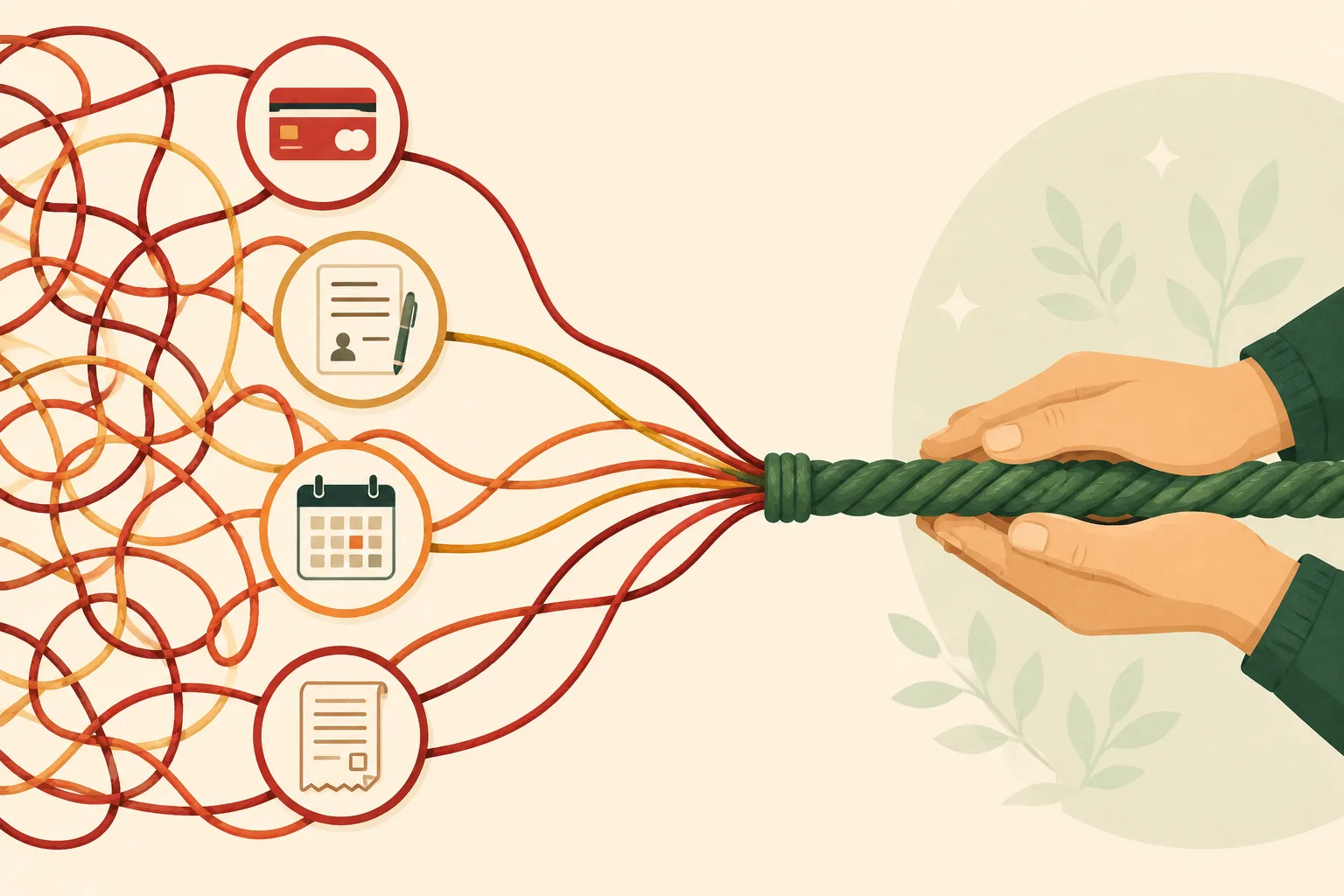
This debt consolidation blog is a reading map for Indian borrowers. Debt consolidation involves taking a new loan to repay multiple eligible debts, leaving you with one EMI to manage. The guides below are grouped by decision stage to help you find relevant information.

Mohit Juneja
Reviewed by FREED India, Debt Resolution Specialists
 4.7/5
 ₹3,200Cr+
 20,000+
 20,00,000+4.7/5₹3,200Cr+20,000+20,00,000+
Key Summary

This debt consolidation blog groups guides by the stage of your decision.
Start with the pillar guide, then pick the guide for your next step.
RBI rules since 2024 touch borrowers who take a new loan.
One table below tells you which guide to read for your situation.
Consolidation suits people who can still repay on time.
What Is Debt Consolidation, in Short?
Debt consolidation is when one new loan pays off several old debts. Those can be personal loans, credit card dues and similar unsecured debts. After that, you pay one EMI (your fixed monthly payment) to one lender on one date.
It doesn’t reduce what you owe. It changes how you repay. The rate, the tenure and the fees on the new loan decide whether it helps you, or whether it only stretches the same debt over more months.
It’s mainly for people who can still repay. Maybe you pay every EMI on time, but the dates and rates are hard to keep track of. Consolidation is a way to take control early, before things get worse.
It isn’t a fit for everyone. If you’ve already missed several EMIs, a standard consolidation loan may be harder to get. We cover that near the end.
FREED has a lot of guides on this topic. That’s useful, but it can feel like too much. So this debt consolidation blog works as a reading map instead of a link dump. It groups guides by the stage you’re in:
- Understand what consolidation is.
- Check whether you qualify.
- Compare loans and balance transfers.
- Apply and get approved.
- Weigh the cost, the credit score effect and the risks.
We’ve also added a dated summary of what RBI has changed since 2024, and a table that tells you which guide to read first. Use this debt consolidation blog as a starting point, not a replacement for your lender’s paperwork.
If you read only one guide, make it the pillar: what loan consolidation is. We haven’t copied its text here. We point you to it, and to the right next step after it.
Let’s start with the basics.

Start Here: Guides to Understand Debt Consolidation
If you’re new to the idea, begin with these. They explain the basics in plain words.
- What Is Loan Consolidation? The pillar guide. Read this first.
- Debt Consolidation Meaning. A short explanation of the term.
- What Is Debt Consolidation and How It Helps Reduce Monthly Financial Stress. How it can ease the monthly load.
- Types of Debt Consolidation. The main routes, side by side.
- Myth vs Reality: Understanding Debt Consolidation. Common beliefs, checked.
- Does Debt Consolidation Work? A direct look at that question.
- Consolidation Loan Ka Matlab (Hindi). The basics in Hindi.
Here’s a simple way to use these. Read the pillar guide first. If a word isn’t clear, read the meaning post. If you aren’t sure which route fits you, read the types post. If you’ve heard claims that sound too good, the myth post is a quick check.
Keep one idea in mind as you read. Consolidation rearranges debt. It doesn’t erase it. Any guide that promises a big cut in what you owe is leaving something out.
Think of this part of the debt consolidation blog as the foundation. Most of the later guides assume you already know three things: what a consolidation loan is, how the new loan pays your old ones, and why the total you repay matters as much as the EMI. If any of those still feel fuzzy, stay here a little longer.
You may also want to know who this is meant for. The short answer: people who still pay on time but feel stretched. Our post on consolidating all debt into one loan shows what that looks like in practice.
Once you know the basics, the next question is what’s changed for Indian borrowers recently. Some of those rules help you directly.

What Has Changed for Indian Borrowers Recently?
RBI has issued several rules since 2024 that touch borrowers who take a new loan. Here are the ones that matter most for consolidation. Each one comes from RBI’s own pages.
| What | When | What it means for you |
|---|---|---|
| Key Facts Statement (KFS) for loans | Circular of 15 April 2024 | Lenders must give retail borrowers a one-page summary before the contract. It shows the APR and the repayment schedule |
| Digital Lending Directions | 8 May 2025 | For digital loans by banks, co-operative banks and NBFCs, money goes into your account and you repay into the lender’s account. You also get a cooling-off period to exit |
| Pre-payment charges | Directions dated 2 July 2025. Apply to loans sanctioned or renewed on or after 1 January 2026 | No pre-payment charge on floating-rate loans to individuals for non-business purposes |
| Free credit report | CIC Directions, 2025. Once a year, January to December | Each credit bureau must give you one free full report, with your score |
| Credit reporting amendment | 4 December 2025 | RBI issued amendments to ensure more frequent, accurate and timely reporting of credit information by lenders to the bureaus |
A few notes on this table, so you don’t read more into it than it says.
The Key Facts Statement. For loans covered by RBI’s KFS framework, ask the lender for the statement before accepting the offer. It sets out the APR, applicable charges and repayment schedule. Review the KFS and its validity period carefully. The framework applies to covered loan products; do not assume that the same KFS requirements apply to credit card dues.
Digital lending. The rule applies to digital lending by banks, co-operative banks and NBFCs. Your lender’s Board sets the cooling-off period, and it can’t be less than one day. In that window you can exit by paying the principal and the proportionate APR without a penalty. The lender may keep a reasonable one-time processing fee, if it disclosed that fee up front in the KFS.
Credit reporting. RBI’s own publication describes the 4 December 2025 amendment only in broad terms: more frequent, accurate and timely reporting. It doesn’t give a schedule, so we don’t either. What you can do today is read your report before you apply, because you get one free full report a year.
Rules change, so this debt consolidation blog will be updated as new guides go live and as RBI issues new directions. Check RBI’s pages for the latest.

What the Law Says
RBI asks lenders to give a Key Facts Statement before the loan contract is signed. It shows the APR and the repayment schedule, and the lender is bound by its terms if you agree within its validity period. Source: RBI circular RBI/2024-25/18, Key Facts Statement for Loans and Advances, 15 April 2024.
Read the Pillar GuideHow Does the Pre-Payment Rule Affect Your Old Loans?
This is the rule most consolidation borrowers ask about, so it gets its own section. When a new loan pays off an old one, that old loan is closed early. Some lenders charge a fee for that.
Here’s an illustration, not a real case. Say an older personal loan charges 2% for early payoff. You pay off a ₹2,00,000 balance on it. The fee is ₹4,000. That fee comes out of your pocket when you consolidate, so add it to your cost check.
Now the rule. Under RBI’s Pre-payment Charges Directions, 2025, lenders can’t levy a pre-payment charge on floating-rate loans given to individuals for purposes other than business. But look at what it covers.
- It applies to loans sanctioned or renewed on or after 1 January 2026. An older loan isn’t covered in the same way.
- It covers floating-rate loans. Many personal loans carry a fixed rate. For other loans, the charge follows the lender’s approved policy.
- Any charge must be disclosed. The sanction letter, the loan agreement and the Key Facts Statement must say if a charge applies. A charge that isn’t disclosed can’t be levied.
So the rule helps if your old loan is covered by it. It doesn’t help in every case. Before you consolidate, ask each old lender two questions: “Is there any pre-payment or foreclosure charge on this loan?” and “Which terms apply to it?” Ask for the answer in writing.
Then add up. List each old loan with its payoff amount and any early-payoff fee. The sum of those is what the new loan really has to cover. If the fees are large, they may eat most of the benefit of consolidating.
This is also why the loan sanction date matters. A loan you took in 2024 may follow older terms. A loan sanctioned or renewed in 2026 may follow the new rule. Check the date on your own paperwork, not on what you remember.
Our guide on personal loan foreclosure charges goes deeper on what lenders charge when a loan is closed early.
Guides to Check If You Qualify
Next comes the question most people ask. Will a lender say yes? These guides help you check.
- Debt Consolidation Eligibility. What lenders look at.
- Can I Consolidate My Debt? A quick way to test your case.
- How to Qualify for a Consolidation Loan. Steps to improve your chances.
- How Hard Is It to Get a Debt Consolidation Loan? What to expect.
- Debt Consolidation Loans for Good Credit. If your record is strong.
- Consolidation Loans for Bad Credit in India. If your record has problems.
- Debt Consolidation Loan for Low Income. If your income is modest.
- Debt Consolidation Loans for Government Employees. For public sector staff.
- Debt Consolidation Loan for the Self-Employed. If you run your own work.
- Joint Debt Consolidation Loan With Spouse. If you borrow together.
We don’t set a score or an income you must have. Each lender has its own view. These guides show you what they tend to look at and how to prepare.
A good first step for anyone is to read your own credit report. Each credit bureau gives you one free full report a year, from January to December. Look for wrong entries, old accounts that should be closed, and overdue amounts you’ve forgotten. Fix errors before you apply, because a wrong entry is easier to correct before a lender sees it than after a no.
You can also check your credit health with FREED’s Credit Insights. It’s open to everyone. It shows your Experian credit report and gives step-by-step actions to improve it.
If you’re short on time, here’s the quickest route in this debt consolidation blog. Read can I consolidate my debt first. Then read the one guide that matches your work or credit position.
Know your credit position before you apply
See your score and open accounts first.
Check My Credit InsightsGuides to Compare Loans and Balance Transfers
Once you know you may qualify, you can compare your options. These guides help you weigh them.
Loan routes:
- Personal Loan vs Debt Consolidation. How the two differ.
- Getting a Personal Loan to Consolidate Debt. The most common route.
- Unsecured Debt Consolidation Decision Guide. A way to decide.
- Bank Debt Consolidation Loans in India. What banks offer.
- Banks and Personal Loans for Debt Consolidation. A bank-side view.
- Debt Consolidation Interest Rates. How rates work.
- Average Debt Consolidation Loan Interest Rate. What to expect.
Balance transfers:
- Personal Loan Balance Transfer. Moving a loan to a new lender.
- Balance Transfer Credit Card in India. Moving a card balance.
- Credit Card Balance Transfer: Pros and Cons. Both sides.
Providers:
- Debt Consolidation Companies. Who offers it.
- Personal Loan Consolidation Companies. A closer look at loan providers.
Compare by the total amount you’ll repay, not only the EMI. A lower EMI can cost more over a longer tenure. Ask every lender one question: “What is the total amount I will repay?”
Keep a simple sheet. Write each offer’s rate, fees, tenure and total repaid. Then compare them side by side. A longer tenure shrinks the EMI, but you pay interest for more months. A shorter tenure raises the EMI, but the total cost falls. The right option is one you can repay comfortably and whose total cost, including applicable fees and charges, compares favourably with the remaining cost of your existing debts.
Also ask each lender about fees: a processing fee, a late-payment fee and any charge for paying early. Put each one on your sheet so no cost stays hidden. The Key Facts Statement lists most of them in one place.

FREED Expert Tip
Read the pillar guide first. Then read the guide for your next step.
Start With the PillarGuides for Credit Card Debt and Personal Loans
Most people who think about consolidation are carrying card dues, personal loans or both. These guides look at those two debts directly.
- Consolidate Credit Card Debt Guide. Moving card dues into one loan.
- Personal Loan to Pay Off Credit Cards. Using a personal loan for card dues.
- Personal Loan vs Credit Card Debt Consolidation. Which route to weigh.
- Consolidate Debt Into One Payment: Steps. The full flow.
Why do cards deserve their own section? Because they often carry some of the highest rates, and they’re the debt people most often use again after clearing. A card with a high balance can cost far more each month than a personal loan of the same size. That is why many people start their list with the costliest card.
Here’s a short way to decide where to begin. Write every card and loan on one sheet, with the balance, the rate and the EMI. Circle the one with the highest rate. Ask whether the new loan’s rate is clearly lower than that one. If it isn’t, ask whether the lower EMI is still worth a longer loan.
A few cautions apply to both types of debt:
- A card balance isn’t covered by the Key Facts Statement in the same way as a term loan, so keep your card statements and payoff proof.
- Closing a card doesn’t have to follow the payoff. You can keep it for emergencies, with a low limit.
- If you start spending on cleared cards again, you’ll carry the new loan and new card dues together. This is the most common way the plan goes wrong.
Keep your list of debts updated as you read. It will help you in the cost guides below.
Guides to Apply and Get Approved
When you’re ready to apply, these guides walk you through it.
- How to Apply for Debt Consolidation. The application steps.
- How to Get Approved for a Debt Consolidation Loan. Preparing your case.
- Where to Apply for a Debt Consolidation Loan. Choosing a lender.
- Online Debt Consolidation Loans. Applying on an app or site.
- Consolidate Your Loans Guide. A general walk-through.
- Applying for Multiple Loans and Credit Cards: CIBIL. Why many applications can hurt.
- Debt Consolidation Loan No Credit Check. Why such offers need care.
A few points apply to any application.
- Apply once. Many applications at once can leave several marks on your report.
- Get the Key Facts Statement. Read it line by line.
- Check the payout. Ask how your old lenders will be paid, and keep a payoff letter from each one. Never pay your old dues into an account an agent gives you.
- Be careful with offers that need no checks. Real lenders check your identity and income.
- Don’t pay a fee to get a loan “approved”. A real lender shows every fee in the Key Facts Statement.
After the money is paid, check your credit report a month or two later. Each old account should show as paid off. Keep a folder with the Key Facts Statement, the sanction letter, the payoff letters and proof of each payment. If a mistake shows up later, these papers help you fix it fast.
Then set up auto-pay for the new EMI. If you’re salaried, pick a date a few days after your salary arrives. One missed EMI on the new loan can undo much of the benefit.
This stage of the debt consolidation blog matters most for people who’ve been turned down before. Read the approval guide first. Then go back to the eligibility list above.
Guides on Cost, Credit Score and Risks
Before you sign, it helps to see the whole picture. These guides cover the cost, the effect on your credit score, and the risks.
Cost:
- Debt Consolidation Calculator. Test your own numbers.
- Debt Consolidation Example. A worked case.
- Is Debt Consolidation Worth It? Weighing the cost.
- Benefits of Debt Consolidation: A Clear, No-Nonsense Guide. A plain view of the upside.
Credit score:
- Debt Consolidation Credit Score Impact. What happens to your score.
- Debt Consolidation With a Low Credit Score: EMI Impact. How a lower score can change the EMI.
- Effects of Debt Consolidation. The wider effects.
Risks:
- Disadvantages of Debt Consolidation. The downsides.
Here’s a simple rule from all of these. A consolidation loan helps most when its rate is clearly lower than the average rate you pay now. A lower EMI alone isn’t a saving. It may only mean a longer loan.
On the credit score, a loan application can leave an enquiry on your report, which can lower your score a little for a while. After the loan starts, paying one EMI on time tends to help your score over time. Lower card balances help too. Don’t expect a quick jump.
Watch for one risk after you consolidate. Once your cards show a zero balance, it’s easy to spend on them again. A simple fix is to keep the cards for emergencies only and to set a low limit on each.
Use the tool below to see where your EMIs stand today. The calculator post above helps you test the new loan.
See How Much of Your Take-Home Pay Your EMIs Take
FREED’s EMI Score compares your EMIs with your take-home pay, so you can check yourself against the 50% pointer. That pointer is FREED’s rule of thumb, not an RBI rule. Results are indicative, and your lender statements are the final word.
Check My EMI ScoreHow Does Consolidation Compare With Restructuring and Bankruptcy?
People often search for debt consolidation when they actually have a different problem. These two guides help you tell them apart.
- Debt Consolidation vs Debt Restructuring. Two different routes.
- Debt Consolidation vs Bankruptcy. A comparison of the two.
The short version is this. Consolidation means a new loan pays your old ones, and you keep paying on time. It’s for people who can still repay. Restructuring means changing the terms of an existing loan with your current lender. And bankruptcy is a legal process, which is a much bigger step.
A quick test can help. Ask yourself: “Am I paying every EMI on time but feel stretched?” If yes, consolidation may fit. Then ask: “Have I already missed several EMIs or do I expect to?” If yes, a standard consolidation loan may not be open to you, and you may need a different conversation altogether.
Don’t mix these up. Applying for a consolidation loan when you’re already in default can lead to a rejection that leaves another mark on your report. Reading first can save you that.
If you’re comparing consolidation with a change to your own loan terms, start with the restructuring guide. If your worry is bigger than a monthly squeeze, talk to FREED’s team before you apply anywhere.
How to Check Any Debt Consolidation Article or Offer
Not every page on this topic is trustworthy, and that includes ads. Here is how to read any debt consolidation blog, article or offer, ours included, with a clear eye.
Look for these signs of a careful guide:
- It says consolidation doesn’t reduce what you owe.
- It shows the total cost, not just the EMI.
- It says when it was updated.
- It names its sources, and the sources are RBI or another official page.
- It says who consolidation isn’t for.
Be wary of these signs:
- It promises a big cut in what you owe.
- It says “no credit check, no documents, instant approval”.
- It asks you to pay a fee before the loan is approved.
- It tells you to pay your old dues into an account an agent gives you.
- It rushes you with an “offer ends today” line.
- It can’t show you a Key Facts Statement.
Under RBI’s Digital Lending Directions, the loan is generally paid into your own bank account, with limited exceptions such as payments made straight to the end beneficiary for a specific purpose. You repay into the lender’s own account. If a stranger’s account is in the picture, stop and check.
Also check the lender. Ask for its registration details and verify them. A lender you can’t find is a warning sign.
If you meet a scam, save the messages and report it to your bank and the cyber crime portal. Don’t pay more money to “recover” what you lost.
And one thing about this page. We describe each guide by its topic. Always read the full guide, check the date, and check the details with your lender before you act.
Which Debt Consolidation Guide Should You Read First?
Not sure where to begin? Find your situation in the table.
| If this is you | Read this first |
|---|---|
| You’re new and want the basics | What Is Loan Consolidation? |
| You want to know if you qualify | Debt Consolidation Eligibility |
| You’re unsure whether it’s worth it | Is Debt Consolidation Worth It? |
| You want to test numbers | Debt Consolidation Calculator |
| Your debt is mostly credit cards | Consolidate Credit Card Debt Guide |
| You’re ready to apply | How to Apply for Debt Consolidation |
| You were turned down | How to Qualify for a Consolidation Loan |
| You worry about your credit score | Debt Consolidation Credit Score Impact |
| You’re comparing it with restructuring | Debt Consolidation vs Debt Restructuring |
| You prefer to read in Hindi | Consolidation Loan Ka Matlab |
If more than one row fits, start with the one nearest the top. Then move down.
A short reading path for most people looks like this. Read the pillar guide. Check eligibility. Test your numbers with the calculator. Read about cost and risks. Then apply once.
You don’t need to read everything. Pick the guides that match your stage, and come back when your situation changes. This debt consolidation blog is built to be used that way.
If your case isn’t in the table, don’t worry. Read the pillar guide, then ask FREED’s team to point you to the right next step.
Three Reading Paths for Different Borrowers
A table is quick, but real cases are rarely one row. Here are three common situations and the order that works for each.
Path 1: Salaried, with three loans and two cards, paying on time. Start with the pillar guide to learn the idea. Then read debt consolidation eligibility to see what lenders check. Next, test your own numbers in the calculator post. Only after that, read how to apply. This order matters. Many people jump to the application first, face a rejection, and leave a mark on their report.
Path 2: Holding one offer already. Skip the basics. Go to the cost and risk guides: is debt consolidation worth it and disadvantages of debt consolidation. Check the offer against the total-cost test before you sign. Ask for the Key Facts Statement, and check any early-payoff fee on your old loans.
Path 3: Turned down once. Read how to qualify for a consolidation loan and how hard is it to get a debt consolidation loan. Then check your credit report, fix errors, and wait a few months of on-time payments before you apply again. Don’t apply to many lenders at once.
Each path ends in the same place. Apply once, read the Key Facts Statement, check the payout, and keep your papers.
If you’re still unsure which path fits, that’s fine. Pick the path whose first step you can do today. For most people, that’s reading the pillar guide or checking the credit report. Everything else can wait a day or two.
What If Debt Consolidation Is Not the Right Fit?
Consolidation isn’t for everyone. After reading, you may find it doesn’t suit you. That’s useful to know, and it’s better to learn it now than after an application.
It may not fit if:
- Your income is unstable, and you may not manage even the new EMI.
- The offered rate is higher than what you pay on average today.
- The fees would eat most of the benefit.
- You know you’ll use the cleared cards again.
In that case, other steps can help first. You can pay down the costliest card first. You can ask a lender for a better rate or more time. You can fix errors in your credit report. You can make a simple monthly budget.
If you’re weighing consolidation against a change to your loan terms, read debt consolidation vs debt restructuring.
What if you’ve missed several EMIs, or repaying has become very hard? In that case, a standard consolidation may not be open to you. Don’t apply to many lenders in a rush, because each rejection can leave a mark. Talk to FREED’s team instead. They can look at your whole situation and explain the options that fit. You don’t have to work it out alone.
If recovery calls are adding to the pressure, FREED Shield is open to everyone. If you are facing recovery agent harassment, FREED helps you understand your legal rights as a borrower, report inappropriate recovery practices, and raise complaints with your lender. Where harassment is frequent, our experts speak to recovery agents on your behalf. And if you receive a legal notice about your loan, FREED helps you understand your options and draft a suitable reply.
Also remember that no blog replaces a talk about your own money. Use these guides to learn, then check the details with your lender.

How Does FREED Help With Debt Consolidation?
FREED’s Loan Consolidation Plan (the Debt Consolidation Program, also called “Reduce My EMI”) is for people who can still repay but need a smarter way to manage their debt. FREED provides services and support to individuals exploring debt management and loan consolidation options. It helps you take control before your situation gets worse. Here’s how it works:
- FREED assesses your profile. It looks at your loans, income and repayment record.
- FREED matches you to a lending partner from its network.
- The partner disburses one new loan. It pays off your existing eligible unsecured loans and card dues.
- You are left with one loan, one EMI and one due date.
- If one partner declines, FREED tries others that match your profile.
Your EMI amount is reduced. Your credit score isn’t hurt by consolidation, and it tends to improve as you pay on time. The whole process is 100% online, and FREED handles it end to end. The new loan can only be used to pay off your existing eligible debt. FREED’s fee is success-based and charged only after the consolidation completes.
The program covers unsecured debt, such as personal loans, credit card dues, BNPL and app loans. It doesn’t cover home loans, car loans or other secured loans.
The checks in the guides above still apply. Ask for the total amount you’ll repay, read the Key Facts Statement, check any early-payoff fee on your old loans, and keep the payoff proof.
Not sure if you qualify? FREED’s team can look at your situation on a call and tell you which options fit. You can also read the Loan Consolidation Plan page for more.
Want to talk through your options?
Speak to a FREED counsellor about your loans.
See My Options on FREED
Mohit Juneja
Mohit Juneja is FREED’s Content & Communication Lead with 12+ years of experience across content, media, advertising and digital communications. He holds a postgraduate diploma in Communications from Xavier Institute of Communications, Mumbai, and has worked with organisations including NDTV, The Indian Express, McCann Worldgroup and NABARD.
At FREED, he leads content and communication across loan management, debt resolution, debt consolidation and financial well-being. His work combines research, storytelling and consumer-focused communication to make complex financial topics easier to understand and act on. He has also scripted and produced 11 documentaries on rural development and agriculture for NABARD, with film's selected for the Mumbai International Film Festival.
mohit.juneja@freed.care

FREED is India's trusted loan management platform. We help India settle their loans, consolidate their EMIs, improve their credit score, and manage their loans better. Over 20 lakh people trust FREED. We have managed more than ₹3,500 crore in loans and saved our users over ₹450 crore.
Media Mentions