Debt Consolidation vs Bankruptcy: Key Differences Explained
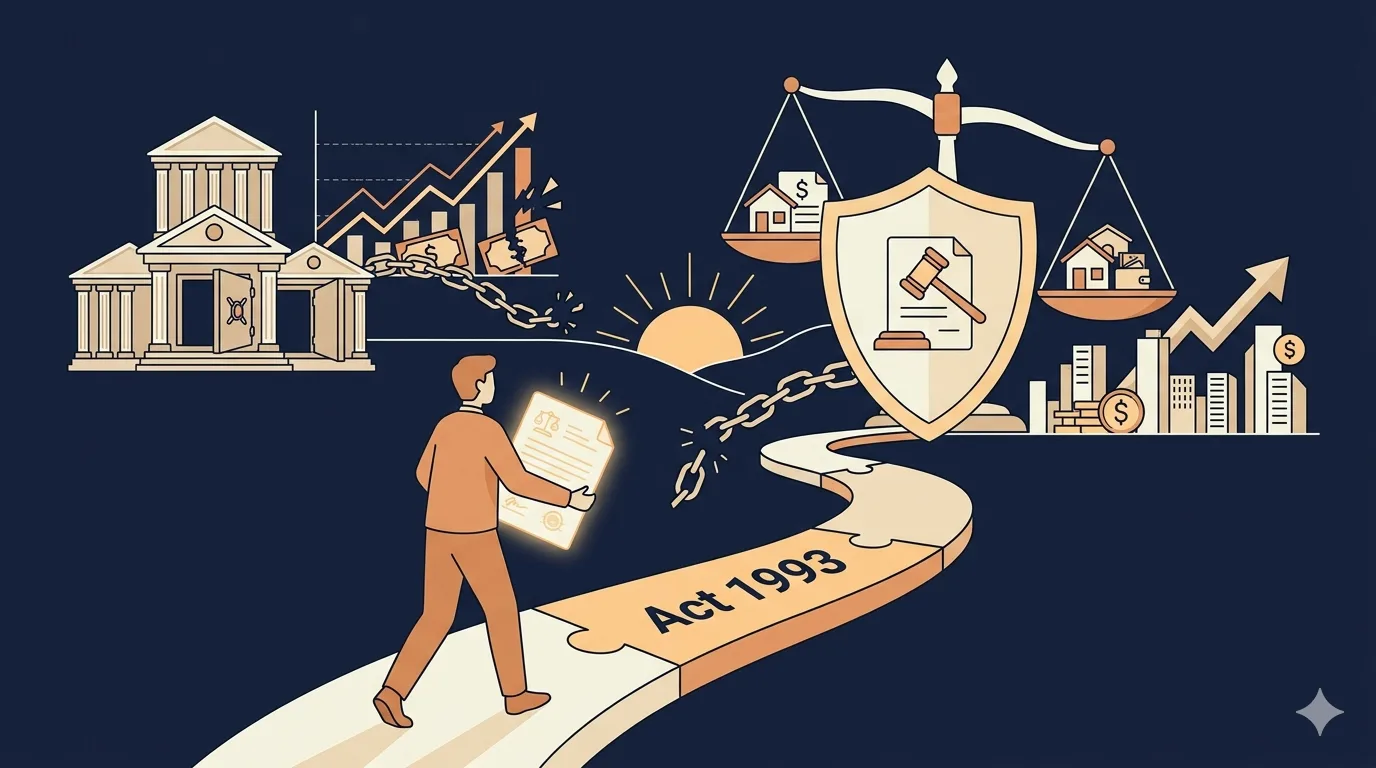
Debt consolidation combines multiple debts into one new loan for people who can still repay; it's available today through banks, NBFCs, and matching platforms. India’s Insolvency and Bankruptcy Code contains provisions for individual insolvency, but the Part III framework currently in force primarily applies to personal guarantors to corporate debtors. Ordinary individual borrowers remain subject to a different and more limited legal framework.
Mohit Juneja
Reviewed by FREED India, Debt Resolution Specialists
 4.7/5
 ₹3,200Cr+
 20,000+
 20,00,000+4.7/5₹3,200Cr+20,000+20,00,000+
KEY TAKEAWAYS

Debt consolidation combines multiple existing debts into one new loan, usually at a lower rate, for people who can still repay but want it simplified.
Personal bankruptcy under India's Insolvency and Bankruptcy Code (IBC) Part III is only operative today for personal guarantors to corporate debtors, not for ordinary individual borrowers.
For ordinary individuals, the technically applicable insolvency laws are still two colonial-era statutes (1909 and 1920), which are rarely used and procedurally difficult.
Consolidation assumes ongoing repayment capacity; a discharge-style bankruptcy process, where it doesn't exist, isn't a fallback most Indian borrowers can rely on today.
For genuine inability to repay, debt settlement, a different, currently operative process, is the more realistic route in India than "declaring bankruptcy."
What Is Debt Consolidation, in Brief?
Debt consolidation combines multiple existing debts, credit cards, personal loans, sometimes BNPL balances, into one new loan, typically at a lower interest rate than the blended average of what you were paying before. It's built for someone with ongoing repayment capacity who wants their payments simplified into a single EMI, rather than juggling several separate due dates and rates.
It's worth being clear on what this actually means: consolidation assumes the debt is being repaid; it just restructures how that repayment happens. Nothing about the amount you owe is forgiven or discharged; the same principal is repaid, just under a different structure. FREED's full breakdown of the different types of debt consolidation covers the mechanics of this process in depth; this article won't repeat that ground.
Bankruptcy is a fundamentally different kind of tool from consolidation; at least in principle, it's designed for genuine inability to repay, not simplification of ongoing repayment. But whether it's actually available as a practical option in India is a question worth answering carefully, since the honest answer surprises most people.

Can Still Repay, Just Want It Simpler?
See if consolidation fits your situation.
Check My Consolidation OptionsIs Personal Bankruptcy Actually Available in India?
Here's the honest answer, stated plainly, since it's genuinely different from what most people assume based on how bankruptcy is portrayed elsewhere: for the large majority of ordinary Indian borrowers, no fully operative statutory bankruptcy discharge process currently exists.
India's Insolvency and Bankruptcy Code, 2016 (IBC) does contain a framework for individual insolvency and bankruptcy in Part III of the Code. But as of the current notification status, only the provisions covering personal guarantors to corporate debtors have actually been brought into force, through a Ministry notification effective December 1, 2019. This limited notification was itself challenged and upheld by the Supreme Court, in Lalit Kumar Jain v. Union of India, confirming that the government could notify Part III selectively rather than bringing the whole framework into force at once.
The broader provisions, the Fresh Start Process and the Insolvency Resolution Process, the parts of the Code that would actually apply to an ordinary salaried or self-employed borrower with no corporate guarantee involved, remain unnotified. In practical terms, this means there is currently no fully operative statutory bankruptcy discharge process for most retail borrowers the way there might be for a personal guarantor to a corporate loan, or the way "declaring bankruptcy" is often portrayed working in some other countries.
What technically still applies instead, for ordinary individual insolvency, are two statutes that predate independence: the Presidency Towns Insolvency Act, 1909, covering Mumbai, Kolkata, and Chennai specifically, and the Provincial Insolvency Act, 1920, covering the rest of India. These remain the operative law for ordinary individual insolvency until the IBC's general provisions are notified and formally repeal them. Both are genuinely old, rarely used in practice, and procedurally demanding, involving a court adjudicating the insolvency and vesting the individual's property with an official assignee for distribution among creditors, a process most people never actually pursue.
Worth being direct about this: this is not a commonly pursued or easily accessible route for most people today, whatever popular impressions of "personal bankruptcy" might suggest. FREED's guides on the difference between insolvency and bankruptcy as concepts, and debt relief versus bankruptcy as a choice, cover related ground if you want to understand these terms more broadly.
The Fresh Start Process: What It's Designed to Do (Even If Not Yet Operative for Most)
The Fresh Start Process is worth understanding specifically, since it's the term most likely to come up if you've researched this topic and heard it mentioned as India's version of a bankruptcy discharge.
It's designed as a simplified mechanism for very low-income individuals with minimal debt to have qualifying debts discharged, a genuinely narrow, targeted provision within the Code. The designed thresholds involve income below roughly ₹5,000 a month and debt not exceeding roughly ₹35,000, an intentionally narrow eligibility band aimed specifically at the most financially constrained cases, not a general debt-relief mechanism for typical borrowers.
Worth stating plainly: even where the broader individual provisions are eventually notified, and this process becomes operative more generally, it was never designed as a general debt-relief tool for typical unsecured-debt borrowers carrying meaningful income and moderate debt levels; a salaried professional with ₹3 lakh in credit card debt, for example, falls well outside this narrow band by design, not by oversight.
For the much larger group of borrowers who don't fit this narrow band, or in the current situation where the provision isn't operative at all, consolidation or settlement remain the practical, currently available routes, covered in more depth later in this article.

Freed Expert Tip
Don't assume "I'll just declare bankruptcy" is a fallback plan; for most individual borrowers in India, that legal route isn't fully operative yet. Know your actual options before you need them.
Check your optionsDebt Consolidation vs Bankruptcy: Side-by-Side
Debt Consolidation | Bankruptcy (India) | |
Purpose | Restructure debt into one loan | Formal insolvency, designed to discharge debt |
Who it's for | Ongoing repayment capacity | Genuine inability to pay |
Available today for ordinary borrowers | Yes, via banks/NBFCs/platforms | Largely no; general provisions unnotified; only personal guarantors covered |
What applies instead for most individuals | N/A | Colonial-era statutes (1909/1920), rarely used |
Credit impact | Temporary dip, generally recovers | Formal insolvency record, long-term consequences where applicable |
Debt outcome | Restructured, still owed | Designed to be discharged, where operative |
This comparison is worth keeping in mind precisely because it isn't the comparison most people expect walking in: "consolidation vs bankruptcy" sounds like two roughly equivalent tools serving similar purposes, when in India today, one is a genuinely available financial product, and the other is, for most people, a legal framework that exists on paper but isn't practically accessible.
If Bankruptcy Isn't Realistically Available, What's the Actual Option for Genuine Inability to Pay?
Since a discharge-style bankruptcy process isn't a practical route for most Indian borrowers today, the realistic alternative for someone who genuinely cannot repay, not just juggling multiple payments, but unable to meet obligations at all, is debt settlement, negotiating directly with existing creditors to accept a reduced payoff as full and final settlement of what's owed.
It's worth stating the framing clearly: settlement is not something a borrower chooses out of preference. Banks and financial institutions only consider it when someone is in genuine financial difficulty and truly unable to repay the full amount owed, a fundamentally different starting point from consolidation's assumption of ongoing, if stretched, repayment capacity.
Settlement carries its own real, honest cost, worth naming directly rather than glossing over. A "Settled" status shows up on your credit report and can remain there for up to 7 years*, a meaningfully longer and different kind of consequence than consolidation's more moderate, typically recoverable dip. It's a real trade-off, accepting a lasting credit mark in exchange for resolving debt that genuinely couldn't otherwise be repaid.
Genuinely can't repay right now?
A confidential assessment of your settlement options.
Start My Debt AssessmentHow FREED Helps: Consolidation and Settlement, Depending on Your Situation
FREED offers two genuinely different products, and which one fits depends entirely on your actual repayment capacity, not personal preference.
For those who can still repay but want it simplified, FREED's Loan Consolidation Plan, "Reduce My EMI," reviews your full debt profile and matches you to a lending partner from its network. The matched loan pays off your existing debts directly, leaving you with one EMI in place of several. CIBIL generally improves over time through this route, since multiple accounts and due dates collapse into a single loan paid on schedule.
For those genuinely unable to repay, FREED's Loan Settlement Plan, "Settle My Loans," works differently. FREED assesses your full financial situation, guides structured savings toward a settlement corpus over time, and negotiates directly with your banks once sufficient funds have accumulated. This is worth being clear about: it takes time, it isn't instant, and it's a genuinely different process from simply deciding to stop paying and hoping for the best. EMIs can be reduced through settlement by up to 50%, though the exact outcome depends on the specific bank and your individual case, and "Settled" status can remain on your credit report for up to 7 years, as covered in the previous section.
Both routes charge a success-based fee only when the process is actually completed, not upfront for the assessment itself.
The connection back to this article's core finding is worth stating directly: since bankruptcy discharge isn't realistically available to most Indian borrowers today, these two FREED-facilitated routes, consolidation for ongoing capacity, settlement for genuine inability to repay, are the practical alternatives, depending honestly on which one actually describes your situation.
*Settlement percentage and CIBIL "Settled" duration are indicative figures based on FREED's published terms and general market practice; actual outcomes depend on your lender and individual circumstances. FREED is not a loan provider and does not guarantee any specific outcome.
Sources
Claim | Source |
IBC Part III personal-guarantor provisions notified effective December 1, 2019; general individual provisions remain unnotified; Lalit Kumar Jain v. Union of India upheld selective notification | Bhatt & Joshi Associates: Individual Insolvency Under the IBC |
Presidency Towns Insolvency Act, 1909, and Provincial Insolvency Act, 1920, remain technically operative for ordinary individuals until repealed by notification | Bhatt & Joshi Associates, same source above |
Fresh Start Process designed thresholds: income below ~₹5,000/month, debt not exceeding ~₹35,000; only personal guarantor provisions currently notified | Bhatt & Joshi Associates: Consequences of Insolvency in India |

Mohit Juneja
Mohit Juneja writes educational content at FREED on debt management, credit scores, loan repayment, and borrowing best practices. His content is shaped by expert insights and industry knowledge, helping readers better understand their financial options and make informed decisions.
mohit.juneja@freed.care

FREED is India's trusted loan management platform. Founded in 2020 and headquartered in Gurugram, FREED has counselled 20 lakh+ people on personal loans, credit cards, and app loans. FREED charges fees only on successful settlement, not upfront. FREED does not handle secured loans (home loans, car loans, gold loans).
Media Mentions