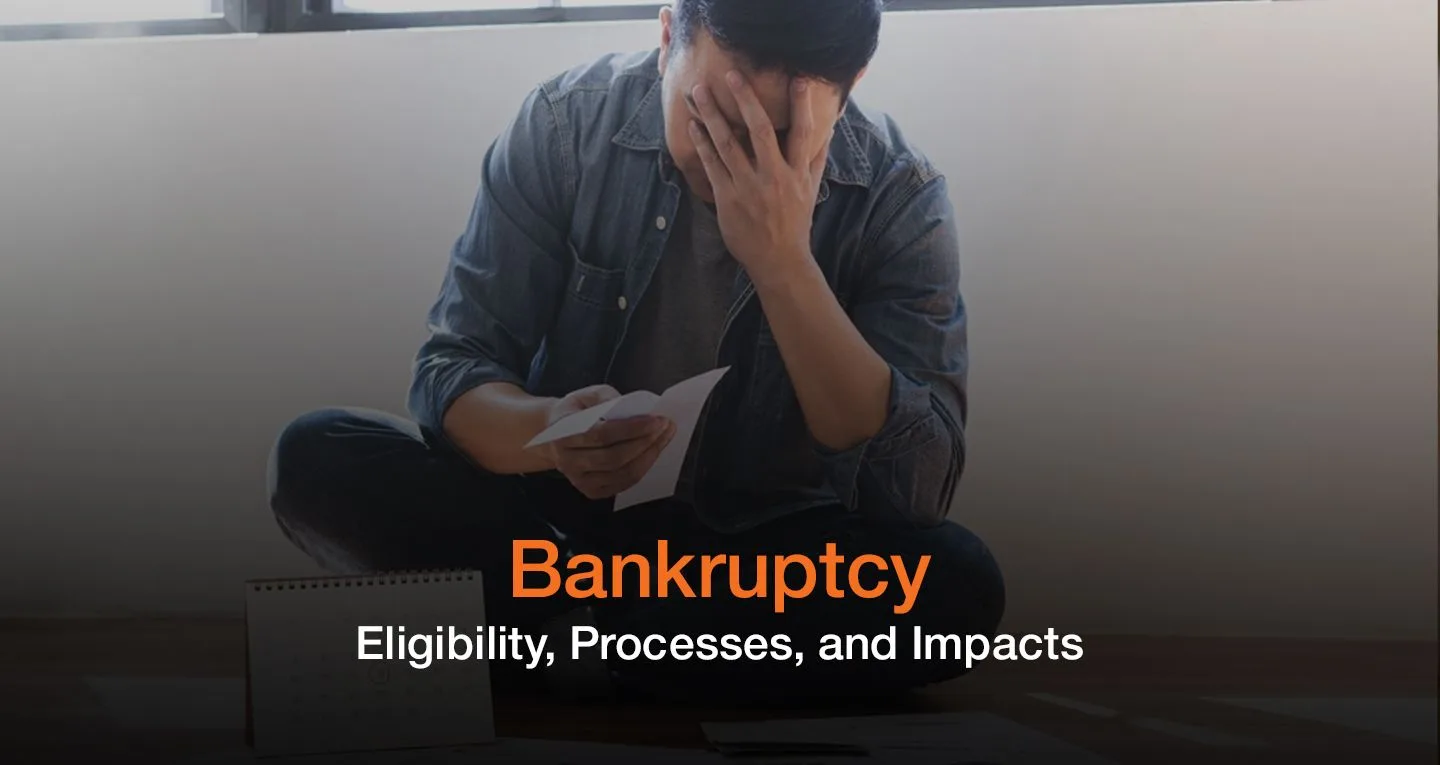
Difference Between Insolvency and Bankruptcy
Insolvency means you cannot pay debts as they fall due. It is a financial state, not a legal one, no court needed. Bankruptcy is the formal, court-declared outcome once insolvency proceedings run their course under the law. In India this distinction mostly applies to companies right now. For individuals, only personal guarantors of company loans have a working legal path (via NCLT). Other individuals do not yet have an operative bankruptcy process under the Insolvency and Bankruptcy Code.
Mohit Juneja
Reviewed by FREED India, Debt Resolution Specialists
 4.7/5
4.7/5 ₹3,200Cr+
 20,000+
 20,00,000+4.7/5₹3,200Cr+20,000+20,00,000+
KEY TAKEAWAYS

Insolvency is a financial condition, not a legal one. You don't need a court to be insolvent.
Bankruptcy only exists once a court, under the IBC, formally decides you can't repay.
Both sit under the Insolvency and Bankruptcy Code (IBC), which covers individuals, partnerships, and companies.
Most insolvent people never become bankrupt. Restructuring, negotiation, and settlement resolve a lot of these cases first.
Bankruptcy may affect future borrowing and the information reflected in your credit report, depending on applicable reporting practices.
What is insolvency?
Insolvency just means you can't pay your debts when they're due. That's it. No court has to say so, no paperwork triggers it, nothing gets filed. It's a fact about your finances, not a status someone hands you.
It rarely comes from one bad decision either. A job loss, a pay cut that wasn't planned for, a medical bill nobody saw coming, or simply having taken on more EMIs than your income can actually carry. Usually it's not a single month, it's a few months where the gap between what you owe and what's coming in keeps getting wider until you notice it.
Being insolvent doesn't mean you're out of options. It's the starting point for a decision, not the end of one. Some people restructure a loan from here. Some negotiate directly. Some end up in something more formal. But the word itself only describes where you are right now, nothing more.

Explore Settlement Before It Escalates
See if resolving your debt without court is possible.
Start My Debt AssessmentWhat is bankruptcy?
Bankruptcy is a different animal. It's a legal status, and only a court can hand it to you. You can't declare yourself bankrupt by telling your bank you're done paying. In India, this whole process runs through the Insolvency and Bankruptcy Code, 2016, the law that governs how unpaid debt gets resolved through the courts, whether you're an individual, a partnership, or a company.
Getting there takes a while. It starts with insolvency proceedings, moves through someone assessing what you own and what you owe, and ends when a tribunal formally decides the debt can't be repaid through the ordinary process. Bankruptcy, in the legal sense, only applies at that last step.
Which is why the distinction matters more than people give it credit for. You can be insolvent for a year, two years, genuinely unable to pay, and never actually become bankrupt, because the situation gets sorted out some other way before a tribunal ever gets involved.
What's the real difference between insolvency and bankruptcy?
Think of insolvency as the problem and bankruptcy as one possible ending to that problem, and only a court can write that ending.
Insolvency describes where your finances stand. You owe more than you can pay right now, and that's true the second it happens, no filing required. Bankruptcy only exists once a legal process under the IBC has run its full course and a court has ruled that you can't meet your obligations. One is a description. The other is a verdict.
People use these words interchangeably in conversation all the time, and that's exactly where the confusion starts. You can be insolvent today and never become bankrupt, if things get resolved through restructuring, negotiation, or settlement before it escalates. Bankruptcy is the exception, not the default next step.
Does every insolvency lead to bankruptcy?
No. Worth saying plainly, because a lot of people assume insolvency is the first domino that always ends in bankruptcy. It isn't.
Plenty of individuals and businesses go through a genuinely rough patch and come out the other side without ever touching formal bankruptcy proceedings. Restructuring a loan (changing the loan plan with the bank), negotiating directly, or reaching a settlement where the bank takes a reduced amount as final payment, any of these can close the chapter without a tribunal involved at all.
Formal bankruptcy tends to show up when none of the earlier options worked, or when the debt and the number of creditors involved make a court-supervised process the only realistic path. For most people dealing with personal loans and credit cards, the earlier options usually get tried first, and often that's where it ends.

Freed Expert Tip
Insolvency alone doesn't mean bankruptcy is coming. Look at restructuring or settlement first.
See what options fit your situation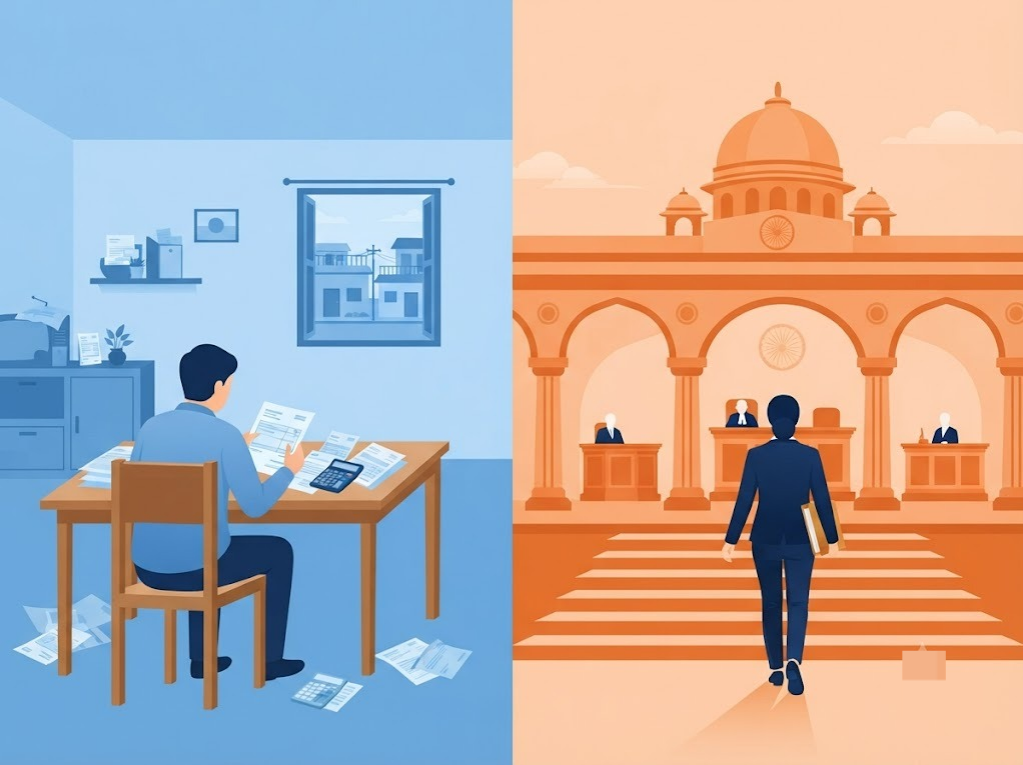
How does the Insolvency and Bankruptcy Code (IBC) work in India?
The IBC, 2016 brought insolvency and bankruptcy cases for individuals, partnerships, and companies under one law. Before it existed, these cases were scattered across several older laws, which slowed everything down.
At a basic level, a resolution professional looks at your finances, and a tribunal oversees the case and makes the actual calls. For individuals and partnership firms, that's usually the Debt Recovery Tribunal (DRT), a court set up specifically for loan and debt cases. Companies generally go through the National Company Law Tribunal (NCLT) instead.
This is general information, not legal advice. If your situation is genuinely heading toward something formal, talk to a lawyer who can look at your actual documents. An explainer like this one can't substitute for that.

What the Law Says
Under the IBC, individual bankruptcy in India goes through the Debt Recovery Tribunal, and the process is meant to be structured and time bound.
Talk to FREED before it escalatesWhat happens if you're declared bankrupt?
Being declared bankrupt has real consequences, and there's no point softening that. In some cases, assets get assessed and even sold off to repay creditors as much as possible. A bankruptcy record sits on your credit report for years, and that makes future loans harder to get. Depending on how the case plays out, there can also be limits on certain financial activity while it's ongoing and for a while after.
None of this is meant to scare you. It's meant to explain why bankruptcy is usually treated as a last resort, not a normal way to deal with debt, and why looking at earlier options first, restructuring, negotiation, settlement, matters as much as it does.
What are your options before it reaches bankruptcy?
For most people with unsecured debt, there's a lot of ground to cover before bankruptcy becomes relevant at all.
A balance transfer is usually the first move, shifting an existing loan to another bank at a better rate, assuming your credit still qualifies. It works if you're stretched but still managing.
Debt consolidation comes next, for anyone juggling several loans and cards who's still paying on time but finding it harder to keep up. FREED's Debt Consolidation Program may combine eligible unsecured debts into a single repayment, depending on the approved loan amount, tenure, and lender terms.
Loan settlement sits further down the line, and it's for situations where paying in full has genuinely stopped being possible, not just inconvenient. It means negotiating with the bank to accept a smaller lump sum as full and final payment, and yes, it does show up on your credit report.
Those three, in that order, cover most situations long before a court needs to get involved. Bankruptcy tends to only enter the picture when none of the earlier paths work given how much is owed.
How FREED helps before it reaches this point
Settlement is not something a borrower chooses out of preference. Banks and financial companies only consider it when you're in genuine financial difficulty and truly unable to repay in full. If that's where you are, settlement is often worth exploring before things escalate toward formal insolvency proceedings.
FREED's Loan Settlement Plan, also called the Debt Resolution Program, is built to help borrowers move from that kind of distress toward an actual structured path to resolving debt. FREED starts by looking at your full picture, loans, income, expenses, then builds a plan around a monthly savings routine you can realistically keep up with. That money builds into a Special Purpose Account (SPA), a separate fund held independently, not by FREED. FREED helps borrowers settle their unpaid/overdue loans at up to 50% less*. You sign off on every settlement before any money moves.
There's a real trade-off here. A settled account gets marked "Settled" on your report, and that stays visible for up to 7 years, consistent with RBI's credit information reporting rules for adverse remarks. It's a genuine cost, which is exactly why settlement is positioned for real hardship, not treated as a shortcut.
If you've already got a legal notice in hand, FREED's in-house legal team can check whether it's genuine and help you draft a reply if one's needed. That support stops at the courtroom door though. Once a case is actually filed, FREED steps back, and that's where you need an actual lawyer.
Explore Settlement Before It Escalates
See if resolving your debt without court is possible.
Start My Debt Assessment
What should you do if you get a legal notice?
Don't ignore it. That's the first and honestly the most important step, even if your response is just confirming you've seen it and are looking into it.
Check that it's actually legitimate. Genuine notices come with clear sender details and specific references to your loan account. Missing the response deadline may affect your legal position, depending on the circumstances.
This is general information, not legal instruction. If you've genuinely received a legal notice, get it reviewed by someone qualified, a lawyer or a service that verifies notices as part of its support, rather than guessing at what it means on your own.
Are You in a Loan Trap? Quick Check
Move the slider to your total EMIs as a % of monthly salary. See your debt stress level instantly.
EMIs as % of Monthly Salary
Insolvency vs bankruptcy at a glance
Aspect | Insolvency | Bankruptcy |
What it is | A financial state | A legal status |
Declared by | No formal declaration needed | A court, under the IBC |
Applies to | Individuals, partnerships, companies | Individuals, partnerships, companies, via IBC processes |
Can it be resolved without escalating | Yes, through restructuring, negotiation, or settlement | No, it is already the formal legal outcome |
Impact on credit report | Depends on missed payments during this period | Recorded for several years, affects future borrowing |
The table sums up the core idea. Insolvency is where a hard financial stretch begins, and there's still room to fix it through restructuring, negotiation, or settlement. Bankruptcy is what's left once a court has already made the call, and by then it's out of your hands.
This content is for general awareness only and does not constitute legal advice. Please consult a qualified legal professional for your specific situation. FREED is not a Loan Provider.

Mohit Juneja
Mohit Juneja writes educational content at FREED on debt management, credit scores, loan repayment, and borrowing best practices. His content is shaped by expert insights and industry knowledge, helping readers better understand their financial options and make informed decisions.
mohit.juneja@freed.care

FREED is India's trusted loan management platform. Founded in 2020 and headquartered in Gurugram, FREED has counselled 20 lakh+ people on personal loans, credit cards, and app loans. FREED charges fees only on successful settlement, not upfront. FREED does not handle secured loans (home loans, car loans, gold loans).
Media Mentions