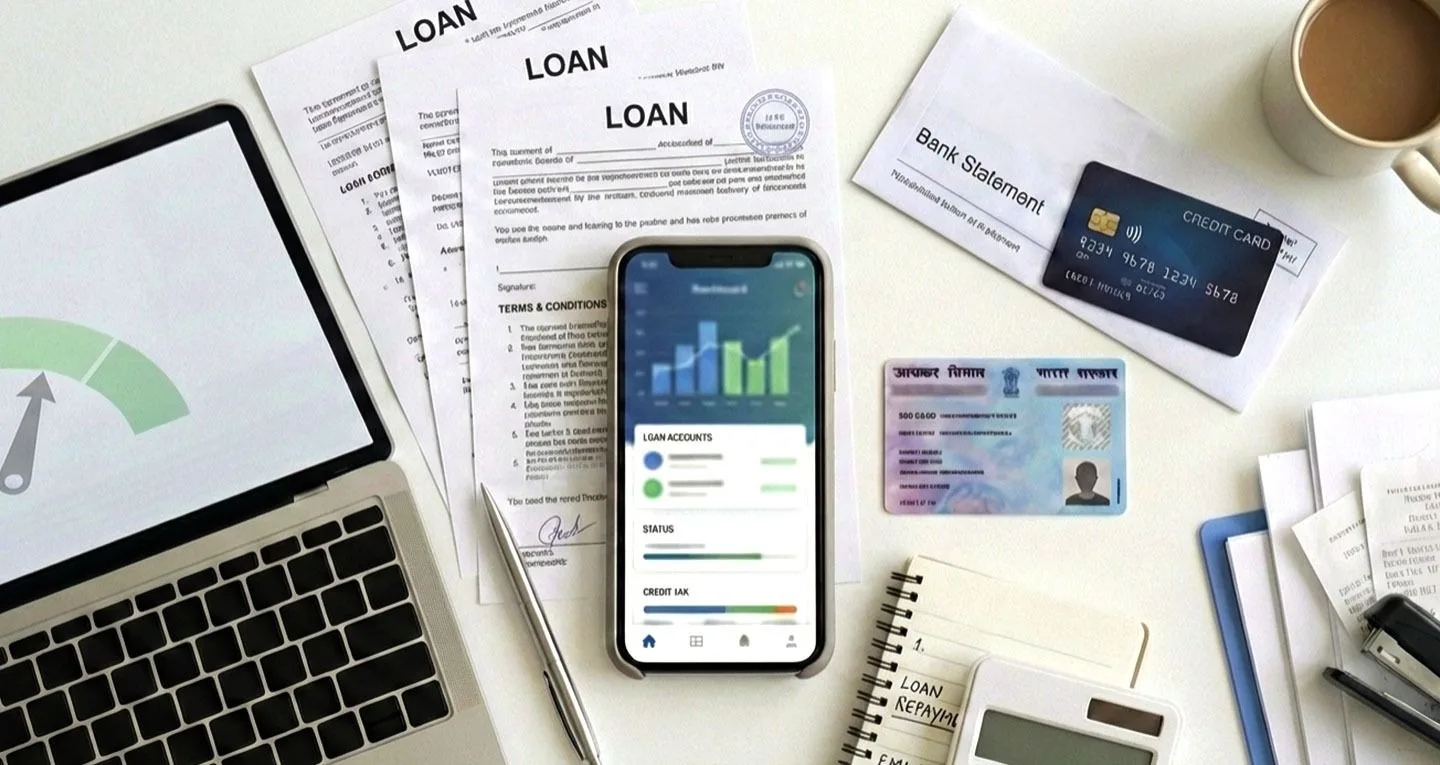
Consolidate All Debt Into One Loan: What to Know Before You Decide
To consolidate your debt into one loan generally means replacing multiple eligible debts, such as credit-card dues or personal loans, with a new loan and one EMI. Which debts qualify depends on the lender and the terms of the new facility. It may lower your monthly payment, particularly if the new loan has a longer repayment tenure. It doesn't automatically lower your total cost. A longer tenure (loan duration) can shrink the EMI while quietly increasing the total interest you pay over the life of the loan, worth checking carefully before you decide.

Mohit Juneja
Reviewed by FREED India, Debt Resolution Specialists
 4.7/5
 ₹3,200Cr+
 20,000+
 20,00,000+4.7/5₹3,200Cr+20,000+20,00,000+
KEY TAKEAWAYS

Consolidating all your eligible debt into one loan combines multiple EMIs into one, usually at a lower monthly payment.
A lower EMI and a lower total cost aren't the same thing. A longer tenure can shrink the EMI while raising the total interest paid.
Consolidation restructures how you repay debt. It doesn't reduce how much you owe.
The decision is only worth it if the new blended rate (the average interest rate across everything you currently owe) is genuinely lower than what you're paying now, combined.
Since October 2024, the RBI requires a Key Facts Statement (a standard disclosure form, called KFS) before you sign, so the true cost is shown upfront, not buried in the EMI number alone.
What Does It Mean to Consolidate All Your Debt Into One Loan?
To consolidate all debt into one loan means taking a single new loan that pays off every eligible debt you're currently carrying, so you're left with one EMI instead of several. It's worth being clear about one thing early: this isn't about reducing what you owe. It's about restructuring how you pay it back.
The mechanics are simple. A new loan replaces your existing debts. You get one lender, one EMI, one due date, instead of juggling three or four. Before you list out what you'd be consolidating, it helps to have an accurate picture of every active loan under your name, not just the ones you remember paying this month. If you're not fully sure what's currently open in your name, it's worth checking every active loan against your credit report before you approach a lender.
"All" here usually means all your eligible unsecured debt, credit cards, personal loans, BNPL balances, and similar. Secured loans like a home loan or a car loan work differently and generally aren't part of this kind of consolidation, that's a bigger topic on its own.
If the new loan has a lower EMI, the difference in monthly outgo is usually easy to see once the consolidation takes effect. The total cost question is easy to miss entirely, and it's worth understanding why before you sign anything.
Why This Decision Deserves More Thought Than It Gets
Seeing your monthly outgo drop from four payments to one, often at a smaller combined number, feels like relief. That relief can make the lower EMI feel more important than the total cost, which is why both figures should be compared. That's not carelessness. It's a natural pull toward the number that's easiest to see.
The EMI is the number printed largest on any offer you'll receive. The total cost over the full tenure requires you to actually do the multiplication, EMI times number of months, and that's a step most offers don't do for you and most borrowers don't do on their own.
A longer tenure is often presented as pure upside ("lower EMI!") without equally highlighting what it usually means: paying interest for longer. Both things can be true about the same offer. A lower EMI is real relief for your monthly budget. A higher total cost is a real number you'll pay over the years ahead. Neither cancels out the other, and only one of them shows up on the headline. If your loans are currently spread across several banks with different due dates, bringing them together under one payment is the part that feels good immediately, while the total-cost question is the part worth slowing down for.

Freed Expert Tip
Always compare total cost across the full loan tenure, not just the monthly EMI. A lower EMI and a lower total cost are not the same thing.
Run your own numbers through the Debt Calculator belowSigns You're Ready to Make This Decision
This isn't a checklist for whether you qualify for consolidation. It's a self-check for whether you're actually ready to evaluate an offer properly, rather than reacting to the first lower EMI you see.
You've calculated your current blended rate across all your existing debts, not just glanced at the one with the highest interest. Your blended rate is the effective average across everything you're paying now, and it's the number any new offer needs to beat. You can get a clearer read on where your credit profile stands, which affects the rate you're likely to be offered, through your EMI score.
You're comparing a specific offer's total cost, not just its EMI, against what you're currently paying. A generic "starting from" rate on a website isn't enough to decide anything.
You're current on your payments. This is a preventative move for people managing their debt, not a rescue plan for people who've already fallen behind.
You're planning to stop using the credit you free up. Consolidation clears your card limits and closes old loan accounts. If that freed-up credit becomes new spending room, the math you worked out stops applying to your real situation.
How to Actually Decide: A Step-by-Step Evaluation
This evaluation takes maybe 20 to 30 minutes with a calculator. It's arguably the single most valuable half hour in the entire decision, because it's the difference between choosing based on the EMI you're shown and choosing based on what you'll actually pay.
Step 1: Calculate your current blended rate
Work out the effective average interest rate across every existing debt you're considering consolidating. Add up what each debt is costing you in interest, weighted by how much you owe on each, to get one honest number for where you stand today.
Step 2: Get a specific consolidation offer
Obtain a real rate, tenure, and fee quote, not just an advertised "starting from" figure. Advertised rates may not be the rate you receive. Ask the lender for the rate, tenure, fees and other terms applicable to your specific application.
Step 3: Calculate the offer's total cost
Multiply the EMI by the number of months in the tenure. That single multiplication tells you the full amount you'll actually repay, not just the monthly figure that looks good on its own.
Step 4: Compare both totals side by side
Set your current total cost trajectory, what you'd pay if nothing changed, against the new offer's total cost. Compare the totals, not the EMIs.
Step 5: Decide based on total cost, not the EMI
Choose whichever option costs less overall while still fitting comfortably into your monthly budget. Both matter. Neither should be ignored in favour of the other.
For an idea of what the numbers can look like: Paisabazaar has published an illustration where four debts totalling roughly ₹4,55,000, with combined EMIs of about ₹24,821 a month, were consolidated into one loan at 11% p.a. over 48 months, bringing the monthly payment down substantially. These figures are illustrative, but even here, the trade-off holds: a longer 48-month tenure can mean paying more in total interest than a shorter tenure would, despite the lower EMI. That's exactly the trap worth understanding next.
If your numbers come out close between two offers, tenure length is usually what decides it. A shorter tenure at a similar or even slightly higher rate can still cost less overall than a longer one at a lower rate.

What the Law Says
Since October 1, 2024, the RBI requires every bank and NBFC to give borrowers a standardised Key Facts Statement (KFS) before signing a new retail loan. It shows the true APR and all fees, so the total cost of what you're signing up for is disclosed upfront, not hidden behind the EMI figure alone.
Ask your lender for your Key Facts StatementThe Trap Most People Miss: Lower EMI, Higher Total Cost
Here's the mechanic, plainly. A longer tenure can lower the monthly EMI because repayment is spread over more instalments. However, the additional months of interest can increase the total repayment amount. But because interest keeps accruing for longer, the total amount you pay over the full life of the loan can end up higher than a shorter tenure at a similar rate, sometimes even higher than what your original, separate debts would have cost you.
Take the same ₹4,55,000 example at an 11% rate, compared across two tenure lengths. Over 24 months, the EMI comes out considerably higher each month, but interest only accrues for two years, so the total interest paid stays relatively contained. Stretch the same loan to 48 months at the same rate, and the EMI drops noticeably, comfortable relief on paper, but interest now accrues for twice as long, and the total interest paid climbs well above the shorter-tenure total, even though nothing about the rate changed.
These are indicative figures for illustration. Run your own numbers through the calculator below with your actual principal, rate, and tenure options before deciding, since the exact difference depends on your specific offer.
One thing worth being clear about: this doesn't mean shorter is always better. If a shorter tenure's EMI is genuinely unaffordable for your monthly budget, it defeats the entire purpose of consolidating in the first place. This is a real trade-off between monthly affordability and total cost, not a simple rule that always points one way.
Once you understand this trade-off, you have two paths open to you: run this evaluation yourself for every offer you're considering, or get help weighing it against your specific situation.
What Are Your Options
Once you understand the total-cost trap, you have two reasonable ways forward.
The first is doing this evaluation yourself for every offer you're weighing. Calculate your current blended rate, get a real quote, multiply EMI by tenure, and compare totals, exactly as walked through above. It takes time and a working calculator, but it's entirely doable on your own, and nothing about it requires anyone else. If you'd rather track this alongside your other bills and repayment plans, a dedicated payoff tracker can help you keep the comparison organised as offers come in.
The second is a matched approach, where the evaluation itself, not just finding you a lender, accounts for your actual repayment capacity and total cost, rather than matching you to whichever offer shows the lowest advertised EMI. This outsources the calculation work to someone who does it as their job, at the cost of giving up some of the manual control.
Both are valid. The first asks more of your time. The second asks you to trust the process doing the evaluating.
How FREED Helps You Evaluate the Real Cost
FREED's Loan Consolidation Plan reviews your full debt picture and your actual repayment capacity, not just matching you to whichever offer has the lowest headline EMI. That distinction is the entire point of this article, and it's built into how FREED approaches the matching itself.
FREED reviews your debt and repayment profile and may match you with a lending partner based on applicable eligibility criteria and the terms available to you. The matched loan then pays off your existing eligible debts instantly. What you're left with is one loan, one EMI, and a tenure that was genuinely evaluated for total cost, not just picked for the lowest monthly number.
FREED charges a success-based fee, only when the consolidation is completed. And one thing worth knowing upfront: consolidating through FREED does not damage your CIBIL score. It tends to improve, since you move from multiple accounts and due dates to one loan paid on time.
FREED has counselled over 20,00,000 customers and managed more than ₹3,200 Cr in debt to date. Through the Loan Consolidation Plan, EMIs can be reduced by up to 50%, with interest rates starting from 11.99%.
Rates and savings figures shown are indicative and based on FREED's published terms. Final terms are decided by the lending partner. FREED is not a loan provider. No outcome is guaranteed. Please verify directly with your lender.
Are You in a Loan Trap? Quick Check
Move the slider to your total EMIs as a % of monthly salary. See your debt stress level instantly.
EMIs as % of Monthly Salary
Tips Before You Sign Anything
Compare total cost across the full tenure, not just the EMI, for every offer you're considering. The multiplication takes two minutes and changes how an offer actually looks.
Read the Key Facts Statement for the exact APR and all fees, not just the advertised headline rate. This is what the RBI now requires lenders to give you before you sign, specifically so the real cost isn't buried.
Check the prepayment and foreclosure terms. If your finances improve later and you want to pay off the consolidated loan faster, that should be possible without a heavy penalty eating into the benefit.
Confirm with yourself, honestly, that you're ready to stop using the credit you're freeing up. The math in this entire evaluation only holds if the debt doesn't creep back onto the cards and limits consolidation just cleared.

Sources
Claim | Source |
RBI requires a standardised Key Facts Statement (KFS) before signing a retail loan, effective October 1, 2024 | RBI Circular RBI/2024-25/18, "Key Facts Statement (KFS) for Loans & Advances," dated April 15, 2024. |

Mohit Juneja
Mohit Juneja writes educational content at FREED on debt management, credit scores, loan repayment, and borrowing best practices. His content is shaped by expert insights and industry knowledge, helping readers better understand their financial options and make informed decisions.
mohit.juneja@freed.care

FREED is India's trusted loan management platform. Founded in 2020 and headquartered in Gurugram, FREED has counselled 20 lakh+ people on personal loans, credit cards, and app loans. FREED charges fees only on successful settlement, not upfront. FREED does not handle secured loans (home loans, car loans, gold loans).
Media Mentions