Best Debt Payoff Tools: Apps, Trackers & Printable Worksheets Compared
A debt payoff tool, spreadsheet, printable worksheet, or app, helps you track every debt you owe in one place, apply a payoff method like snowball or avalanche, and see a projected debt payoff date based on your current balances, rates and planned payments.

Mohit Juneja
Reviewed by Shweta, FREED India's Debt Resolution Specialists
 4.7/5
4.7/5 ₹3,200Cr+
 20,000+
 20,00,000+4.7/5₹3,200Cr+20,000+20,00,000+
Key Summary

Debt payoff tools fall into a few broad categories, spreadsheets, printable worksheets, budgeting apps, and guided/professional tools, each suited to different situations.
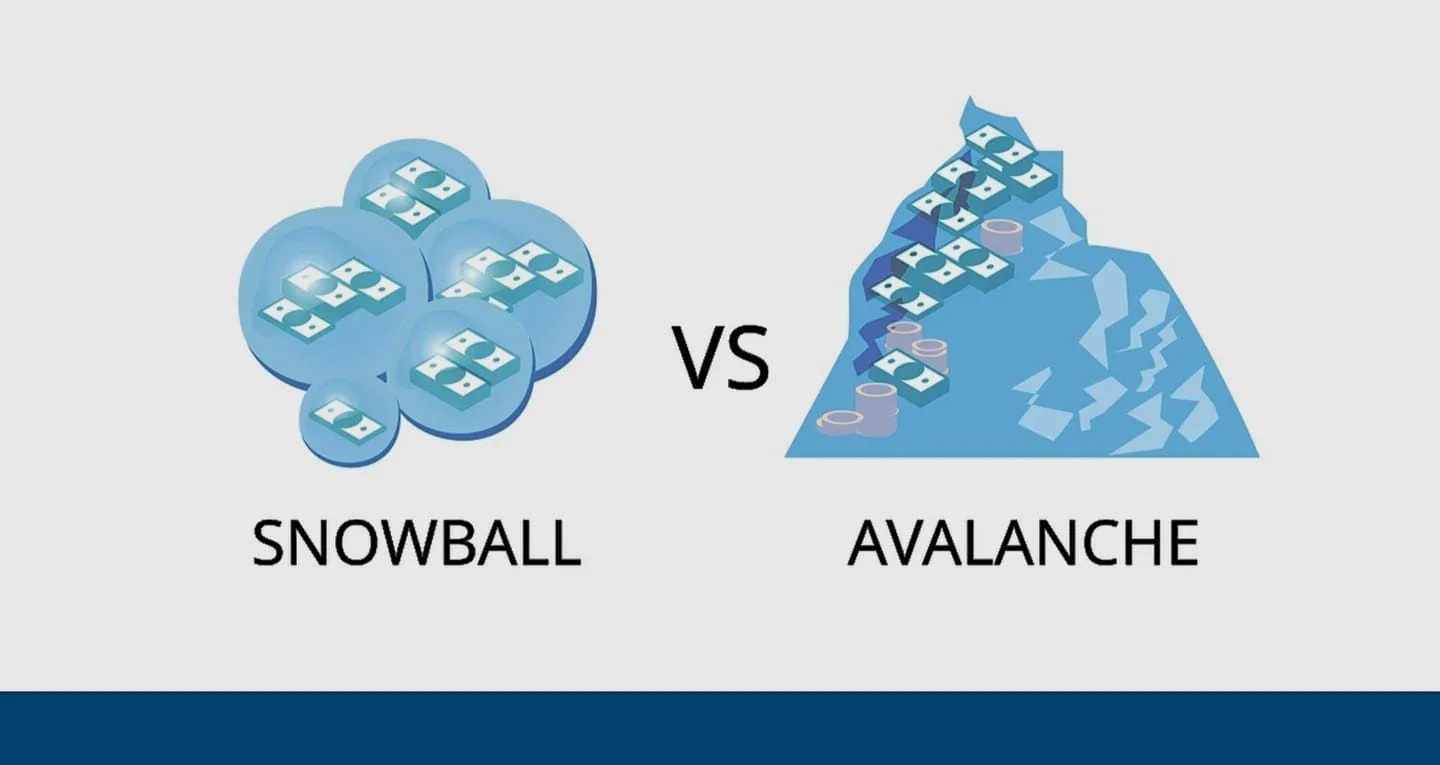
A good tool should track every debt in one place, show a realistic payoff date, and support either the snowball (smallest balance first) or avalanche (highest interest first) method.
Simple trackers work well when you're organising a handful of debts you're already paying, they stop being enough once the debts themselves are the problem, not just the tracking.
FREED's Debt Calculator shows what consolidating your debts into one lower EMI could actually look like, a different kind of tool for a different stage of the problem.
What Makes a Good Debt Payoff Tool?
Before comparing categories, it's worth being clear on what a tool actually needs to do to be useful, rather than just look impressive.
It should let you list every debt in one place, lender, balance, interest rate, and minimum payment. Scattered tracking, half remembered and half spread across separate apps, is the single most common reason people lose track of where they actually stand. The avalanche method prioritises higher-interest debts and can reduce total interest when you follow the plan consistently.
It should show a realistic projected payoff date, not just a running total that never quite resolves into anything concrete. A projected payoff date can make progress easier to visualise and track. And it shouldn't require handing over more financial access or data than the tool genuinely needs to do its job, a debt tracker doesn't need permissions a simple spreadsheet never asked for.
With those criteria in mind, here's how the main categories actually stack up against each other.

Expert Tip
Whatever tool you pick, the habit of updating it weekly matters more than which specific tool you chose. A simple tracker updated consistently beats a sophisticated one left untouched.
Talk to FREEDCategories of Debt Payoff Tools, Compared
Rather than comparing individual brands, it's more useful to compare the categories themselves, since the right one depends entirely on how you personally like to track things.
Spreadsheets (DIY). Fully customisable, free, and yours to shape however you want. The trade-off is that everything, updates, formulas, ranking, is manual. Best suited to people who are comfortable building their own simple formulas and want complete control over what the tracker shows.
Printable worksheets. No screen needed at all, and genuinely good for people who think better on paper or want a visual, physical reminder they actually see day to day. Nothing here auto-calculates, so it's the lightest-touch option of the four.
Budgeting or tracking apps, as a category. Many offer automatic transaction syncing and visual dashboards, which cuts down on manual entry considerably. Some apps offer automatic transaction syncing, which may require linking a bank account or card.
Guided or professional tools. These sit inside a debt resolution or consolidation service, and they're a genuinely different category from pure tracking. Rather than just showing what you owe, they show what actually changes if the debt itself gets restructured.
The practical guidance here: categories one through three are for organising and motivating repayment of debts you're already managing on your own terms. Category four matters once tracking alone has stopped being enough to solve the underlying problem, a distinction worth sitting with honestly before picking a tool
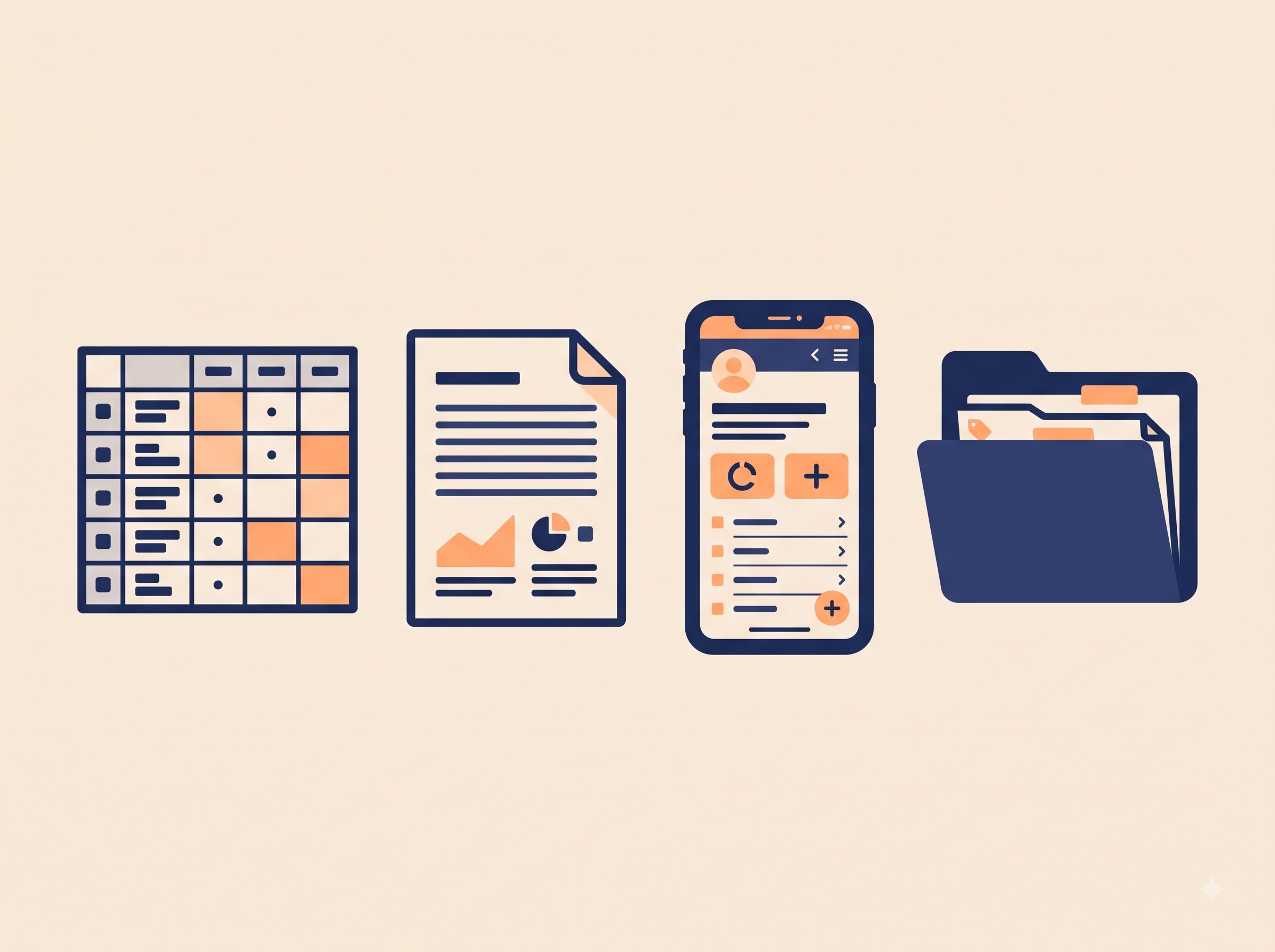
Build Your Own Debt Payoff Spreadsheet
A genuinely useful debt tracker doesn't need to be complicated, but it does need the right columns to actually do its job.
- Lender name
- Original balance
- Current balance
- Interest rate
- Minimum payment
- Extra payment (if any, this month)
- Payoff order, ranked by whichever method you're using
- Projected payoff date
The payoff order column is where your chosen method actually lives. For snowballs, sort by current balance, smallest first. For avalanche, sort by interest rate, highest first. The fuller comparison between the two methods is worth reading if you haven't picked one yet, since the ranking logic is genuinely different depending on which you choose.
Even a basic version of this, built in any spreadsheet tool you already have, updated monthly rather than daily, is enough to see real progress and stay motivated through the months it takes.
Printable Debt Payoff Worksheets
A printable worksheet carries the same core information as the spreadsheet, just formatted for paper, a debt list table alongside a simple visual, a payoff thermometer or a grid of boxes to colour in as balances shrink.
This genuinely suits people who find a physical, visible tracker, stuck on a fridge or kept in a planner, more motivating than anything living on a screen they can swipe past unread. The trade-off is straightforward: no auto-calculation, ranking and updates are entirely manual. It's worth pairing this with a simple monthly ten-minute review habit, rather than trying to update it daily, since daily updates on a paper tracker tend to fall away fast.
When a Simple Tracker Isn't Enough
A handful of signs suggest tracking alone has reached its limit, and something structural needs to change instead.
You're tracking multiple debts but the total keeps growing rather than shrinking, despite genuinely following your plan month after month.
You're juggling so many separate lenders that even a good spreadsheet feels overwhelming just to maintain, let alone act on.
Your minimum payments alone are consuming most of your available income, leaving nothing for the "extra payment" column any tracker quietly assumes you have.
You've been using a tracker for months with no meaningful progress. That's a real signal the debt itself needs restructuring, not better tracking of the same numbers. What loan consolidation actually involves is worth reading at this point, before deciding whether a tracker upgrade or a structural change is what you actually need.
This is exactly where a different kind of tool comes in.

Tracking Isn't Moving the Needle?
Get a free, honest read on your full debt picture.
Get a Free AssessmentFREED's Debt Calculator: What It Actually Shows You
Unlike a spreadsheet or worksheet, which tracks debts you're already paying down as-is, FREED's Debt Calculator shows what changes if the debt itself gets restructured, a genuinely different kind of question than any tracker above answers.
Entering your current EMIs and lenders shows an estimated combined debt service now, side by side against what a single consolidated loan could look like instead. Worth being plain that this is a planning tool, not an application, using it doesn't commit you to anything at all, it just shows you the comparison.
It's the natural next step for someone who has already used a tracker, seen the totals clearly laid out, and now wants to know what an actual structural change, not just better tracking of the same numbers, could realistically do for their situation.

How FREED Helps Beyond Tracking?
For readers whose tracker has confirmed what they already suspected, several unsecured EMIs and cards adding up to more than the household can comfortably manage, there's a direct next step beyond just watching the same numbers.
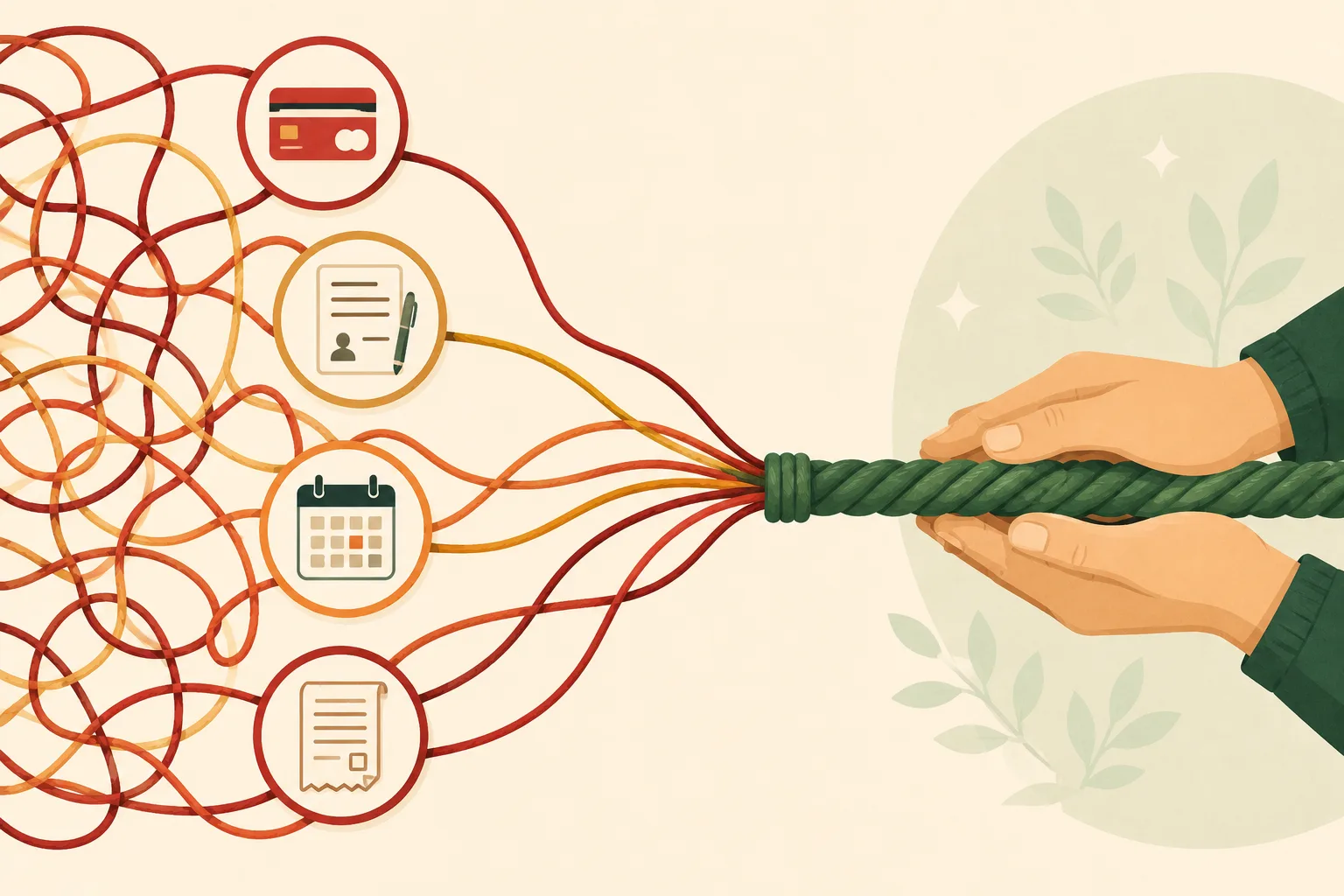
FREED's Debt Consolidation Program combines those debts into one new loan at one lower monthly payment, replacing the multi-line spreadsheet you've been maintaining with a single account to track going forward. The different types of consolidation loans and where each fits is worth a read if you're weighing how this compares to a DIY balance transfer. For genuine, sustained inability to repay even a consolidated amount, FREED's Debt Resolution Program is the separate, later-stage path built for that specific situation instead.
One Lower EMI Instead of a Long List
See if consolidation fits your numbers.
Check My Consolidation OptionsTips for Sticking With Whichever Tool You Choose
A few habits matter more than the specific tool you end up picking.
Pick the simplest tool you'll actually keep updating, not the most feature-rich one you'll abandon after two weeks.
Set a fixed weekly or monthly review time rather than relying on remembering to check in whenever it crosses your mind.
Track interest paid alongside the remaining balance so you can see the cost of borrowing as well as your outstanding debt.
Revisit your method, snowball versus avalanche, if your motivation or your numbers change. Neither is fixed once chosen, and switching for a good reason isn't a failure.
Treat a tracker as a starting point, not a verdict. If it shows the numbers genuinely aren't moving, that's useful information worth acting on, not a personal failure to fix by trying harder at the same approach.
Expert Tip
Whichever tool you land on, revisit it after 60-90 days and ask honestly whether the numbers are actually improving, not just whether you're using the tool.
Check My Credit Score
Mohit Juneja
Mohit Juneja writes educational content at FREED on debt management, credit scores, loan repayment, and borrowing best practices. His content is shaped by expert insights and industry knowledge, helping readers better understand their financial options and make informed decisions.
mohit.juneja@freed.care

FREED is India's trusted loan management platform. Founded in 2020 and headquartered in Gurugram, FREED has counselled 20 lakh+ people on personal loans, credit cards, and app loans. FREED charges fees only on successful settlement, not upfront. FREED does not handle secured loans (home loans, car loans, gold loans).
Media Mentions