Debt Consolidation Loans: Types, pros and cons and ideal situations
Simplify debt management with consolidation loans. Learn how to combine high-interest debts into one manageable payment, lower rates, & regain financial control.
Mohit Juneja
Reviewed by FREED India, Debt Resolution Specialists
 4.7/5
4.7/5 ₹3,200Cr+
 20,000+
 20,00,000+4.7/5₹3,200Cr+20,000+20,00,000+
Key Takeaways

The three main types of debt consolidation loans are personal loans, balance transfer cards, and secured loans like LAP (loan against property).
Personal loans need no collateral but usually carry a higher rate than secured options.
Balance transfer cards offer low or 0% promotional rates, but only for a limited window.
A home equity loan or LAP has lower rates but puts the property at risk if payments are missed.
Consolidation restructures debt; it doesn't erase it. The borrower still has to repay the full amount.
What Are the Types of Debt Consolidation Loans?
A debt consolidation loan means taking a new loan to pay off several existing debts at once, so only one payment remains each month to a single lender. This genuinely helps people juggling multiple credit card balances, personal loans, or other unsecured debts spread across different due dates. The main advantage is straightforward: the new loan may carry a lower interest rate and a clearer repayment schedule, which makes staying on top of payments considerably easier than managing several accounts separately.
Here's the part worth stating plainly, since it gets lost in the appeal of "one payment instead of many": consolidation restructures debt; it does not reduce or erase what's owed. The total amount you need to repay doesn't shrink just because it's now sitting under one loan instead of several. You still need a real plan to actually pay it off. Consolidation makes that plan easier to execute; it doesn't replace the need for one.
Three main types cover almost every consolidation situation: unsecured personal loans, balance transfer credit cards, and secured options like a home equity loan or a loan against property. Each fits a different financial situation, and picking the one that doesn't match your actual circumstances can end up costing more than staying with the original debts would have. The sections below walk through each one, what it actually involves, and who it tends to suit.

Personal Loans for Debt Consolidation
This is one of the most popular ways to consolidate debt, and for good reason. Banks, NBFCs, and online lenders all offer personal loans, and you can use one to pay off high-interest debts like credit card balances or smaller personal loans in one go. Since these loans are unsecured, they don't require any collateral, which is exactly what makes this route available to a wide range of borrowers who don't own property or other assets to pledge.
The typical use case here is straightforward: someone carrying balances across two, three, or more credit cards, or juggling a couple of smaller personal loans, folds all of it into one new unsecured EMI. Instead of tracking several due dates and several interest rates, there's a single payment and a single schedule to manage going forward.
What actually determines the rate you get on this route comes down to your own profile; generally, a stronger CIBIL score and stable income put you in a better position for a competitive rate, though exact terms vary by lender and aren't something any lender guarantees upfront. Working through the actual rupee math of consolidating this way, rather than assuming it's automatically cheaper, is worth doing before committing, since the benefit depends heavily on the rate you're actually offered compared to what you're currently paying across your existing debts.
No collateral needed is genuinely the standout advantage here, worth keeping front and center when weighing this against the secured option covered further down.
Balance Transfer Credit Cards
Some credit cards offer a balance transfer option, letting you move balances from other high-interest cards onto this one card at a lower promotional interest rate. In some cases, that promotional rate runs as low as 0% for a limited number of months.
Here's the caution worth taking seriously, not treating as a minor footnote: that promotional rate is temporary, and it exists for a fixed window, not indefinitely. A balance that isn't cleared before that window closes usually reverts to the card's standard rate, which can end up higher than what you were originally paying on the debt you transferred in the first place. This is the single most common way this option backfires, not because the mechanism is flawed, but because the deadline gets missed.
This route fits best when you're consolidating one or two card balances, not several scattered debts spread across multiple lenders. It works well specifically because it rewards a borrower who's disciplined enough to actually clear the balance within the promotional window; someone managing more debts across more lenders is generally better served by one of the other two options covered in this piece.
Self-discipline really is the deciding factor here, more than anything else about the product itself. The mechanics are simple; the outcome depends entirely on whether the balance actually gets cleared before the clock runs out.

FREED Expert Tip
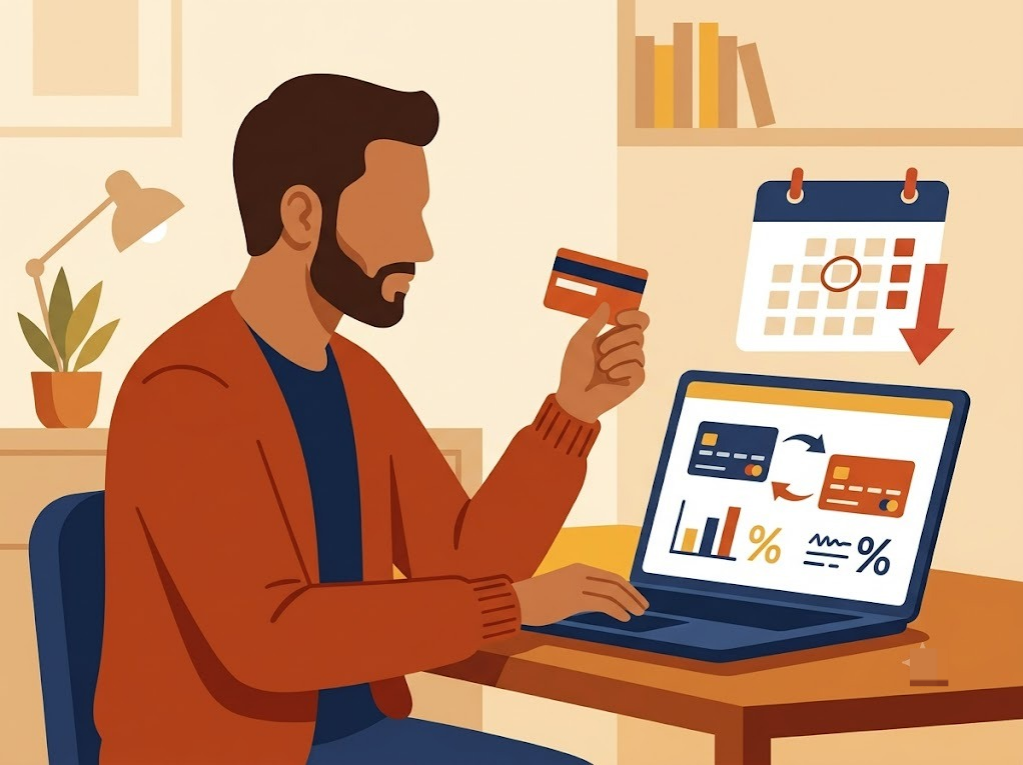
If you're using a balance transfer card, mark the promotional end date on a calendar the day you get it. Missing that date is the single most common way this option backfires.
Compare your consolidation optionsHome Equity Loan or Loan Against Property
For anyone who owns property, a home equity loan or a loan against property (LAP) is another consolidation route worth knowing about. These are secured loans, backed by the property itself, which is exactly why interest rates on this route tend to run lower than what an unsecured personal loan would charge for the same amount.
That lower rate comes with a genuine trade-off, and it deserves to be treated as a real decision factor, not a small caveat tucked at the end of a paragraph. If repayments remain unpaid, the lender may eventually take recovery action against the property used as collateral. This isn't a minor risk sitting in the fine print; it's the central thing to weigh honestly before choosing this route over an unsecured alternative.
The typical use case here is larger consolidation amounts, situations where the lower secured rate meaningfully offsets the added risk, enough that the interest savings genuinely justify putting the property on the line. For smaller consolidation amounts, the risk usually isn't worth taking on when an unsecured personal loan or a balance transfer card could handle the same debt without any collateral at stake.
Anyone considering this path is worth sitting with the worst-case scenario honestly before signing anything, not just the best-case interest savings the lower rate promises on paper.
Comparing the Three Types Side by Side
Type | Collateral Needed | Rate Range | Best For |
Personal loan | None | Higher than secured options | Multiple smaller unsecured debts, no property to pledge |
Balance transfer card | None | Low or 0% promotional, then reverts | One or two card balances, disciplined payoff before the window ends |
Home equity loan / LAP | Property | Lower than personal loans | With larger consolidation amounts, the borrower is comfortable with the collateral risk |
Rates and ranges shown are indicative. Final terms decided by the bank. FREED is not a Loan Provider. No outcome is guaranteed. Please verify directly with your bank.
Three factors mostly decide which type actually fits a given situation. Collateral availability comes first; if property isn't on the table, the choice narrows immediately to personal loans or a balance transfer card. Urgency matters too; a balance transfer card moves fast for one or two balances, while a personal loan or secured loan typically takes a bit longer to process and disburse. And how many separate debts are actually being combined shapes the decision as much as anything else. A balance transfer card handles one or two balances well, but starts to strain once more than that needs to be consolidated into a single card.
None of these three is universally better; each is built for a different starting situation, and matching the type to your actual circumstances matters more than picking whichever one sounds cheapest on paper.
Are You in a Loan Trap? Quick Check
Move the slider to your total EMIs as a % of monthly salary. See your debt stress level instantly.
EMIs as % of Monthly Salary

When Is Debt Consolidation a Good Option?
Consolidation tends to make sense when a few specific conditions line up together, worth checking against your own situation rather than assuming it universally applies.
- A borrower is carrying multiple debts at high interest rates, especially credit cards or unsecured loans.
- A genuinely lower interest rate is available than what's currently being paid across those debts, making consolidation actually cheaper rather than just simpler.
- Steady income means a single monthly payment is affordable without risking a missed EMI.
- A fixed, predictable repayment schedule would replace the confusion of tracking several separate debts.
On the other hand, if someone genuinely can't make any payments at all right now, consolidation isn't the right tool for that situation. A new loan still requires repayment, and taking one on without the ability to service it just adds a new obligation on top of existing ones rather than solving anything. In that case, credit counseling or debt settlement is the more appropriate next step to explore; consolidation is built for someone who can still repay, just needs a better structure to do it in.
Getting this right takes a bit of honest self-assessment. Comparing actual loan offers, checking whether the numbers genuinely work out cheaper, and being realistic about whether a single payment is truly more manageable than the current setup all matter more than the general appeal of "one payment instead of many." None of this needs to be figured out alone either; comparing offers and running the actual numbers is exactly the kind of groundwork worth doing before committing to any specific route.

One Loan, One EMI, No More Juggling
See if FREED's Debt Consolidation Program fits your situation.
Start My Free AssessmentCommon Myths About Debt Consolidation
A few misconceptions about consolidation come up often enough to address directly.
Myth: Consolidation erases debt. It doesn't; it restructures how you repay it. The total amount owed doesn't shrink just because it's now sitting under one loan instead of several; you still need to actually pay it off.
Myth: Consolidation always hurts your CIBIL score. Not necessarily. The impact depends on factors such as repayment behaviour, credit utilisation, and the new credit enquiry. Closing out several accounts properly through one new loan, rather than letting them sit as multiple ongoing obligations, tends to work in your favor over time rather than against you.
Myth: Any lender offering consolidation is basically the same. Rates, fees, and terms vary meaningfully between lenders; comparing a few options rather than accepting the first offer is genuinely worth the extra effort it takes.
Myth: Consolidation is only for people in serious financial trouble. It's equally useful for someone simply juggling too many due dates with an otherwise stable income; this isn't a last-resort tool reserved only for distress; it's a structural fix that works just as well for someone who's current on everything but tired of tracking five different payments.
The fuller myth-busting picture is worth reading if any of these misconceptions sound familiar from your own thinking.
For a reader who's decided consolidation genuinely fits their situation, the practical next step is knowing exactly how FREED's own program handles this process, which is covered next.
How FREED Helps With Debt Consolidation
FREED's Loan Consolidation Plan, also known as the Debt Consolidation Program, is built for people who can still repay but need a smarter way to manage multiple loans, not the DIY route of shopping for personal loan lenders yourself.
Here's how it works. FREED assesses your full financial profile, then matches you to a suitable lending partner from its network. That lending partner disburses one new loan that pays off all your existing eligible loans instantly. What's left afterward is one loan, one EMI, one due date.
This is worth distinguishing clearly from the personal-loan-for-consolidation route covered earlier in this piece. With FREED, the matching and process are handled directly; you don't have to shop for lenders, compare offers, or navigate applications on your own. That legwork is done as part of the assessment.
On the credit side, consolidation can affect your score in different ways
, since existing accounts close out properly rather than continuing as multiple separate obligations.
One important scope note worth being upfront about: FREED does not handle secured loans, home loans, car loans, gold loans, or loans against property among them. If a home equity loan or LAP, covered earlier in this piece, is the route that fits your situation, that falls outside what FREED's own program offers and would need to be pursued directly with a bank or lender offering that specific product.
For someone weighing all three types covered in this piece, that scope distinction matters. FREED's own program specifically addresses the unsecured side of consolidation, the personal loans and card balances most people are actually juggling, rather than the secured route that requires property as collateral.
The fee is success-based, charged only once consolidation actually completes, nothing if it doesn't.

Mohit Juneja
Mohit Juneja writes educational content at FREED on debt management, credit scores, loan repayment, and borrowing best practices. His content is shaped by expert insights and industry knowledge, helping readers better understand their financial options and make informed decisions.
mohit.juneja@freed.care

FREED is India's trusted loan management platform. Founded in 2020 and headquartered in Gurugram, FREED has counselled 20 lakh+ people on personal loans, credit cards, and app loans. FREED charges fees only on successful settlement, not upfront. FREED does not handle secured loans (home loans, car loans, gold loans).
Media Mentions











