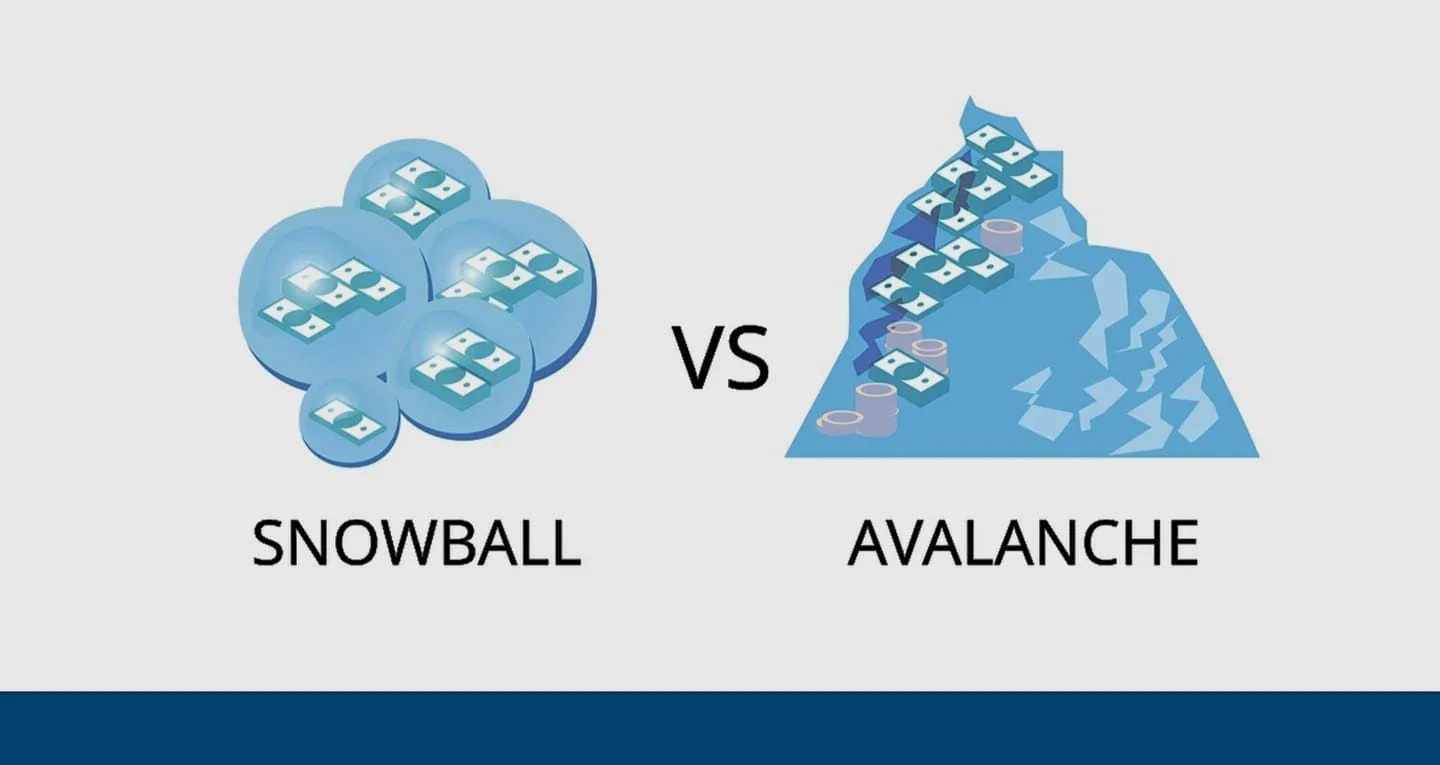
Snowball Method vs Avalanche Method
The Snowball and Avalanche methods are widely used to structure repayments towards debt in order to become debt-free. The strategy will differ depending on your personal financial situation,
Mohit Juneja
Reviewed by FREED India, Debt Resolution Specialists
 4.7/5
4.7/5 ₹3,200Cr+
 20,000+
 20,00,000+4.7/5₹3,200Cr+20,000+20,00,000+
Key Takeaways

Snowball method clears the smallest balance first, regardless of interest rate. Built for motivation, not maths.
Avalanche method clears the highest-interest debt first. Mathematically, it saves the most money over the full payoff.
Both methods need the same foundation: minimum payments on every debt, on time, with all surplus redirected to one target debt at a time.
The classic versions of both methods require some surplus after minimum payments. That's a debt-load problem, not a strategy problem.
RBI's Pre-payment Charges on Loans Directions, 2025 restrict prepayment charges in specified cases involving floating-rate loans to individuals for non-business purposes. Whether the rule applies to your loan depends on the loan type, borrower and lender. Check your loan agreement and the applicable RBI rules before prepaying.
RBI's Pre-payment Charges on Loans Directions, 2025 restrict prepayment charges in specified cases involving floating-rate loans to individuals for non-business purposes. Whether the rule applies to your loan depends on the loan type, borrower and lender. Check your loan agreement and the applicable RBI rules before prepaying.
What Is the Snowball Method?
The snowball method is a debt repayment strategy where you pay off your debts in order from the smallest balance to the largest balance, regardless of the interest rate attached to each debt.
Here is how it works in practice.
You list all your debts from smallest outstanding balance to largest.
You pay the minimum due on every debt except the smallest one.
On the smallest debt, you pay as much as you possibly can every month, throwing every available rupee at it.
When the smallest debt is fully cleared, you take the money you were paying on it, the minimum plus the extra, and add it all to the payment on the next smallest debt.
This is the snowball effect. Each time a debt is cleared, the monthly amount available for the next debt grows. The payment grows in size as it rolls down the list, like a snowball picking up mass as it rolls downhill.
What Is the Avalanche Method?
The avalanche method flips the order. List every debt from highest interest rate to lowest. Ignore the balance size. Pay the minimum on everything, and throw every extra rupee at the highest-interest debt until it clears.
Once that debt is gone, roll its full payment into the next highest-interest debt. Repeat until everything is cleared. In India, this usually means credit card debt goes first, since cards commonly carry 36 to 42% annual interest, far above most personal loans or vehicle loans.
The logic here is pure maths. Every rupee applied to your most expensive debt stops the most expensive compounding first. Assuming identical total payments, your total interest paid across the full payoff ends up lower than snowball's.
That said, avalanche isn't automatically "better." It's mathematically cheaper, not universally more effective. A plan abandoned halfway saves nothing at all, no matter how well it was ordered on paper. Here's what that actually looks like with real numbers.
A Worked Example: Snowball vs Avalanche Side by Side
Take three debts. Debt A: ₹15,000 at 14% interest, minimum ₹800. Debt B: ₹60,000 at 22% interest, minimum ₹2,500. Debt C: ₹1,50,000 at 18% interest, minimum ₹5,000. You have ₹3,000 in monthly surplus to put toward extra payments.
Snowball order (smallest balance first): A, then C, then B.
Every extra ₹3,000 goes to Debt A first. At ₹800 minimum plus ₹3,000 extra, that's ₹3,800 a month against a ₹15,000 balance, so A clears in about 4 months. Once A is gone, its full ₹3,800 rolls into Debt C, alongside C's own ₹5,000 minimum, giving Debt C ₹8,800 a month.
Avalanche order (highest interest first): B, then C, then A.
Every extra ₹3,000 goes to Debt B first, since it carries the highest rate at 22%. At ₹2,500 minimum plus ₹3,000 extra, that's ₹5,500 a month against ₹60,000, so B takes longer to clear than A did under snowball, since the balance is bigger. But every month that money sits on B, it's stopping the most expensive interest in the group from compounding.
The honest trade-off: snowball clears Debt A fast for an early win within months. Avalanche stops the 22% compounding on Debt B first, saving more total interest over the full payoff, but takes longer to produce that first "cleared" debt feeling. If you want to see how this fits into a full plan rather than just payoff order, the complete guide to debt management plans covers the bigger picture.
Which Method Should You Use?
There's a genuine way to decide this, not a coin flip.
Use avalanche if the interest rate gap between your debts is large, say a 40% credit card sitting next to a 14% personal loan, and you have a track record of sticking to plans even without early visible wins.
Use snowball if you've tried a repayment plan before and abandoned it from lack of visible progress, or if you have several small debts that can genuinely clear within a few months.
Here's the practical test. If it will take 8 to 10 months before your first debt clears under avalanche, will you honestly still be following the plan at month 4? If yes, avalanche fits you. If probably not, snowball fits you better.
There's also a hybrid option. Clear one very small debt first for an early win, then switch to avalanche logic for the rest. Neither method is objectively correct here. It depends on you, not the maths alone. If a lower combined EMI would free up more surplus either way, how loan consolidation works is worth a read before you pick.

Get a Clear Picture Before You Decide
Free Experian based report, shows exactly what's holding your score back.
Check My DebtsWhat You Need Before Either Method Works
Both methods share the same foundation underneath them. Miss this, and neither one works.
- Pay the minimum on every single debt, every month, without exception. Both methods only touch the surplus above minimums. Miss a minimum and you're not doing snowball or avalanche anymore, you're just falling behind.
- Know your exact numbers. Every outstanding balance, every rate, every minimum, written down in one place. A lot of people are genuinely surprised by the real total once they see it laid out clearly.
- Find your real extra repayment capacity. Review last month's actual spending. Even ₹1,000 to ₹2,000 a month makes a real difference once it's compounded over a full payoff.
- Automate every minimum payment. Set up auto-pay so a forgotten due date never derails months of progress.
- Stop taking new debt during the payoff. Both methods are a closed system. New debt reopens it, and you're back to square one.
A missed minimum breaks the method's maths, not your character. It's a mechanical failure, not a personal one, and it's fixable the same month it happens.

Freed Expert Tip
Celebrate every debt cleared, genuinely, not extravagantly. Tell someone. Write it down. The reward is part of why the method works, not incidental to it.
Check your optionsDoes Paying Off a Loan Early Cost Extra in India?
Not anymore, for most people. From January 1, 2026, RBI's Pre-payment Charges on Loans Directions, 2025 bar all prepayment or foreclosure charges on floating-rate loans taken by individuals for non-business purposes. This applies regardless of where the extra money came from or whether there was a lock-in period.
This covers most personal loans, since most personal loans in India are floating-rate retail products. Where the RBI rule applies, the lender cannot levy the covered prepayment or foreclosure charge. Check your loan terms for any other applicable costs.
Fixed-rate loans are the exception. This ban doesn't cover them, so a bank or NBFC can still charge a foreclosure fee on a fixed-rate loan. Check your loan agreement or sanction letter before aggressively paying one down, just to be sure. With that cleared up, here's what tends to go wrong even with a good strategy.

What the Law Says
From January 1, 2026, RBI bars all prepayment charges on floating-rate loans held by individuals for non-business purposes, no matter the source of funds or lock-in period.
Talk to FREED's TeamWhen Neither Method Works
Both methods assume there's surplus left after minimum payments. When minimums alone consume your entire income and there's nothing left over, that's not a strategy problem. It's a debt-load problem, and no repayment order fixes a load that's mathematically too heavy.
As a practical warning indicator, FREED uses an EMI-to-income ratio of around 50%, but there is no universal threshold that defines when a debt load becomes unmanageable. In that case, the fix is reducing your total monthly obligation first.
If you can still service your debt with a lower combined EMI, consolidation addresses this directly. Only for genuine inability to repay at all does settlement come into the picture, as a last-resort structured path. Settlement is not something a borrower chooses out of preference. It's for people who genuinely cannot repay, not a shortcut for people who'd rather not follow a payoff order. If you want to understand exactly where that line sits, debt management plan vs debt settlement walks through the difference.
How FREED Helps When a Repayment Strategy Alone Isn't Enough
If you're still repaying but juggling too many separate EMIs for any payoff order to feel manageable, FREED's Debt Consolidation Program, called Reduce My EMI, exists for exactly this.
Here's how it works. FREED assesses your full financial profile. It matches you to a lending partner from its network. That lending partner disburses a new loan that instantly pays off your existing eligible unsecured debt, credit cards, personal loans, and similar. You're left with one repayment arrangement and, where approved on suitable terms, potentially a lower combined EMI. Consistent, on-time repayment of the new loan can help strengthen your credit profile over time. FREED only charges its success-based fee once consolidation is actually completed.
For the smaller group of readers whose situation has moved past "which order should I pay these in" into genuine inability to repay anything at all, FREED's Debt Resolution Program, called Settle My Loans, is a separate, structured last-resort path. You save into a dedicated account, FREED negotiates with each bank once enough corpus builds, and you authorise every settlement yourself. Settlement can result in a ‘Settled’ status on your credit report, which may affect how lenders assess future credit applications. For the full mechanics, loan settlement meaning, process, and CIBIL impact covers it in detail.
Sources
Claim | Source |
From January 1, 2026, RBI bars all prepayment/foreclosure charges on floating-rate loans held by individuals for non-business purposes | RBI Pre-payment Charges on Loans Directions, 2025 (https://www.rbi.org.in/Scripts/NotificationUser.aspx?Id=12878&Mode=0) |
Indian credit card interest typically runs 36-42% annually | Industry consensus across major card issuers, cited for context only |
Journal of Consumer Research finding on individual debt elimination and motivation | Writer to verify exact citation before publishing, commonly cited but not always sourced |
EMI burden danger threshold, 50% of take-home salary | FREED's internal guidance figure |
Settlement "Settled" mark visible up to 7 years | Credit bureau standard, Credit Information Reporting Directions |

Mohit Juneja
Mohit Juneja writes educational content at FREED on debt management, credit scores, loan repayment, and borrowing best practices. His content is shaped by expert insights and industry knowledge, helping readers better understand their financial options and make informed decisions.
mohit.juneja@freed.care

FREED is India's trusted loan management platform. Founded in 2020 and headquartered in Gurugram, FREED has counselled 20 lakh+ people on personal loans, credit cards, and app loans. FREED charges fees only on successful settlement, not upfront. FREED does not handle secured loans (home loans, car loans, gold loans).
Media Mentions