Disadvantages of Debt Consolidation
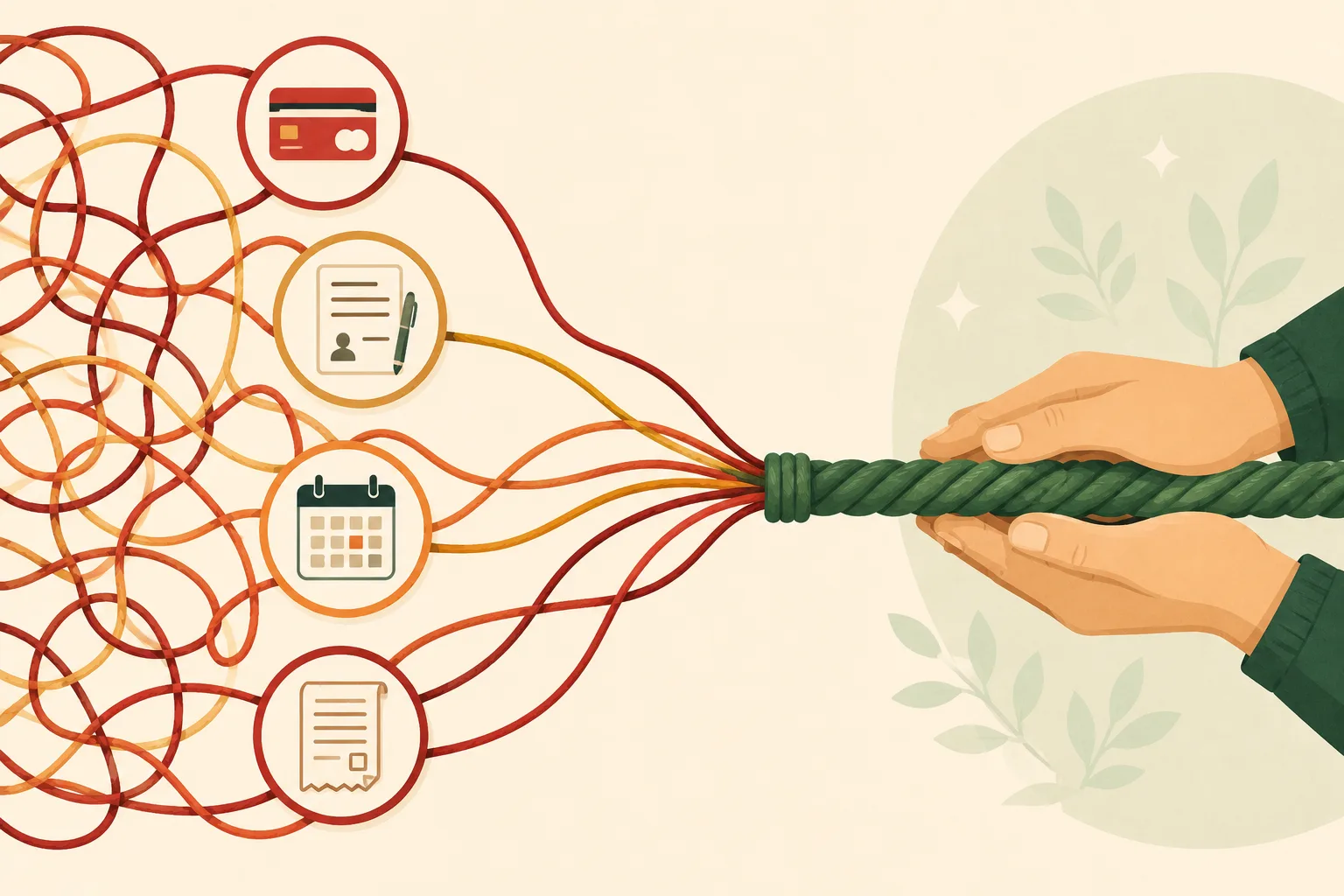
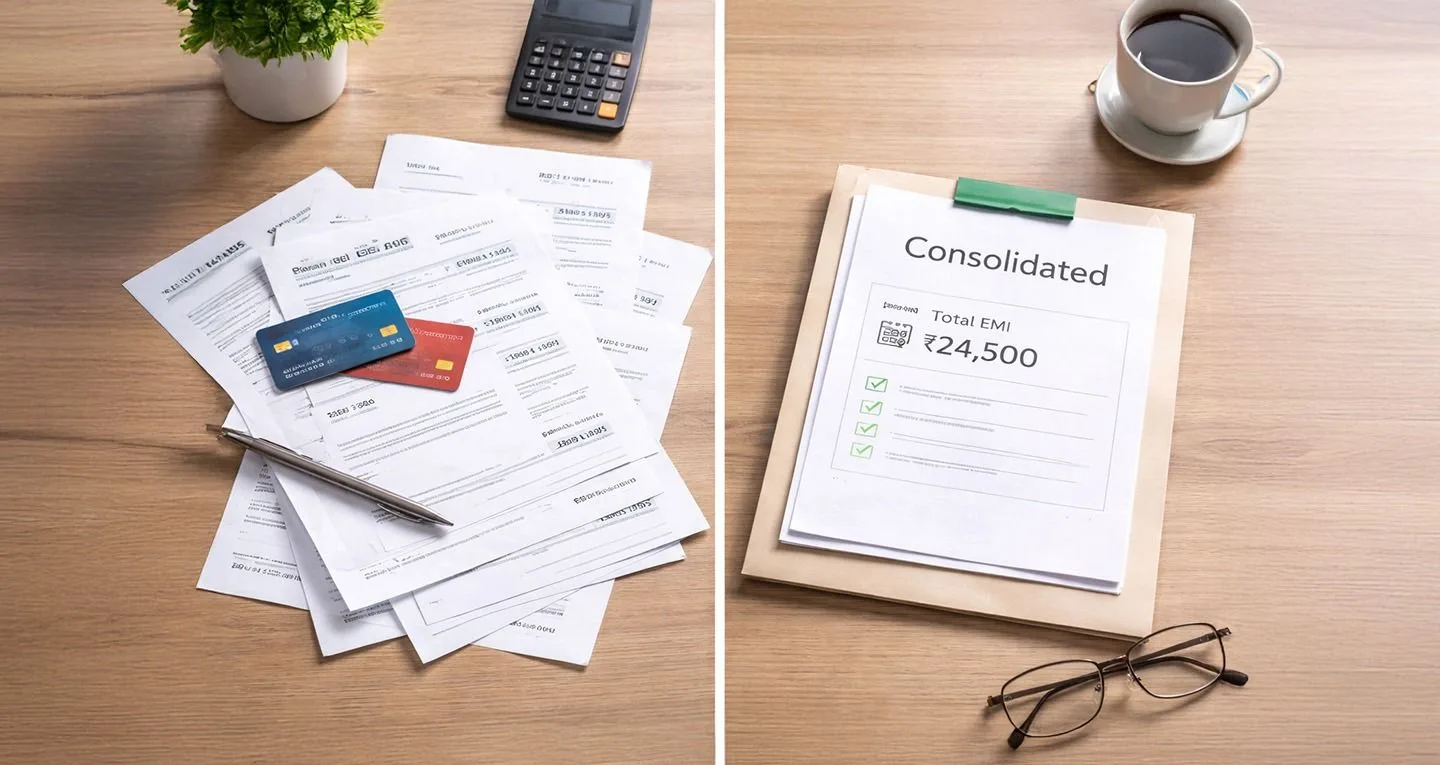
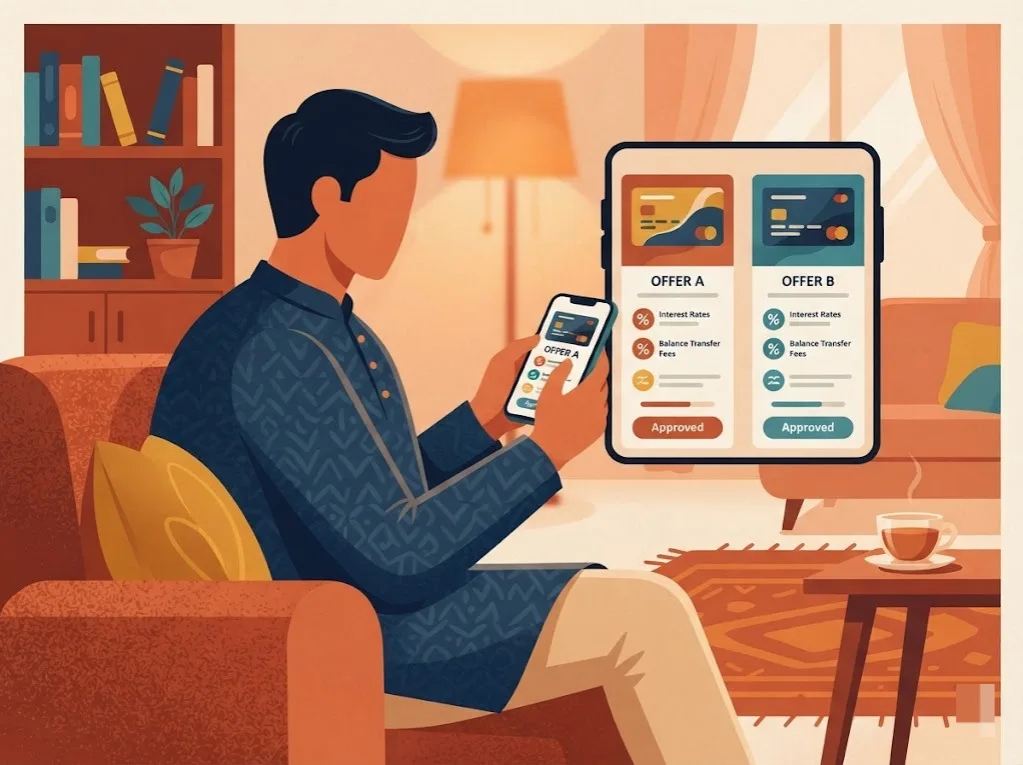
The disadvantages of debt consolidation can include higher total interest, fees, changes to your credit profile, and the risk of rebuilding debt after old balances are cleared. A longer tenure can raise total interest. Fees can eat the saving. New dues can pile up again. And it does not reduce what you owe. Knowing these before you apply helps you pick terms that work.

Mohit Juneja
Reviewed by FREED India, Debt Resolution Specialists
 4.7/5
4.7/5 ₹3,200Cr+
 20,000+
 20,00,000+4.7/5₹3,200Cr+20,000+20,00,000+
Key Summary

Disadvantages of debt consolidation: it does not reduce what you owe, only how you repay it.
A longer tenure can lower the EMI (monthly instalment) but raise total interest.
Fees and GST (tax charged on the fee) can eat the saving if the rate gap is small.
New dues on cleared cards can bring the old problem back.
RBI requires a Key Facts Statement showing the APR (annual percentage rate, which includes all charges) before you sign a retail loan.
What Are the Disadvantages of Debt Consolidation?
The disadvantages of debt consolidation are real, and most are about cost and habit. Here are 6 to know before you apply:
It does not reduce what you owe.
A longer tenure can mean more total interest.
Fees and GST add cost up front.
The rate offered may not beat your current blended rate.
New dues can pile up on cleared cards.
A missed EMI on the new loan carries real consequences.
It does not reduce what you owe. The total stays the same. Check that the new loan really clears every due you planned.
A longer tenure can mean more total interest. A smaller EMI feels lighter each month. Check the total you will repay, not just the EMI.
Fees and GST add cost up front. A processing fee is paid before the benefit arrives. Check whether it is deducted from the payout.
The rate may not beat your blended rate. Your blended rate is the average yearly rate across all your dues. Work it out first, and compare.
New dues can pile up on cleared cards. Cleared cards look empty and tempting. Check your plan for the cards before the loan lands.
A missed EMI carries real consequences. Late fees can apply, and the miss is reported to credit bureaus. Check the late-fee terms and set autopay.
None of these is a reason to avoid consolidation. They are reasons to check the numbers first. For the wider view, read the pros and cons of each loan type.
Next, why it helps to know these early.

FREED Expert Tip
Ask for the total repayment amount, not just the EMI. A lower EMI over a longer tenure can cost more.
Check My OptionsWhy Is It Worth Knowing the Downsides Before You Consolidate?
An offer arrives. It promises 1 EMI on 1 date. The relief is real, and the fine print is easy to skip.
Wanting relief is reasonable. When several due dates sit on your head, 1 payment sounds like a rest. Reading the terms is how you keep that rest.
How do people get here? Several due dates in the same week. A card balance that keeps rolling, called revolving credit (borrowing that carries into next month). A medical bill. A festival month. Nobody plans these.
Here is the honest part. A downside is a thing to check, not a verdict. A longer tenure is not a trap. It is a trade: a lighter EMI now for more interest later. A fee is not a scam. It is a cost you can count.
Counting is the point. When you know each downside by name, you can look for it in the offer. Some offers will show none of them. Others will show 1 or 2, and you can decide with open eyes.
It also helps to separate fact from noise. Plenty of common myths float around, both for and against consolidation. Neither side tells you what your own loan will cost.
The next section shows who needs extra care.

Who Should Be Careful About Debt Consolidation?
The downsides hit some people harder than others. Here is a quick check.
Be extra careful if:
The new rate is only slightly lower than your blended rate today. A small gap can vanish once the fee and GST are added.
You are tempted to stretch the tenure much longer. A longer plan lowers the EMI, but the total interest climbs.
You plan to keep using the cards you clear. New spends rebuild the balance you just cleared.
You are offered a loan that asks for money before payout. A fee paid in advance may never come back, and the loan may never arrive.
EMIs already take more than 50% of your take-home salary. You can check your own load with EMI Score, since a heavy load needs a closer look at any new loan.
It tends to work better when:
Dues sit on several cards or loans. More dues mean more dates to track, so merging them does more.
The new rate is clearly lower. The gap has to survive fees, not just look good on paper.
You can stop adding new dues. The benefit lasts only if the cleared cards stay clear.
One more line. A secured loan against property may offer a different interest rate or repayment structure, but the property serves as collateral. If you fail to repay according to the loan terms, the lender may have enforcement rights over the secured asset.
No pressure here. Next, the checks to run before you sign.
How to Spot the Disadvantages of Debt Consolidation Before You Sign, Step by Step
These checks take about an hour and can save thousands of rupees.
List Every Due and Its Rate
Write each balance, yearly rate and EMI. You need this to judge whether the new loan really is cheaper.Work Out Your Blended Rate
Multiply each balance by its rate, add them and divide by the total. The new loan has to beat this number.Ask for the APR in Writing
Ask for the Key Facts Statement. APR includes all charges, so it shows the real yearly cost.Compare Total Repayment
Look at the total you will pay, not only the EMI. A longer tenure can raise it.Add Fee and GST
Include any early-closure charge. Fees not in the Key Facts Statement cannot be charged without your explicit consent.Confirm the Payout Clears Everything
Check which dues it pays and that the loan goes to your own bank account. A due left out keeps its old rate.
A debt consolidation calculator does the sums for steps 2 and 4. Keep your list from step 1 open while you use it.
Next, those sums in rupees.

What the Law Says
RBI requires banks and NBFCs (non-bank finance companies) to give a Key Facts Statement with the annual percentage rate, including all charges, before you sign a new retail loan.
Talk Through My Loan TermsHow Much Can the Disadvantages Cost in Rupees?
Two important cost factors are tenure and the difference between your existing borrowing cost and the new loan's cost. Fees and other charges can also materially affect the result. Here are both in rupees. Both are hypothetical and illustrative. The rates are examples, not offers, and not a FREED rate.
Example A: tenure. On ₹2,00,000 at 16%:
24 months: about ₹9,790 a month, with about ₹35,000 in interest.
36 months: about ₹7,030 a month, with about ₹53,000 in interest.
In practice, the longer plan makes the EMI about ₹2,760 lower each month. It also adds about ₹18,000 in interest. Both are true at once, so decide which matters more to you.
Example B: rate gap. On ₹1,00,000 in dues:
Today (blended) | New loan (hypothetical) | |
Rate | 18% a year | 20% a year |
First-year interest, balance held flat | ₹18,000 | ₹20,000 |
Fee 2% + 18% GST | None | ₹2,000 + ₹360 = ₹2,360 |
First-year cost | ₹18,000 | ₹22,360 |
Difference | ₹4,360 more |
Here, the new loan costs ₹4,360 more in the first year. The rate was higher, and the fee made it worse. That is why you compare against your own blended rate before you accept.
Here is a rule of thumb. If fees absorb a large part of the interest saving, recalculate the total cost before proceeding.
Rates and ranges shown are indicative. Final terms decided by the bank. FREED is not a Loan Provider. No outcome is guaranteed. Please verify directly with your bank.
What Are Your Options If Consolidation Is Not the Right Fit?
If the downsides outweigh the benefits for you, other routes exist. They are listed here from simplest to broadest. None is right for everyone.
The simplest option costs nothing. Pay the highest-rate due first, and keep the others on their normal EMIs. It does not merge anything, but it cuts the costliest interest.
The table puts 4 routes side by side. Read the "What to check" column first, since that is where the cost hides.
Four Routes When Consolidation Is Not Right
Route | Best for | What it covers | What to check | Who arranges it |
Ask your bank for EMI changes | 1 loan that feels heavy while others are fine | The loan you ask about | Whether total interest rises with a longer tenure | You ask your bank |
Card balance transfer | 1 expensive card balance you can clear soon | The balance on 1 card, up to the new limit | Fee, GST, offer window and the rate after it | You apply to the new bank |
Personal loan from a bank or NBFC | People who want several dues cleared by 1 loan | Several dues, paid from the loan amount | Key Facts Statement, APR and total interest | You apply to a bank or NBFC |
With FREED: Debt Consolidation Program | Dues on several cards or loans, still paid on time | Several unsecured dues merged into 1 new loan, 1 lower EMI, credit score starts to improve | Eligibility and final terms depend on the lending partner's assessment | FREED matches you to a lending partner, who disburses the loan |
Rates and ranges shown are indicative. Final terms decided by the bank. FREED is not a Loan Provider. No outcome is guaranteed. Please verify directly with your bank.
In practice, the first 3 routes each rest on you doing the work with 1 bank. The 4th is built for people holding several dues at once. The right pick depends on your balances, your budget and how many due dates you hold.
A balance transfer credit card suits 1 expensive balance. The low rate lasts for a set window, so plan to clear it before then.
A personal loan to consolidate debt clears several dues with 1 new EMI. It brings its own fees, so compare the total cost.
Several dues across cards and loans are what consolidation is built for, if the terms check out. The next section shows how.

Several Cards or Loans? See If One EMI Fits
Check whether FREED can match you to one lower EMI.
Check FREEDHow FREED Helps If You Are Weighing Consolidation Against Its Downsides?
For people who can still repay but need a smarter way to manage their debt.
If your dues sit on several cards and loans, FREED's Debt Consolidation Program is built for that. FREED has counselled 20,00,000+ customers.
Here is what FREED does for you:
FREED assesses your profile and matches you to a lending partner from its network.
The partner disburses 1 new loan. It pays off your eligible dues instantly, including card dues, personal loans, BNPL (buy now pay later) and similar unsecured credit.
You are left with 1 loan, 1 lower EMI and 1 due date.
FREED handles the process from assessment to payout. You do not have to chase each lender on your own.
You should still compare the terms you are offered with your blended rate. FREED does not quote a rate on this page, so the numbers come from the lending partner's own assessment.
Your credit score does not drop with consolidation. It starts to improve as old dues are cleared and you pay 1 loan on time.
FREED's fee is success-based. It is charged only when the consolidation is completed.
Maybe you have missed a payment or two, or you are not sure where you stand. If you are unsure whether you qualify, FREED's team can assess your situation in a free call and let you know what options are available.
Eligibility and final terms depend on the lending partner's assessment. FREED is not a Loan Provider.
Are You in a Loan Trap? Quick Check
Move the slider to your total EMIs as a % of monthly salary. See your debt stress level instantly.
EMIs as % of Monthly Salary
What Helps You Avoid the Downsides of Debt Consolidation?
Most downsides can be managed with a few habits. These 6 tips keep them small.
Choose the shortest tenure whose EMI you can carry. A shorter plan costs less in total interest, so pick the lightest EMI you can still sustain.
Compare total repayment, not only the EMI. A lower EMI can hide a higher total.
Keep new spends off the cleared cards. Fresh swipes rebuild the pile you just cleared.
Set autopay for the new EMI on day one. Autopay (auto-payment permission) removes the chance of a missed date.
Pay a little extra when you can. It shortens the loan and cuts interest. In Example A, 24 months costs about ₹35,000 in interest against about ₹53,000 for 36 months.
Check your credit report a month later. It shows whether the old dues appear as cleared. You can check your credit report in a few minutes.
It also helps to plan the month around the new EMI. Read more on budgeting after consolidation.
If the numbers still feel tight after all this, the earlier sections cover another route.
SOURCING / VERIFICATION TABLE
Claim in blog | Source |
Banks and NBFCs must give a Key Facts Statement, with APR including all charges, before the borrower signs | RBI circular, Key Facts Statement (KFS) for Loans & Advances (RBI/2024-25/18, 15 April 2024), paras 4 and 6: https://www.rbi.org.in/Scripts/NotificationUser.aspx?Id=12663&Mode=0 |
Fees not mentioned in the KFS cannot be charged without the borrower's explicit consent | Same page, para 8 |
Applies to new retail and MSME term loans sanctioned on or after 1 October 2024 | Same page, para 11 |
In digital lending, disbursal must go into the borrower's own bank account, not a third party's | RBI (Digital Lending) Directions, 2025 (RBI/2025-26/36, 8 May 2025), para 9: https://www.rbi.org.in/Scripts/NotificationUser.aspx?Id=12848&Mode=0 |
Both RBI pages were live when checked on 7 Oct 2026.

FREED is India's trusted loan management platform. Founded in 2020 and headquartered in Gurugram, FREED has counselled 20 lakh+ people on personal loans, credit cards, and app loans. FREED charges fees only on successful settlement, not upfront. FREED does not handle secured loans (home loans, car loans, gold loans).
Media Mentions