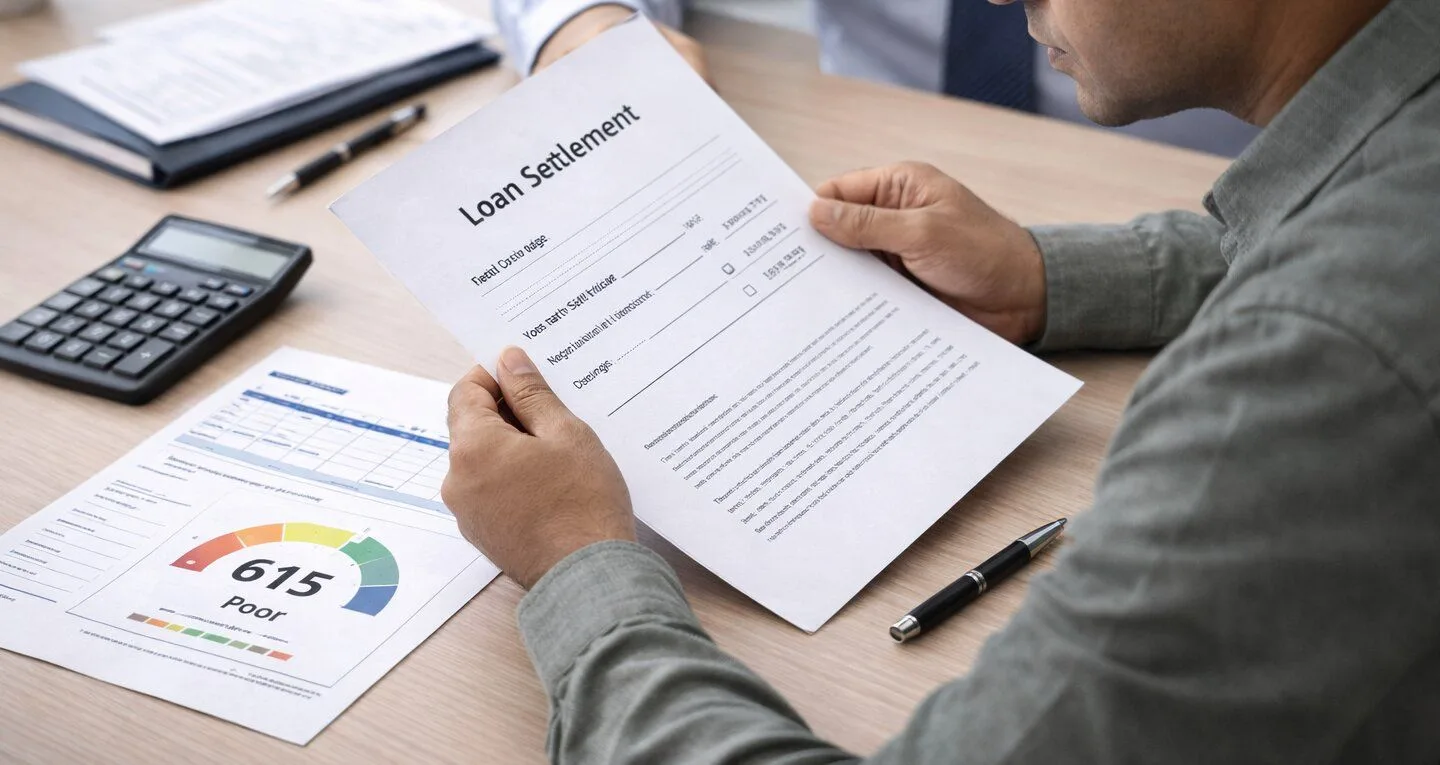
What is debt consolidation and how it helps reduce monthly financial stress
Three credit cards, a personal loan, and maybe a BNPL commitment, each with its own due date, its own interest rate, its own minimum payment, is a genuinely exhausting thing to manage every single month, even before considering the actual cost. Debt consolidation exists specifically to address both the cost and the exhaustion. Here is exactly how.
Mohit Juneja
Reviewed by FREED India, Debt Resolution Specialists
 4.7/5
4.7/5 ₹3,200Cr+
 20,000+
 20,00,000+4.7/5₹3,200Cr+20,000+20,00,000+
Key Takeaways

Debt consolidation combines several existing debts, typically high-interest credit cards and personal loans, into a single new loan, usually at a lower interest rate, with one monthly payment replacing several.
The stress reduction comes from two separate sources, a genuinely lower total interest cost, and the practical relief of tracking one due date and one payment amount instead of several scattered across the month.
Consolidation generally suits people who can still afford to repay their debt in full but are managing multiple high-interest obligations inefficiently, typically requiring a CIBIL score of 650 or above to access favourable terms.
Consolidation does not reduce the total amount owed, it restructures how that amount is repaid, at a lower cost and with less operational complexity, which is a meaningfully different outcome from a settlement.
If the combined outstanding is too large for consolidation to make a realistic difference, or several accounts have already gone significantly overdue, a negotiated settlement, which FREED can also arrange, may be the more effective path.
Debt Consolidation, Defined Simply
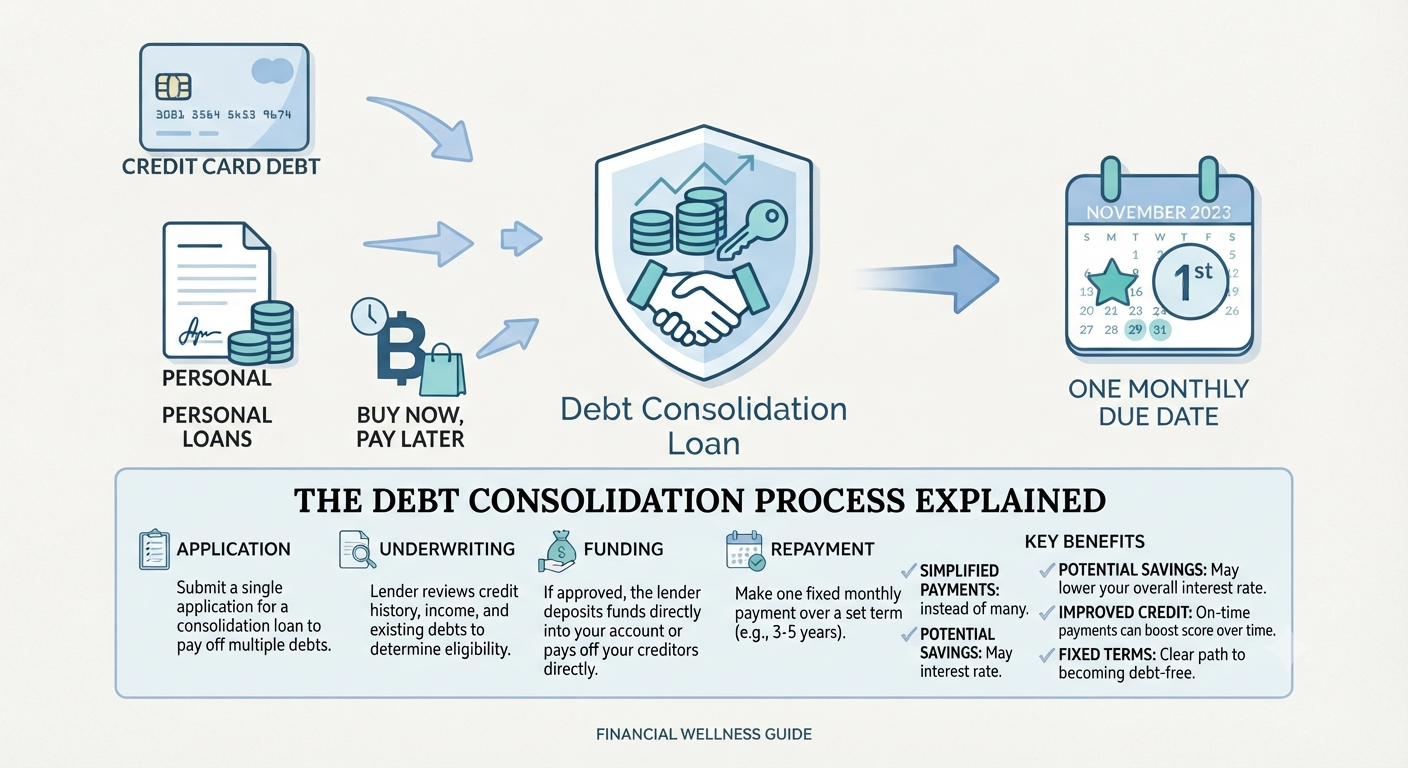
Debt consolidation is the process of combining several existing debts, typically credit card balances and personal loans, into one new loan, generally at a lower interest rate than the average of what you were paying across those separate accounts, with a single, defined monthly EMI replacing several separate payments.
The new consolidation loan pays off each existing debt directly, and from that point forward, you owe only the new lender, on one schedule, at one rate, rather than managing several separate creditors, each with their own terms and deadlines.

Juggling multiple debts and want to see what consolidation could actually do for you?
Talk to a FREED Expert for free.
Connect with FREED ExpertHow Debt Consolidation Actually Works, Step by Step
The process typically begins with an assessment of your total existing debt, every credit card balance, every personal loan, listed with its outstanding amount and current interest rate, to calculate the genuine total being consolidated.
A consolidation loan is then arranged, through a bank, NBFC, or a program like FREED's, sized to cover this total, at a new, generally lower interest rate reflecting your overall creditworthiness assessed as a single application rather than several. Once approved, the loan proceeds are used directly to pay off each existing account in full, closing them out, and you begin repaying only the new, single loan according to its own schedule from that point forward.
Why Multiple Small Debts Create More Stress Than One Larger One
There is a specific, well-documented psychological cost to managing several separate financial obligations simultaneously, distinct from the pure mathematics of the total amount owed. Each account carries its own due date, its own minimum payment calculation, its own customer service number to call if something goes wrong, and its own risk of a late fee or score impact if any single one is missed amid the complexity of tracking several.
This cognitive load, remembering, prioritising, and correctly managing multiple simultaneous obligations, is a genuine, measurable source of stress, separate from the financial cost itself. Consolidation directly addresses this specific burden by reducing several scattered obligations into one, considerably simplifying what needs to be tracked and remembered each month.
The Interest Rate Math That Makes Consolidation Genuinely Worthwhile
Beyond the psychological relief, consolidation typically produces a genuine, calculable financial benefit. Credit card debt in India typically carries interest of 36 to 42% per year. A consolidation loan, by contrast, typically carries an interest rate of 14 to 20%, reflecting the lower risk profile of a single, structured loan compared to revolving credit card debt.
On a combined outstanding of Rs 3,00,000 previously spread across cards charging an average of 38%, consolidating into a loan at 16% can reduce the total interest paid over the repayment period by a considerable amount, often tens of thousands of rupees, depending on the specific tenure chosen, while also converting an open-ended, revolving obligation into one with a clear, calculated end date.
Reducing Monthly Stress Beyond the Interest Rate
The stress reduction from consolidation is not solely about the lower interest rate, it comes from several specific, practical changes working together. One due date each month, rather than three, four, or more, removes the risk of accidentally missing one obligation while focused on another. One fixed EMI amount, rather than several minimum due calculations that can shift month to month, makes budgeting considerably more predictable.
And a defined, calculated end date to the loan, rather than an open-ended revolving balance that can theoretically continue indefinitely if only minimums are paid, provides a genuine, visible finish line, which itself reduces the specific, ongoing anxiety of an obligation that otherwise feels like it has no clear resolution point.
Curious what a single consolidated EMI would actually look like for your specific debts?
Talk to a FREED Expert for free.
Talk to a FREED ExpertWho Debt Consolidation Genuinely Suits
Debt consolidation is generally most appropriate for people who can still afford to repay their debt in full, but are doing so inefficiently, spread across multiple high-interest accounts, rather than people who genuinely cannot repay the full amount owed under any realistic circumstances.
It typically requires a reasonably healthy credit profile, generally a CIBIL score of 650 or above, to access genuinely favourable consolidation terms, since the new loan's approval and rate depend on the same creditworthiness factors covered elsewhere, income stability, existing obligations, and overall credit history.
The Two Main Ways to Consolidate Debt in India
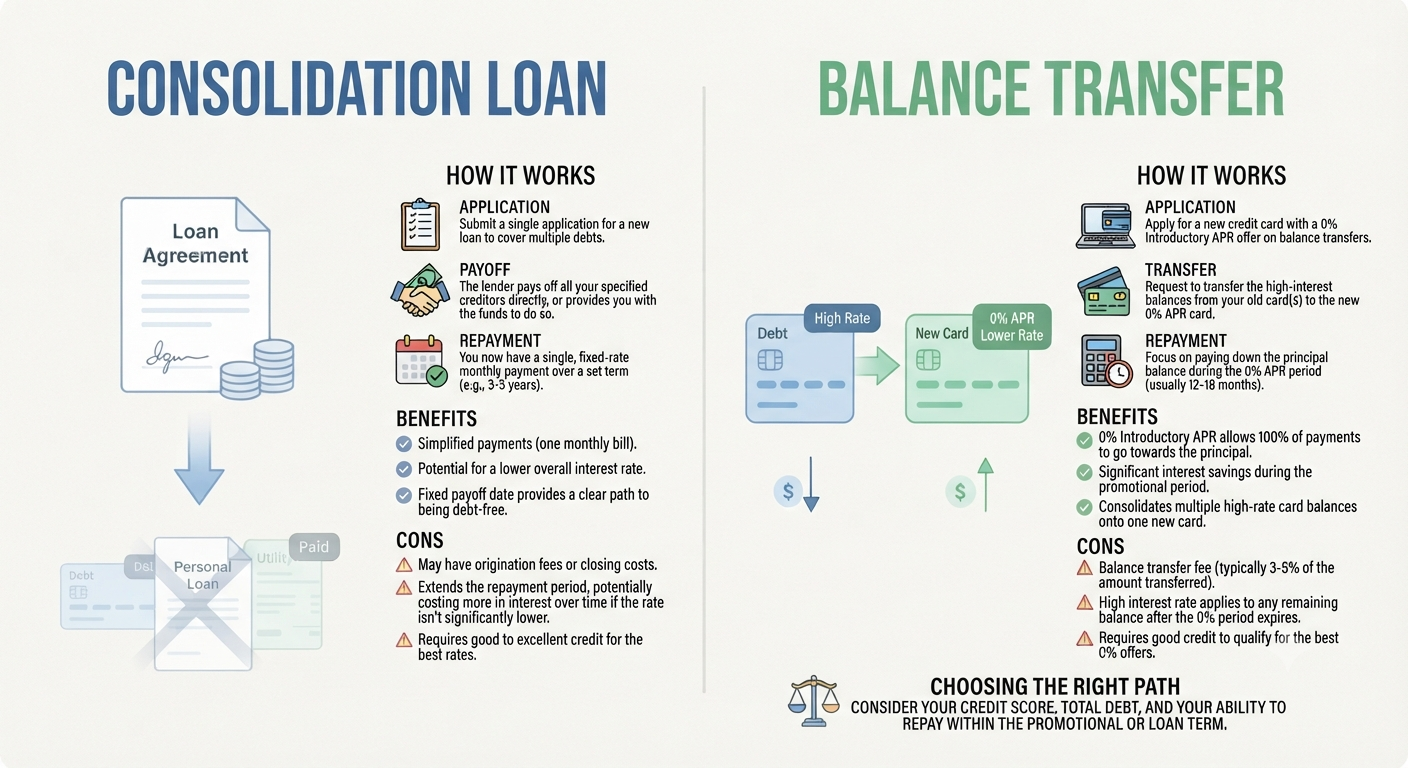
Consolidation is typically achieved through one of two structures. A personal loan for debt consolidation, offered by banks and NBFCs specifically for this purpose, or a general personal loan used to pay off existing high-interest debts directly. A balance transfer, more specific to credit card debt, where an existing balance is moved to a new card or loan offering a lower promotional interest rate for a defined period.
FREED's Debt Consolidation Program functions through a network of lending partners, specifically assessing your full existing debt picture and arranging a consolidation loan structured around your genuine repayment capacity, rather than requiring you to independently research and apply to multiple lenders on your own.
What Consolidation Does Not Do
It is worth being direct about the limits of consolidation. It does not reduce the actual amount owed, the full outstanding balance is still repaid, simply restructured at a lower interest rate and combined into one obligation. It is not the right tool for debt that genuinely cannot be repaid in full given current income, since it still requires a full, if lower-cost, monthly repayment.
And it typically requires a reasonably healthy credit profile to access good terms, meaning it is generally not readily available, at favourable rates, to someone whose score has already been significantly damaged by an extended period of missed payments or existing default.
A Realistic Before and After Example
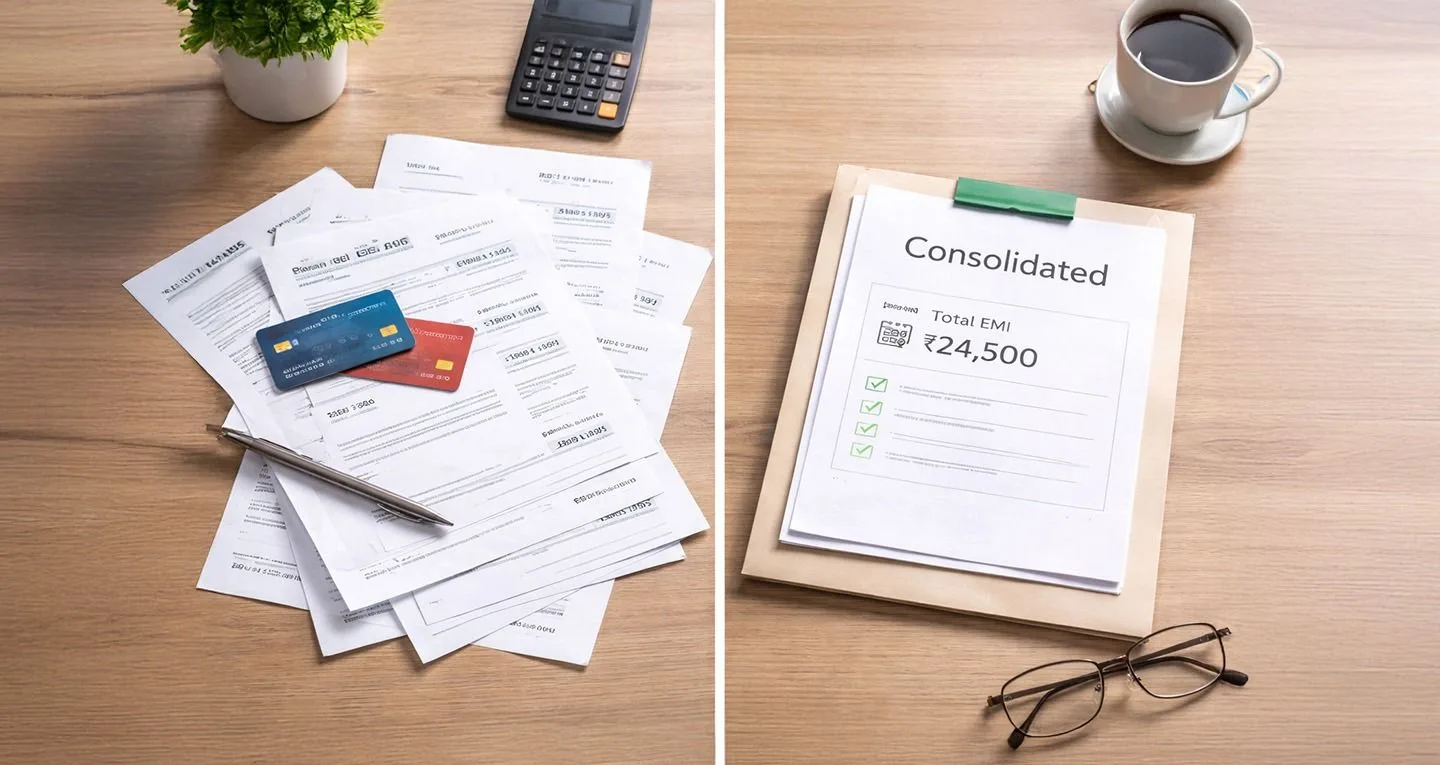
Before consolidation, a specific individual might be managing three credit cards, with a combined outstanding of Rs 2,50,000 at an average rate of 38%, plus a personal loan of Rs 80,000 at 22%, across four separate due dates each month, with combined minimum payments consuming a significant, stressful share of monthly income while barely reducing the total balance.
After consolidation into a single loan of Rs 3,30,000 at 16% over a defined tenure, the same individual makes one fixed EMI, on one date, each month, with a clear, calculated date by which the entire obligation will be fully cleared, at a meaningfully lower total interest cost than continuing to service the original accounts separately would have produced.

What the Law Says
Under RBI's Fair Practices Code, lenders offering consolidation loans are required to disclose the full Annual Percentage Rate, including processing fees, clearly before the loan is finalised, allowing a genuine, informed comparison against the combined true cost of the existing debts being consolidated, rather than relying on the headline interest rate figure alone.
See If You Can Reduce Your EMIsHow to Know if Consolidation Is the Right Fit for Your Situation
Consolidation is likely a good fit if you can comfortably afford a single, calculated EMI at the new, lower rate, if your credit profile genuinely qualifies for favourable new loan terms, and if the total interest saved, calculated honestly by comparing your current combined cost against the proposed consolidation loan's true APR, is genuinely meaningful rather than marginal once any processing fees are accounted for.
It is worth calculating this comparison specifically, rather than assuming consolidation is automatically beneficial simply because it feels more convenient to manage one payment instead of several, convenience alone should not be the deciding factor if the underlying cost comparison does not also favour it clearly.
Want an honest calculation of whether consolidation would genuinely save you money?
Talk to a FREED Expert for free.
Talk to a FREED ExpertWhen Consolidation Is Not Enough, and Settlement Becomes the Better Path
For some people, the combined outstanding across several accounts has grown large enough, or several accounts have already gone significantly overdue, that even a consolidated loan at a considerably lower interest rate would still require a monthly EMI that genuinely does not fit within current income, regardless of how much the rate itself improves.
In this situation, debt resolution through a negotiated settlement, rather than consolidation, becomes the more realistic path, since it addresses the actual outstanding amount directly rather than simply restructuring how the full amount is repaid.
FREED's Debt Resolution Program negotiates a reduced settlement for debt that cannot realistically be repaid in full, on average 56% less than the original outstanding, for exactly this situation, where consolidation's math no longer works given current income.
A free consultation can assess your specific combined outstanding honestly, calculate whether consolidation would genuinely reduce your monthly stress and cost meaningfully, or whether settlement is the more realistic path given your current situation.
Are You in a Loan Trap? Quick Check
Move the slider to your total EMIs as a % of monthly salary. See your debt stress level instantly.
EMIs as % of Monthly Salary

Mohit Juneja
Mohit Juneja writes educational content at FREED on debt management, credit scores, loan repayment, and borrowing best practices. His content is shaped by expert insights and industry knowledge, helping readers better understand their financial options and make informed decisions.
mohit.juneja@freed.care

FREED is India's trusted loan management platform. Founded in 2020 and headquartered in Gurugram, FREED has counselled 20 lakh+ people on personal loans, credit cards, and app loans. FREED charges fees only on successful settlement, not upfront. FREED does not handle secured loans (home loans, car loans, gold loans).
Media Mentions