Getting a Personal Loan to Consolidate Debt: What to Know Before You Decide
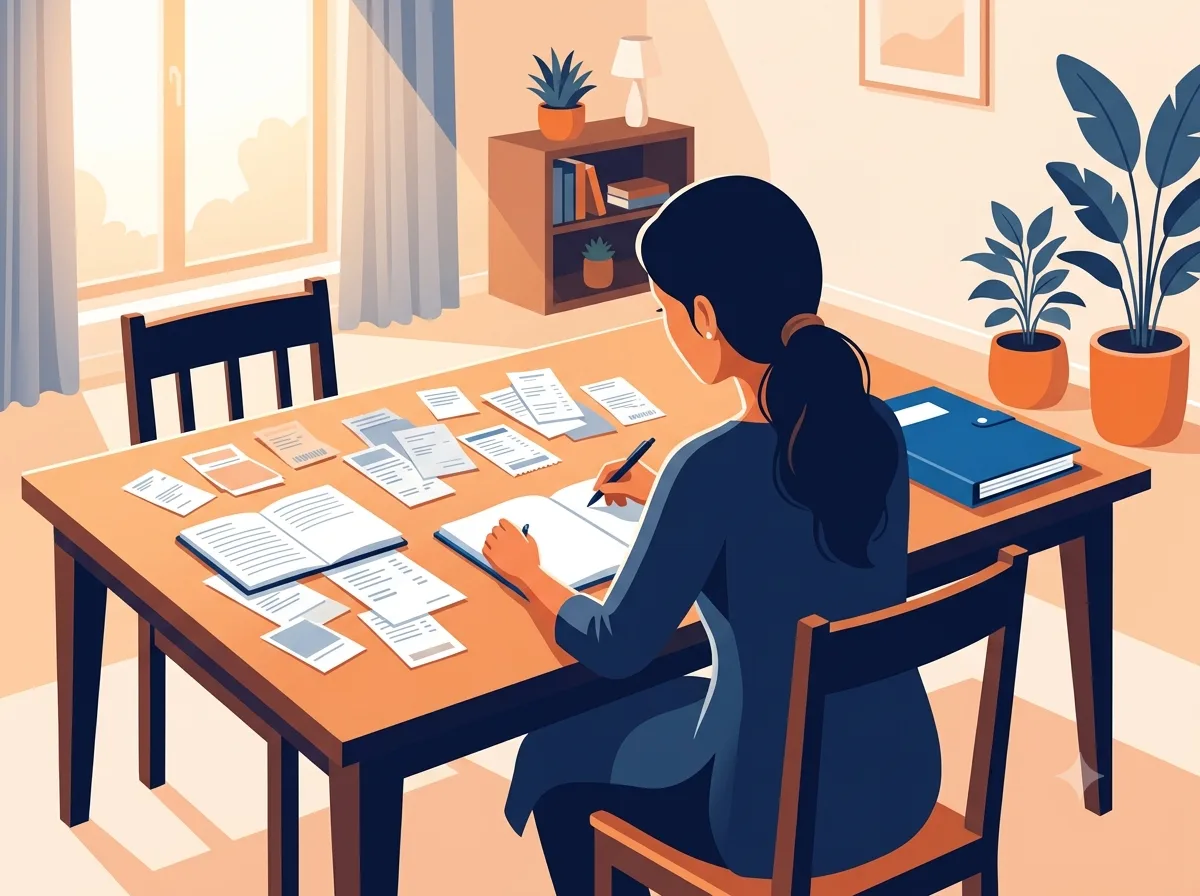
Getting a personal loan to consolidate debt means taking one new loan from a bank or NBFC and using it to pay off your other loans and card dues. You are then left with one EMI, one due date, and one lender to deal with.
Mohit Juneja
Reviewed by FREED India, Debt Resolution Specialists
 4.7/5
4.7/5 ₹3,200Cr+
 20,000+
 20,00,000+4.7/5₹3,200Cr+20,000+20,00,000+
KEY TAKEAWAYS

Getting a personal loan to consolidate debt swaps many EMIs for one, but you still repay the full amount.
Credit card balances may cost more than the personal loan. Compare the rates you actually pay with the rate offered to you.
Fees and a longer tenure can eat into the savings. Check the total cost, not just the EMI.
RBI's Key Facts Statement shows the full yearly cost of a retail loan before you sign.
Check that the new EMI, any other EMIs, and your essential expenses fit within your take-home income.
Is Getting a Personal Loan to Consolidate Debt a Good Idea?
Getting a personal loan to consolidate debt can be a good idea. It works when the new loan costs you less in total than the debts it replaces.
Here is how it works in three moves:
A bank or NBFC approves one new personal loan for the total you owe.
That money goes to pay off each card or loan you listed.
You repay only the new loan, in one EMI on one date.
One point trips people up. Consolidation does not reduce what you owe. You still repay the full amount, just in a different shape. Banks and platforms use "debt consolidation" and "loan consolidation" for the same idea, so both terms lead to the same place.
So when is it a good idea? Look at these two lists.
It tends to work when:
You carry at least one high-rate debt, such as a credit card balance, and the new rate is clearly lower.
You are still paying every EMI on time, so a bank or NBFC is willing to lend to you.
It tends not to work when:
Your old loans are almost paid off, so there is little interest left to save.
The processing fee and other charges on the new loan cancel out the lower rate.
Neither list means you did something wrong. It is a maths question, and the next sections help you answer it.

Need a second pair of eyes on your loans?
Share your loan details and get a clear yes or no.
Check your optionsWhy Do People Consolidate Debt With a Personal Loan?
Think of a normal month. A credit card bill is due on the 5th. A personal loan EMI falls on the 12th. A BNPL (buy now, pay later) payment lands on the 18th. Another card is due on the 25th.
Nothing about that is careless. It is simply a lot of dates to hold in your head while you also run a home and a job.
Most people consolidate for three reasons.
Too many due dates raise the chance of a slip. Forgetting one date usually means a late fee. If slips repeat over a few months, they start to show on your credit report.
High card interest keeps growing. Card balances commonly carry rates far above a personal loan. Carrying a balance month after month adds interest on interest.
Separate minimum payments crowd the budget. Four small payments can add up to more than one planned EMI. Your salary gets pulled in four directions.
Consolidation answers the calendar problem and, if the new rate is lower, the cost problem too. It is a tool, not a verdict on how you managed money. Many people who use it were paying on time all along.
If you want the basics in one place, this explainer on how debt consolidation reduces monthly financial stress covers them. The next section helps you decide if a personal loan fits your situation.
When Does Using a Personal Loan to Pay Off Debt Make Sense?
Run through these five points. The more you can tick, the stronger the case.
You carry at least one high-rate debt. A credit card balance is the usual example. Replacing a 36% card with a 15% personal loan cuts the interest on that amount by more than half.
You are still paying every EMI on time. Banks and NBFCs lend more easily to borrowers who are current. Each one sets its own score cut-off, and a stronger profile usually gets a lower rate.
The new rate is below your blended current rate. Blended means the average across all your debts, weighted by how much you owe on each. The next sections show a worked example.
The new EMI, fits your budget. Add it to any other EMIs you will still pay, then check what remains for rent, food, transport, and unexpected costs. You can test this with FREED's EMI Score.
You will not run the cards up again. If the old cards fill up after you pay them off, you end up with the new EMI plus new card bills.
When it may not make sense:
Your total debt is small, and each loan is nearly done. Fees would outweigh the savings.
The proposed EMI would still leave too little for your essential expenses. You fit the second group; it is worth a pause before applying anywhere. The next section shows how the process runs.
How Does Getting a Personal Loan to Consolidate Debt Work?
The steps are simple. Each one is worth doing in order.
List every debt. Write down the outstanding amount, rate, and EMI for each card and loan. This gives you the true total to borrow and the rate you are trying to beat.
Check your credit report. Know your score before you apply anywhere. You can pull it through FREED's Credit Insight tool, so you know where you stand before a bank tells you.
Compare offers from banks and NBFCs. Ask each one for its Key Facts Statement before you accept. This is a standard sheet that shows the full cost of the loan in one place.
Use the money only to pay old dues. Pay each account directly and keep the confirmation. This makes sure the old balances really go to zero.
Set auto-pay on the new EMI. Stop using the old cards for new spending. One missed date on a new loan undoes the point of consolidating.
RBI asks banks and NBFCs to give a Key Facts Statement (KFS) for retail term loans. It must show the yearly cost, called the APR (annual percentage rate), which includes interest and other charges. Fees that are not in the KFS cannot be charged without your explicit consent. This applies to new loans sanctioned on or after 1 October 2024, and credit card receivables are exempt.
One more tip. Applying to many banks in one week can leave several hard inquiries (checks on your credit report). Compare offers first, then apply to your best one or two.

What the Law Says
RBI circular RBI/2024-25/18 requires a Key Facts Statement for retail term loans. It shows the full yearly cost, and unlisted fees need your consent.
See How Consolidation WorksWhat Should You Check Before Taking a Personal Loan to Pay Off Debt?
This is where most of the value sits. Check these five things before you say yes.
Total cost, not only the EMI. A lower EMI feels like relief, but it can hide a higher total. Always compare what you will pay over the full loan.
Fees on the new loan. A processing fee is taken up front. For example, 2% on ₹2,50,000 is ₹5,000. This is an example only, and fees vary by bank and NBFC.
Charges on your old loans. Some old loans have prepayment or foreclosure charges. Ask each one before you pay it off.
Tenure. A longer tenure lowers your EMI and raises your total interest. The table below shows how much.
Your own habits. The plan only works if the old cards stay quiet.
Here is a worked example with three debts. It is illustrative, not a quote.
Debt | Amount | Rate | Yearly interest |
Card A | ₹80,000 | 36% | ₹28,800 |
Card B | ₹50,000 | 42% | ₹21,000 |
Personal loan | ₹1,20,000 | 16% | ₹19,200 |
Total | ₹2,50,000 | 27.6% blended | ₹69,000 |
Applying the listed rates to today's balances gives 69,000 rupees. Applying 15% to 2,50,000 rupees gives 37,500 Rupees. These figures compare rates on unchanged balances. They are not the interest you would actually pay in a year for your actual savings. To work out whether consolidation saves money, compare all remaining payments and charges on your current debts with the new loan's full repayment amount and fees. That gap is the saving, before fees.
Now see what tenure does on that same ₹2,50,000 at 15%.
Tenure | Monthly EMI | Total interest |
24 months | about ₹12,120 | about ₹40,880 |
48 months | about ₹6,958 | about ₹83,960 |
The 48-month EMI is almost half as much, but you pay about twice the interest. Pick the shortest tenure your budget can hold. If you want the full working, see the math behind consolidating with a personal loan.
Rates and ranges shown are indicative. Final terms are decided by the bank. FREED is not a Loan Provider. No outcome is guaranteed. Please verify directly with your bank.
Are You in a Loan Trap? Quick Check
Move the slider to your total EMIs as a % of monthly salary. See your debt stress level instantly.
EMIs as % of Monthly Salary
What Are Your Options Besides a Personal Loan for Debt Consolidation?
A personal loan is one route. There are others, and the right one depends on how many debts you have.
A balance transfer moves one credit card balance to a lower rate, usually for a set period. It helps with a single big card. It does not merge many different debts.
A personal loan from a bank or NBFC can merge many debts into one EMI. You apply, compare offers, and deal with each institution yourself.
A structured consolidation program does the matching for you. FREED's Debt Consolidation Program matches you with a lending partner, and one new loan pays off your eligible dues.
Option | What it does | Best for | Watch out for |
Personal loan from bank or NBFC | Merges many debts into one EMI | Several cards and loans, good repayment record | Fees, tenure, and rate offered to you |
Balance transfer | Moves one card balance to a lower rate | One large card balance | Rate after the offer period, transfer fee |
Consolidation through FREED | Matches you with a lending partner for one new loan | Borrowers still paying who want one lower EMI | Eligibility depends on your profile and the partner |
The table shows the trade-off in short. A balance transfer is narrow, a personal loan is wide but done by you, and a program hands over the matching work. Read about the types of debt consolidation loans if you want more on each.
Secured options, like a loan against property, also exist. They put an asset at risk, and FREED works only with unsecured debt, so they are outside this guide.
If you have already missed EMIs and cannot repay in full, the picture is different. Settlement means that the lender agrees to accept less than the full amount owed. If it agrees, the account may be reported as settled, which can affect future borrowing. Banks and financial companies only consider it when you are in genuine financial difficulty and are truly unable to repay the full amount. A "Settled" mark can stay on your credit report for up to 7 years.
Read more on what a debt settlement loan really means before deciding anything.

Freed Expert Tip
Add up every debt and its rate first. Then test whether one more EMI fits your budget.
Reduce My EMIHow FREED Helps If You Are Paying Multiple EMIs Every Month
FREED's Loan Consolidation Plan (LCP) is for people who can still repay but need a smarter way to manage their debt. You may also see it called the Debt Consolidation Program (DCP) or "Reduce My EMI".
Here is how it works.
You share your loan details. FREED looks at your profile and your existing loans.
FREED matches you with a lending partner. The match comes from FREED's network of lending partners, based on your financial profile.
One new loan pays off your dues. If approved, the loan is disbursed to close the debts listed in your sanction letter. You then pay one lower EMI on one date.
FREED handles the process from start to finish, so the paperwork and follow-up do not fall on you. The whole process is 100% online.
A few facts worth knowing:
The new loan can only be used to pay off your existing eligible debt.
It covers personal loans, credit card dues, BNPL, and other unsecured credit.
FREED charges a success-based fee only when your consolidation is completed.
If one lending partner declines, FREED tries other partners that fit your profile.
A new loan may affect your credit score. The result depends on lender reporting, your other accounts, and your repayment history.
FREED says its counsellors have spoken with many borrowers. If you are unsure whether you qualify, FREED's team can assess your situation in a free call and let you know what options are available. You can read more about FREED's Debt Consolidation Program.
What Helps After You Consolidate Your Debt?
Getting the loan is the start. These habits keep the plan working.
Set auto-pay on the one EMI. With a single date, auto-pay is easy to set up. It may help you avoid a missed due date, provided you keep enough money in the account.It protects you from late fees and keeps your record clean.
Get proof that each old account is paid off. Ask each bank or card issuer for a clearance letter (called NOC). Keep these papers safe, in case a balance shows up later.
Keep the old cards quiet. If you still have them, avoid new spending on them for now. This stops new balances from building on top of your EMI.
Keep a small buffer. A little cash set aside means one tight month does not become a missed EMI. Even one month of EMI in reserve helps.
Check your credit report in a few months. A new loan application may affect your score; later changes depend on your payment history, card usage, and other information in your credit report.
Keep an eye on your budget as well. Check your total EMIs alongside your essential expenses each month. The amount leftover should be workable for you. Use the same approach in this guide on reducing EMIs by consolidating debt to keep that ratio healthy.
Small steps like these add up. One EMI, paid on time each month, is what turns consolidation into real relief.
Sources
Claim | Source |
Key Facts Statement is required for retail term loans, shows APR, unlisted fees need consent, applies from 1 October 2024, credit card receivables exempt | https://www.rbi.org.in/Scripts/NotificationUser.aspx?Id=12663&Mode=0 |
Every other figure is worded as "commonly reported" or "typically", as no verified primary source was found. This covers the card rate range, the personal loan rate range, the 50% EMI guide, and fee examples. The "up to 7 years" figure for a "Settled" mark also has no primary RBI source and is flagged for legal review.

Mohit Juneja
Mohit Juneja writes educational content at FREED on debt management, credit scores, loan repayment, and borrowing best practices. His content is shaped by expert insights and industry knowledge, helping readers better understand their financial options and make informed decisions.
mohit.juneja@freed.care

FREED is India's trusted loan management platform. Founded in 2020 and headquartered in Gurugram, FREED has counselled 20 lakh+ people on personal loans, credit cards, and app loans. FREED charges fees only on successful settlement, not upfront. FREED does not handle secured loans (home loans, car loans, gold loans).
Media Mentions