Unsecured Debt Consolidation: What to Know Before You Decide
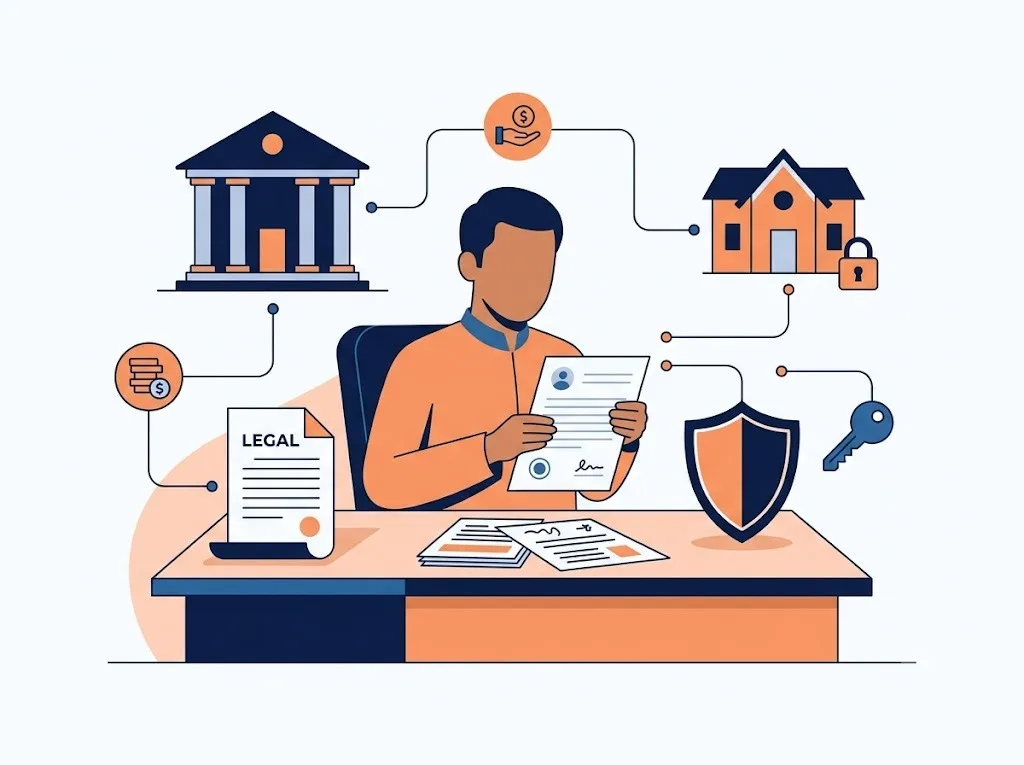
The debts you're consolidating, credit cards, personal loans, BNPL, are unsecured. Nothing you own is directly on the line if you default, beyond your credit score and recovery contact. Some consolidation offers ask you to secure the new loan with collateral, gold, property, or a fixed deposit, for a meaningfully lower rate. That single decision changes what's actually at risk far more than most people realise before signing.
Mohit Juneja
Reviewed by FREED India, Debt Resolution Specialists
 4.7/5
4.7/5 ₹3,200Cr+
 20,000+
 20,00,000+4.7/5₹3,200Cr+20,000+20,00,000+
KEY TAKEAWAYS

Your original unsecured debts carry limited direct consequences on default. Your credit score suffers, and recovery contact follows, but no specific asset is seized.
A secured consolidation loan offers a genuinely lower rate, often 9% to 13% versus 13% to 24% for unsecured options, but defaulting on it puts the pledged asset itself at risk.
This isn't a decision to make purely on rate. It depends on how confident you genuinely are in your ability to sustain the new EMI.
Once you convert unsecured debt into secured debt, some legal protections and recovery processes that didn't apply before, like SARFAESI in extreme cases, can newly apply to you.
The Decision Most Guides Skip: Should You Secure It?
Most content about debt consolidation stops at eligibility and process: how to apply, what income you need, how fast the loan gets disbursed. What it usually skips is a second decision that follows right after, one with far bigger consequences than a few percentage points of interest.
Once you've decided to consolidate, some lenders will offer you a meaningfully lower rate if you agree to secure the new loan against an asset you own, gold, property, or a fixed deposit. On paper, that looks like a straightforward upgrade: same consolidation, lower cost. In practice, it's a different decision altogether, not a rate detail but a risk decision, because the two paths behave completely differently if your income takes a hit and you can't keep up with the new EMI.
This piece exists to walk through that specific trade-off. Not the mechanics of consolidating, which are covered elsewhere, but the part that actually matters most when you're staring at two offers: a slightly higher rate with no asset on the line, or a noticeably lower rate with something real of yours pledged against it.

What You're Actually Risking Today, With Unsecured Debt
It helps to be clear about what you're already living with before comparing it to something new. If you default on an unsecured debt today, whether that's a credit card, a personal loan, or a BNPL balance, the direct consequences are real but limited to a specific set. Your credit score takes a hit, and it can take a meaningful hit if the default continues. Recovery calls and messages from the lender or its collection team typically follow. If the situation continues without resolution, it can eventually lead to a settlement negotiation, or in some cases a legal notice.
What doesn't happen is a lender showing up to claim a specific asset you own. There's no gold, no property, no fixed deposit sitting behind an unsecured personal loan or credit card that the bank has a legal claim to. For a fuller picture of exactly where you stand and what rights you have if an unsecured debt goes into default, these borrower rights are worth understanding in detail. Knowing this baseline clearly is what makes the alternative, a secured consolidation loan, genuinely comparable rather than an abstract trade-off.
What Changes If You Secure the Consolidation Loan Instead
This is the part of the decision that carries the most weight, so it's worth being direct about both sides of it.
The benefit is real. Secured consolidation loans, backed by gold, property, or a fixed deposit, typically come at meaningfully lower rates than unsecured options, often somewhere in the 9% to 13% range compared to roughly 13% to 24% or higher for an unsecured consolidation loan. On a large enough loan amount, that difference adds up to a genuinely lower EMI and lower total interest paid over the tenure.
What changes on the risk side is just as real. Defaulting on a secured loan means the lender has a direct legal claim to the specific asset you pledged. Gold can be auctioned. A fixed deposit can be encashed directly by the lender. For larger, property-backed consolidation loans, enforcement can proceed under frameworks like the SARFAESI Act, a legal mechanism that never applied to your original unsecured debts at all, since SARFAESI's enforcement powers apply specifically to secured loans with pledged collateral.
Put plainly, the trade you'd be making is this: a worse-but-survivable consequence (credit damage, recovery pressure) for a better rate paired with a consequence that could mean losing something you specifically value. Say you pledge a fixed deposit of ₹3 lakh to secure a consolidation loan at 11%, instead of taking an unsecured loan at 18% for the same amount. The rate difference could save you a genuinely meaningful sum in interest over two or three years. But if your income drops for a stretch and you can't keep up with the EMI, that specific ₹3 lakh deposit is what the lender encashes, not an abstract number on a report. The lower rate is real. So is what backs it.

Freed Expert Tip
Enforcement frameworks like the SARFAESI Act apply specifically to secured loans. Converting unsecured debt into a property-backed secured consolidation loan can bring your debt within reach of enforcement mechanisms that never applied to the original unsecured obligations.
Understand My RightsWhen Securing the Loan Genuinely Makes Sense
This trade-off isn't automatically a bad idea. It genuinely makes sense in certain situations, and it genuinely doesn't in others, so it's worth being honest about both.
Securing the loan tends to make sense when your income is stable and you're confident, realistically, not optimistically, that it will continue through the full loan tenure. It also makes sense when the asset you'd pledge isn't one you'd be devastated to lose in a worst-case scenario, a smaller fixed deposit you could rebuild, for instance, rather than the only gold jewellery in the family or the house you live in. And it makes sense when the rate difference is large enough to meaningfully change your monthly burden, not a marginal one or two percentage points that barely moves your EMI.
It's genuinely not worth it when your income is variable or uncertain, freelance work, commission-based pay, or a job in an industry going through layoffs, since a secured loan assumes steady repayment far more than an unsecured one does. It's also not worth it when the asset in question, particularly your home, is something you cannot risk under any circumstance. And it's not worth it when the rate improvement is modest enough that the added risk isn't clearly justified by the savings. A one- or two-point difference in rate rarely offsets the consequence of losing something you value.
Questions to Ask Yourself Before Choosing Secured
A few honest questions are worth sitting with before signing anything, rather than deciding on the rate alone.
How confident am I, honestly, that my income over the full loan tenure will support this EMI without major disruption? Not hopeful, honestly confident, based on how stable your income has actually been over the last year or two.
If the worst happened and I genuinely couldn't pay, could I live with losing this specific asset? Not in the abstract sense of "it's just money," but this particular fixed deposit, this particular piece of gold, this particular property.
Is the rate difference large enough to justify this risk, or am I choosing collateral out of habit rather than genuine need? A small saving isn't worth a large exposure.
Have I compared the unsecured route's real numbers first, before assuming secured is automatically the smarter choice? It's worth understanding how consolidation loans actually get compared on total cost, not just the headline rate, before deciding either way is obviously better.
Weighing a Secured Consolidation Offer Right Now?
Talk to FREED before you decide.
Check your optionsWhat Are Your Options If Neither Feels Right
If secured consolidation feels too risky for your comfort, and an unsecured rate doesn't meaningfully improve your monthly situation either, that's genuinely useful information to have, not a dead end. It tells you that consolidation, in either form, may not be solving the actual problem you're facing.
For a genuine, sustained inability to repay regardless of how the loan is structured, settlement is the separate, structured path that exists for exactly that situation. Settlement is not something a borrower chooses out of preference. Banks only consider it when someone is genuinely unable to repay in full. If that describes your situation more accurately than "I want a better rate," it's worth looking into FREED's Debt Resolution Program, which works on a different basis entirely: building toward a lump sum over time and negotiating a reduced payoff with your lenders, rather than taking on any new loan, secured or unsecured.
How FREED Helps You Weigh This Decision
FREED's Debt Consolidation Program can show both secured and unsecured options where they're available for your profile, with the real numbers for each side by side, so this decision gets made against your actual figures rather than a general sense of which type of loan is "usually cheaper."
That means seeing the actual rate difference on offer for your loan amount, not an industry average, and being clear about exactly what asset would be pledged and under what terms before you commit to anything. No specific rate or outcome is guaranteed as fact for any individual case, since actual offers depend on your lender, your asset, and your profile. What FREED can do is lay both paths out clearly enough that the decision is genuinely yours to make, with full information in front of you.
Tips for Making This Decision Well
A few practical habits to carry into this decision, whichever way it goes.
Get real numbers for both secured and unsecured options before deciding anything, not a general sense that "secured is always cheaper." The actual gap varies by lender and by your specific profile.
Be honest with yourself about income stability, not optimistic. If there's genuine uncertainty about your income over the next two or three years, that uncertainty should weigh more heavily than a lower EMI on paper.
Never pledge an asset you genuinely couldn't afford to lose, regardless of how attractive the rate improvement looks. A home, in particular, deserves this level of caution.
Treat this as a risk decision first and a rate decision second, not the other way around. The rate is the easy number to compare. The risk is the one that actually determines what happens if things don't go to plan.

Mohit Juneja
Mohit Juneja writes educational content at FREED on debt management, credit scores, loan repayment, and borrowing best practices. His content is shaped by expert insights and industry knowledge, helping readers better understand their financial options and make informed decisions.
mohit.juneja@freed.care

FREED is India's trusted loan management platform. Founded in 2020 and headquartered in Gurugram, FREED has counselled 20 lakh+ people on personal loans, credit cards, and app loans. FREED charges fees only on successful settlement, not upfront. FREED does not handle secured loans (home loans, car loans, gold loans).
Media Mentions