Consolidate Your Loans: A Complete Guide
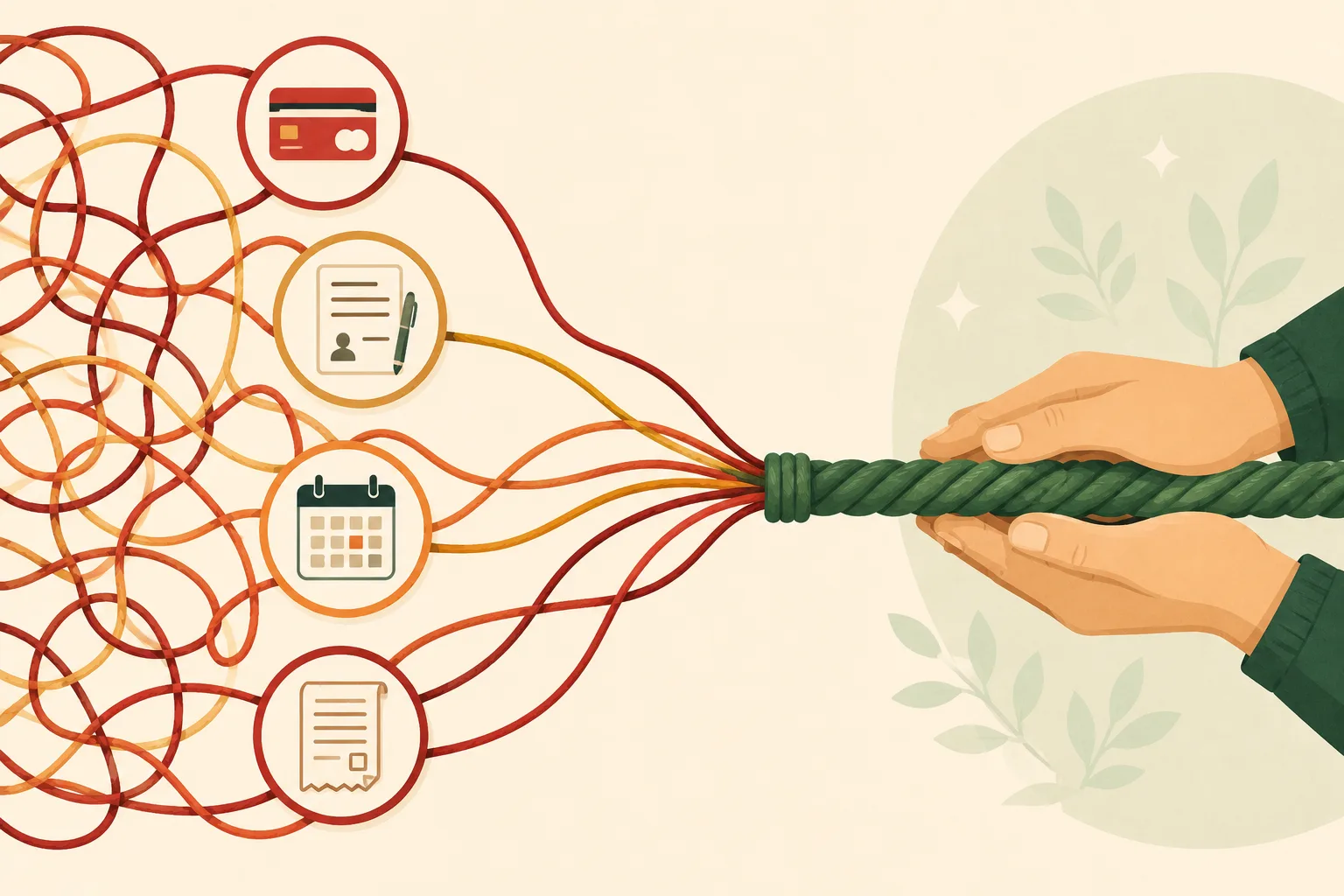
Consolidate your loans by combining multiple existing debts, personal loans, credit cards, whatever you're juggling, into a single new loan with one EMI, one due date, and often a lower total monthly outgo. This guide walks through the actual steps, not just the concept.

Mohit Juneja
Reviewed by FREED India, Debt Resolution Specialists
 4.7/5
4.7/5 ₹3,200Cr+
 20,000+
 20,00,000+4.7/5₹3,200Cr+20,000+20,00,000+
KEY TAKEAWAYS

To consolidate your loans, you combine multiple existing debts into a single new loan with one EMI and one due date.
Most lenders check your combined EMIs against a set share of your income before approving a consolidation loan.
You can consolidate through a bank, an NBFC, or a matched lending partner via a program like FREED's Debt Consolidation Program.
Once your old accounts are paid off and closed, your credit report should reflect fewer open accounts over time.
What Does It Mean to Consolidate Your Loans?
To consolidate your loans means replacing several separate debts with one new loan, one EMI, one due date, instead of tracking multiple accounts each with their own schedule. If you want what loan consolidation actually means explained in full first, start there. This guide picks up from the decision to actually go through with it, not the decision itself.
How to know if now's genuinely the right time is worth walking through directly.
How Do You Know It's Time to Consolidate?
- You're tracking 3 or more EMIs across different due dates, and it's getting genuinely hard to keep straight, month after month.
- Your combined EMI outgo is eating a large chunk of your take-home pay, leaving little room for anything else.
- You're paying noticeably different interest rates across accounts, with some high-cost credit card debt mixed in with lower-cost loans, dragging up your overall cost.
- You're still current on payments. This route works best before anything slips into default, not after.
None of this means anything has gone wrong; it just means the moving pieces have grown past what feels manageable on their own.

What to Gather Before You Start
- A list of every loan and card you're carrying, with current outstanding balance, interest rate, and remaining tenure for each, written down in one place rather than held in memory.
- Your last 3 to 6 months of salary slips or income proof, ready before you're asked for them.
- Your CIBIL report, pulled fresh, not from memory or an old check that no longer reflects your actual standing.
- Your monthly budget. Know what EMI you can actually absorb before you start comparing offers, rather than working backward from whatever a lender approves.
Checking your eligibility against realistic criteria before applying anywhere saves you a round of rejected applications and unnecessary hard inquiries.
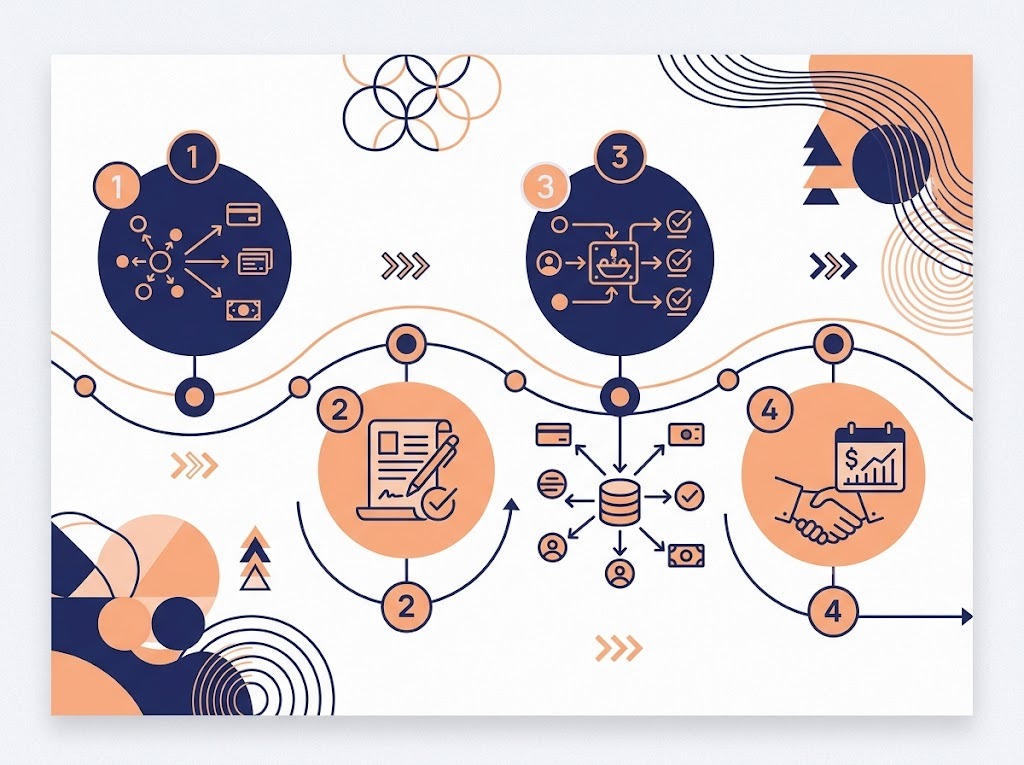
The Step-by-Step Process to Consolidate Your Loans
Once you have everything gathered, here's the process itself, in order.
- List Every Debt You're Carrying. Write down each loan and card, with balance, interest rate, and remaining tenure. This becomes your baseline for every comparison that follows.
- Check Your Eligibility. Confirm your income and existing EMI load fit within what a new consolidation loan would require.
- Compare Consolidation Routes. Decide between approaching your own bank, an NBFC, or a matched lending partner based on your profile and how much comparison legwork you want to do yourself.
- Apply and Get Approved. Submit your application with income proof and existing loan details; the lender confirms the sanctioned amount, rate, and tenure.
- Old Debts Get Paid Off. Once disbursed, the new loan amount is used to pay off and close each existing account.
- Confirm Closure. Get closure confirmation for every old account and check your credit report a few weeks later to confirm it reflects the change.
The whole process typically takes a few weeks from application to old accounts being closed, not instant, and the actual math behind whether it's worth doing is covered in full detail elsewhere if you want to run the numbers precisely before starting.
Choosing How You Consolidate: Bank, NBFC, or a Matched Partner
Route | Bank (Direct) | NBFC | Matched Partner (e.g., FREED) |
Eligibility flexibility | Stricter, standard criteria | Often more flexible | Matched to your specific profile |
Comparison effort | You compare and apply yourself | You compare and apply yourself | Legwork handled for you |
Typical rate | Often lower if you qualify | Often higher than banks | Varies by matched lender |
Best fit for | Strong CIBIL, existing relationship | Wider eligibility need | Unsure where you'd qualify |
Figures shown are general patterns; final terms are decided by the lender.
Bringing down your combined EMI outgo is the shared goal across all three routes; the difference is really about how much of the work you want to do yourself versus have handled for you.
What Helps During the Process
Don't close old accounts yourself before the new loan actually pays them off and confirmation comes through. Let the process complete properly rather than jumping ahead.
Keep making existing EMI payments until each old loan is formally closed. A gap here, even briefly, can hurt your credit report in ways that outlast the consolidation itself.
Get the new loan's total cost in writing, not just the EMI figure, before signing anything.
If credit card debt is part of the mix, understand it gets folded in slightly differently than loan EMIs. Credit card debt consolidation specifically has its own mechanics worth understanding before assuming it works identically to consolidating fixed-term loans.
How FREED Helps You Consolidate Your Loans
FREED's Debt Consolidation Program (DCP) does the legwork described above for you, assessing your existing loans and income, then matching you to a lending partner suited to your profile rather than you approaching banks one by one on your own.
This works best for borrowers still current on payments. If a reader doesn't qualify for consolidation, particularly if they're already behind on payments, FREED's Loan Settlement Plan is the alternative route, negotiating down what's owed instead of taking on a new loan.
Are You in a Loan Trap? Quick Check
Move the slider to your total EMIs as a % of monthly salary. See your debt stress level instantly.
EMIs as % of Monthly Salary
Quick Checklist Before You Apply
- List of all existing debts with balances and rates.
- Income proof ready.
- CIBIL report checked.
- Target EMI figured out.
- Route chosen: bank, NBFC, or matched partner.
If you can tick each of these off, you're genuinely ready to start applying, not just thinking about it.
Sources
Claim | Source |
RBI's Fair Practices Code requires lenders to disclose interest rates, fees, and charges upfront, communicated explicitly in the sanction letter | RBI Master Circular on Fair Practices Code, RBI/2015-16/16, extended to banks and NBFCs under subsequent Master Directions |

Mohit Juneja
Mohit Juneja writes educational content at FREED on debt management, credit scores, loan repayment, and borrowing best practices. His content is shaped by expert insights and industry knowledge, helping readers better understand their financial options and make informed decisions.
mohit.juneja@freed.care

FREED is India's trusted loan management platform. Founded in 2020 and headquartered in Gurugram, FREED has counselled 20 lakh+ people on personal loans, credit cards, and app loans. FREED charges fees only on successful settlement, not upfront. FREED does not handle secured loans (home loans, car loans, gold loans).
Media Mentions