Effects of Debt Consolidation: What It Means for Your EMIs
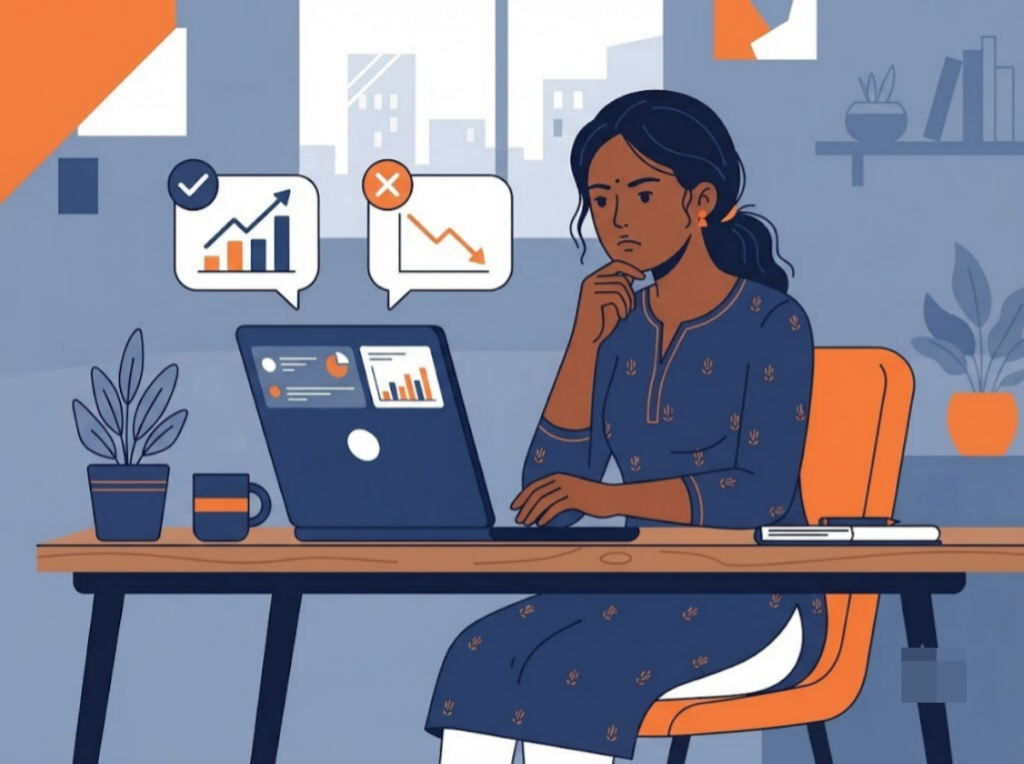
The effects of debt consolidation are mostly positive but not instant. In the short term, your credit score may dip slightly from the new loan's hard inquiry; over months, on-time payments and lower credit utilization typically push it higher than before. Your EMIs simplify to one payment, but the real financial effect depends on whether the new rate genuinely beats your old blended rate.

Mohit Juneja
Reviewed by FREED India, Debt Resolution Specialists
 4.7/5
4.7/5 ₹3,200Cr+
 20,000+
 20,00,000+4.7/5₹3,200Cr+20,000+20,00,000+
KEY TAKEAWAYS

A new consolidation loan usually causes a small, temporary dip in credit score from the hard inquiry and a new account, this typically recovers within a few months.
Credit utilization improves when revolving credit card balances close, which is a major factor in most credit scoring, this is often the biggest positive long-term effect.
The single biggest behavioral risk: running credit card balances back up after they're paid off, ending up with both the new EMI and fresh card debt.
One combined EMI reduces the number of monthly due dates from several to one, cutting the chance of a missed payment from sheer juggling.
Not every consolidation improves your rate, if your credit score is weak, the new loan's rate may not meaningfully beat your existing blended rate.
What Are the Real Effects of Debt Consolidation?
Most searches for this topic bundle several different questions into one vague phrase: does it hurt my score, does it help my score, will my EMI go down, is it risky. These are actually separate questions with separate answers, and worth pulling apart before going any further. This article splits them into short-term effects versus long-term effects, and credit-score effects versus financial effects, rather than answering them all at once as if they were the same thing.
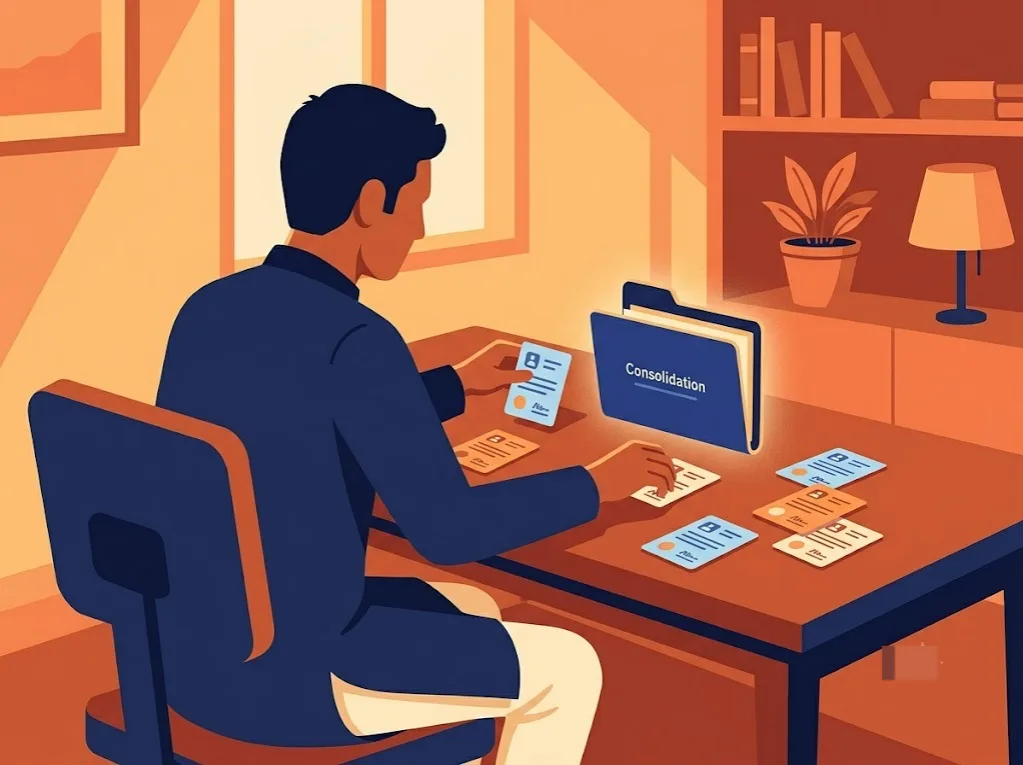
The honest frame worth setting first: consolidation is not a magic fix that erases debt, it restructures it. The total amount you owe doesn't disappear the moment you consolidate, only the number of payments, and potentially the rate you're paying on that amount, changes. Before consolidating anything, it's worth having an accurate picture of what debt you're actually consolidating in the first place, since every effect described in this article depends on your specific starting numbers.
With that frame in place, here's each effect broken down individually, starting with what happens in the first few weeks after you take out a consolidation loan.

See Your Own Likely Effects
A quick assessment shows how consolidation would change your numbers.
Check My ImpactShort-Term Effect: The Initial Credit Score Dip
Applying for a new consolidation loan generates a hard inquiry on your credit report, and opening a new account also lowers the average age of your overall credit history. Opening a new account can change the age and composition of your credit history, while the lender's credit enquiry may have a marginal impact on your CIBIL Score. The effect varies by individual profile.
Realistically, this dip is typically minor and tends to correct within a few months of consistent on-time payments on the new loan. It isn't a lasting mark against you, and it isn't something specific to consolidation either, any new loan or credit product of any kind causes a similar small, temporary dip when you apply for it. The mechanics here are worth understanding clearly, since the difference between a soft and hard inquiry explains why checking your own score never causes this dip, only an actual application does.
This short-term effect is genuinely normal and expected, not a reason to avoid consolidating if the underlying numbers make sense for your situation. Here's the longer-term effect that usually outweighs this initial dip by a meaningful margin.
Long-Term Effect: Credit Utilization and Score Improvement
This is the genuinely positive, well-documented effect worth understanding in depth. Credit utilization refers to how much of your available revolving credit, mainly credit cards, you're actually using at any given time, and it's one of the largest factors in most credit scoring models, right alongside payment history.
Here's the mechanic that makes consolidation genuinely helpful here: when a consolidation loan pays off and closes revolving credit card balances, utilization on those cards drops to zero, or the cards close entirely. This typically improves your score meaningfully over the following months, often outweighing the initial small dip from the new loan covered in the previous section.
Payment history plays its own role too. Consolidation into one EMI, if paid on time consistently, builds a clean, simple payment record that's genuinely easier to maintain than juggling several accounts' worth of separate due dates spread across different banks. Missing one of five payments because you lost track of a due date is a common, understandable failure mode, one that a single consolidated EMI structurally removes. It's worth knowing why your score can sometimes drop even when you're paying on time, since utilization and account-age factors move independently of your payment record.
Worth being honest about the limit here: this benefit depends entirely on actually making the new EMI payments on time. Consolidation doesn't automatically improve your score simply by existing, disciplined repayment on the new loan is what actually does the work, the restructuring alone just creates the opportunity for that improvement to happen.
The Real Financial Effect: Does Your EMI Actually Go Down?
Shifting from credit score to cash flow: combining multiple EMIs into one lower monthly payment is common, but the mechanism behind that lower number matters enormously. A lower monthly figure can come from either a genuinely lower interest rate, real savings, or simply a longer repayment tenure, the same or even more total cost, just spread thinner across more months.
Here's how to tell the difference plainly: compare the new loan's total cost over its full tenure against the sum of what all your old debts would have cost to pay off on their own original schedules, not just the monthly figures sitting side by side. A lower EMI by itself does not tell you whether you will save money overall. Compare the new loan's total cost, including applicable interest and fees, with the cost of your existing debts.
For the full mechanics behind flat versus reducing-balance interest, and exactly how a lower headline rate can still cost more, FREED's guide to low interest rate consolidation loans covers that math in depth. This section has stayed focused specifically on the cash-flow effect at a summary level, checking your eligibility for consolidation in the first place is the practical starting point before running any of these comparisons.

What the Law Says
RBI's Digital Lending Guidelines require lenders to disclose the full cost and terms of a consolidation loan through a Key Fact Statement before you sign, so the real cost impact is knowable upfront.
Check My ImpactThe One Real Risk: Running Up the Same Debt Again
This is worth naming directly and clearly, since it's the single most consequential risk in the entire consolidation process, and one that's genuinely common rather than rare.
Once a consolidation loan pays off and closes credit card balances, those cards' available credit limits typically remain open, unless you formally close the account yourself. It's genuinely common, understandable, and human for someone to start spending on the now-empty cards again over the following months, ending up with both the new consolidation EMI and fresh card debt stacked on top of it, a materially worse position than before consolidating in the first place.
The practical fix here matters more than the warning itself. Consider formally closing paid-off revolving accounts once the consolidation loan has cleared them, or at minimum, set a low personal spending limit on them going forward if closing feels premature. Treat the consolidation loan as the actual end of the old debt cycle, not a reset button that quietly frees up room to borrow again. Understanding your own credit profile clearly after consolidating, rather than just the headline score, helps you see whether old accounts are sitting open and unused, or whether balances are quietly creeping back up.
Worth saying plainly: this is an extremely common pattern under financial stress, not a personal failing or a sign of poor discipline. The relief of a lower, simpler payment can genuinely feel like room has opened up, when really the old debt has just been restructured, not eliminated. Naming this risk clearly upfront is the best defence against it happening without you noticing.
How FREED Helps You Get the Positive Effects, Not the Risks
FREED assesses your full debt profile, your income, your existing debts, and your current EMIs, and matches you to a lending partner from its network. Subject to lender approval and the applicable loan structure, the matched lending partner may provide a new loan to consolidate eligible unsecured debts. Confirm the disbursement and repayment process in the lender's final terms.
This process is tied specifically to the effects covered throughout this article. One clean EMI replacing several fragmented ones is exactly what supports the credit-utilization improvement described earlier, and the guidance built into FREED's process includes flagging the old-account risk covered in the section above, so you're not left to navigate that particular pitfall alone once the consolidation loan actually disburses.
FREED charges a success-based fee, only when the consolidation is actually completed, there's no fee to you for the consolidation itself beyond the matched lending partner's own terms. No specific CIBIL floor or percentage EMI-saving figure is quoted here, since, consistent with everything covered in this article, your own numbers, your current rates, your current utilization, your repayment discipline, determine what you'll actually experience, not a generic marketing claim.
Are You in a Loan Trap? Quick Check
Move the slider to your total EMIs as a % of monthly salary. See your debt stress level instantly.
EMIs as % of Monthly Salary
What Helps You Get the Best Effects From Consolidation
Make every new EMI payment on time. Payment history is doing most of the long-term score-improvement work described earlier in this article, a single missed payment on the new loan undermines the entire benefit you consolidated to get.
Formally close, or set a firm personal limit on, old revolving credit accounts once they're paid off. This directly addresses the one real risk covered above, the single most common way consolidation quietly backfires.
Avoid applying for several separate new credit products right around the same time as your consolidation loan. Multiple hard inquiries clustered close together compound the short-term dip rather than each one being treated in isolation.
Keep a simple written note of the new EMI due date somewhere visible for the first few months while the new single-payment routine settles in. The old habit of tracking several due dates takes a little time to fully let go of.
Sources
Claim | Source |
Credit score typically recovers from a new-account/inquiry dip within a few months of consistent on-time payment | Fox Business explainer on debt consolidation and credit |
Credit utilization and payment history together commonly account for roughly 60-65% of most credit scoring models' weight | Finder's explainer on debt consolidation and credit score impact |
RBI Digital Lending Guidelines require a Key Fact Statement disclosing full cost and terms | incorpx.io summary, writer to verify against the RBI circular directly |

Mohit Juneja
Mohit Juneja writes educational content at FREED on debt management, credit scores, loan repayment, and borrowing best practices. His content is shaped by expert insights and industry knowledge, helping readers better understand their financial options and make informed decisions.
mohit.juneja@freed.care

FREED is India's trusted loan management platform. Founded in 2020 and headquartered in Gurugram, FREED has counselled 20 lakh+ people on personal loans, credit cards, and app loans. FREED charges fees only on successful settlement, not upfront. FREED does not handle secured loans (home loans, car loans, gold loans).
Media Mentions