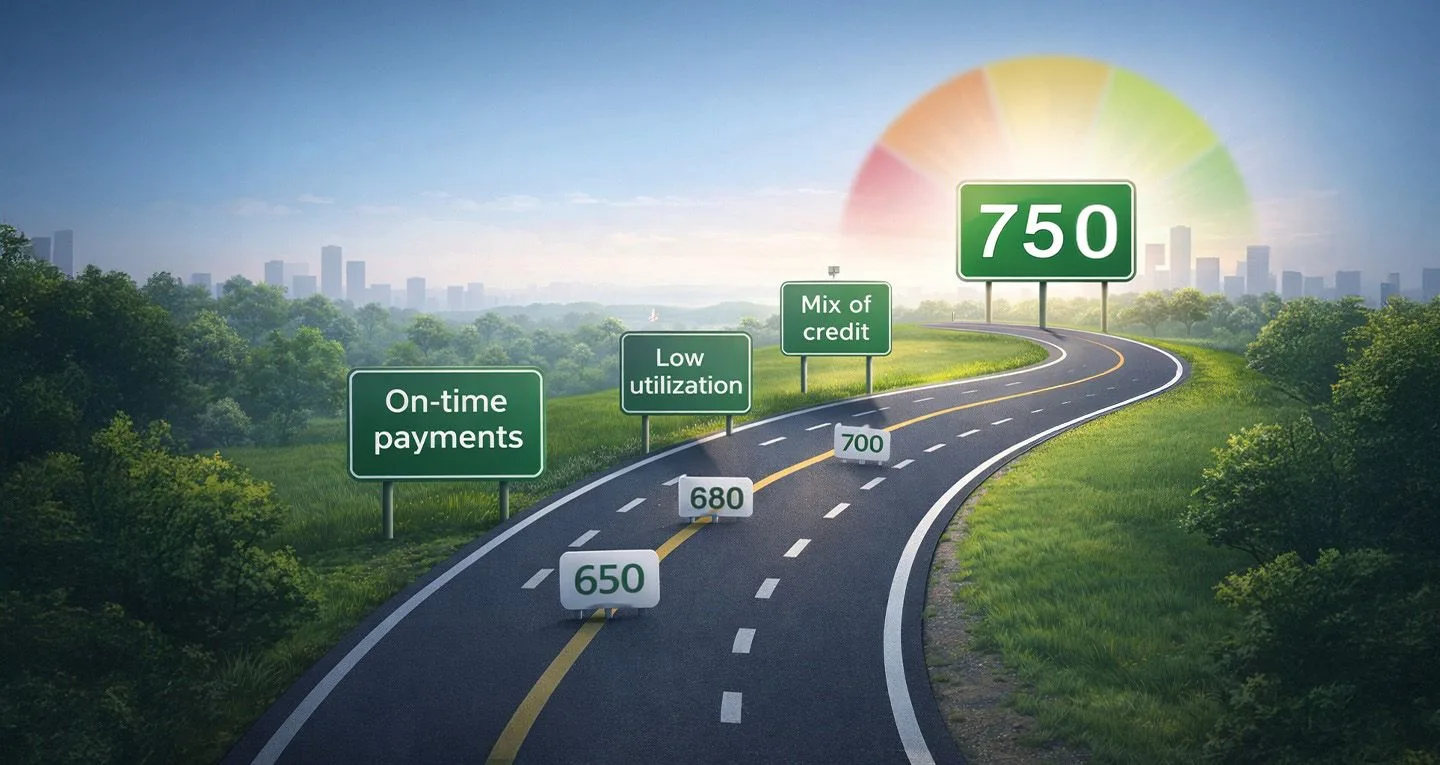
Why Does My Credit Score Drop Even Though I Pay On Time?
You have not missed a single payment. Every EMI is on time. Every credit card bill is paid. And yet your credit score dropped. Confusing? Frustrating? You are not alone. Here is exactly why this happens and what you can do about it.
Mohit Juneja
Reviewed by FREED India, Debt Resolution Specialists
 4.7/5
4.7/5 ₹3,200Cr+
 20,000+
 20,00,000+4.7/5₹3,200Cr+20,000+20,00,000+
Key Takeaways

Payment history is the biggest factor in your credit score but it is not the only one. Five other factors also affect it.
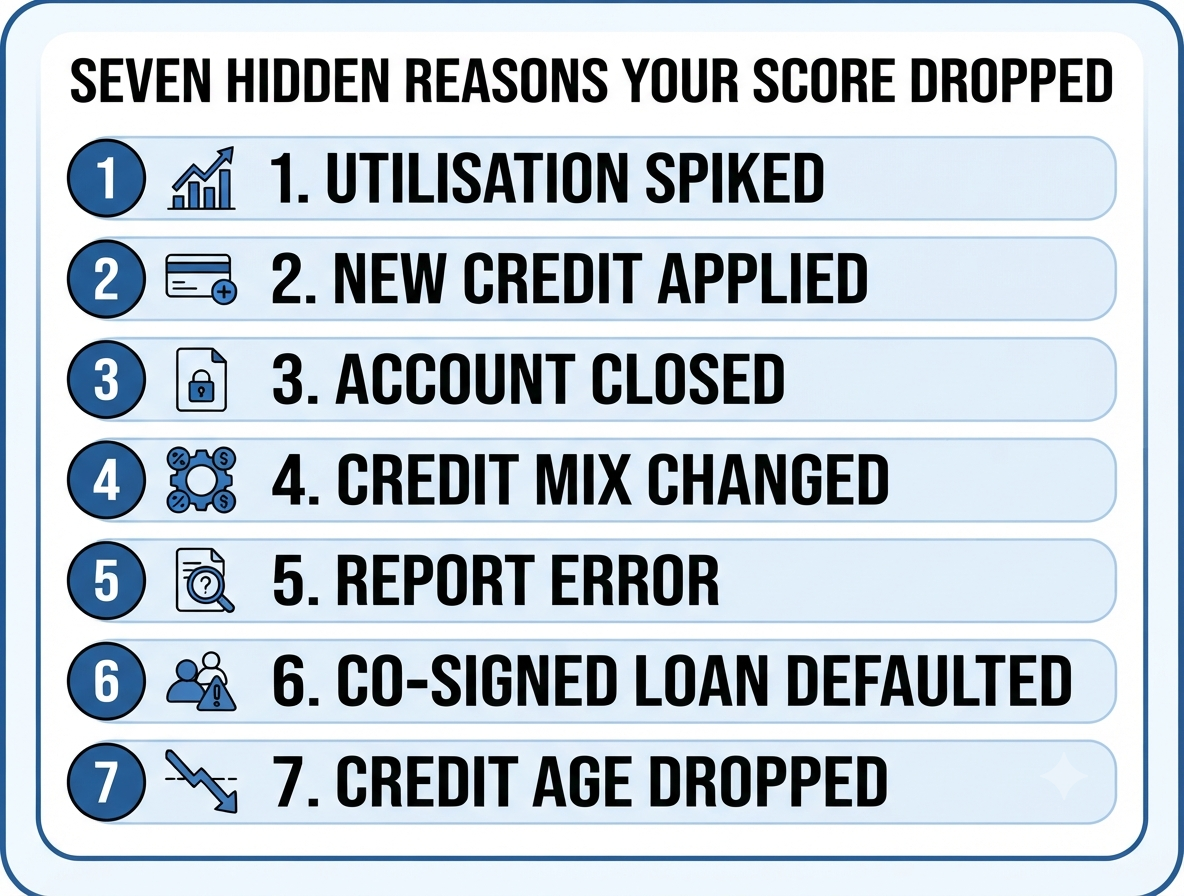
A score drop despite on-time payments almost always has one of seven specific causes.
The most common hidden reasons are a spike in credit card utilisation, a new loan application, or closing an old account.
Finding the exact cause requires reading your credit report carefully, not just checking your score.
Once you know the cause, fixing it is straightforward in most cases.
Why Paying on Time Is Not the Only Factor
Most people learn about credit scores in reverse.
They miss a payment, their score drops, and they realise that payment history matters. So they fix that. They start paying on time. Every month, without fail.
And then, one day, they check their score and it has dropped anyway.
This moment of confusion is incredibly common. And it comes from a misunderstanding of how credit scores are actually calculated.
Payment history is the single most important factor in your credit score, accounting for approximately 35 percent of the total calculation. But that leaves 65 percent of your score determined by five other factors that have nothing to do with whether you paid on time.
Those five other factors are credit utilisation, length of credit history, credit mix, new credit enquiries, and the overall information accuracy on your report.
Any one of these can cause your score to drop even when your payment behaviour is perfect.
This is actually good news, even if it does not feel that way.
It means that a score drop despite on-time payments is usually caused by something specific and identifiable. And once identified, it is usually fixable.
The rest of this article walks through each possible cause, how to spot it, and what to do about it.
Reason 1: Your Credit Utilisation Shot Up
This is the most common hidden reason for a credit score drop.
Credit utilisation is the percentage of your total available credit limit that you are currently using. It accounts for approximately 30 percent of your credit score, making it the second most influential factor after payment history.
Here is how it works.
If your total credit card limit across all cards is Rs. 1,00,000 and your current outstanding balance is Rs. 70,000, your credit utilisation is 70 percent.
That is considered very high. Most credit experts recommend keeping utilisation below 30 percent. Below 20 percent is even better.
A high utilisation tells lenders and credit bureaus that you are heavily dependent on credit. Even if you pay the bill in full every month, what matters for the score calculation is the balance reported to the bureau at the time of the statement.
How this causes a score drop without missed payments
You might pay your credit card bill in full every month. Clean payment record. No issues there.
But if you made large purchases during the month and your outstanding balance was high on the statement date, that high utilisation gets reported to the bureau. Your score drops even though you subsequently paid the full amount.
This surprises many people. The timing of when the balance is reported matters just as much as whether it was eventually paid.
What to do about it
Keep your outstanding balance below 30 percent of your total credit limit at all times, not just on the payment due date.
If you regularly use your credit card for large transactions, consider making a mid-cycle payment before the statement is generated, reducing the balance that gets reported.
If your utilisation is chronically high because your credit limit is low relative to your spending, request a limit increase from your bank. A higher limit with the same spending reduces your utilisation ratio.

FREED Expert Tip
Your credit card balance is typically reported to the bureau on your statement generation date, not your payment due date. These are usually different dates. If you pay your bill after the statement is generated, the high balance has already been reported. Make payments before your statement date to keep reported utilisation low.
Talk to a FREED Counsellor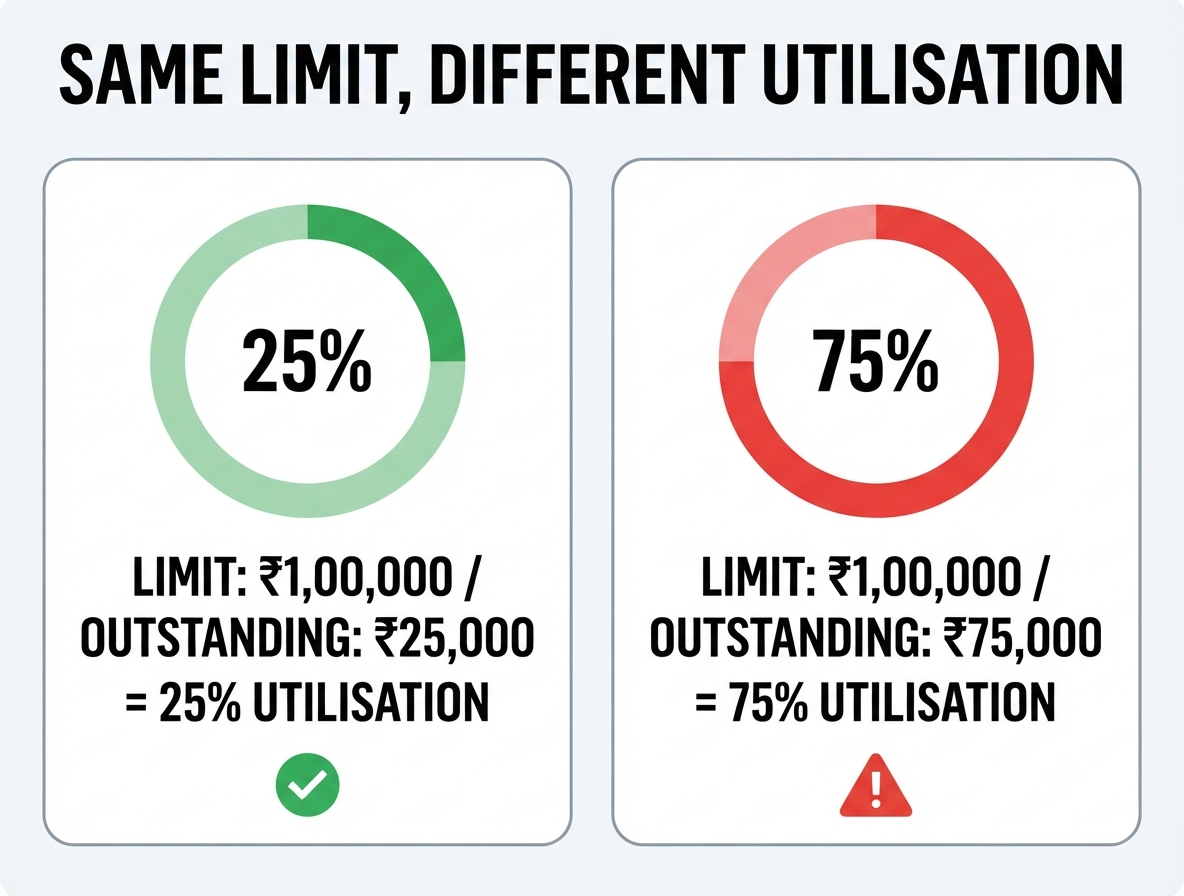
Reason 3: A Credit Account Was Closed
Closing a credit account, whether you close it yourself or the lender closes it, can cause your credit score to drop in two distinct ways.
Way 1: Your credit utilisation ratio increases
When an account is closed, its credit limit disappears from your total available credit.
Example: You have two credit cards. Card A has a limit of Rs. 50,000. Card B has a limit of Rs. 50,000. Total limit is Rs. 1,00,000.
You have an outstanding of Rs. 30,000 on Card B. Your utilisation is 30 percent. Healthy.
Now you close Card A. Your total available credit drops to Rs. 50,000. Your outstanding is still Rs. 30,000 on Card B. Your utilisation jumps to 60 percent. High.
Nothing changed about your spending or your payments. But your utilisation doubled because a limit was removed.
Way 2: Your average credit age drops
The length of your credit history accounts for approximately 15 percent of your score.
Credit bureaus look at the age of your oldest account, your newest account, and the average age of all accounts combined.
If you close an old account that has been active for many years, you remove a significant chunk of credit history from your profile. Your average credit age drops. Your score drops with it.
This is why financial experts consistently advise against closing old credit card accounts even if you no longer use them actively.
What to do about it
Avoid closing credit accounts unnecessarily.
If you have an old card with an annual fee that you no longer use, consider calling the bank to request a downgrade to a no-fee version of the same card rather than closing it entirely. This preserves the credit history and the available limit.
If an account was closed without your initiation, contact the lender to understand why and explore whether it can be reinstated.
Use This Tool: FREED Financial Health Score Not sure which factor is dragging your score down? Get your FREED Financial Health Score in 2 minutes. Free. No login required. Plain-language insights that identify exactly what is working and what needs attention in your credit profile.
Reason 4: Your Credit Mix Changed
Credit mix refers to the variety of credit types in your profile. It accounts for approximately 10 percent of your credit score.
Credit bureaus view a mix of instalment loans, such as home loans, car loans, and personal loans, alongside revolving credit, such as credit cards and overdraft facilities, more favourably than a profile that has only one type.
A diverse credit mix shows lenders that you can responsibly manage different types of financial obligations.
When your credit mix changes, your score can be affected.
How this causes a score drop
If you close your only credit card, you may eliminate the revolving credit element of your profile entirely. Your mix becomes less diverse and your score reflects this.
If your only active instalment loan ends after full repayment, you may temporarily have no instalment loan on your profile until you take another. A purely credit-card-based profile is considered less balanced.
What to do about it
Do not close accounts purely to simplify your finances if doing so removes an entire category of credit from your profile.
Do not take on debt purely to improve your credit mix. This would be counterproductive. But when you genuinely need credit, being aware of your current mix helps you understand how a new product might affect your profile.
Reason 5: An Error on Your Credit Report
Credit report errors are more common than most people realise.
A single incorrectly recorded piece of information can drag your score down silently for months or even years without you knowing.
Common types of errors that cause score drops
A loan or credit card that was closed or settled showing as still active with an outstanding balance.
A payment that you made on time showing as missed due to a lender processing error or reporting delay.
A loan that belongs to someone else appearing on your report due to a name, PAN, or address mix-up.
An account with an incorrect outstanding balance higher than the actual amount.
A duplicate entry for the same loan creating the appearance of more debt than you actually have.
A loan from years ago that should have been removed after 7 years still appearing on the report.
Why this causes a score drop despite clean behaviour
The error is recorded just like real negative information. The bureau calculates your score based on what is on the report, not what should be on it.
If a payment you made is incorrectly recorded as missed, it damages your score just as much as an actual missed payment.
How to spot and fix errors
Download your credit report from CIBIL, Experian, or any bureau and read through every account entry carefully.
Compare what the report shows to your actual loan agreements, bank statements, and payment confirmations.
If you find an error, raise a formal dispute with the credit bureau directly through their website or app. Provide documentary evidence of the correct information.
The bureau is legally required to investigate and respond within 30 days. The lender responsible for the error must correct it and update the bureau.

What the Law Says
Under the Credit Information Companies Regulation Act 2005, every individual in India has the right to access their credit report once per year free of charge from any credit bureau. If incorrect information is found on the report, the individual has the legal right to dispute it formally. The credit bureau is required to investigate and respond within 30 days. The lender that supplied the incorrect information is required to correct it and update the bureau accordingly. Incorrect negative information on a credit report is not just an inconvenience. It is a legally addressable error. Read about how to raise a credit report dispute in India.
Talk to FREEDReason 6: A Co-Signed or Guaranteed Loan Went Bad
This is a cause that blindsides people completely.
If you co-signed or guaranteed a loan for someone else, that loan appears on your credit report.
If that person, whether a family member, friend, or colleague, starts missing their payments or defaults on the loan, the negative record shows up on your credit report too.
You made no payments on this loan. You may not even know the other person is struggling. But your score drops anyway because the loan is legally your responsibility as well.
This is more common than people think
Many Indians co-sign loans for family members out of love and trust, a sibling taking a home loan, a parent needing a vehicle loan, a friend starting a business.
The intention is good. But the financial risk is real and personal.
What to do about it
If you are a co-applicant or guarantor on a loan that is in trouble, your options are limited but not zero.
Contact the primary borrower and understand the full situation. Sometimes the problem can be resolved quickly with a small amount of support.
Contact the lender to discuss restructuring or resolution options for the loan.
If the relationship allows, help the primary borrower connect with FREED for professional support in resolving the underlying debt problem.
Going forward, only co-sign or guarantee loans for people whose financial discipline and repayment capacity you are completely confident about.
How to spot this on your report
Your credit report will show all accounts where you are listed as a co-applicant or guarantor. Check these accounts specifically for any payment irregularities or negative status indicators.
Reason 7: Your Credit Age Dropped
Your length of credit history accounts for approximately 15 percent of your credit score.
Credit bureaus look at three aspects of credit age. The age of your oldest active account, the age of your newest account, and the average age of all your accounts combined.
The older your average credit age, the better.
How credit age drops without any payment issues
When you open a new credit account, your newest account age drops to zero. This pulls down the average age of all accounts.
If you opened two new accounts recently, a new credit card and a new personal loan, both are now very young accounts. Your average credit age drops. Your score reflects this.
This does not mean you should never open new accounts. New credit is sometimes necessary. But opening multiple accounts in a short period compounds the credit age effect on top of the hard enquiry effect, and both go in the same direction.
What to do about it
Be selective about when you open new credit accounts.
Only apply for new credit when you have a genuine need. Avoid opening multiple accounts close together.
Keep old accounts open even if inactive, because these are your oldest accounts and anchor your average credit age positively.
The credit age impact of a new account recovers naturally over time as the account gets older. There is no shortcut to accelerating this. Patience and not adding more new accounts are the best responses.
Are You in a Loan Trap? Quick Check
Move the slider to your total EMIs as a % of monthly salary. See your debt stress level instantly.
EMIs as % of Monthly Salary
How to Find the Exact Reason Your Score Dropped
You now know the seven possible reasons. But which one actually caused your score to drop?
Here is a simple process to find out.
Step 1: Download your full credit report.
Do not just check the score number. Download the complete credit report from CIBIL, Experian, Equifax, or CRIF High Mark.
The score number tells you that something changed. The report tells you what.
Step 2: Check your credit utilisation across all cards.
Add up the outstanding balances across all credit cards. Divide by the total credit limit across all cards. If the result is above 30 percent, utilisation is likely a contributing factor.
Step 3: Check for recent hard enquiries.
Look for a section on your report showing enquiries. Note any hard enquiries from the last 6 months. If there are multiple recent ones, that is a likely cause.
Step 4: Check whether any accounts were recently closed.
Look for accounts showing as closed in the last 3 to 6 months. Note the impact on your total available credit and your oldest account age.
Step 5: Check all payment records carefully.
Verify that every payment you made is correctly recorded. Look for any missed payment entries you do not recognise.
If you find an error, raise a dispute with the bureau immediately.
Step 6: Check accounts where you are a co-applicant or guarantor.
These will be listed separately on your report. Check the payment status on each of these accounts.
Step 7: Calculate your average account age.
Note the opening date of every active account. Calculate the average age. If it has dropped significantly due to new accounts, that is a factor.
Step 8: Compare to your previous report.
If you have a copy of your credit report from 3 to 6 months ago, compare it directly to the current one. Changes between the two reports will point clearly to the cause of the score movement.

Mohit Juneja
Mohit Juneja writes educational content at FREED on debt management, credit scores, loan repayment, and borrowing best practices. His content is shaped by expert insights and industry knowledge, helping readers better understand their financial options and make informed decisions.
mohit.juneja@freed.care

FREED is India's trusted loan management platform. Founded in 2020 and headquartered in Gurugram, FREED has counselled 20 lakh+ people on personal loans, credit cards, and app loans. FREED charges fees only on successful settlement, not upfront. FREED does not handle secured loans (home loans, car loans, gold loans).
Media Mentions