Debt Consolidation Loan Eligibility: Who Actually Qualifies
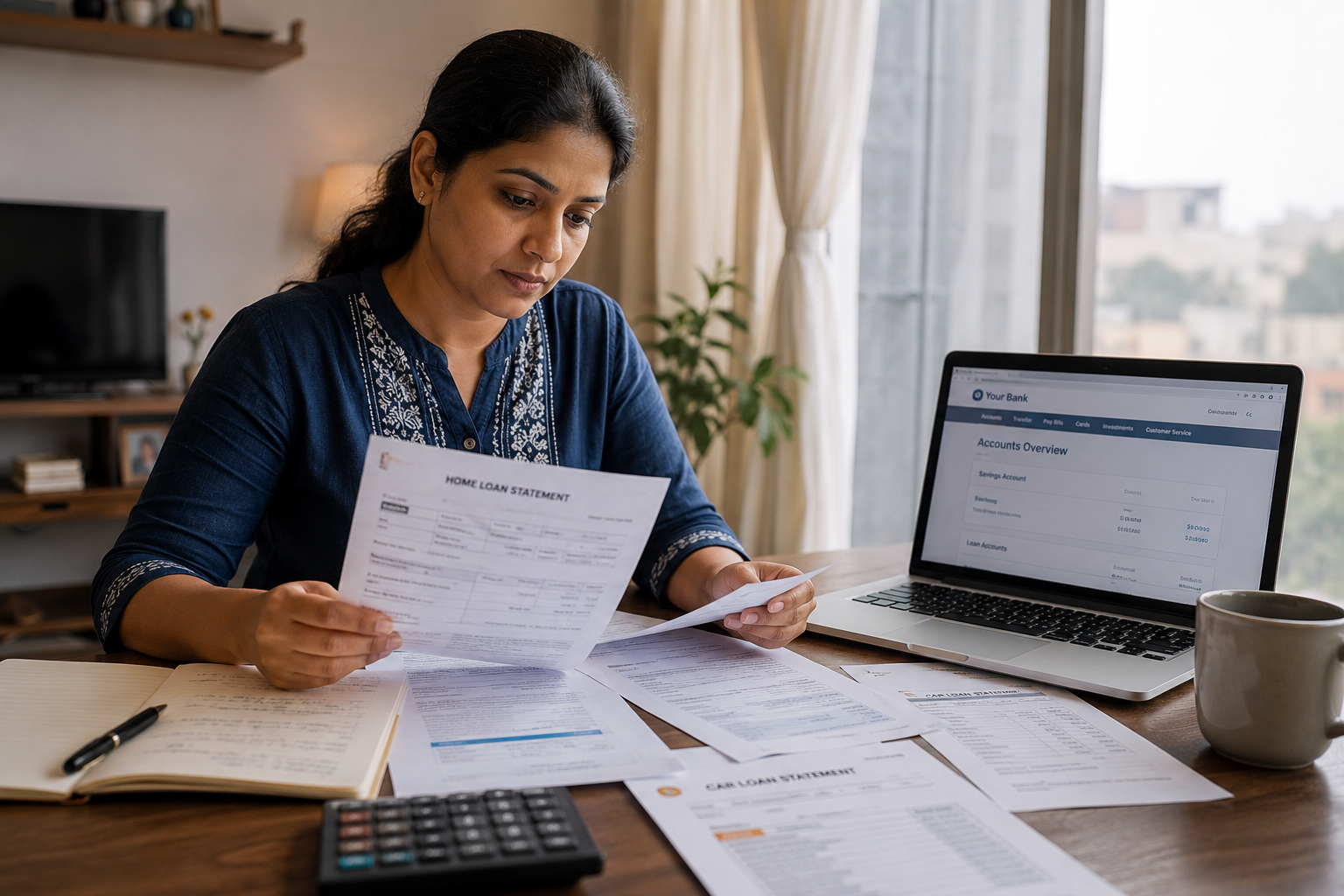
Debt consolidation loan eligibility means passing a lender's checks on your income, credit score, job stability, and existing EMI load before one new loan replaces your old debts. Lenders look at your monthly income, CIBIL score, job type, and how much salary already goes to EMIs (FOIR) before they approve. Your age and where you live matter too.

Mohit Juneja
Reviewed by FREED India, Debt Resolution Specialists
 4.7/5
4.7/5 ₹3,200Cr+
 20,000+
 20,00,000+4.7/5₹3,200Cr+20,000+20,00,000+
KEY TAKEAWAYS

Debt consolidation loan eligibility comes down to 4 factors: income, CIBIL score, FOIR, and employment type.
Credit score and income requirements vary by lender, product, and applicant profile.
FOIR (how much of your salary already goes to EMIs) above 50% can make approval more difficult. Banks may be reluctant to add more debt on top.
Already missed a few EMIs? Consolidation may not be off the table. Talk to FREED's team for an honest assessment.
Age requirements vary by lender and product.
What Is Debt Consolidation Loan Eligibility?
Eligibility for a debt consolidation loan is not automatic. Before a lender agrees to disburse a new loan that pays off your existing debts, they assess your whole financial picture, not just one number.
Four things drive that decision:
- Income. Can your salary support one new EMI, even a lower one?
- CIBIL score. Does your repayment history show that you pay on time?
- FOIR (how much of your salary already goes to EMIs). Is there room for one more loan, even a consolidating one?
- Employment stability. Has your income been steady, or has it changed recently?
This is different from settlement eligibility, which is a separate process for borrowers who genuinely cannot repay in full. If that describes your situation more closely, FREED's guide on debt consolidation vs settlement walks through both paths.
Lenders run this check because they are taking on your existing debt. The next section looks at why that check exists and what it actually protects.

Not Sure Where You Stand?
Check your eligibility for debt consolidation in a few minutes. No cost, no commitment.
Check My EligibilityWhy Do Lenders Check Debt Consolidation Loan Eligibility?
A lender who consolidates your loans is stepping into a position of real risk. They pay off your existing debts upfront and trust you to repay one new loan reliably. The eligibility check is how they satisfy themselves that trust is warranted, not a judgment on your financial habits.
Here's the part that gets missed: juggling several loans is not, by itself, a red flag. Plenty of borrowers manage 3 or 4 EMIs across different banks and never miss a payment. What matters to a lender is whether your income can comfortably support one new EMI going forward.
Picture a borrower who has a personal loan, two credit cards, and a small BNPL balance. Every payment has gone through on time, but keeping track of four due dates each month is exhausting. That borrower is not asking to be rescued from a crisis. They are asking for a simpler way to manage the debt they can already handle. That is exactly who consolidation eligibility checks are built to identify.
Understanding the lender's angle helps explain the next question: how do you know if you are likely to qualify?
Signs You May Be Eligible for a Debt Consolidation Loan
A few concrete signs point toward eligibility. None of these guarantee approval since each lender weighs them differently, but they are a reasonable starting checklist.
- You have paid every EMI on time, with no missed payments. This is an important factor lenders look at. A clean payment history tells them you are managing your current debt, even if it feels stretched.
- You have 2 or more active loans or cards across different banks. Multiple EMIs, multiple due dates, and multiple lenders are exactly the pattern consolidation is designed to simplify.
- Your EMIs eat up 40% to 50% or more of your take-home pay. This is where things start to feel tight, and it is the range where consolidation tends to make the most difference.
- You have had a stable income for a year or more. Lenders want to see that your ability to repay is not a recent or temporary thing.
- Your CIBIL score has no major defaults on record. A reasonable score with a clean history counts more than a single high number.
- You have not yet received legal notices or recovery pressure. This is a preventative step, not a crisis response.
If you have already missed 1 or 2 EMIs, do not assume you are automatically disqualified. Eligibility rules vary by lender, and you may still qualify depending on your overall financial profile. Talk to FREED's team. They can assess your case and tell you honestly where you stand.
Knowing the signs is one thing. Knowing exactly how a lender turns those signs into a yes or no is the next piece.

What the Law Says
If you have already missed 1 or 2 EMIs, do not assume you are automatically disqualified. Eligibility rules vary by lender, and you may still qualify depending on your overall financial profile. Talk to FREED's team. They can assess your case and tell you honestly where you stand. Knowing the signs is one thing. Knowing exactly how a lender turns those signs into a yes or no is the next piece.
Check your reportHow Do Lenders Decide Debt Consolidation Loan Eligibility?
Lenders run 4 checks, and each one answers a different question about your ability to repay.
- 1
Income check.
Lenders verify your net monthly salary through salary slips and bank statements, usually for the last 3 to 6 months. If you are self-employed, they typically ask for ITR filings and 6 months of bank statements instead. This tells the lender how much money is actually coming in before anything else is assessed.
- 2
CIBIL or credit score check.
Lenders review your credit score and repayment history. The minimum score required varies by lender and applicant profile. A higher score may improve your chances or terms, but it does not guarantee approval.
- 3
FOIR or debt-to-income check.
This measures how much of your income already goes toward EMIs, and most lenders cap it somewhere between 40% and 50%. Here is what that looks like in practice: someone earning ₹50,000 a month with ₹28,000 already going to EMIs has a FOIR of 56%. That is above what most lenders will approve, regardless of how strong the CIBIL score
- 4
Employment stability check.
Lenders look at how long you have been with your current employer and what kind of employer it is. Salaried applicants with 1 or more years at their current job are viewed differently from self-employed applicants, who are assessed on business continuity and income consistency instead.
Typical Lender Eligibility Criteria for Debt Consolidation Loans
Criterion | What Lenders Typically Look For |
Age | Roughly 21 to 70 years, varies by lender |
Employment | Salaried or self-employed, Required income or employment history varies |
Monthly income | Minimum varies by lender, product, and location; net varies by lender and city |
CIBIL or credit score | Minimum varies by lender and applicant profile range; a higher score usually means better terms |
FOIR (EMI-to-income ratio) | Acceptable limit varies by lender; most lenders |
Documentation | ID proof, address proof, income proof, existing loan statements |
This table reflects general criteria that lenders publish, not a fixed rule that applies everywhere. FREED does not set these numbers. Your lending partner does, and the exact figures ultimately depend on your bank.

Compare Different Lenders' Criteria
Use the filters below to see how eligibility checks vary by bank, product type, and CIBIL threshold.
[Bank/Lender Comparison Matrix: ICICI / HDFC / IndusInd / SBI / Kotak / Axis, filterable by bank, product type, CIBIL threshold, settlement availability]
Rates and ranges shown are indicative. Final terms are decided by the bank. FREED is not a Loan Provider. No outcome is guaranteed. Please verify directly with your bank.
Meeting these 4 checks does not guarantee approval. The next section looks at why applications still get turned down.
Why Debt Consolidation Loan Applications Get Rejected
Understanding rejection helps more than just knowing the eligibility checklist, because most rejections come down to a handful of repeatable reasons.
FOIR is already too high. If your existing EMIs already eat up more than 50% of your income, a new loan pushes your risk profile past what most lenders are comfortable with, even if the new loan is meant to lower your total EMI.
Recent missed payments. Even 1 or 2 late EMIs in the last few months signal risk to a new lender, since they have no track record with you yet and lean on your recent history to judge intent.
A recent job change. Less than a year at your current employer is often flagged, particularly for salaried applicants, since lenders read job tenure as a proxy for income stability.
Too many recent loan inquiries. Applying to several lenders in a short window can raise concerns, and each hard inquiry can also affect your credit score, making the next application harder.
A rejection from one lender is not the final word. Different lenders weigh these 4 factors differently, and FREED assesses your profile against its network of lending partners rather than pinning your chances on a single application.
See If You Qualify for Debt Consolidation
Free assessment, no impact on your credit score.
Start My Debt Assessment
What Are Your Options If You Don't Qualify Right Now?
If you do not clear a lender's checks today, you still have a couple of realistic paths forward.
Balance transfer. If only one loan is the problem, and your CIBIL score is reasonable, moving that single loan to a lender offering a lower rate can bring your EMI down without touching your other debts. This works best when you have one expensive loan, not several.
FREED's Debt Consolidation Program. If you are managing multiple loans and your FOIR is stretched across all of them, a single balance transfer will not fix the underlying problem. FREED assesses your full financial profile, all your loans, your income, your obligations, and matches you to a suitable lending partner from its network. If that route fits your situation, more detail on how it works follows in the next section.
How FREED Helps With Debt Consolidation Eligibility
FREED's Debt Consolidation Program, also known as "Reduce My EMI," looks at your complete financial profile rather than checking you against one lender's narrow list.
Here is what that means in practice. You share your existing loans, income, and monthly obligations with FREED. FREED assesses that profile and matches you to a suitable lending partner from its network, rather than you applying to bank after bank on your own and taking a hard inquiry hit each time.
Once matched, the new loan may pay off your eligible existing unsecured debt in one go. Personal loans, credit card dues, BNPL balances, payday loans, and peer-to-peer loans may be covered, subject to eligibility and the lending partner's criteria. What you are left with is one loan, one lender, one EMI, and one due date, replacing whatever combination of debts you were juggling before.
Your monthly EMI may go down as a result of combining multiple obligations into one loan. How much it comes down by depends on your income, existing loans, and the terms of the new loan, so it is not something that can be quoted as a fixed number here.
One important boundary: FREED's Debt Consolidation Program covers unsecured debt only. It does not touch secured loans like home loans, car loans, gold loans, or education loans.
On the fee side, FREED charges only when the consolidation is successfully completed. There is no upfront cost, and nothing is charged if it does not go through.
Tips to Improve Your Debt Consolidation Loan Eligibility
A few practical steps can shift your eligibility odds before you apply anywhere.
Check your free credit report first. RBI's rules entitle you to one free, full credit report every calendar year from each bureau. Reviewing it before you apply lets you catch errors, like an old loan showing as active, before a lender's system flags them for you.
Pay down your FOIR where you can. Even clearing one small loan before applying can shift your FOIR enough to change how a lender views your application. It does not need to be a large amount to make a difference.
Avoid applying to multiple lenders in a short window. Each application shows up as a separate inquiry on your credit report, and several inquiries close together can drag your score down right when you need it steady.
Maintain a clean recent payment history before applying. Lenders review your repayment behaviour, but the period they consider varies.
Gather your documents in advance. Income proof, ID, address proof, and existing loan statements ready ahead of time cut down on processing delays once you do apply.
A free assessment through FREED checks your fit across multiple lending partners without the inquiry hit of applying to each one directly.

Freed Expert Tip
Check your free annual credit report before applying anywhere. Fixing errors early can quietly protect your eligibility.
Check your optionsSources
Claim | Source status |
RBI entitles individuals to one free full credit report per calendar year, from each credit bureau | Verified. RBI Master Directions on Credit Information Reporting, published on RBI's official Master Directions section: https://www.rbi.org.in/Scripts/BS_ViewMasDirections.aspx?id=12764 |
CIBIL 650 to 750+ range across lenders, FOIR cap 40-50%, income ₹25,000+, age band 21-70 | Not a regulator figure. These are lender-published criteria that shift over time. Softened in body copy to "typically" / "commonly" language; no row-level source link since none of these trace to a single locatable RBI document. |
HDFC consolidation route: CIBIL 720+ | Sourced from FREED's own published HDFC blog (internal, not RBI). Not eligible for this table under the rbi.org.in-only rule; kept as an internal cross-reference in body copy instead. |

Mohit Juneja
Mohit Juneja writes educational content at FREED on debt management, credit scores, loan repayment, and borrowing best practices. His content is shaped by expert insights and industry knowledge, helping readers better understand their financial options and make informed decisions.
mohit.juneja@freed.care

FREED is India's trusted loan management platform. Founded in 2020 and headquartered in Gurugram, FREED has counselled 20 lakh+ people on personal loans, credit cards, and app loans. FREED charges fees only on successful settlement, not upfront. FREED does not handle secured loans (home loans, car loans, gold loans).
Media Mentions