Debt Consolidation Meaning: One Loan to Replace Many
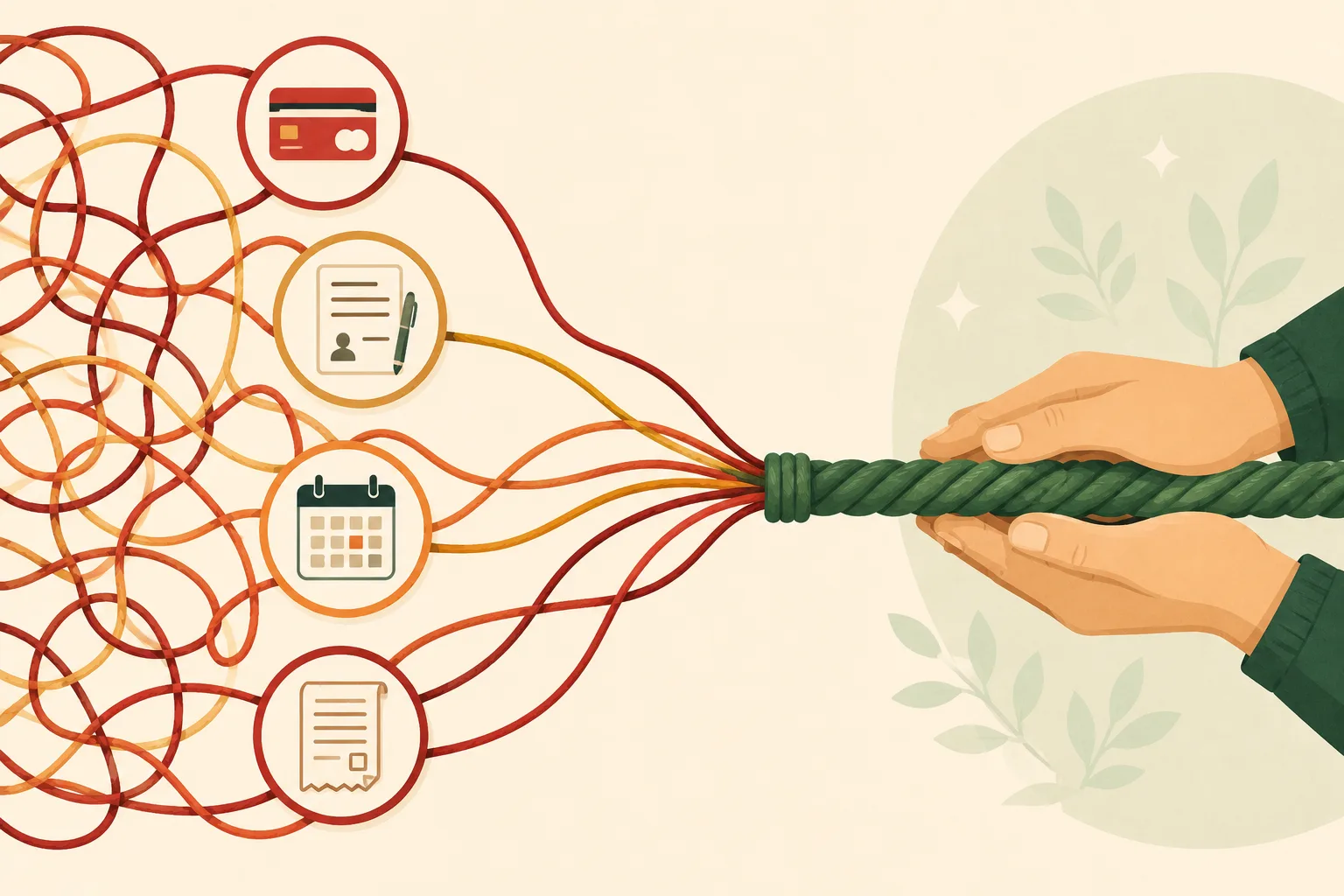
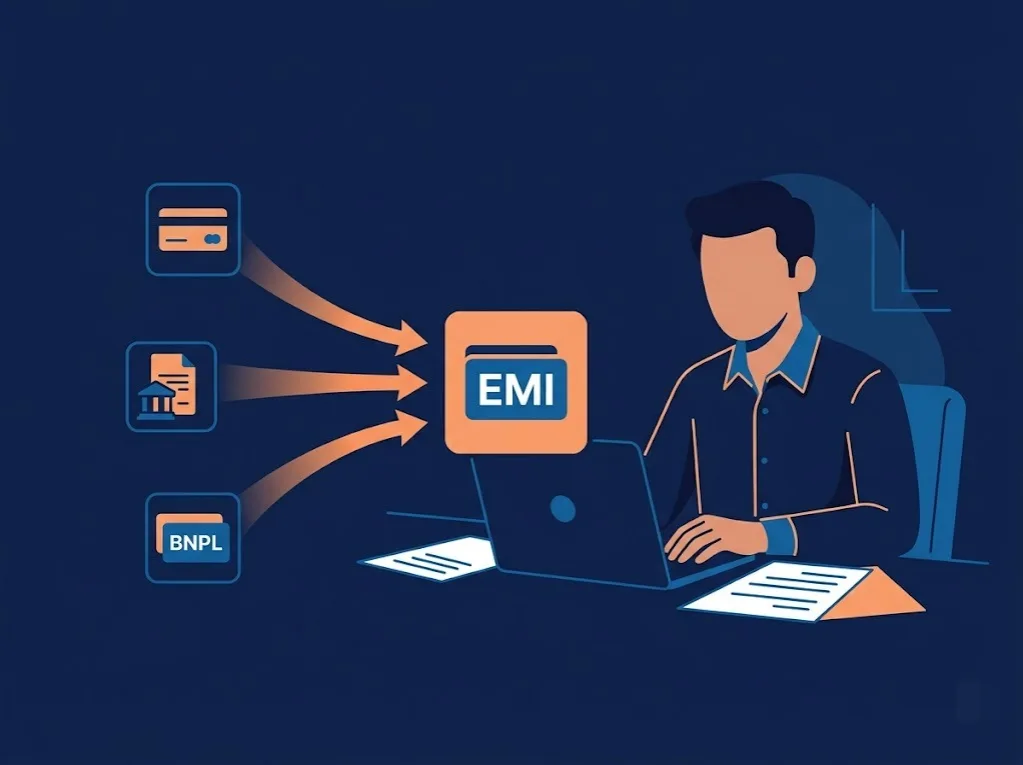
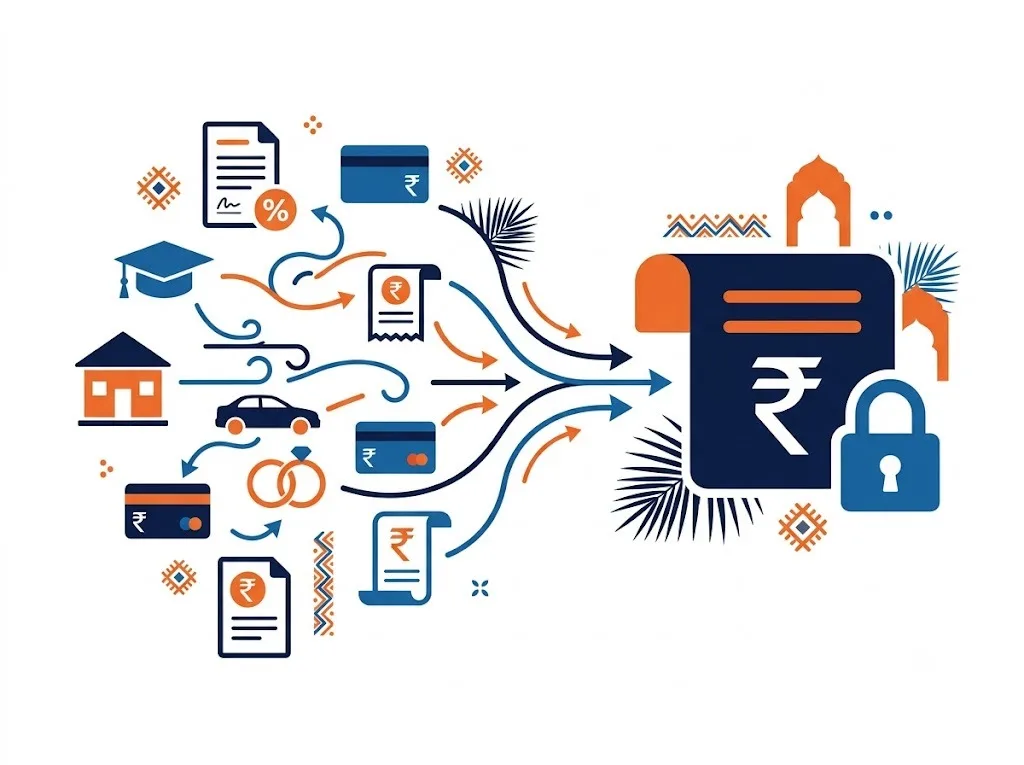
Debt consolidation means taking one new loan to pay off several existing loans and credit card dues at once, so several EMIs to different lenders become a single, usually lower, EMI to one lender. It restructures how debt is repaid; it doesn't erase what's owed.
Mohit Juneja
Reviewed by FREED India, Debt Resolution Specialists
 4.7/5
4.7/5 ₹3,200Cr+
 20,000+
 20,00,000+4.7/5₹3,200Cr+20,000+20,00,000+
KEY TAKEAWAYS

Debt consolidation, in short: one new loan replaces multiple existing debts.
The total amount owed stays the same; what changes is the number of payments and often the EMI size.
Personal loans, credit card dues, BNPL balances, and payday or app loans may be eligible for consolidation. Coverage depends on the lending partner’s criteria, while secured loans are generally not eligible.
Consolidation may affect your credit profile because a new loan and credit inquiry may be reported. Its impact varies, and no score improvement or recovery timeline can be guaranteed.
It's different from settlement, which reduces what's owed but does affect CIBIL.
What Does Debt Consolidation Mean?
Debt consolidation means taking one new loan to pay off several existing debts at once, replacing multiple EMIs to different lenders with a single EMI to one lender. Mechanically, the new loan disburses directly against your existing balances, closing each of those accounts, and going forward, you're repaying just that one loan, to one lender, on one schedule.
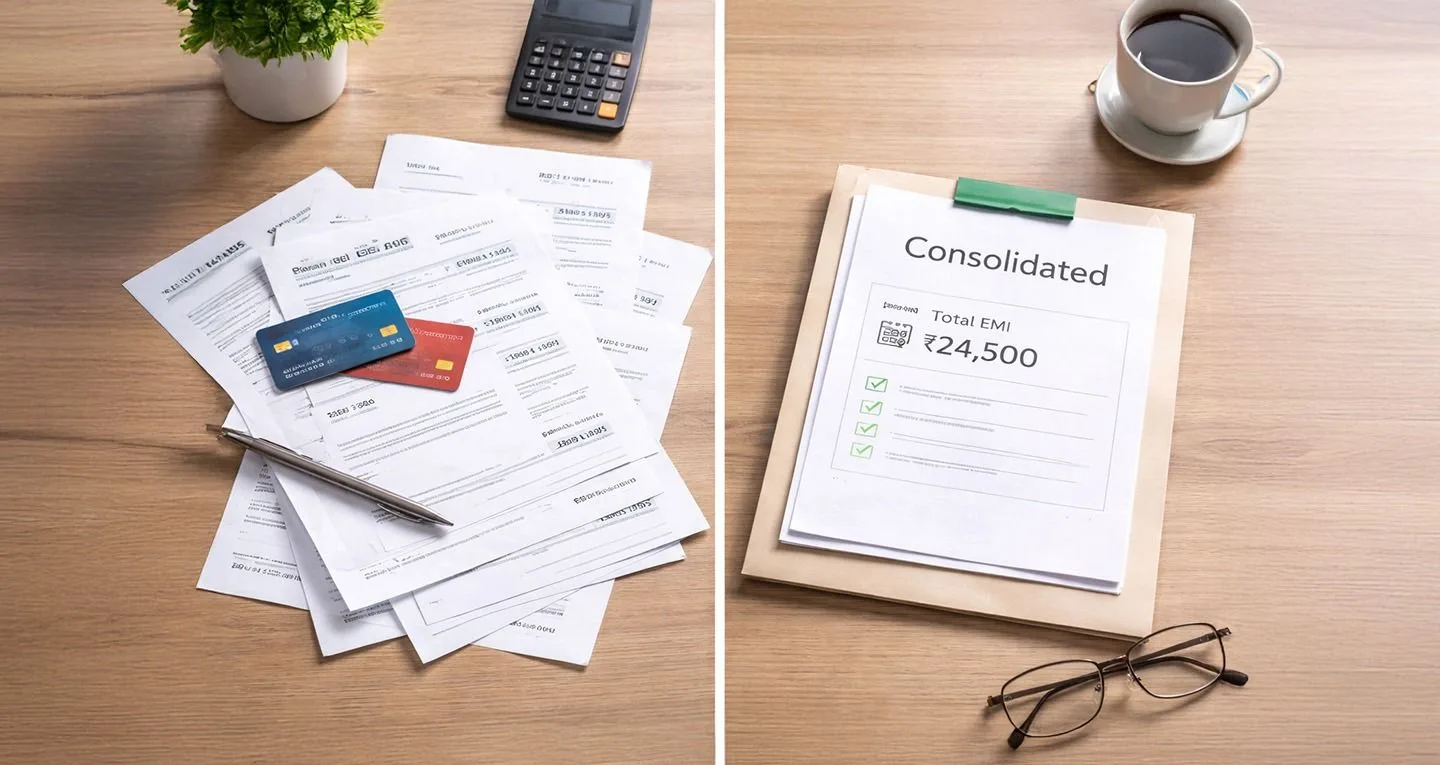
It's worth sitting with what actually happens at the moment of consolidation, because this is where the most common misconception creeps in. The new loan pays off your old ones in full, which can feel like the debt has shrunk or disappeared. It hasn't. The total principal you owe is carried forward almost exactly as it was, just repackaged under a single loan instead of scattered across several. What consolidation genuinely changes is structure: fewer due dates to track, fewer lenders calling, and often, though not always, a lower combined monthly EMI than the sum of what you were paying before.
That last point matters enough to repeat: consolidation is a repayment tool, not a debt-reduction tool. It exists to make debt easier to manage and, ideally, cheaper to service month to month, not to make the underlying number smaller. That distinction is exactly what separates it from settlement, covered next.

Debt Consolidation Meaning vs Debt Settlement Meaning
These two terms get confused constantly, in casual conversation and sometimes in marketing copy that should know better, and they mean genuinely different things.
Consolidation restructures the full repayment. You continue repaying the full amount through one loan and one EMI instead of several. A new loan and credit inquiry may be reported, so the impact on your credit profile can vary. No improvement in your CIBIL score or recovery timeline can be guaranteed.
Settlement reduces the amount owed itself. Here, your lender agrees to accept less than the full balance as final payment, an actual reduction in what you owe, not just a restructuring of how you pay it. In exchange for that reduction, your credit report carries a "Settled" tag, distinct from an ordinary "Closed" status, for up to 7 years. Settlement is meant only for genuine inability to repay in full; it isn't a lighter-touch alternative to consolidation for someone who can still realistically pay everything back, just less conveniently.
The two sit at different points on the same ladder: consolidation for someone still current on payments but juggling too many of them, settlement for someone who genuinely cannot repay the full amount, no matter how it's restructured. Neither is "better" in the abstract; they solve different problems.
Debt Consolidation vs Debt Settlement: Meaning at a Glance
Term | What It Means | Total Owed | CIBIL Impact |
Debt Consolidation | New loan replaces multiple eligible debts | Full eligible debt remains payable under the new loan | Impact varies; no improvement is guaranteed |
Debt Settlement | Bank accepts a negotiated reduced amount as final settlement | Reduced according to the lender’s final settlement terms | Impact varies; “Settled” status may remain for up to 7 years |
FREED is not a Loan Provider. Final terms are decided by the lending partner or bank. No outcome is guaranteed.
Which Debts Fall Under Debt Consolidation?
Not every kind of debt qualifies, and the split follows a consistent logic: unsecured debt is eligible; secured debt generally isn't.
Eligible:
- Personal loans - unsecured by definition, these are the most commonly consolidated debt type.
- Credit card dues - outstanding balances, especially ones carrying minimum-payment interest, are prime consolidation candidates.
- BNPL balances - Buy Now Pay Later dues that have built up across one or more providers.
- Payday and app loan balances - short-term, high-cost borrowing that's often the most expensive debt in someone's mix.
- Peer-to-peer loan balances - unsecured lending arranged through P2P platforms.
Not eligible:
- Home loans - secured against the property itself.
- Car loans - secured against the vehicle.
- Gold loans - secured against pledged gold.
- Education loans - typically carry their own repayment structures and, often, a co-signer.
- Loan against property - secured lending, structurally similar to a home loan in this context.
How Does the Meaning Play Out in Practice?
A concrete example makes this easier to hold onto than the definition alone.
Take a borrower paying three separate EMIs each month: a personal loan EMI of ₹8,500, a credit card minimum-plus payment running around ₹6,000, and a BNPL instalment of ₹2,500, three different lenders, three different due dates, ₹17,000 going out every month just on these three. A consolidation loan pays off all three balances at once, in full. From that point forward, the borrower makes one EMI to one lender, on one due date, and that single EMI is typically lower than the ₹17,000 combined total before it, say, ₹14,000 to ₹15,000, depending on the new loan's rate and tenure.
Where the nuance comes in: that lower monthly number doesn't automatically mean lower total interest paid over time. If the new consolidation loan runs over a longer tenure than the original debts would have taken to clear, the total interest across the full term can end up higher, even though the monthly EMI feels lighter. The definition itself is neutral on this; consolidation restructures repayment; it doesn't promise a specific interest outcome; that depends entirely on the new loan's rate and tenure relative to what was there before.
That's the meaning in practice: fewer payments, one lender, usually a lighter monthly number, with the total-interest trade-off worth checking rather than assuming. For the full eligibility criteria and application process, see the dedicated consolidation program page.

Freed Expert Tip
Consolidation may lower your EMI but can extend your tenure. Check the total interest payable over the full term, not just the monthly amount
Check your options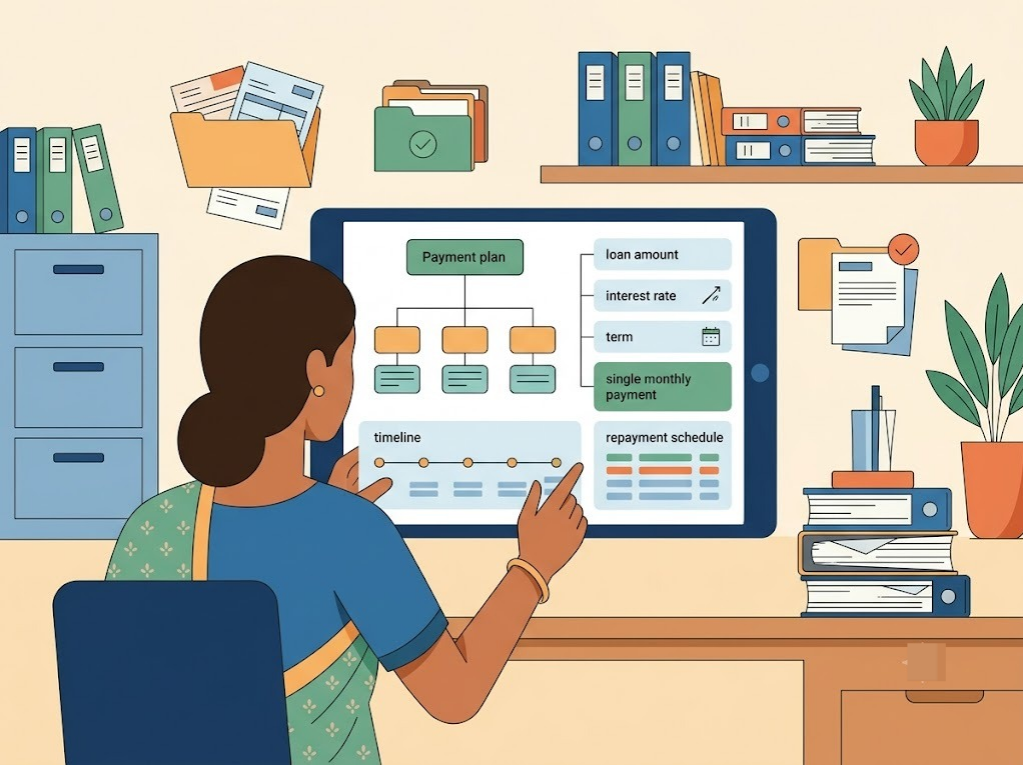
Where FREED Fits Into This
FREED's Loan Consolidation Plan, also called the Debt Consolidation Program, or "Reduce My EMI," puts this definition into practice for borrowers who are still current on payments but stretched across too many of them.
The process starts with FREED assessing your financial profile, including your existing loans, credit card balances, income, and monthly obligations. Based on that assessment, FREED may match you with a lending partner from its network. If approved, the lending partner’s new loan may repay your eligible existing debts, leaving you with one EMI instead of several. The new EMI may be lower, depending on the lending partner’s terms. The fee is success-based and applies only if the consolidation is completed.
This is the same mechanism described in the worked example above, just executed rather than illustrated: multiple EMIs collapsing into one, on one loan, at typically a lower combined monthly figure. For the full process and eligibility details beyond what fits in this glossary-format explainer, see what debt consolidation is and how it helps reduce monthly financial stress.

Mohit Juneja
Mohit Juneja writes educational content at FREED on debt management, credit scores, loan repayment, and borrowing best practices. His content is shaped by expert insights and industry knowledge, helping readers better understand their financial options and make informed decisions.
mohit.juneja@freed.care

FREED is India's trusted loan management platform. Founded in 2020 and headquartered in Gurugram, FREED has counselled 20 lakh+ people on personal loans, credit cards, and app loans. FREED charges fees only on successful settlement, not upfront. FREED does not handle secured loans (home loans, car loans, gold loans).
Media Mentions