Debt Consolidation Loans in India: How They Actually Work
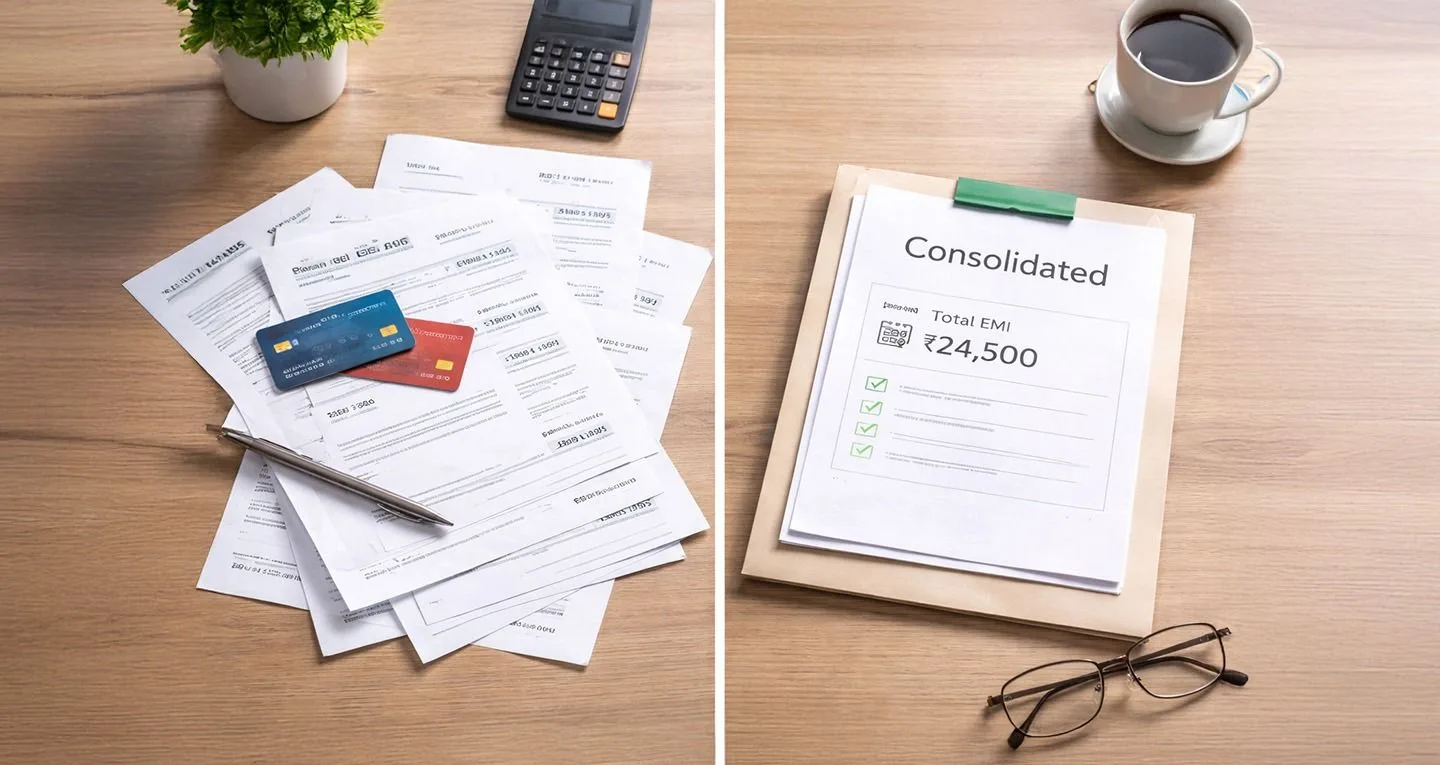
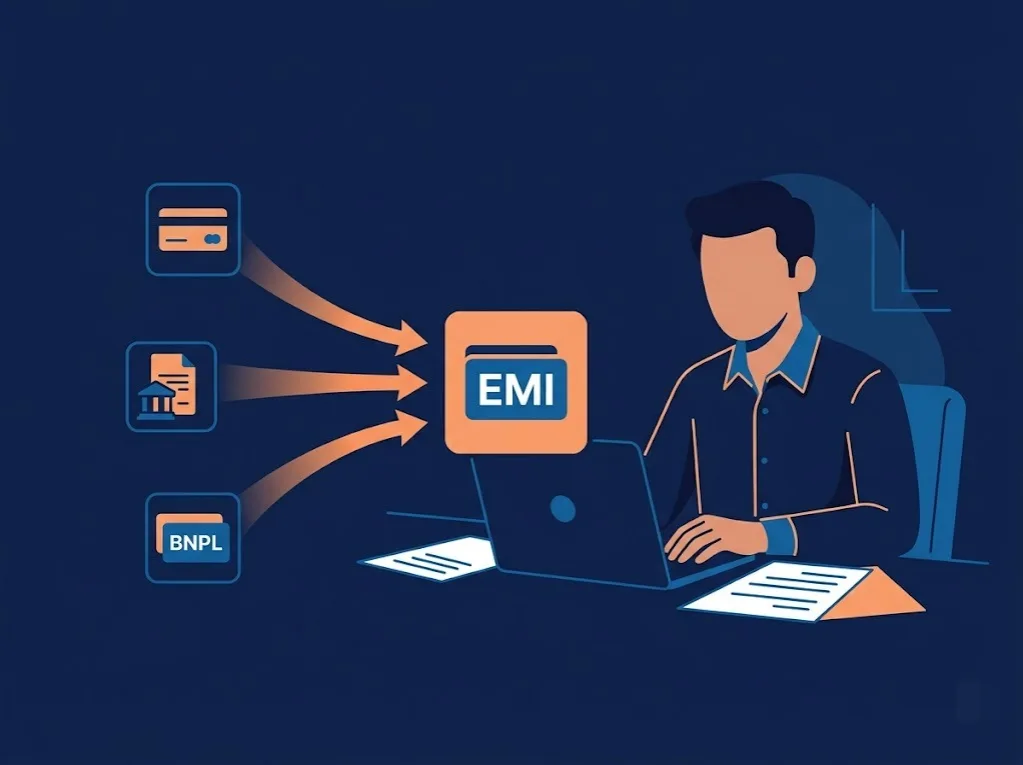
A debt consolidation loan in India is a new loan, usually a personal loan, that pays off several existing loans and credit card dues at once. You're left with one EMI to one lender instead of several separate payments, although the new EMI may not always be lower. It doesn't reduce what you owe. It changes how you pay it back.
Mohit Juneja
Reviewed by FREED India, Debt Resolution Specialists
 4.7/5
4.7/5 ₹3,200Cr+
 20,000+
 20,00,000+4.7/5₹3,200Cr+20,000+20,00,000+
KEY TAKEAWAYS

Debt consolidation loans combine several unsecured debts into one loan with one EMI.
Most banks don't sell something literally called a "debt consolidation loan." It's usually a regular personal loan used for this purpose.
Eligibility depends on the lender’s criteria, including income, repayment history, existing obligations, and overall credit profile.
Your total debt doesn't shrink. Your monthly EMI usually does, and repayment gets simpler.
Missed EMIs or a low CIBIL score can shut you out of most bank consolidation routes.
What Is a Debt Consolidation Loan in India?
The idea is simple, even though the name sounds like a special bank product. A new loan pays off your existing eligible debts in one shot. From then on, you repay just that one new loan, instead of juggling several separate ones every month.
Here's something worth knowing before you go looking for it by name. Most Indian banks don't actually sell anything called a "debt consolidation loan." HDFC, ICICI, and most others don't have that exact product on their menu. What people mean by the phrase is usually a regular multipurpose personal loan, taken out specifically to pay off several existing debts at once our explainer on what loan consolidation actually means breaks down that gap between the name and the product. Same loan the bank already offers, different reason for taking it.
It's worth being direct about this too. Consolidation changes how you repay your debt. It doesn't erase it or shrink what you owe. Say you currently owe ₹3 lakh spread across two personal loans and a credit card, with three different due dates and three different interest rates. A consolidation loan pays all three off in one go. You're left owing that same ₹3 lakh, but now to one bank, on one EMI date, often at a lower blended interest rate than what your credit card was charging you. That's the real shift: fewer due dates, one number to track, not a smaller number overall.
This matters because a lot of people go looking for consolidation, expecting some kind of discount. There isn't one. What you get is order, not a reduction. Once that's clear, the next real question is which of your debts actually qualify for this kind of loan.

See If You Qualify for Consolidation
Simple assessment. Eligibility and final terms are determined by the lending partner.
Check My Eligibility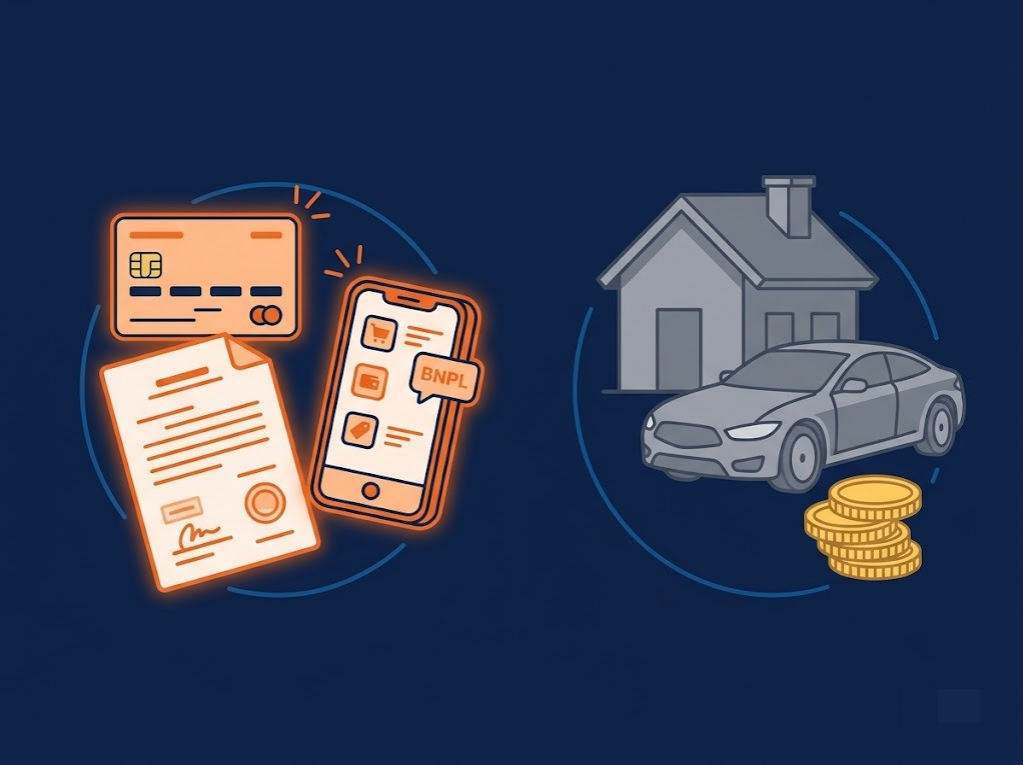
Which Loans Can Be Consolidated in India?
Not every kind of debt fits into a consolidation loan. Lenders look at whether the debt has any asset backing it, and that decides whether it can be folded in.
Generally eligible (unsecured debt):
- Personal loans, since nothing backs them beyond your promise to repay.
- Credit card dues, which work the same way and often carry the highest interest of anything you owe credit card debt consolidation is usually the single biggest reason people look into this route in the first place.
- Payday loans or instant loan app balances are usually small but high-cost.
- BNPL (Buy Now, Pay Later) dues are sitting unpaid across shopping apps.
- Peer-to-peer loan balances taken through lending platforms.
Usually assessed separately:
- Home loans, since your house is the security behind them.
- Car loans, secured by the vehicle itself.
- Gold loans, secured by the gold you've pledged.
- Education loans, which often come with their own government-backed terms.
- Loan against property, or any other loan with an asset attached.
The pattern is straightforward once you see it. Unsecured debt, the kind with no asset behind it, is what gets folded into a consolidation loan. Secured debt stays exactly where it is, on its own terms, with its own bank, because the bank isn't going to swap out the asset securing it for a new unsecured loan. A borrower with ₹1.5 lakh in credit card debt and a home loan can consolidate the card debt, but the home loan stays untouched and separate. Once you know which of your debts are actually in play, the next question is whether you'd even qualify to consolidate them.
Who Qualifies for a Debt Consolidation Loan in India?
Eligibility isn't identical across banks, but a few patterns show up again and again in how banks and NBFCs assess this.
Steady income matters most, since the new loan still has to be repaid every month like any other. A reasonable CIBIL score helps too. Many banks in this space commonly look for something around 700 or higher, though this isn't a fixed rule everywhere and shifts from bank to bank. The bank is really checking one thing underneath all of this: how much of your salary is already committed to EMIs, what's known as FOIR, or Fixed Obligation to Income Ratio. Some minimum work history, often around a year in your current job or line of work, tends to come up as well.
The bigger factor, though, is whether you're still current on your existing EMIs. Consolidation is generally built for people who are managing their payments but feel stretched thin across too many of them at once, not for someone already in default. Say you're paying four EMIs on time every month, but it's eating most of your salary, with barely anything left over. That's exactly the situation consolidation is meant for.
If you've missed one or two payments recently, that doesn't automatically rule you out. It just means a straightforward bank application might not be the smoothest path for you right now. Talking to a team that looks at your actual situation, rather than running you through a rigid checklist, tends to work better here. Once eligibility is roughly clear, the process itself is worth understanding too, since it's less complicated than most people expect.
How Does the Debt Consolidation Process Actually Work?
The process runs in a fairly predictable sequence, no matter which bank or platform you go through.
- 1
Share your full debt picture.
This means every loan, every card balance, your current EMIs, and your monthly income. Nothing hidden, nothing left out, since the bank needs the complete picture to size the new loan correctly.
- 2
The bank checks what you can actually afford.
Banks often run the FOIR check mentioned earlier. If your FOIR is already too high, that limits how big a consolidation loan you'll be approved for, or whether you'll be approved at all.
- 3
A new loan gets sanctioned.
The amount is sized to cover your eligible existing unsecured debts, based on what the bank has approved after checking your income and repayment history.
- 4
Confirm how the existing debts will be repaid.
Depending on the lender and product structure, funds may be disbursed to you or applied towards eligible existing debts.
- 5
You're left with one loan and one EMI.
From this point forward, one due date, one bank, one number to track every month. This isn't the only route for restructuring what you owe, though. Balance transfer and loan restructuring solve related but genuinely different problems, and mixing them up is a common mistake.

FREED Expert Tip
Apply to one lender at a time for consolidation, not several banks together. Each application triggers a fresh credit check, and multiple hard inquiries in a short window can pull your CIBIL score down before the loan even comes through.
Check your eligibility firstDebt Consolidation vs Balance Transfer vs Restructuring: What's the Difference?
Option | What Changes | Number of Debts After | Best For |
Debt Consolidation | New loan replaces multiple debts | One | Multiple loans/cards, still paying but stretched |
Balance Transfer | One loan/card moves to a new bank at a better rate | Same as before | One high-interest loan or card, good CIBIL |
Restructuring | Terms change on the same existing loan | Same as before | Temporary shortfall with current bank |
The table matters because a lot of borrowers ask for "consolidation" when what they actually need is a balance transfer, or the other way around. If you have one specific high-interest loan and your credit score is healthy, a balance transfer alone might solve your problem without taking on a whole new loan. If you're juggling three or four separate debts, consolidation is the one built for that.
FREED is not a Loan Provider. Final loan terms are decided by the lending partner. No outcome is guaranteed. Please verify directly with your bank or NBFC.
What Are the Real Costs and Risks of Consolidating Debt?
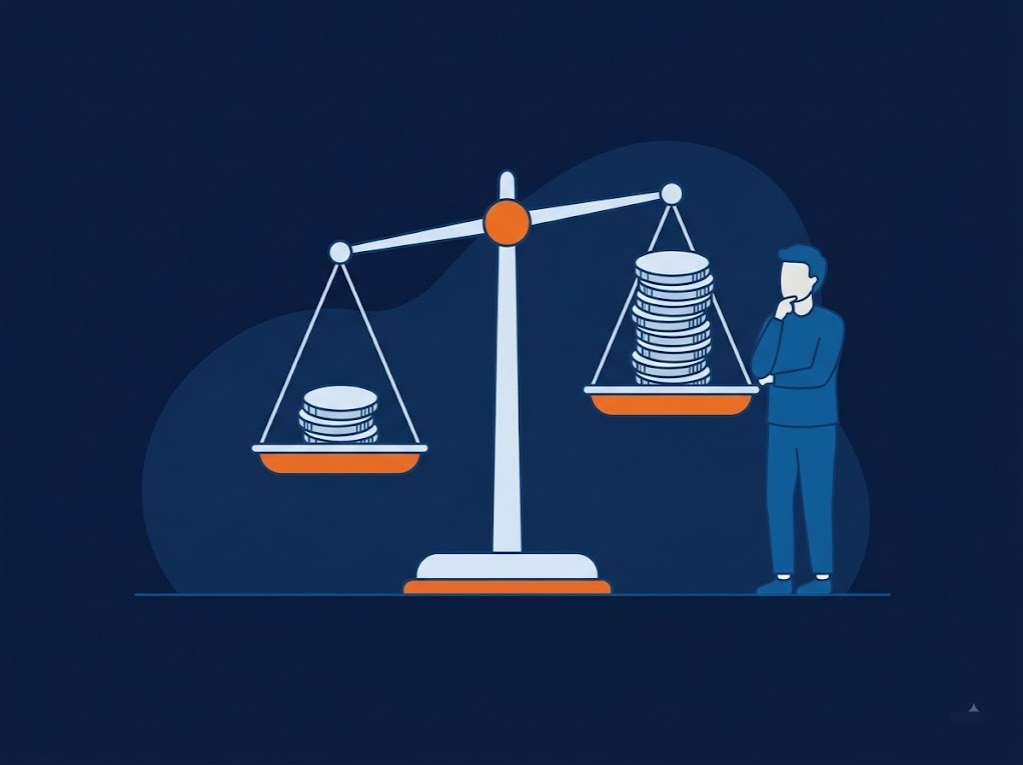
Consolidation genuinely helps a lot of people, but it's worth going in with a clear picture, not just the part about your EMI feeling lighter.
Stretching repayment over a longer time can mean the total interest you pay over the life of the loan ends up higher, even while the monthly EMI itself feels smaller. That's not a hidden trick; it's just how longer repayment times work. Say your current debts add up to ₹4 lakh at high card interest, and you consolidate them into one loan over 4 years instead of 2. Your EMI drops noticeably, but you could end up paying tens of thousands of rupees more in total interest over that longer stretch. It's worth running the actual numbers before assuming a lower EMI automatically means cheaper overall. Processing fees on the new loan are common too, so factor that in, not just the headline interest rate.
The bigger risk isn't really the loan itself. It's what happens after. If your old credit cards get freed up and spending habits don't change, it's entirely possible to run those balances back up again. You'd end up carrying both the new consolidated loan and fresh card debt at the same time, which is worse than where you started. That's not a scare story; it's a pattern that shows up often enough to be worth naming plainly before you sign anything.

What the Law Says
When a loan gets paid off through consolidation, the bank is required to update your closed account status with the credit bureau within its regular reporting cycle. If your old loan still shows "Active" weeks later, you have the right to raise this with the bank and escalate to the RBI Ombudsman if it isn't fixed.
Check if your closed loans are updated correctlyHow FREED Helps If Your EMIs Are Slipping Under Multiple Loans
FREED's Loan Consolidation Plan, also called the Debt Consolidation Program or "Reduce My EMI," works through this exact process, with FREED handling the coordination for you.
FREED starts by looking at your full financial picture, your income, your existing loans and cards, and what you can genuinely manage each month. From there, you get matched to a suitable lending partner from FREED's network. That partner disburses one new loan that pays off all your eligible existing unsecured debts at once. What you're left with is one loan, one bank, one EMI, one due date, and that EMI is usually lower than what you were paying across everything combined before.
A common worry here is whether this hurts your credit score the way a settlement would. The effect on your CIBIL score can vary depending on the credit enquiry, account reporting, credit utilisation and subsequent repayment history.
FREED's fee here is success-based too, charged only once the consolidation actually goes through. Nothing upfront if it doesn't happen.
What to Check Before Taking a Debt Consolidation Loan
A few checks before you sign anything, all of them straightforward.
- Compare the total interest cost over the full repayment time, not just the monthly EMI figure. A lower monthly number can still add up to more paid overall if it's spread over a longer time. Ask the bank for the total interest amount, not just the EMI, before you decide.
- Confirm there's no penalty for paying off the loan early. If your finances improve later and you want to close the loan sooner, an early-payment penalty can eat into those savings.
- Confirm that eligible loan accounts have been repaid and updated correctly. Paying a credit-card balance does not automatically close the card account. If you're unsure whether an old loan is still technically open in your name, here's how to check every active loan against your PAN. This defeats the entire point of consolidating in the first place.
- Avoid using freed-up credit card limits right after consolidating. The whole benefit disappears if the old balances just start climbing again on cards you've already cleared.
None of this needs to feel like a warning list. It's just what separates a consolidation loan that actually helps from one that quietly adds a second debt on top of the first. If you'd rather see how this plays out for a specific bank, our pieces on HDFC's debt consolidation loan process and ICICI's debt consolidation loan eligibility go bank by bank.
Sources
Claim in Blog | Source |
|---|---|
Lenders must report an updated (closed) account status to credit bureaus on the regular fortnightly reporting cycle | RBI/2024-25/60, DoR.FIN.REC.No.32/20.16.056/2024-25, Aug 8, 2024, effective Jan 1, 2025 rbi.org.in link |
If a closed account still shows incorrectly weeks later, the borrower can raise it with the bank and escalate to the RBI Ombudsman if unresolved | RBI Notification RBI/2023-24/72, DoR.FIN.REC.48/20.16.003/2023-24, Oct 26, 2023 (30-day combined resolution window + compensation) rbi.org.in link |

Mohit Juneja
Mohit Juneja writes educational content at FREED on debt management, credit scores, loan repayment, and borrowing best practices. His content is shaped by expert insights and industry knowledge, helping readers better understand their financial options and make informed decisions.
mohit.juneja@freed.care

FREED is India's trusted loan management platform. Founded in 2020 and headquartered in Gurugram, FREED has counselled 20 lakh+ people on personal loans, credit cards, and app loans. FREED charges fees only on successful settlement, not upfront. FREED does not handle secured loans (home loans, car loans, gold loans).
Media Mentions