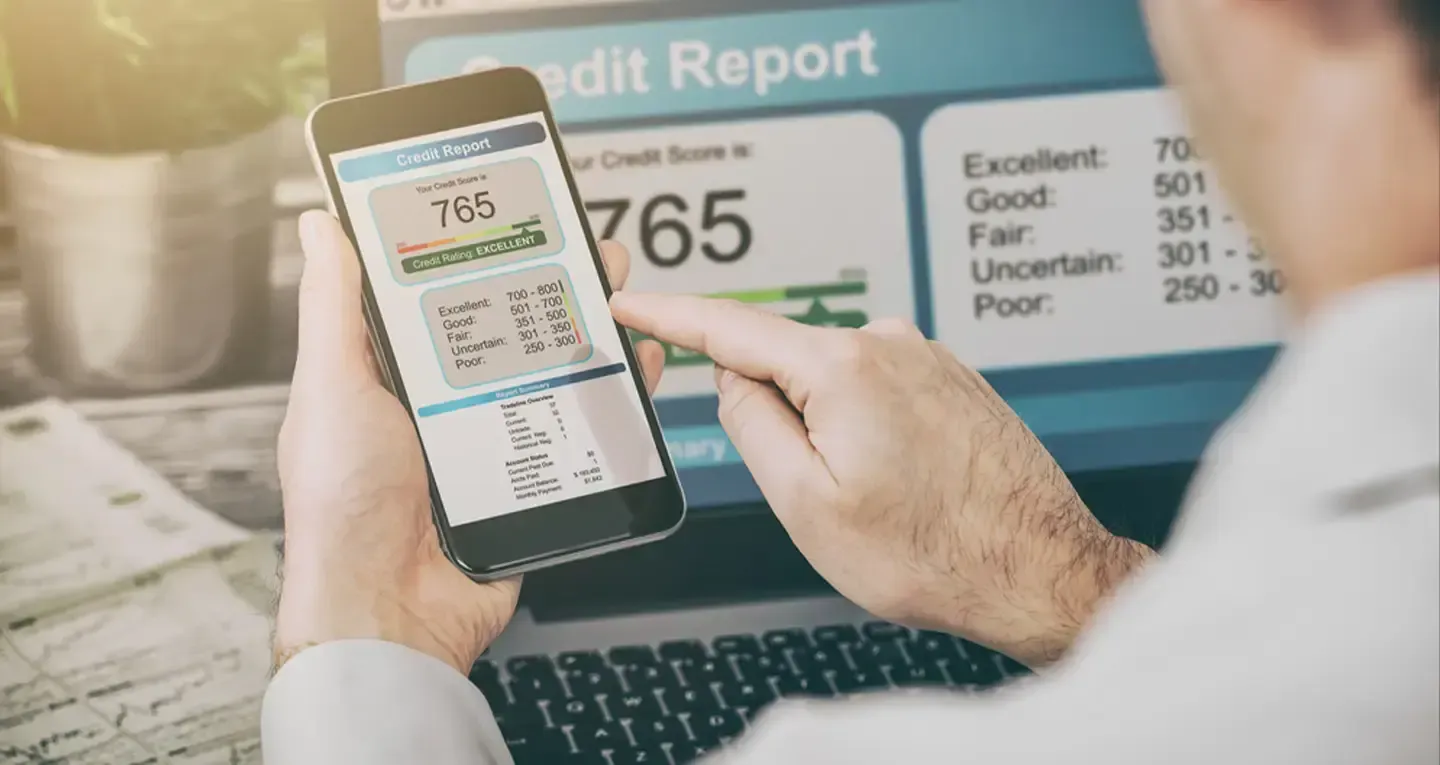
What Counts as a Good CIBIL Score in India
A CIBIL Score above 750 is generally considered good and can strengthen your chances of getting credit, although approval and interest rates depend on the lender and your overall credit profile. But "good enough" isn't fixed. RBI doesn't set a minimum, so each lender decides its own threshold, which means a score that's good for a credit card may fall short for a home loan.
Mohit Juneja
Reviewed by FREED India, Debt Resolution Specialists
 4.7/5
4.7/5 ₹3,200Cr+
 20,000+
 20,00,000+4.7/5₹3,200Cr+20,000+20,00,000+
KEY TAKEAWAYS

A good CIBIL score in India is generally 750 or above, the band most lenders treat as low risk.
RBI doesn't mandate a minimum credit score. Each bank and NBFC sets its own approval threshold.
A score between 700 and 749 can still be sufficient for credit, but approval depends on the lender, product and your wider financial profile.
A lower score can make borrowing more difficult or expensive, but there is no universal score below which every lender will reject an application.
Lenders report credit information to bureaus on a fortnightly basis under RBI's current rules, with reference dates of the 15th and the last day of each month, so your report reflects those updates on that cycle. Your score itself doesn't automatically recalculate on a fixed 15-day clock, it updates when new data comes in.
What Counts as a Good CIBIL Score in India?
750 and above is the figure most lenders cite as excellent. Cross that line and you're generally looking at the best interest rates on offer and approvals that move faster, with fewer follow-up questions. But that single number complicates itself the moment you look closer. "Good" isn't a regulatory line RBI has drawn anywhere. It's a pattern most lenders have converged on independently, based on their own risk models, which means the real question isn't "what's the range," it's "is my score good enough for what I'm about to apply for."
That's a different question depending on whether you're applying for a credit card or a home loan, and it's the one this article actually answers. There's already a full breakdown of CIBIL score ranges explained band by band if you want the complete picture beyond the 750+/700-749/650-699/below-650 pattern. Here, the focus is narrower: what "good" buys you at each stage, and why the number that counts keeps moving depending on what's on the other side of the application.
Why "Good" Isn't One Fixed Number
RBI does not stipulate a minimum CIBIL score for any loan type. Every bank and NBFC assesses repayment capacity and risk on its own commercial judgment, within RBI's broader prudential lending framework, but without a shared number handed down from the top. That's exactly why the same score can get approved at one bank and rejected at another, or approved everywhere but at noticeably different interest rates depending on who's lending.
What does stay consistent, even without a common rulebook forcing it, is the direction. A higher score generally indicates a stronger credit profile, but lenders consider other factors alongside the score. What changes from lender to lender, and from product to product, is exactly where the acceptable line sits below that. A personal loan and a home loan don't ask the same question of your score, and the next few sections work through why.


Signs Your Score Might Not Be Good Enough Yet
A few situational signs worth checking against your own experience:
- A recent loan or card application was rejected outright.
- Approvals are coming through, but only at noticeably higher interest rates than advertised.
- A lender is asking for a co-applicant or extra collateral you weren't expecting.
- You're being offered a smaller loan amount than you actually applied for.
- You haven't checked your real score before applying and are going in blind.
If any of these situations apply to you, it's worth checking your credit report and understanding what is driving the lender's decision.
How Lenders Actually Decide If Your Score Is Good Enough
Lenders don't look at your score in isolation. It runs through a broader decision process, one that explains why two lenders can see the identical number and land somewhere completely different.
Step 1 - Pull the Credit Report and Score
The lender checks your score from one or more bureaus at the time of application.
Step 2 - Compare Against Their Own Threshold
Each lender uses its own eligibility criteria and risk-assessment process for that product. This isn't a shared, published number.
Step 3 - Weigh Income and Repayment Capacity
A strong score alongside unstable income can still lead to a smaller sanctioned amount or rejection.
Step 4 - Factor In Existing Debt Obligations
Current EMIs and credit card balances affect how much more the lender is willing to sanction. It also helps to understand how your credit score is actually calculated so this step doesn't feel like a black box.
Step 5 - Decide, Approve, Reject, or Adjust
The outcome may be a straight approval, a rejection, or approval at a higher rate or lower amount.
What Counts as Good, By Loan Type
Good CIBIL Score, By Loan Type
Loan Type | Typically Approved From | Best Terms From |
Personal Loan | 700 (some digital lenders lower for small amounts) | 750+ |
Credit Card | 700 for standard cards | 750+ for premium cards |
Home Loan | 700, practical minimum | 750+ preferred by most banks |
These are commonly observed lender patterns, not fixed or guaranteed thresholds. RBI does not mandate a minimum score for any loan type. FREED is not a loan provider. Please verify current criteria directly with your lender.
What Are Your Options If Your Score Isn't There Yet?
If your credit-card utilisation is unusually high, reducing outstanding revolving balances may strengthen your credit profile once the updated information is reported. It's also worth avoiding a cluster of new applications in the weeks before applying for something important. Applications that result in hard enquiries can add enquiries to your credit report, so avoid unnecessary applications close together.
One factual note worth knowing: FREED's Credit Insights shows exactly which factor is holding a score back, rather than leaving you to guess at fixes that may not move the number that actually matters for your situation. If a score is close but not quite there,If a DPD entry is accurate, it stays on your report as reported, paying it off later doesn't erase it. If you believe it's incorrect, that's when you'd raise a dispute to get it corrected.

How FREED Helps You Track This
Credit Insights, FREED's "Check My Credit" product, is available to everyone, not just people enrolled in a FREED program. It pulls your Experian report and score, and instead of handing you a generic improvement checklist, it highlights which factors, utilisation, payment history, inquiries, or account age, are affecting your score, so you know where to focus. If you're trying to clear 750 for a home loan, that's a different fix than trying to clear 700 for a personal loan, and the tool treats those as different problems.
Instead of guessing whether a score is "good enough," this shows exactly where it stands against the real lender patterns covered above.

Freed Expert Tip
Check your actual score at least a week before applying for anything significant, not after, so there's still time to pay down utilisation if it's holding you back.
Talk to a FREED CounsellorWhat Helps Build a Genuinely Good Score Over Time
A few habits that actually move the number, consistently rather than once:
- Keep credit-card utilisation comfortably low, rather than treating 30% as a mandatory CIBIL cutoff.
- Pay every EMI and card bill on time, every month, without exception.
- Avoid bunching multiple credit applications close together.
- Think carefully before closing older credit accounts, particularly if they have no meaningful cost and contribute to your available credit. Closing an account can affect aspects of your credit profile.
- Check your score periodically so nothing surprises you at application time.
- Remember that one good month doesn't undo months of a different pattern. Consistency is what lenders actually reward.
There's no guaranteed shortcut to a higher score. Consistent, responsible credit behaviour is what matters over time.

Mohit Juneja
Mohit Juneja writes educational content at FREED on debt management, credit scores, loan repayment, and borrowing best practices. His content is shaped by expert insights and industry knowledge, helping readers better understand their financial options and make informed decisions.
mohit.juneja@freed.care

FREED is India's trusted loan management platform. Founded in 2020 and headquartered in Gurugram, FREED has counselled 20 lakh+ people on personal loans, credit cards, and app loans. FREED charges fees only on successful settlement, not upfront. FREED does not handle secured loans (home loans, car loans, gold loans).
Media Mentions