How to Qualify for a Consolidation Loan: A Step-by-Step Guide
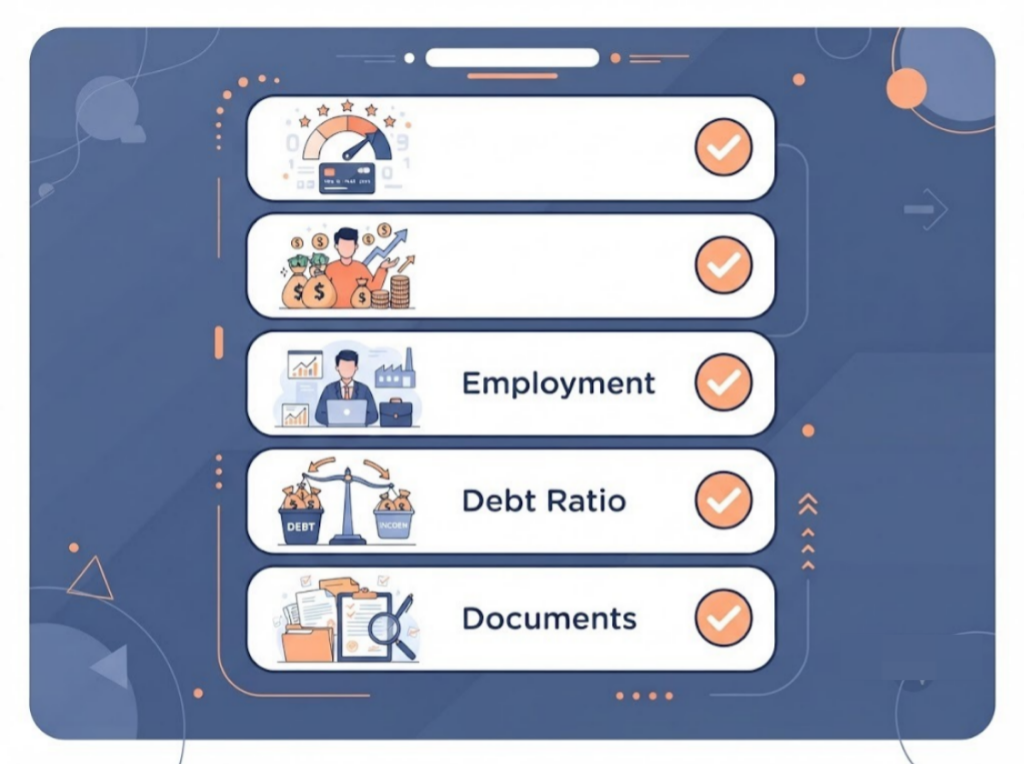
Qualifying for a debt consolidation loan generally depends on five important factors: credit history, income stability, employment profile, existing obligations, and documentation. The factors assessed and their relative importance vary by lender.
Mohit Juneja
Reviewed by FREED India, Debt Resolution Specialists
 4.7/5
4.7/5 ₹3,200Cr+
 20,000+
 20,00,000+4.7/5₹3,200Cr+20,000+20,00,000+
KEY TAKEAWAYS

Most lenders want a CIBIL score of 650 or above for consolidation, though the rate and amount you're offered improve meaningfully above 700 to 750.
A stable, verifiable income, salaried or self-employed, matters as much as the score itself. Lenders need to see the new EMI is genuinely affordable.
Your existing debt-to-income ratio (FOIR) is checked directly. A combined EMI load already eating most of your take-home pay works against qualification regardless of score.
If you don't qualify with one lender, that doesn't mean you don't qualify anywhere. Different lenders weigh these five factors differently.
The Five Things Every Lender Actually Checks
Five criteria come up again and again, whatever bank or program you approach: credit score, income stability, employment type, existing debt-to-income ratio, and documentation completeness.
Together, these five answer the one question every lender is really asking: will this new EMI actually get paid. A lender isn't checking your score in isolation, or your income in isolation. They're weighing all five together to reach one judgment call about your ability to repay.
Specific thresholds vary by lender. A bank's exact minimum score or income requirement differs from an NBFC's or a fintech's. This piece covers what's being assessed generally across all of them, and our complete guide to consolidating your loans goes further into how those thresholds shift by lender type.

Freed Expert Tip
Check your actual credit score before assuming which of these five criteria will be your weak point. Most people guess wrong about which one holds them back.
Check My Credit ScoreCredit Score: The Threshold Most Lenders Start With
A 650 score might get approved, but a 700 to 750+ score tends to put you in a stronger position for better rates and higher approved amounts, alongside the other factors lenders weigh: income, existing debt-to-income ratio, employment stability, and documentation. Credit score isn't the only variable, but it's one you can see and track, which makes it a useful starting benchmark. Qualification and good terms aren't the same threshold, and it's worth knowing which one you're actually aiming for.
Below 650 doesn't automatically mean no consolidation is possible. It means fewer lenders will consider it directly. FREED's Credit Insights shows you your exact score and what's affecting it, which is worth checking before you assume the door is closed based on a rough guess.
Income and Employment Type: What Lenders Are Actually Verifying
A stable, verifiable income is the core requirement here. Most lenders set a minimum monthly income threshold, and evaluate salaried and self-employed applicants somewhat differently.
Employment type matters beyond the income number itself. Salaried applicants typically face simpler documentation, salary slips and bank statements. Self-employed applicants often need additional proof, ITR filings and business continuity evidence, since income verification is inherently less straightforward for that group.
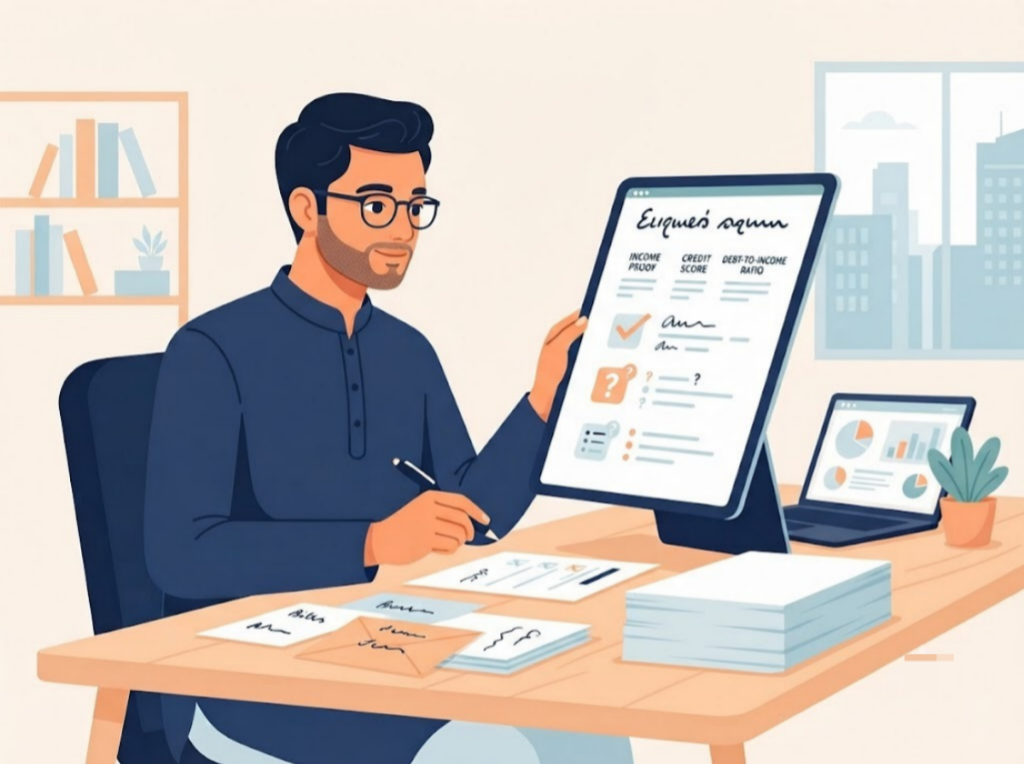
Have your specific income proof ready in the format your employment type requires. This is one of the most common reasons applications stall, not the underlying eligibility itself. A lender that would have approved you can still delay the process over a missing document.

Your Existing Debt-to-Income Ratio (FOIR)
FOIR, or Fixed Obligation to Income Ratio, measures your combined existing EMI and fixed obligation load as a percentage of your take-home income.
This matters as much as, or more than, credit score for consolidation specifically. A lender needs to see room for the new consolidated EMI to fit comfortably. A combined obligation load already consuming most of your income works against qualification even with a strong score, because the math simply doesn't leave space for another commitment.

Calculate your own current FOIR before applying: add every existing EMI and fixed obligation, then divide by your take-home pay. A high FOIR may reduce your ability to qualify, depending on the lender’s underwriting policy. Calculate your existing obligations using the lender’s stated methodology and assess whether the proposed EMI would remain affordable. FREED's EMI Score does this calculation for you in a couple of minutes, free.
Documentation: The Part That Actually Delays Most Applications
Most lenders require the same standard documents regardless of type: KYC (PAN, Aadhaar), income proof, bank statements, and a list of your existing debts to be consolidated.
Incomplete or mismatched documentation is a more common reason for delay than genuine ineligibility. A name mismatch between documents, a blurry upload, or an outdated income statement stalls an otherwise qualifying application. None of these reflect your actual creditworthiness, but they slow the process down all the same. This connects directly to how lenders see your history in the first place, our piece on what happens when you're reported to a credit bureau covers what shows up on that side of the picture.
Gather every document in the exact format requested before starting any application. This alone prevents most of the back-and-forth that makes qualification feel harder than it actually is.
What to Do If You Don't Qualify With One Lender
Not qualifying with one specific bank doesn't mean you don't qualify for consolidation at all. Different lenders weigh the five factors differently, and NBFCs generally apply more flexible criteria than banks in exchange for a higher rate.
Rather than applying to several lenders in sequence, each a fresh hard inquiry, FREED's Debt Consolidation Program checks eligibility across a network of lending partners through a single soft inquiry first. This may help applicants understand their potential eligibility before proceeding with a full application, subject to the applicable inquiry and consent process.
Not Sure Where to Start?
See where you'd actually qualify, without multiple hard inquiries.
Check your optionsWhat Are Your Options If You Genuinely Don't Qualify Anywhere
For genuine, sustained inability to qualify for or manage even a consolidated amount, settlement is the separate, structured last resort.
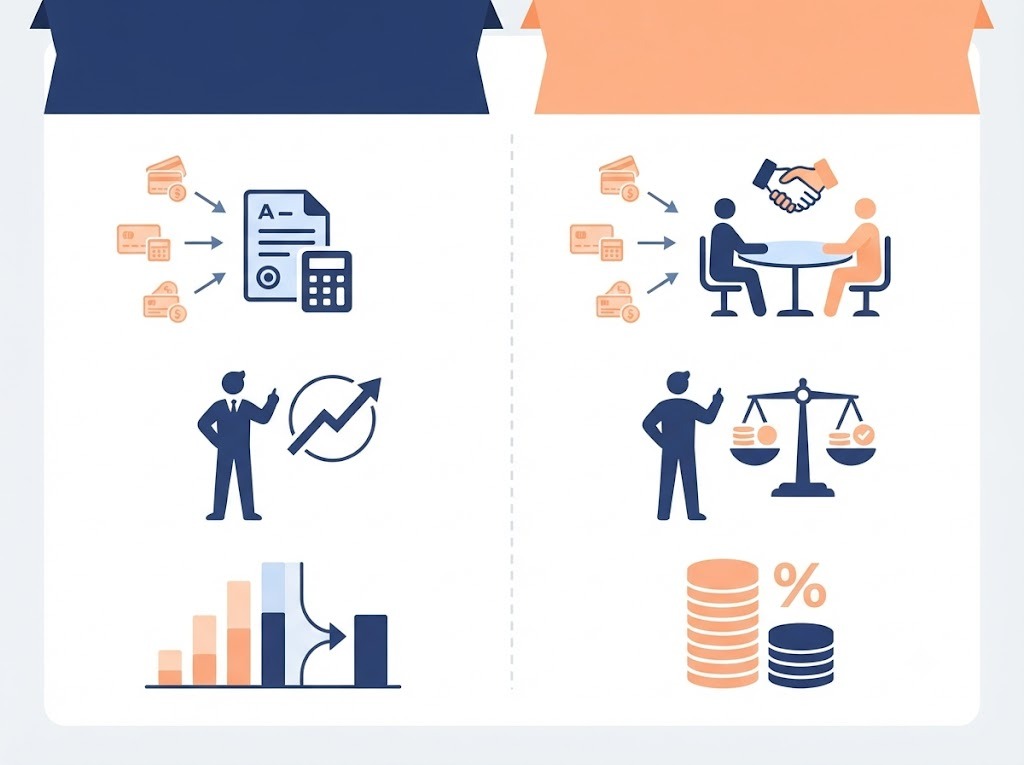
Settlement is not something a borrower chooses out of preference. Banks only consider it when someone is in genuine financial difficulty and is truly unable to repay in full.
In that situation, FREED's Debt Resolution Program becomes the more relevant path than consolidation. Our guide to the settlement letter format covers what that process actually looks like once it's underway.
How FREED Helps You Find Out Where You Qualify
FREED's Debt Consolidation Program checks eligibility across a network of lending partners through a single soft inquiry, rather than you applying bank by bank and stacking hard inquiries along the way. This covers the eligible types of unsecured debt most people are trying to consolidate: credit cards, personal loans, and BNPL balances.
FREED may help eligible applicants assess available options through its programme and participating lending partners. The availability of options depends on the applicant’s profile, lender criteria, and the applicable process.
Tips Before You Apply
Check your score and calculate your FOIR before applying anywhere. Knowing both numbers changes how you approach every lender you consider.
Gather documentation in the exact format required before starting. This is the single biggest source of avoidable delay.
Don't assume one rejection means ineligibility everywhere. It usually means one lender's specific weighting of the five criteria didn't work in your favour, not that none will.
Compare criteria across lender types, bank, NBFC, program, rather than applying to the first one you find.

Mohit Juneja
Mohit Juneja writes educational content at FREED on debt management, credit scores, loan repayment, and borrowing best practices. His content is shaped by expert insights and industry knowledge, helping readers better understand their financial options and make informed decisions.
mohit.juneja@freed.care

FREED is India's trusted loan management platform. Founded in 2020 and headquartered in Gurugram, FREED has counselled 20 lakh+ people on personal loans, credit cards, and app loans. FREED charges fees only on successful settlement, not upfront. FREED does not handle secured loans (home loans, car loans, gold loans).
Media Mentions