What Happens When You Are Reported to a Credit Bureau
Every EMI you've ever paid on time has been reported. So did the one you missed by three weeks last March. That's the part most people never quite absorb: being reported to a credit bureau isn't an event reserved for bad news; it's a monthly routine that happens to every open account you hold, whether you're a model borrower or three payments behind.

Mohit Juneja
Reviewed by FREED India, Debt Resolution Specialists
 4.7/5
4.7/5 ₹3,200Cr+
 20,000+
 20,00,000+4.7/5₹3,200Cr+20,000+20,00,000+
KEY TAKEAWAYS

What happens when you are reported to a credit bureau depends entirely on the event: routine on-time reporting doesn't hurt you, but missed payments and defaults do.
Lenders send account status updates to credit bureaus on a fortnightly basis or at shorter intervals as agreed.
A missed payment shows up as a DPD (days past due) entry and can climb toward written-off or settled status if it's left unresolved long enough.
Negative entries age off eventually. A few years, not forever, though the exact clock depends on which status is actually on the account.
What Does It Mean to Be Reported to a Credit Bureau?
Take a straightforward example: someone with a car loan, a credit card, and a personal loan gets three separate updates sent to the bureau this month, one for each account, regardless of how any of them are actually performing. That's the whole mechanism. Active loan and credit card information is updated with credit bureaus on a fortnightly basis, or at shorter intervals as agreed, and "being reported" by itself carries no verdict either way.
What actually lands on the bureau's side is a snapshot: your balance, your payment status, your credit limit, all as of that reporting date. Only when that snapshot shows something specific, a missed payment, a default, a settlement, does it actually move your score. A clean month just adds another quiet, unremarkable line to a long, ongoing record, the kind of entry that quietly builds your overall payment history without ever drawing attention to itself.
Understanding how this reporting cycle runs, month after month, matters before anything else.

How Does the Reporting Cycle Actually Work?
Lenders update account data with the bureaus on a fortnightly basis, or at shorter intervals as agreed; this is routine data plumbing, not a special notification triggered only when something goes wrong. The bureau takes that feed and folds it into your credit report, the same report a lender pulls the next time you apply for anything.
This happens separately for every account you hold. Your report isn't a single log of events; it's a rolling composite, dozens of monthly snapshots layered across every loan and card, updated again next month regardless of what happened this month. Pulling your own full annual report, rather than just a score summary, is the only real way to actually see that composite in full. It's worth knowing exactly what data travels in that monthly feed.
What Actually Gets Reported?
Payment history: either a clean on-time record or a specific DPD count for that month.
Current outstanding balance, alongside your credit limit or the originally sanctioned amount.
Account status: active, closed, settled, written-off, whichever applies right now.
New credit enquiries are logged whenever you apply for something new, a card, a loan, anything requiring a credit check.
Account age and type, how long you've held it, and what kind of facility it is.
Drag

Freed Expert Tip
Pull your credit report periodically, rather than waiting to apply for new credit, to see what's on it; early awareness gives you more options.
Check Your Credit ReportWhat Happens After a Missed Payment Gets Reported?
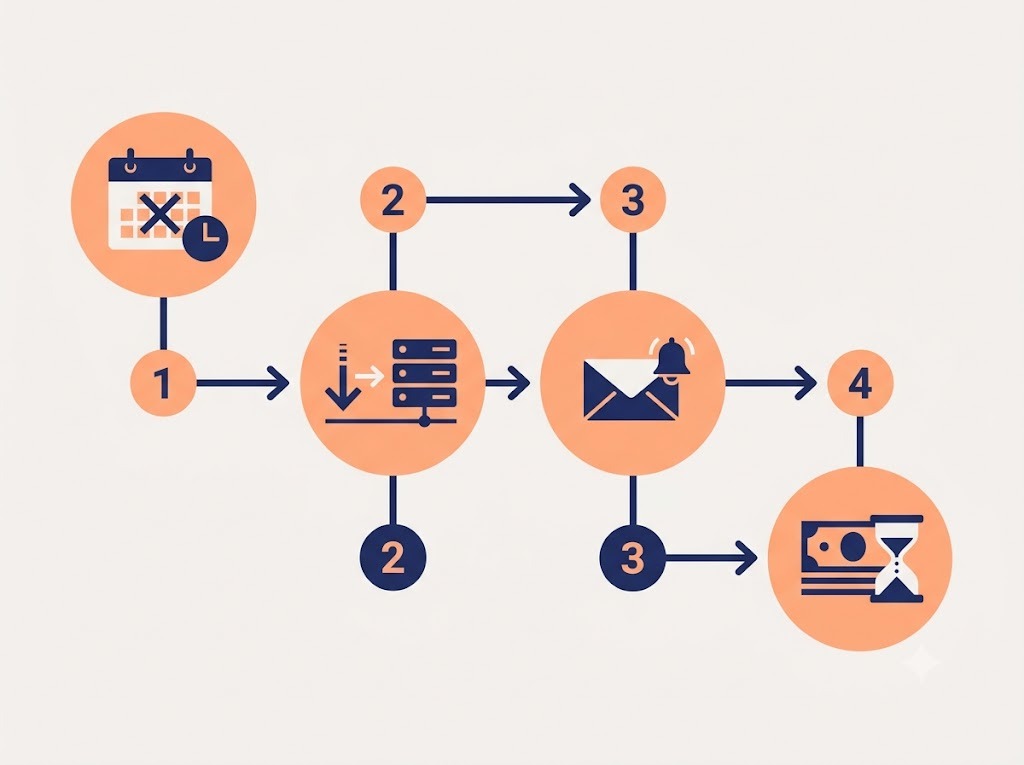
Here's the sequence a single missed EMI actually sets off, and it's longer than most people assume.
- Payment Missed. A due date passes without payment, and the DPD days past due count starts ticking from that day.
- Reported as Delinquent. At the next monthly cycle, the lender reports the account with its DPD status- 30, 60, 90-plus days, whatever it's reached by then.
- Account Classified Internally. If nothing changes, the lender's own internal classification can shift the account toward SMA, special mention account, and eventually NPA status.
- Recovery Contact Increases. Once an account crosses certain delinquency thresholds, contact from the lender or its recovery team typically picks up.
- Resolution or Escalation. The account gets caught up, settled, or restructured; or, if none of that happens, it may eventually be reported as written off.
The full credit-score impact of a late payment is covered in depth elsewhere, worth reading if you want the exact mechanics behind each stage. What matters here is the shape of the thing: a single missed payment doesn't jump straight to written-off; there's real distance between step one and step five, and real opportunities to change course along the way, well before any recovery-agent contact even enters the picture.
How Long Does Negative Reporting Stay on Your File?
Status Type | What It Means | Typical Retention (indicative) |
DPD (30/60/90 days) | Payment overdue by a set number of days | Reflected in the payment history grid for 36 months on a rolling basis |
Settled | Account closed via negotiated settlement, less than the full amount | Commonly cited at up to 7 years, confirm against current bureau policy |
The lender has closed the account as a loss without full recovery | Up to 7 years from the write-off date | |
Suit filed | The lender has initiated legal recovery action | Reflect until the matter is resolved |
Nothing here sits on your file permanently. Entries age off on their own schedule, though the exact window is worth confirming against current bureau policy rather than treating any single figure as fixed forever.
What Does This Actually Mean for You Going Forward?
New credit applications get harder or come at a noticeably worse rate while a negative entry is still active. A lender pulling your report sees the whole picture, not just the score, the same way any NA or NIL field on your report tells a fuller story than the headline number alone ever could.
Recovery contact from the lender, or whoever they've handed the collection to, typically steps up once an account is actually reported delinquent; that's a direct downstream effect of the reporting itself. What doesn't happen, though, is a blanket freeze: your other accounts, the ones still performing fine, aren't automatically touched just because one has gone sideways. Where an account sits in the NPA classification sequence explains a lot about why the pressure ramps up the way it does. What to do about it is the more useful question right now.
What Are Your Options If You've Already Been Reported Negatively?
Catching up on the missed payment, if you genuinely can, is the fastest way to stop the escalation cold; this alone resolves more situations than people expect. If a full catch-up isn't realistic right now, a settlement or a restructured plan with the lender is the next real lever, worth raising directly rather than letting the account drift further, especially if several accounts are stretching your budget at once rather than just one.
Once whatever's been agreed is resolved, check that the correction lands correctly on your report; errors happen, and clearing a DPD entry that's genuinely wrong is a dispute-based process worth knowing about, separate from simply waiting for it to age off.
How FREED Helps If You've Been Reported Negatively
FREED's Loan Settlement Plan negotiates directly with lenders once an account has already gone into default, working toward a resolution that gets reported back to the bureau as settled rather than left open and unresolved indefinitely.
Worth being honest here: settlement itself still gets reported, and it carries its own credit impact; this isn't a way to erase what's happened. How settling debt affects your credit score is worth reading directly, since the goal isn't erasing history; it's closing it out cleanly enough that rebuilding can start.
A Few Things Worth Doing Proactively
Check your credit report periodically. Don't wait until you're applying for something to find out what's actually on it.
Know that routine reporting isn't a threat. It's only a negative status change, DPD, settled, written-off, that actually needs your attention.
If you're behind on something, deal with it before the DPD count climbs. Earlier action leaves more real options on the table than waiting does.
Once something's resolved, follow up and confirm it. A correction that never actually reflects on your report defeats the point of resolving it in the first place, and verifying your correct score directly is the fastest way to catch a gap early.
Drag

Mohit Juneja
Mohit Juneja writes educational content at FREED on debt management, credit scores, loan repayment, and borrowing best practices. His content is shaped by expert insights and industry knowledge, helping readers better understand their financial options and make informed decisions.
mohit.juneja@freed.care

FREED is India's trusted loan management platform. Founded in 2020 and headquartered in Gurugram, FREED has counselled 20 lakh+ people on personal loans, credit cards, and app loans. FREED charges fees only on successful settlement, not upfront. FREED does not handle secured loans (home loans, car loans, gold loans).
Media Mentions