How Your Payment History Impacts Your Credit Score
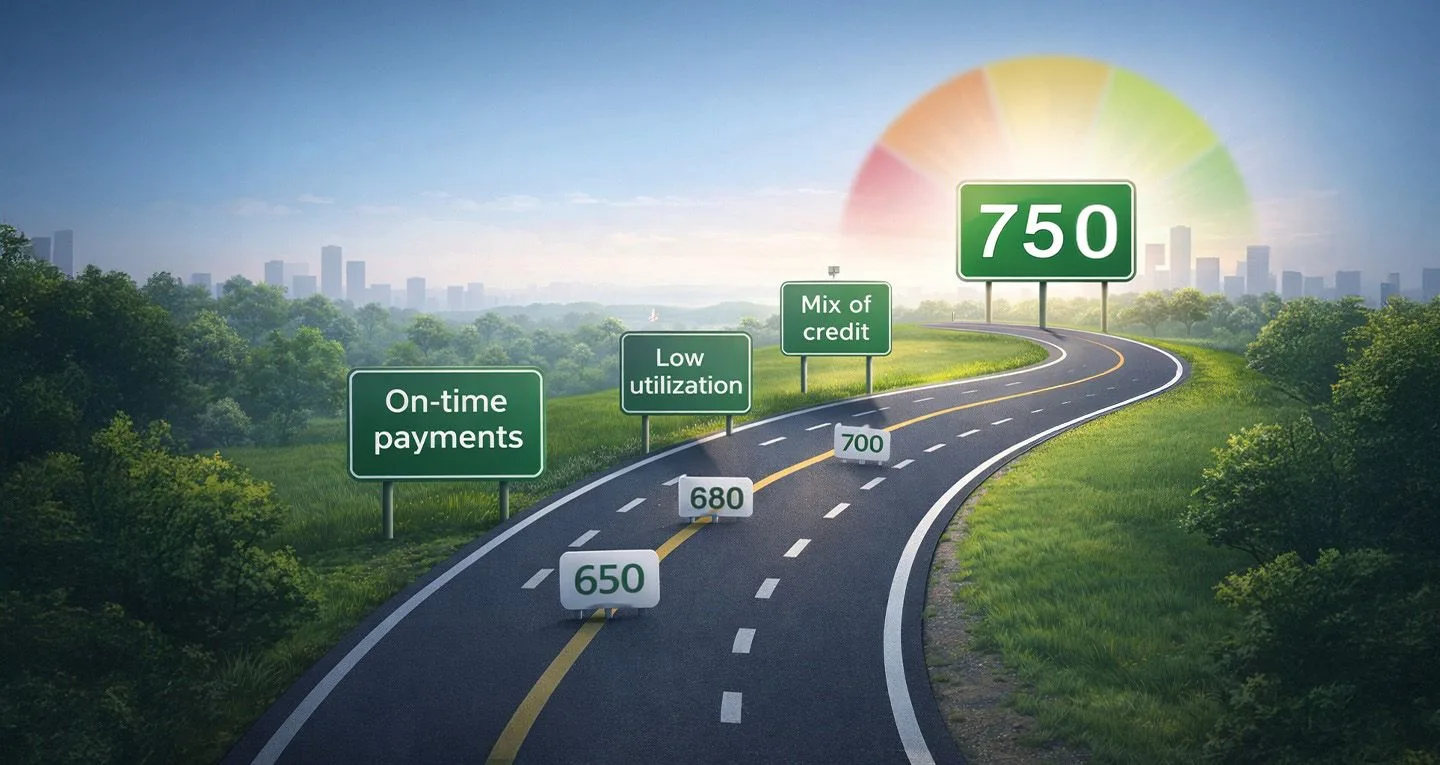
Understand why your payment history is the most important factor in your credit score and how consistent, on-time payments can boost your financial profile.

Mohit Juneja
Reviewed by FREED India, Debt Resolution Specialists
 4.7/5
4.7/5 ₹3,200Cr+
 20,000+
 20,00,000+4.7/5₹3,200Cr+20,000+20,00,000+
Key Takeaways

Payment history accounts for approximately 35 percent of your total credit score. It is the single most important factor.
Every on-time payment strengthens your score. Every missed payment damages it.
A single missed EMI can drop your score by 50 to 100 points and stay on your credit report for up to 7 years.
The damage reduces over time as positive payment history builds up around it.
The simplest and most powerful thing you can do for your credit score is pay every bill on time, every single month.
What Is Payment History?
Payment history is simply a record of whether you have paid your financial obligations on time.
Every time you pay a loan EMI or a credit card bill, that payment is reported to credit bureaus like CIBIL, Experian, Equifax, and CRIF High Mark by your lender.
Every time you miss a payment, that is reported too.
Over time, these records build a detailed picture of your financial reliability.
Lenders call this your payment track record. Credit bureaus use it to calculate your score. Future lenders use it to decide whether to trust you with money.
Think of payment history as a financial report card. Every month, you either get a tick or a cross. Enough ticks over enough time and your score climbs. A string of crosses and it falls fast.
The reason payment history matters so much is simple. Lenders want to know one thing above everything else: if I lend this person money, will they pay it back on time? Payment history answers that question more directly than anything else.
How Much Does Payment History Affect Your Credit Score?
Payment history carries approximately 35 percent of the weight in your credit score calculation.
That is more than any other single factor.
Here is how the five main factors compare:
What Counts as Payment History in India?
Payment history is tracked across more types of obligations than most people realise.
Loan EMIs
Every scheduled EMI on every active or past loan is recorded and reported. This covers home loans, personal loans, vehicle loans, two-wheeler loans, education loans, gold loans, business loans, and consumer durable loans.
Credit Card Payments
The payment you make each month toward your credit card outstanding is tracked. Whether you pay the full amount, a partial amount above the minimum, or just the minimum due, all of it is recorded.
Microfinance Loans
Loans from microfinance institutions are increasingly reported to credit bureaus. For borrowers in smaller cities and rural areas, this is becoming a significant part of their credit profile.
Buy Now Pay Later Schemes
Many BNPL products are now being reported to credit bureaus. A missed payment on a BNPL scheme can damage your credit score just like a missed EMI on a traditional loan.
Overdraft Facilities
If you have an overdraft linked to your bank account, repayment behaviour on this may also be reported depending on your lender.
What Is Not Tracked Currently
Utility bills, rent payments, mobile bills, and insurance premiums are generally not reported to credit bureaus in India at present. So, paying these on time does not directly improve your score, though failing to pay loans linked to these services would still show up.

FREED Expert Tip
Many people think paying the minimum due on their credit card is enough to keep their payment history clean. Technically, yes. But at 36 to 42 percent annual interest, the balance left unpaid keeps growing every month. After a few months of only minimum payments, the outstanding can become so large that even the minimum becomes unaffordable. Pay more than the minimum whenever possible.
Enroll NowWhat Happens When You Miss a Payment?
This is the section most people need to read most carefully.
Missing even one payment sets off a chain of consequences that are larger than most people expect.
The Immediate Score Drop
When your lender reports a missed payment to the credit bureau, your score drops immediately.
How much depends on your current score and overall profile. But the range is significant.
A person with a score of 760 who misses one EMI can see their score drop to 670 or below in a single reporting cycle.
That is a fall of 90 points or more. From a good score to a mediocre one. Because of one missed payment.
The Higher You Are, the More You Lose
Here is something that surprises most people.
The higher your credit score before a missed payment, the bigger the drop when it happens.
Someone with a score of 800 loses more points from a single missed payment than someone with a score of 600.
The logic is that a missed payment is a bigger departure from expected behaviour for a high scorer than for someone who already has a patchy record.
This makes protecting your score more critical the higher it gets.
What Happens Over the Next 90 Days
A missed payment does not sit still. If it is not addressed quickly, the damage compounds.
From 1 to 30 days past due, your account is overdue. The lender sends reminders. Score damage is beginning.
From 31 to 90 days past due, your account is flagged as a Special Mention Account or SMA. Recovery activity increases. Score damage becomes more serious.
Beyond 90 days, your account is classified as a Non-Performing Asset or NPA. This is a formal default. The score damage is severe and long-lasting.
How Long It Stays on Your Report
A missed payment stays on your credit report for up to 7 years from the date it was recorded.
However, its impact on your score reduces year by year as you build positive payment history around it.
An old missed payment from 5 years ago with a spotless record since then carries far less weight than a recent one.
How Lenders Read Your Payment History
When a lender reviews your credit report, they do not just count missed payments. They read your payment history like a story.
Here is what they are actually looking for.
Patterns, Not Just Individual Events
One missed payment 3 years ago tells a very different story from three missed payments in the last 18 months.
Lenders look for patterns. Is this person consistently reliable? Or do they struggle regularly with repayments?
A single old event surrounded by years of clean payments is usually forgivable.
A recurring pattern of lateness or irregularity is a serious red flag.
Recency of Payment Issues
Recent payment history carries more weight than older history.
A missed payment from 4 months ago matters far more to a lender than one from 4 years ago.
This is why it is especially important to maintain a clean record in the 6 to 12 months leading up to any new loan application.
Severity of the Issue
A payment that was 5 days late is treated differently from one that was 60 days overdue.
A single overdue event is treated differently from a full default.
Lenders assess severity, recency, and frequency together to form their overall view of your payment reliability.
Account Type
A missed payment on a home loan involving a large secured amount is viewed more seriously than a missed payment on a small consumer loan.
The importance of the account where the issue occurred factors into how lenders read the event.
The Full Story
Lenders piece all of these elements together into a complete picture.
A single minor issue from years ago in an otherwise strong payment record rarely causes rejection by itself.
A combination of recent, severe, and repeated payment issues is a very different matter entirely.
Use This Tool: FREED Financial Health Score Want to see how your payment history is affecting your complete financial profile? Get your FREED Financial Health Score in 2 minutes. Free.
Mistakes That Damage Payment History Without People Realising
Many people damage their payment history without fully understanding what they are doing. Here are the most common traps.
Forgetting a Due Date
The most common reason for missed payments is simply forgetting.
With multiple loans and credit cards all having different due dates, it is easy for one to slip through.
Fix: Set up auto-pay for every account. Even setting auto-pay for just the minimum due on credit cards prevents a missed payment from being recorded while you sort out the full amount separately.
Assuming a Small Payment Does Not Matter
Some people let a Rs. 500 or Rs. 800 minimum payment on a small loan or BNPL scheme go unpaid because the amount seems trivial.
Every missed payment is reported to the credit bureau regardless of the amount involved. A small missed payment causes the same type of record as a large one.
No amount is too small to take seriously.
Leaving an Account on Autopilot Without Checking
Some people set up auto-pay and then never check whether the payments are actually going through.
Auto-pay can fail if your bank account balance is insufficient on the due date, if the bank mandate is not active, or if there is a technical error.
Check your bank statements regularly to confirm that all auto-pay instructions are executing correctly.
Paying Only the Minimum Due Every Month
Paying only the minimum due keeps your payment record technically clean. But the interest at 36 to 42 percent per year on the remaining balance compounds very quickly.
After several months of only minimum payments, the outstanding balance grows faster than you are paying it down. Eventually the minimum due itself becomes unmanageable.
At that point, missed payments begin. And by then the outstanding is much larger than when the problem started.
Always pay more than the minimum when possible. Have a clear plan to clear credit card balances.
Ignoring a Dispute While Stopping Payments
Sometimes people stop paying an EMI because they are in a dispute with their lender about the loan terms, interest rate, or a processing error.
This is a mistake. Regardless of the dispute, the lender will continue to report missed payments to the credit bureau until the matter is formally resolved.
Always continue making payments while a dispute is being resolved. The alternative is damaging your credit score for a problem that may ultimately be decided in your favour.
Not Communicating With Your Lender When You Cannot Pay
Many people who know they are going to miss a payment simply go silent. They avoid the lender's calls. They hope the situation will resolve itself.
This is the worst possible approach.
If you call your lender before the due date and explain your situation, many lenders will offer a formal moratorium, a temporary EMI reduction, or a short repayment holiday.
A formally granted moratorium is not reported as a missed payment. Silence and default is.
Communicating proactively before a missed payment is infinitely better than trying to explain yourself after one.

What the Law Says
Under the Credit Information Companies Regulation Act 2005, every individual in India is entitled to access their credit report from any credit bureau once per year at no cost. If you find a payment incorrectly recorded as missed on your report, whether due to a lender error, a processing delay, or an administrative mistake, you have the legal right to raise a formal dispute. The credit bureau is required to investigate and respond within 30 days. The lender is required to correct accurate information if an error is confirmed. Incorrect negative information on your credit report can damage your score and your loan eligibility for years. Checking your report regularly and correcting errors promptly is one of the most important things you can do to protect your financial health. Read about how to raise a credit report dispute in India.
Enroll NowHow to Build and Protect Your Payment History
Building a strong payment history is the most reliable path to an excellent credit score. It is not complicated. It requires consistency more than anything else.
Step 1: Know your current payment history.
Download your credit report from CIBIL or any bureau and read through the payment history section carefully.
Look for any missed payments, delayed payments, or irregularities. Check whether all payments you have made are correctly recorded.
Raise disputes for any errors you find. Getting an incorrectly recorded missed payment removed can improve your score quickly.
Step 2: List every credit obligation and its due date.
Write down every loan EMI and credit card bill you need to pay each month, including the lender, due date, and amount.
This is your payment calendar. Keep it somewhere visible.
Having the full picture in front of you removes the risk of forgetting any payment.
Step 3: Set up auto-pay for every account without exception.
This is the most important practical action you can take.
Set up automatic payment instructions through your bank for every loan EMI and credit card bill.
For credit cards, set auto-pay for the full statement amount if your cash flow allows. If not, set it for at least the minimum due to prevent a missed payment from being recorded.
Step 4: Ensure your bank account has funds before every due date.
Auto-pay only works if the money is there.
Keep a mental note, or set a calendar reminder, to check your bank balance 3 to 5 days before each due date.
A returned payment due to insufficient funds is treated the same as a missed payment by the credit bureau.
Step 5: Treat EMI payments as non-negotiable.
Mentally categorise your loan EMIs the same way you categorise rent and food. They are not optional. They come before discretionary spending.
Building this habit of prioritisation is the mindset shift that protects your payment history during tight months.
Step 6: Clear any currently overdue amounts as your top priority.
If you have any accounts that are currently overdue, addressing these comes before everything else.
Every additional month of non-payment adds to the damage. Clearing overdue balances quickly stops the score from falling further and starts the recovery process.
If you cannot clear the full overdue amount at once, contact your lender immediately and set up a formal repayment arrangement.
Step 7: Build an emergency fund to protect payment consistency.
The most common cause of missed payments is an unexpected expense, a medical bill, a job loss, a vehicle repair, that temporarily drains the funds needed for EMIs.
An emergency fund of 3 to 6 months of essential expenses provides a buffer that protects your payment consistency during these moments.
Even a small fund built gradually over time is far better than none at all.
Step 8: Check your credit report every 3 months.
Make reviewing your credit report a regular quarterly habit.
Verify that all payments are correctly recorded. Catch and dispute errors quickly. Track your score improvement over time.
Regular review keeps you in control of your credit profile and lets you spot problems before they compound.
Are You in a Loan Trap? Quick Check
Move the slider to your total EMIs as a % of monthly salary. See your debt stress level instantly.
EMIs as % of Monthly Salary

Mohit Juneja
Mohit Juneja writes educational content at FREED on debt management, credit scores, loan repayment, and borrowing best practices. His content is shaped by expert insights and industry knowledge, helping readers better understand their financial options and make informed decisions.
mohit.juneja@freed.care

FREED is India's trusted loan management platform. Founded in 2020 and headquartered in Gurugram, FREED has counselled 20 lakh+ people on personal loans, credit cards, and app loans. FREED charges fees only on successful settlement, not upfront. FREED does not handle secured loans (home loans, car loans, gold loans).
Media Mentions