Annual Credit Report: Why It Matters
Annual credit report is the detailed record of your loans, credit cards, and repayment history that every RBI-registered credit bureau must give you once a year, free, on request. It shows lenders exactly what they'll see before they decide on your next loan or credit card. Checking it early means you catch mistakes before they cost you an approval.

Mohit Juneja
Reviewed by FREED India, Debt Resolution Specialists
 4.7/5
4.7/5 ₹3,200Cr+
 20,000+
 20,00,000+4.7/5₹3,200Cr+20,000+20,00,000+
KEY TAKEAWAYS

Every borrower can request one free annual credit report from each RBI-registered bureau.
India has 4 bureaus, CIBIL, Equifax, Experian, and CRIF High Mark, so up to 4 free reports a year.
A reporting error may affect your credit profile and influence future lending decisions until it is corrected.
Bureaus must resolve a dispute within 30 days or pay ₹100 a day in compensation.
What Is an Annual Credit Report?
Every credit report, regardless of which bureau issues it, contains four things: your personal details, your account and loan history (called tradelines), a record of every enquiry made against your file, and any public records like write-offs or settled accounts. This is the exact document a bank pulls up before deciding on your next loan or credit card, so what's in it is one of the key factors lenders consider when assessing your application.
It's called "annual" for a specific reason. RBI's 2025 Master Direction on Credit Information Reporting requires every credit bureau to give you one free full credit report each calendar year, on request. This isn't a courtesy the bureau extends to you. It's a right you already have, whether or not you've ever used it.
India runs four RBI-registered bureaus: TransUnion CIBIL, Equifax, Experian, and CRIF High Mark. Worth being precise here, since the two terms get used loosely: CIBIL is one of these four bureaus, not another name for "credit report" itself. A "CIBIL report" and an "Experian report" are two different documents, pulled from two different databases, and they can occasionally show slightly different information for the same person.
Knowing you're entitled to this report is one thing. Most people never actually request it, and that gap is exactly where problems quietly build up.
Why Do Most People Never Check Their Credit Report?
There's no single reason, and it isn't a sign of carelessness. A few things quietly work against the habit.
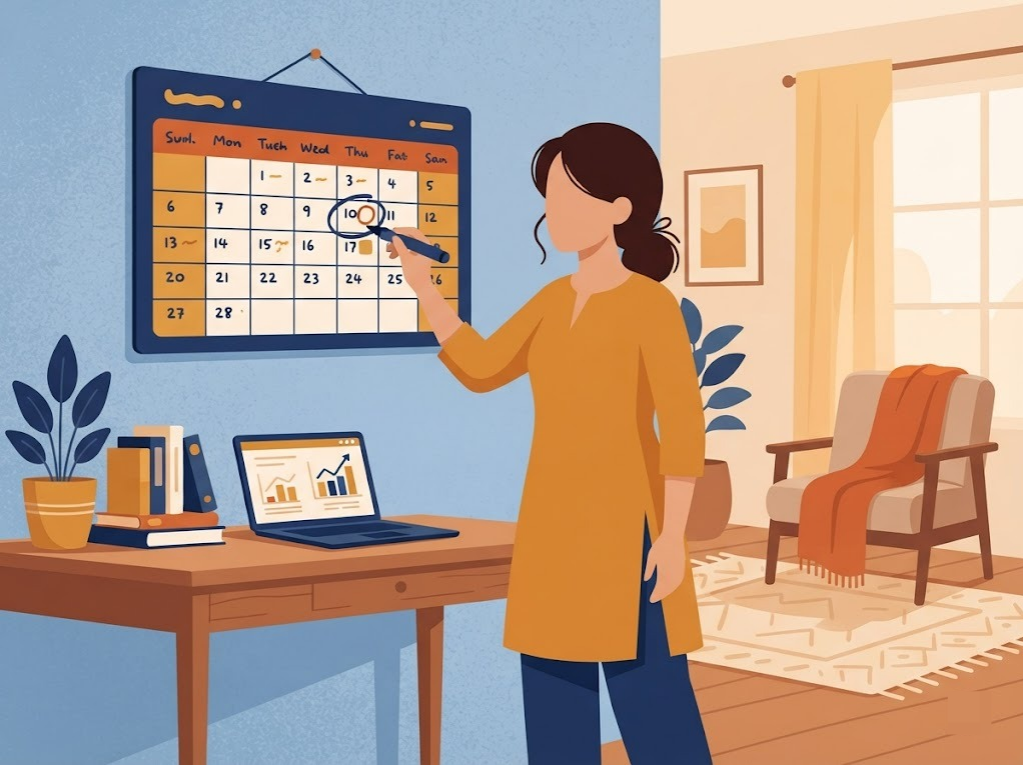
There's no deadline forcing the moment. Unlike a tax filing date, nothing on a calendar reminds you to pull your report. There's also a natural assumption that paying EMIs on time means everything must be fine, so there's no visible trigger to go check. And with four different bureaus in the picture, it isn't always obvious which one to even start with.
Here's how this usually plays out in practice. Someone applies for a home loan, expecting a smooth approval given their clean payment history, and may be offered different loan terms, depending on the lender's assessment. Only after asking why do they discover an old personal loan, paid off two years earlier, still showing as "active" on their report. Nobody was careless here. The report simply sat unchecked for years, quietly working against them the entire time.
This is exactly why a fixed, low-effort habit works better than waiting for a reason to check. If you're prone to assuming your score is fine because your payments are, our piece on whether checking your CIBIL score reduces it is worth a look too, since that same hesitation often keeps people from checking at all.

Freed Expert Tip
Request all 4 bureau reports in the same week each year so you're comparing the same snapshot in time.
Check My Credit Insights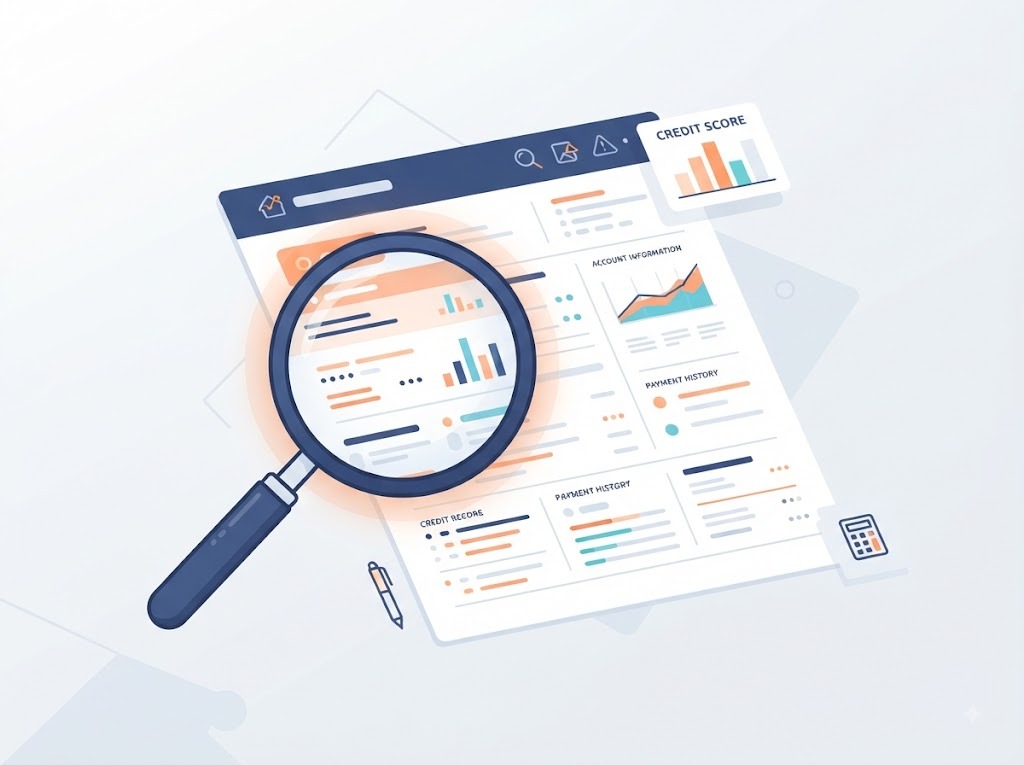
When Should You Check Your Credit Report?
These are five separate, valid triggers, no single one is more urgent than the rest.
- Once every 6 to 12 months, as routine. Even with nothing prompting it, a fixed check catches drift before it becomes a problem.
- Before applying for any loan or credit card. Knowing what a lender will see before they see it lets you fix anything wrong ahead of time.
- Right after closing or settling any account. Confirm the update actually landed on your report rather than assuming it did.
- If a loan or credit card application gets unexpectedly rejected. The report usually holds the answer to why.
- If you start getting recovery calls for a loan you don't recognise. This can point to a reporting error or, in rarer cases, identity fraud.
Knowing when to check only helps once you also know how. That's what the next section covers.
How to Get Your Free Annual Credit Report
The process is largely the same across all four bureaus, even though each one runs it on its own site. You pick a bureau, go to its official website directly rather than a third-party app, verify your identity with your PAN and an OTP, and download the report once it clears.
One thing worth being clear about upfront: this only covers one bureau at a time. Getting your full picture across all four means repeating this process four separate times, since each bureau holds its own data and issues its own free report.
Checking your own report, however many times you do it, is a soft enquiry. It has no effect on your score at all. Hard enquiries are one of several factors lenders and credit bureaus may consider. This distinction trips up a lot of people, so it's worth remembering before you hesitate to check.
Steps:
- Pick your bureau. Choose which of the 4, CIBIL, Equifax, Experian, or CRIF High Mark, you want to start with.
- Visit the official site. Go directly to that bureau's official website, not a third-party aggregator.
- Verify your identity. Provide your PAN and basic KYC details, then confirm via OTP.
- Download your report. View or download your free annual report once verification clears.
- Repeat for other bureaus. Each bureau owes you one free report a year, so repeat separately if you want the fuller picture.
If you're specifically starting with Experian, our detailed walkthrough on checking, downloading, and reading your Experian credit report covers that one bureau's process screen by screen.

What's Actually Inside Your Annual Credit Report
Section | What It Shows | What to Check |
Personal information | Name, PAN, address, date of birth | Confirm every detail matches your own records exactly |
Account or tradeline details | Every loan and card, balance, payment history | Check every account marked "Active" is actually still open |
Enquiries | Every time a lender pulled your report | Look for any enquiry you don't recognise applying for |
Public records or collections | Settled or written-off accounts | Confirm the status matches what you actually agreed to with the lender |
Each section tells a different part of the story a lender reads before deciding on you. A wrong tradeline status, a loan you closed still showing "active," is one of the most common issues people find once they actually look. If you spot something in this section that looks wrong, our guide on raising a CIBIL dispute to fix wrong entries walks through exactly how to correct it.
What Are Your Options for Staying on Top of It
There are really two tiers here, and neither one is "better" than the other, they just serve different needs.
Tier 1: the free, official route. One report per bureau, per year, requested manually, giving you a point-in-time snapshot. For most people checking on a routine basis, this is completely sufficient. It's the same underlying data a paid option would show you, just accessed less frequently.
Tier 2: a paid, ongoing monitoring option. For anyone actively planning a loan application, working through an active dispute, or simply wanting peace of mind between annual checks, a subscription that lets you check more often, with plain-language context rather than just a raw number, fills that gap.
Neither tier replaces the other. The free annual report is your right regardless of what else you use alongside it.
How FREED Helps
Frequency | Bureau(s) | Cost | What You Get |
Free Annual Report | Once per bureau per year | All 4 bureaus separately | Free |
Credit Insights | Anytime during subscription period | Experian | Paid, short-term subscription |
Credit Insights does not replace your right to the free annual report from each bureau.
Want me to also go back through the earlier "Free Annual Report vs Credit Insights" mentions elsewhere in that same blog (there weren't others besides this table) or check any of the other blogs from this session for the same figure? The balance transfer and CIBIL customer care pieces didn't reference Credit Insights pricing, so they're unaffected.
Know What's Really In Your Credit Report
Get your score and a plain-language breakdown of what's affecting it.
Check your optionsTips to Keep Your Credit Report Clean
Sources
Claim in blog | Source |
|---|---|
RBI mandates 1 free full credit report per bureau, per calendar year | |
Dispute unresolved past 30 days → ₹100/day compensation | |
4 RBI-registered CICs = CIBIL, Equifax, Experian, CRIF High Mark, all fall under one reporting framework | Same Master Direction, 2025 (link above) |
Settled/Written-Off status can stay visible up to 7 years | No RBI statute fixes this number — industry-standard bureau retention practice. Ref: CIBIL Framework for Compensation page (general CIBIL policy context), not primary regulation |

Mohit Juneja
Mohit Juneja writes educational content at FREED on debt management, credit scores, loan repayment, and borrowing best practices. His content is shaped by expert insights and industry knowledge, helping readers better understand their financial options and make informed decisions.
mohit.juneja@freed.care

FREED is India's trusted loan management platform. Founded in 2020 and headquartered in Gurugram, FREED has counselled 20 lakh+ people on personal loans, credit cards, and app loans. FREED charges fees only on successful settlement, not upfront. FREED does not handle secured loans (home loans, car loans, gold loans).
Media Mentions