How to Deal With Bank Recovery Agents: RBI Rules and Your Rights
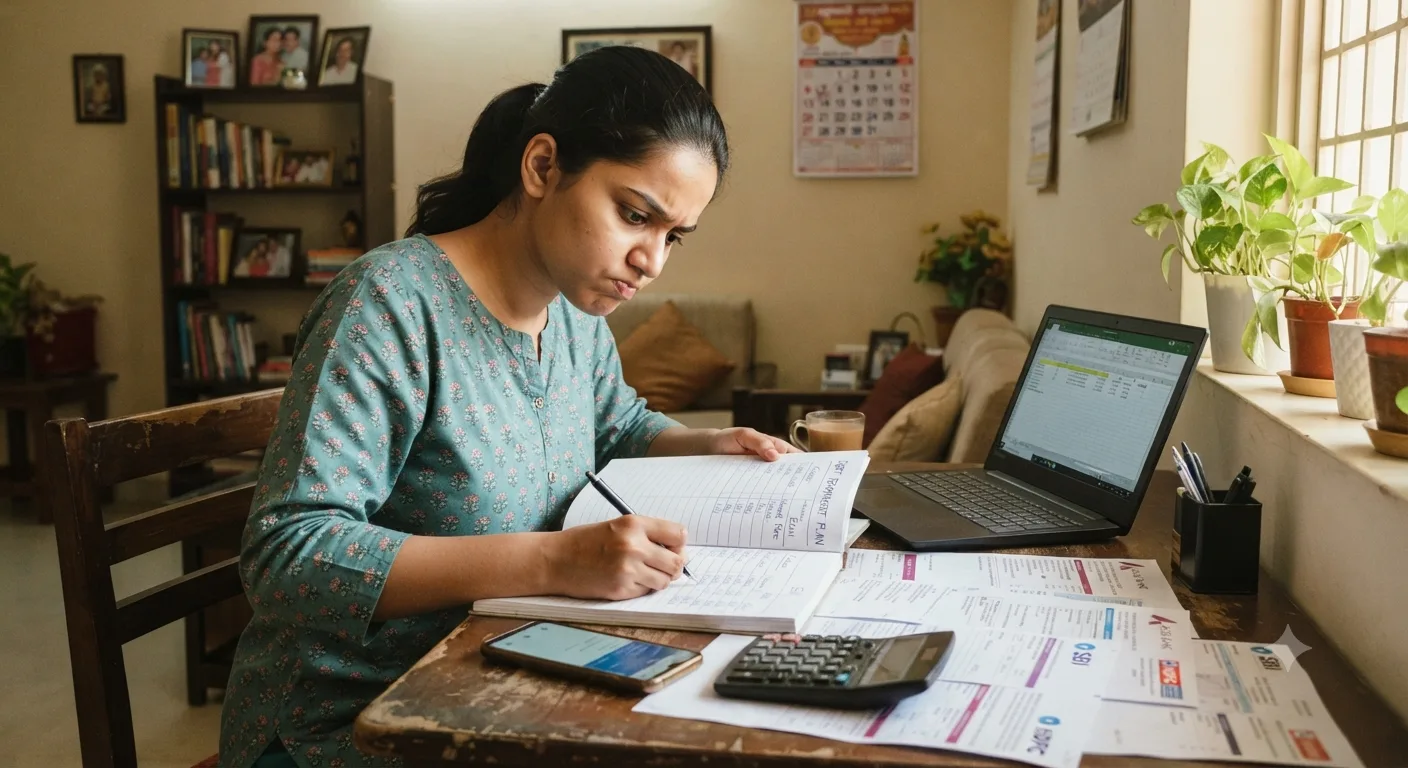
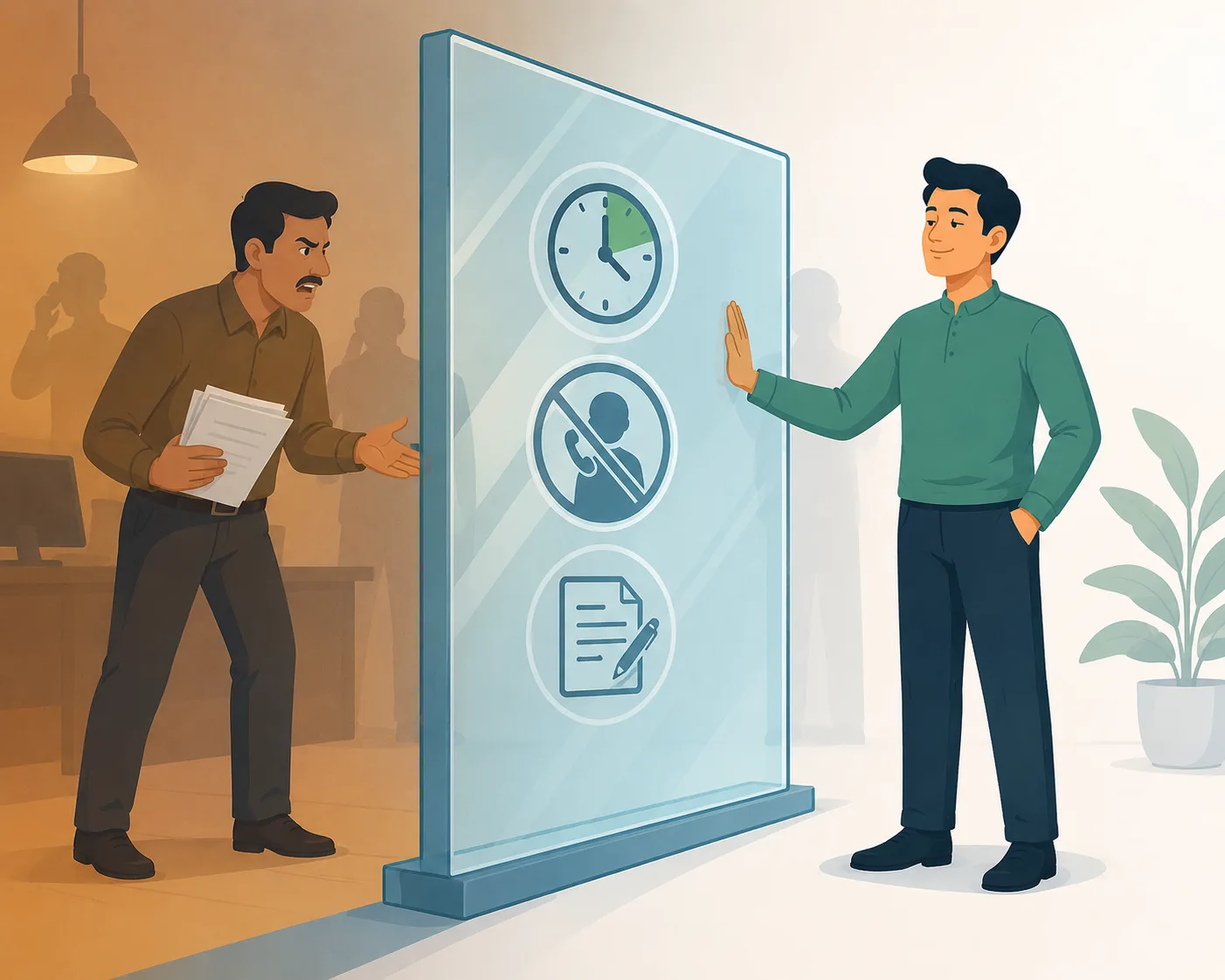
How to deal with bank recovery agents starts with knowing your rights. Under RBI (Reserve Bank of India) rules, recovery agents can only contact you between 8 AM and 7 PM. They cannot threaten you, contact your family, or use abusive language. If they do, that is a rule violation, and you can report it. Knowing this changes how every call feels.

Mohit Juneja
Reviewed by FREED India, SEO Intern
 4.7/5
4.7/5 ₹3,200Cr+
 20,000+
 20,00,000+4.7/5₹3,200Cr+20,000+20,00,000+
Key summury

Recovery agents are permitted to contact you only between 8 AM and 7 PM under RBI's Fair Practices Code. Calls outside this window go against these guidelines and can be reported.
Recovery agents should not improperly disclose your loan information to unrelated third parties.
Every agent must carry a valid ID card and an authorisation letter from the bank. You can ask to see it.
RBI's 2026 draft directions, effective July 1, 2026, introduce mandatory call recordings and stricter agent rules.
If harassment continues, you can escalate for free to the RBI Ombudsman at cms.rbi.org.in. No lawyer needed.
What Is a Bank Recovery Agent and Why Are They Calling You?
A recovery agent is a person or agency hired by a bank or an NBFC (non-bank loan company) to follow up when a borrower misses EMIs. If you have started getting these calls, it does not mean the bank is taking you to court. It is usually the first stage of follow-up after a missed payment.
Under RBI guidelines, banks are expected to give you written notice before assigning your account to a recovery agent. Check your loan agreement for the specific timeline your lender follows.
What they should not do is threaten you or contact your family. For unsecured loans like personal loans and credit cards, no asset can be seized without a court order.
A recent in-house survey found that close to 39% of borrowers have faced abusive recovery calls at some point. That number is high, but it also means the protections below exist precisely because this is a known problem, not a rare one.

What Are RBI's Rules for Recovery Agents? (What They Can and Cannot Do)
RBI's Fair Practices Code sets clear limits on what a recovery agent can do. Here is the full picture.
What recovery agents CAN do:
Call you between 8 AM and 7 PM only
Visit your address, with prior written notice for first visits
Send written communication such as letters and emails
Tell you the outstanding amount and ask for repayment
Record the interaction (RBI directions from 2026 are moving toward mandatory recordings verify current requirements with your lender)
What recovery agents CANNOT do:
Call before 8 AM or after 7 PM
Use abusive, threatening, or intimidating language
Contact your family members, employer, or neighbours about your loan without your consent
Create a public scene or shame you in any way
Force entry into your home or workplace
Seize any property without a court order. For unsecured loans like personal loans and credit cards, this can never happen. For secured loans, it can only happen after the SARFAESI (the law that lets banks take back secured property) process is followed
Hide their identity or refuse to show their ID and authorisation letter
Under RBI's updated directions, banks are moving toward mandatory recording of every recovery interaction. Agents are also expected to complete IIBF (Indian Institute of Banking & Finance) training before contacting borrowers. The bank, not just the agent, is responsible if conduct rules are broken.

FREED Expert Tip
Ask every recovery agent to show their ID card and the authorisation letter from the bank before you discuss anything. If they refuse, end the call.
Know Your Recovery Agent RightsHow to Handle a Recovery Agent Call Step by Step
Here is what to do, starting from the moment the phone rings.
Step 1 - Stay calm and don't panic. The call feels scary, but it is not a legal summons. Take a breath and listen to what the agent says.
Step 2 - Ask for their ID and authorisation. Ask the agent for their full name, the bank they represent, and their authorisation letter number. Note it down.
Step 3 - Record the call if possible. A recording is useful evidence if you need to complain later.
Step 4 - Don't make any payments on the spot. Never hand over cash to a recovery agent on a call or during a home visit. All payments should go directly to the bank account.
Step 5 - Note the time, date, and what was said. Keep a simple call log: time, number, what was said, and whether any threats were made. This becomes your evidence trail.
Step 6 - Respond in writing. Send an email to the bank's customer care restating your current financial situation. Written records carry more weight than phone calls. If the calls keep escalating despite this, FREED's counsellors are available for a free call to help you think through next steps.
Under RBI's updated directions, banks are expected to digitally record recovery interactions from 2026 onwards. You can ask the bank for this recording. If they are unable to provide it, you can raise this as part of a formal complaint.

What the Law Says
Under the RBI Fair Practices Code, a bank is directly responsible for any misconduct by its recovery agent. Banks remain responsible for the conduct of authorised recovery agents acting on their behalf.
File a Complaint Against Your BankWhat Counts as Recovery Agent Harassment Under RBI Rules?
Many borrowers go through behaviour that crosses the line without realising it is against the rules. Here is what counts as harassment, in plain terms.
A call after 7 PM goes against RBI guidelines, even if it feels routine. So does a threat of any kind, even an implied one. If an agent contacts your family, your spouse, or your manager about your loan, that crosses the line set by the Fair Practices Code, no matter how the agent frames it. The same applies if an agent shows up unannounced at your workplace or discusses your loan with your building's security guard.
If any of this has happened to you, it was wrong, and you have options.
When recovery conversations cross the line into abusive, threatening, or harassing behaviour, FREED provides an added layer of support through FREED Shield, a dedicated borrower-support service. Borrowers can file a complaint with proof against recovery harassment on FREED Shield and we will escalate the complaint directly to the lender.
This is not a rare problem. RBI data shows that loan and credit card complaints now make up the largest share of grievances the regulator receives. In a recent case, the Courts have taken recovery agent misconduct seriously in several cases borrowers have obtained compensation through both civil courts and the RBI Ombudsman process. Over recovery agent harassment is a sign that courts are taking this seriously.

Calls Getting Worse? Talk to Someone Who Can Help
Free, confidential. Tell us what's happening and we'll tell you exactly where you stand.
Get My Free AssessmentHow to File a Complaint Against a Recovery Agent, Step by Step
If a recovery agent has crossed the line, there is a clear path to escalate.
First, go to the bank's internal grievance officer. Every bank and NBFC has a Grievance Redressal Officer listed on its website. Send a written complaint with the date, time, what was said or done, and what action you want. Ask for a complaint reference number.
Wait 30 days for a response. Wait up to 30 days for a response. Under RBI's grievance redressal framework, banks are expected to respond within 30 days. If they don't respond, or you're not satisfied with the response, you can move to the next step.
Then, go to the RBI Ombudsman. The RBI Integrated Ombudsman Scheme at cms.rbi.org.in is free and needs no lawyer. You can attach your call log and email trail as evidence.
If there's a physical threat, go to the police. If an agent has assaulted you or made a credible physical threat, this is also a matter for a police complaint under the Bharatiya Nyaya Sanhita (BNS), separate from the Ombudsman process.
A written complaint trail is your strongest protection through all of this. A bank cannot deny what is already in writing.
Are You in a Loan Trap? Quick Check
Move the slider to your total EMIs as a % of monthly salary. See your debt stress level instantly.
EMIs as % of Monthly Salary
What Are Your Options When You Can't Pay Your EMIs?
If recovery calls have started because you're genuinely struggling with your EMIs, there are a few paths to look at, in order.
Loan restructuring. Ask the bank to change your loan plan, for a lower EMI spread over more months.
A short break from payments (moratorium). Some banks offer this, but it has to be requested formally. It is not automatic.
Balance transfer. If your CIBIL score still allows it, you can move your loan to another bank, often at a better rate.
Debt consolidation. If you have multiple loans, combining them into one can mean a single, lower EMI instead of juggling several due dates.
Loan settlement. Settlement is not something a borrower chooses out of preference. Banks and financial companies only consider it when you are in a genuine financial difficulty and are truly unable to repay the full amount. It is a last resort, not a shortcut.
How Loan Settlement Works When Repayment Is No Longer Possible
Settlement is not something a borrower chooses out of preference. Banks and financial companies only consider it when you are in a genuine financial difficulty and are truly unable to repay the full amount. It is a last resort, not a shortcut.
When repaying in full becomes genuinely difficult, here is how the process generally works. The default is acknowledged, the bank reviews your case, an offer is made, a lump sum is paid, and the matter is marked as settled.
A few things to know before this stage. The loan shows a "Settled" status on your CIBIL report, and this stays for up to 7 years. This is different from a loan that was paid off in full, which shows as closed with a clean record. For unsecured loans like personal loans and credit cards, no asset can ever be seized without a court order, settlement or not.
Through FREED's Loan Settlement Plan, settlement can bring your total outstanding down by up to 50%*, depending on your bank. FREED's counsellors handle the back-and-forth with the bank, help put your documents together, and get the settlement letter worded correctly before any payment is made.
Rates and ranges shown are indicative. Final terms decided by the bank. FREED is not a Loan Provider. No outcome is guaranteed. Please verify directly with your bank.
Not Sure If Settlement Is Right for You?
A free call with a FREED counsellor takes 20 minutes. No commitment.
Book My Free Call
What Helps When Recovery Agents Are Calling Every Day
If the calls have become a daily pattern, a few habits make a real difference.
Keep a call log every time, even when it feels repetitive. Don't ignore the calls. Maintaining communication with the lender can help you better understand available options . Where possible, move communication to writing, since it holds up better later. Never pay cash directly to an agent. Avoid making verbal promises on a call that you're not sure you can keep.
RBI guidelines expect banks to give written notice before appointing a recovery agent. Recovery is meant to be peaceful, professional, and private. If any of those standards break down, you have grounds to file a formal complaint with the bank and, if unresolved, with the RBI Ombudsman.
If the daily pressure starts to feel like too much to manage alone, speaking to a debt counsellor is a concrete next step, not a sign that you've failed.
Recovery Agent Behaviour: Allowed vs. Not Allowed Under RBI Rules
Behaviour | Allowed? | What to Do |
Calling between 8 AM and 7 PM | ✅ Allowed | Answer and note the call |
Calling before 8 AM or after 7 PM | ❌ Violation | Note the time, file a written complaint with the bank |
Using threatening or abusive language | ❌ Violation | Record the call, file a complaint immediately |
Contacting family members or employer | ❌ Violation | Written complaint, then RBI Ombudsman if unresolved |
Visiting home with prior notice | ✅ Allowed (limited) | Ask for ID and authorisation letter |
Visiting home without notice or at night | ❌ Violation | Refuse entry, file a police complaint |
Asking you to pay cash directly to them | ❌ Not standard | Pay only to the bank account, ask for a receipt |
Refusing to show ID or authorisation | ❌ Violation | End the interaction, report to the bank's grievance officer |
This table is for general awareness. Specific rules may vary by loan type and bank. Consult a financial counsellor for advice specific to your situation.
How to File a Complaint: Step by Step Summary
Step 1 - Write down every call. Note the date, time, phone number, the agent's name, and what was said. Keep this log safe. It becomes your evidence if you need to escalate.
Step 2 - Send a written complaint to the bank. Find the bank's Grievance Redressal Officer on their website. Email a factual complaint: date and time of the violation, what was said or done, and what action you want taken. Ask for a complaint reference number.
Step 3 - Wait 30 days for the bank's response. Banks are required to respond within 30 days. If they don't, or you're not satisfied with the answer, move to the next step.
Step 4 - File with the RBI Ombudsman. Go to cms.rbi.org.in. The process is free and you do not need a lawyer. Upload your complaint, attach your call log and email trail, and submit.
Step 5 - Explore your repayment options in parallel. While the complaint is in process, talk to your bank about restructuring or a short break from payments. If repaying in full is genuinely not possible, you can also look at what settlement involves. FREED's counsellors can help you assess your situation and handle the process on your behalf.

Mohit Juneja
Mohit Juneja writes educational content at FREED on debt management, credit scores, loan repayment, and borrowing best practices. His content is shaped by expert insights and industry knowledge, helping readers better understand their financial options and make informed decisions.
mohit.juneja@freed.care

FREED is India's trusted loan management platform. Founded in 2020 and headquartered in Gurugram, FREED has counselled 20 lakh+ people on personal loans, credit cards, and app loans. FREED charges fees only on successful settlement, not upfront. FREED does not handle secured loans (home loans, car loans, gold loans).
Media Mentions