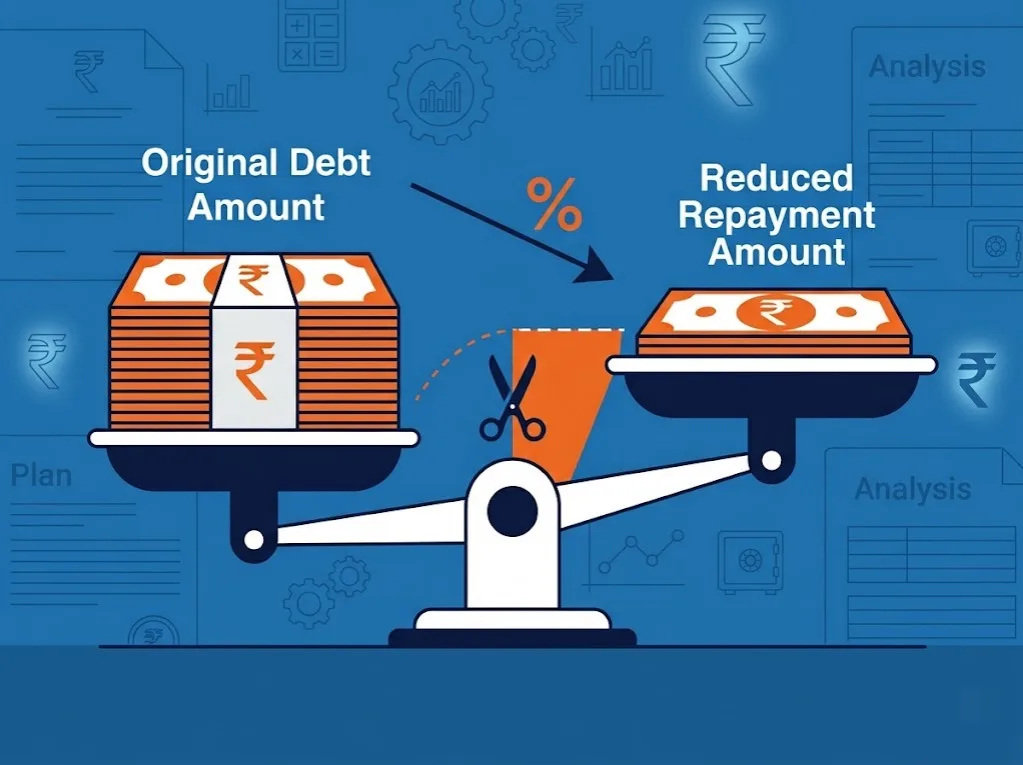
Final Settlement Payment Settlement Letter Format: Eligibility, Process & Key Facts
A final settlement letter is the document your bank or NBFC issues after you've made the agreed settlement payment, confirming your account is closed and marked "Fully and Finally Settled." This is different from the settlement offer or agreement you sign before paying; this piece covers the confirmation that comes after.
Mohit Juneja
Reviewed by FREED India, Debt Resolution Specialists
 4.7/5
4.7/5 ₹3,200Cr+
 20,000+
 20,00,000+4.7/5₹3,200Cr+20,000+20,00,000+
KEY TAKEAWAYS

A final settlement letter is issued only after the agreed payment is actually received, not at the point of agreeing to terms.
It must state specific language, "Fully and Finally Settled," with the account number, settled amount, and a zero-balance confirmation; vague wording creates real problems later.
This exact letter is what supports accurate CIBIL reporting; an incorrectly worded one can leave your account looking unresolved even after you've paid.
If you haven't received one within a reasonable time after payment, you're entitled to request it formally and to escalate if it's refused or delayed.
What a Final Settlement Letter Actually Is
A settlement process actually involves two distinct documents, and confusing them is where a lot of borrowers run into trouble later. The first is the settlement offer or agreement, the negotiated terms you sign before paying anything, setting out the amount, the timeline, and the conditions both sides are agreeing to. Getting that first document right is its own separate skill, one that determines whether the bank even takes your proposal seriously in the first place.
This piece is specifically about the second document, the final settlement letter, issued after you've actually paid, confirming closure. Some borrowers assume the settlement agreement alone is enough proof that the matter is resolved; it isn't. The agreement is a promise about what will happen once you pay; the final letter is confirmation that it actually did happen, that the payment was received and accepted as full and final. Practically, the final letter confirms that the agreed settlement payment has been received and the settlement terms have been completed.
Not everyone automatically gets this letter the moment they pay, which is worth understanding before you assume it's already on its way.

Freed Expert Tip
If you've only ever seen your settlement agreement and never a separate closure confirmation after paying, that's worth checking on directly; don't assume one document covers both stages.
Talk to FREEDWho Is Eligible to Receive a Final Settlement Letter
Eligibility here is straightforward but specific: you're entitled to this letter once, and only once, the full agreed settlement amount has actually been received by the bank or NBFC, exactly per the terms laid out in your settlement agreement.
A partial payment, or a payment of an amount different from what was agreed, doesn't trigger this letter. The bank isn't obligated to issue a closure confirmation for an incomplete settlement, no matter how close you got to the full agreed figure. This applies to the account holder and any co-applicant or guarantor named on the account too, since the closure and the credit reporting that follows it affect their profile just as much as the primary borrower's. What the letter itself needs to actually say is worth walking through carefully.
What This Letter Must Contain
A genuine final settlement letter needs several specific elements, and a letter missing any of them isn't really doing its job, however official it looks on the surface.
- The specific phrase "Fully and Finally Settled." This exact language, or a clear equivalent, is what distinguishes a genuine closure from an ambiguous one. Anything vaguer leaves room for later dispute.
- Account number and loan details, matching your own records exactly, not a generic reference that could apply to any account.
- The settled amount and payment date, confirming precisely what was actually received and when.
- A zero-balance or nil-dues confirmation, stating explicitly that no further amount is owed under any circumstance.
- Reference to CIBIL or credit bureau reporting, ideally noting that the account will be reported as settled, not left ambiguous about what happens next.
Don't accept a letter that only vaguely references "the matter is resolved" without this specific language. Vague wording is exactly what causes reporting disputes later, sometimes months or years after you assumed the matter was closed for good.
The Process for Obtaining It After Payment
- Confirm your payment has actually been processed and received, not just submitted, before expecting the letter to follow.
- Request the final settlement letter formally, in writing, referencing your settlement agreement and payment date directly; don't rely on a verbal assurance that it's "on its way."
- Most banks and NBFCs issue this within a reasonable timeframe after payment confirmation, commonly a few weeks, though this varies by lender and isn't governed by a single universal deadline the way the settlement negotiation itself might be.
- Follow up in writing if it doesn't arrive within that window, referencing your original request by date rather than starting the conversation from scratch.
Why getting the wording right matters more than most people realise comes down to one specific, downstream consequence.
Why the Exact Wording Matters for Your CIBIL Report
The lender reports your account status separately to credit bureaus, while the final settlement letter serves as evidence of the agreed settlement and closure.. A correctly worded "Fully and Finally Settled" letter supports a clean, accurate "Settled" status on your report, the outcome you actually negotiated for.
A vague, incomplete, or missing letter can leave your account looking ambiguous or even still active or overdue on your credit report, well after you've genuinely paid in full. This isn't a rare edge case; it's exactly the kind of gap that shows up when nobody checks the letter's wording carefully at the time. This is precisely why checking your credit report a month or so after receiving this letter matters, confirming the correct status directly on your report rather than just assuming the letter did its job. What to do if either the letter or the report doesn't match what you expect is worth knowing before you need it.

Want to confirm your report reflects this correctly?
Check your credit score and full picture.
Check My Credit ScoreWhat to Do If You Never Received One, or the Wording Is Wrong
Request it again in writing, formally, referencing the original payment date and settlement agreement, addressed to the bank's grievance officer if an initial request goes unanswered. If you did receive a letter but it's incorrectly worded, missing the specific "Fully and Finally Settled" language or the zero-balance confirmation, request a corrected version rather than accepting it as is just because it exists.
If the bank refuses or continues to delay unreasonably, this is grounds for escalation through the bank's formal grievance process and, if unresolved, to the RBI Ombudsman. Don't let this slide because the payment itself is done; an incorrect or missing letter can create real problems months later, exactly when a new lender is reviewing your report and finds something that doesn't match what you actually paid.
What Are Your Options
If you're still negotiating a settlement and haven't reached the payment stage yet, that's a separate, earlier conversation. Settlement is not something a borrower chooses out of preference; banks only consider it when someone is genuinely unable to repay in full.
For those managing several unsecured debts where settlement is one of several tools being considered, consolidation is worth exploring first if repayment, just restructured, remains genuinely possible rather than reaching for settlement as the first move.
How FREED Helps Get This Right
FREED's Debt Resolution Program specifically manages the settlement process end-to-end, including ensuring the final settlement letter carries the correct language before considering a case closed. This is one of the concrete things a structured program does that a self-negotiated settlement can miss entirely if the borrower doesn't know to check for it. Having negotiated the payment is only half the job; the closure document is what actually protects you afterward.
No specific settlement percentage or timeline is guaranteed as fact; actual outcomes depend on the individual account and lender involved.
Want your settlement letter checked properly from the start?
See how FREED's process works.
Get a Free AssessmentTips for Handling Your Final Settlement Letter
Request the letter in writing the same day your final payment clears. Don't wait to be reminded, and don't assume it will arrive automatically.
Read it against the checklist in this piece before filing it away, not months later when you actually need it and discover something's missing.
Check your credit report about a month later to confirm the status matches what the letter actually states.
Keep both the settlement agreement and the final letter together, permanently. They may both matter years later for a future loan application, the same way a well-documented settlement letter sample shows exactly what good documentation looks like from the very first step.
Freed Expert Tip
Scan and store your final settlement letter somewhere permanent and backed up, not just a physical copy that could be lost. You may need to produce it years after the fact.
Talk to FREEDSources
Claim | Source |
Settlement letter wording requirement ("Fully and Finally Settled") | Consistent with existing FREED-published guidance |
Escalation path via bank grievance officer and RBI Ombudsman | RBI Fair Practices Code / RB-IOS 2026 |

Mohit Juneja
Mohit Juneja writes educational content at FREED on debt management, credit scores, loan repayment, and borrowing best practices. His content is shaped by expert insights and industry knowledge, helping readers better understand their financial options and make informed decisions.
mohit.juneja@freed.care

FREED is India's trusted loan management platform. Founded in 2020 and headquartered in Gurugram, FREED has counselled 20 lakh+ people on personal loans, credit cards, and app loans. FREED charges fees only on successful settlement, not upfront. FREED does not handle secured loans (home loans, car loans, gold loans).
Media Mentions