Unsecured Advances: A Beginner's Guide
Unsecured advances is the banking term for loans and credit facilities, like personal loans, credit cards, and unsecured overdrafts, that a bank extends without any collateral backing them. Because there's no asset to fall back on,RBI applies higher risk weights to certain categories of unsecured consumer credit compared with some secured lending categories.
Mohit Juneja
Reviewed by FREED India, Debt Resolution Specialists
 4.7/5
4.7/5 ₹3,200Cr+
 20,000+
 20,00,000+4.7/5₹3,200Cr+20,000+20,00,000+
KEY TAKEAWAYS

Unsecured advances is the banking term for loans and credit lines, personal loans, credit cards, unsecured overdrafts, extended without collateral.
RBI applies higher risk weights to certain categories of unsecured consumer credit.
Personal loans, credit cards, and unsecured business loans all fall under this category on a bank's books.
Because banks carry more risk upfront, unsecured advances typically come with higher interest rates than secured lending.
What Are Unsecured Advances?
"Advances" is the broader banking term. RBI and banks use it to cover loans, cash credit, overdrafts, and bill discounting collectively, a "loan" is really just one type of advance, even though most borrowers use the two words interchangeably in everyday conversation without thinking about the distinction at all.
"Unsecured" simply means no collateral is pledged against the facility, approval rests entirely on your income and creditworthiness rather than an asset the bank could recover if things go wrong. This is exactly the category FREED works with: personal loans, credit cards, and similar unsecured facilities, though this piece is about understanding the classification itself, not a pitch for any particular service. Getting comfortable with this terminology upfront makes the rest of your own paperwork, loan agreements, bank statements, and credit reports considerably less confusing to read.
Why the terminology itself matters, beyond just sounding technical, is worth understanding next.

Curious how this classification applies to your own debts?
Check where you stand.
Check My Credit ScoreWhy Do Banks Use the Term "Advances," Not Just "Loans"?
"Advances" is the term used on a bank's own books and in RBI reporting, an accounting and regulatory classification, not just marketing language chosen for a brochure or a loan app's landing page. It covers a wider net than "loan" alone; cash credit and overdraft facilities count as advances too, even though most people wouldn't naturally call them loans in everyday conversation; they think of an overdraft as flexibility on their salary account, not a formal credit facility with its own regulatory treatment.
Knowing this helps make sense of why bank statements, loan agreements, and RBI circulars use "advances" language that can feel unfamiliar to a borrower encountering it for the first time, often at exactly the moment they're trying to understand a document that matters, a sanction letter, a default notice, or a credit report entry. The consumer-facing side of unsecured loans, what they actually cost and how they work day to day, is covered in full elsewhere; this piece stays on the banking and regulatory side of the same term instead.
What actually counts as an unsecured advance is worth listing out plainly, since the category is broader than most people assume.
What Counts as an Unsecured Advance?
- Personal loans, the most common form most people encounter directly, whether from a bank, an NBFC, or a lending app.
- Credit card outstanding balances are technically a revolving unsecured advance rather than a fixed-term loan, renewing themselves every billing cycle rather than following a set repayment schedule.
- Unsecured overdraft facilities, some banks extend these against salary accounts without any collateral attached, functioning almost invisibly until a balance is actually drawn down.
- Unsecured business loans and working capital are extended to businesses without asset backing, assessed instead on cash flow, turnover, and business history.
- Consumer durable loans, in some cases, depending on how the specific facility is structured, some are secured against the item purchased, and some aren't.
If credit card debt is the specific unsecured advance you're carrying, it's worth knowing this list applies to it just as directly as it does to a personal loan; the underlying regulatory treatment doesn't distinguish based on how the credit was actually used.
How Banks Treat Unsecured Advances Differently
RBI requires higher risk weights and provisioning on unsecured consumer credit compared to secured lending. Banks must set aside more capital against these exposures specifically because there's no collateral to recover value from if the borrower defaults; the bank's only real recourse is the borrower's continued ability and willingness to pay.
This directly affects pricing. Higher provisioning costs are one reason unsecured advances carry higher interest rates than secured loans for a comparable amount and tenure; the bank is effectively pricing in the extra capital it has to hold against that exposure. It also affects how quickly a bank moves once an account shows stress. Since there's no collateral to fall back on, banks tend to engage with unsecured accounts differently once they slip toward NPA classification than they would with a secured facility with an asset sitting behind it as a fallback.

What the Law Says
RBI raised the risk weights that banks and NBFCs must hold against unsecured consumer credit exposures in a 2023 circular, increasing the risk weight on personal loans from 100% to 125% for both banks and NBFCs, and on credit card receivables to 150% for banks and 125% for NBFCs, a direct regulatory response to rising unsecured lending.
Understand the Regulatory BackdropSecured vs Unsecured Advances: Side by Side
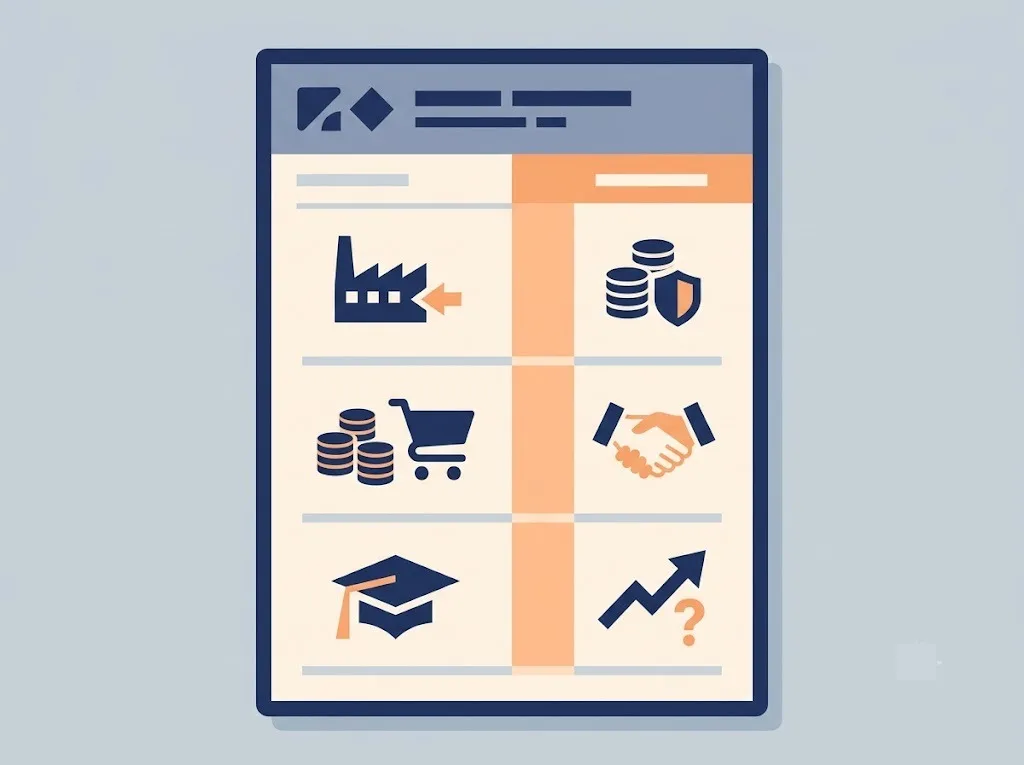
Feature | Secured Advances | Unsecured Advances |
Collateral required | Yes (property, gold, FD, etc.) | No |
Bank provisioning requirement | Lower | Higher, per RBI norms |
Typical interest rate | Lower | Higher |
Recovery approach on default | Asset recovery available | Credit report impact, recovery contact, settlement-based |
Common examples | Home loan, LAP, gold loan | Personal loan, credit card, unsecured overdraft |
This classification is about how the bank manages risk, not a judgment on the borrower, plenty of financially disciplined people carry unsecured advances simply because that's the appropriate product for a short-term or smaller-ticket need where pledging an asset wouldn't make sense.
What This Means If You're Already Carrying One
Because unsecured advances carry no collateral cushion for the bank, missed payments tend to show up on your credit report and trigger recovery contact sooner than on secured debt, where the bank has an asset to fall back on before escalating to more active collection.
Multiple unsecured advances, a personal loan plus a couple of credit cards, for instance, compound this, since each is being tracked and provisioned for separately by different lenders, each watching its own exposure independently with no visibility into what the others are doing. Understanding this classification helps explain why unsecured debt often feels like it escalates faster than a home loan or car loan would, it isn't your imagination, it's built directly into how the bank itself treats the exposure from day one, not something that develops only once you fall behind. If an account has already gone unresolved for long enough, it's worth understanding what a written-off account actually means versus the earlier stages covered here, since the two carry meaningfully different weight on your report.

Freed Expert Tip
Pull your credit report and separate your secured debts from your unsecured ones, it changes what's actually at risk and how urgently to act on each.
Check Your Credit ReportHow FREED Helps With Unsecured Advances
Personal loans, credit cards, and other unsecured advances are exactly what FREED's Loan Settlement Plan (LSP) and Debt Consolidation Program (DCP) are built for, unlike home loans or other secured debt, which FREED does not handle at all, regardless of the circumstances.
If you're still current on payments but juggling multiple unsecured advances, consolidation into one lower EMI is the fit, replacing several separately tracked accounts, each with its own due date and lender relationship, with a single, simpler one. If payments have already lapsed and recovery pressure has started, FREED's structured settlement process negotiates directly with each unsecured lender on your behalf, rather than leaving you to manage several separate conversations at once.
A Few Things Worth Knowing
Check your credit report periodically to see how your unsecured advances are being reported, not just your score, which won't show you the account-level detail that actually matters here.
Know which of your debts are secured vs. unsecured. It changes what's actually at risk if you fall behind, an asset for one, credit standing and recovery contact for the other, and conflating the two can lead to misplaced worry or misplaced calm in either direction.
If you're weighing a new unsecured advance against paying down existing ones, run the math before adding another account to the mix, especially given how much unsecured debt is genuinely manageable relative to your income before it starts working against you.
Address unsecured debt stress early. Banks and NBFCs tend to engage sooner on this category than on secured lending, so waiting rarely buys you the same breathing room it might on a home loan, where the collateral itself slows the process down.
Drag
Sources
Claim | Source |
RBI raised risk weight on unsecured consumer credit exposure (personal loans) from 100% to 125% for banks and NBFCs; credit card receivables raised to 150% (banks) / 125% (NBFCs) |

Mohit Juneja
Mohit Juneja writes educational content at FREED on debt management, credit scores, loan repayment, and borrowing best practices. His content is shaped by expert insights and industry knowledge, helping readers better understand their financial options and make informed decisions.
mohit.juneja@freed.care

FREED is India's trusted loan management platform. Founded in 2020 and headquartered in Gurugram, FREED has counselled 20 lakh+ people on personal loans, credit cards, and app loans. FREED charges fees only on successful settlement, not upfront. FREED does not handle secured loans (home loans, car loans, gold loans).
Media Mentions