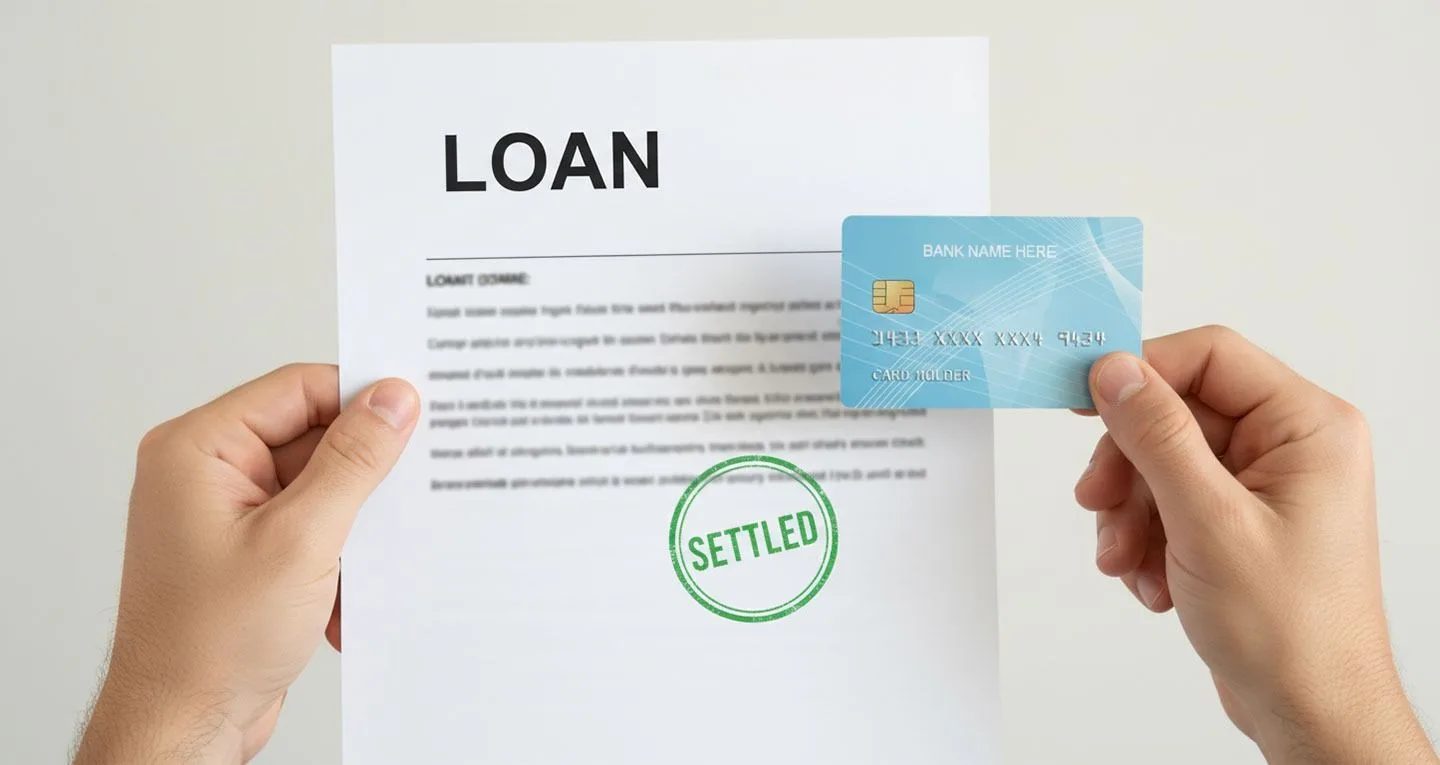
Bad Debts Written Off: Meaning, CIBIL Impact & Why You Still Owe the Money
You missed EMIs for months. The bank stopped calling. The loan disappeared from their statements. You thought it was over. It is not. The bank moved your loan off their books, but the debt is still yours. And it is quietly damaging your CIBIL right now.
Mohit Juneja
Reviewed by FREED India, Debt Resolution Specialists
 4.7/5
4.7/5 ₹3,200Cr+
 20,000+
 20,00,000+4.7/5₹3,200Cr+20,000+20,00,000+
Key Takeaways

Bad debt written off means the bank removed the loan from their active records for accounting purposes. The debt is still legally owed.
This happens after 180 or more days of non-payment under RBI's NPA (Non-Performing Asset — loan the bank treats as bad debt) rules.
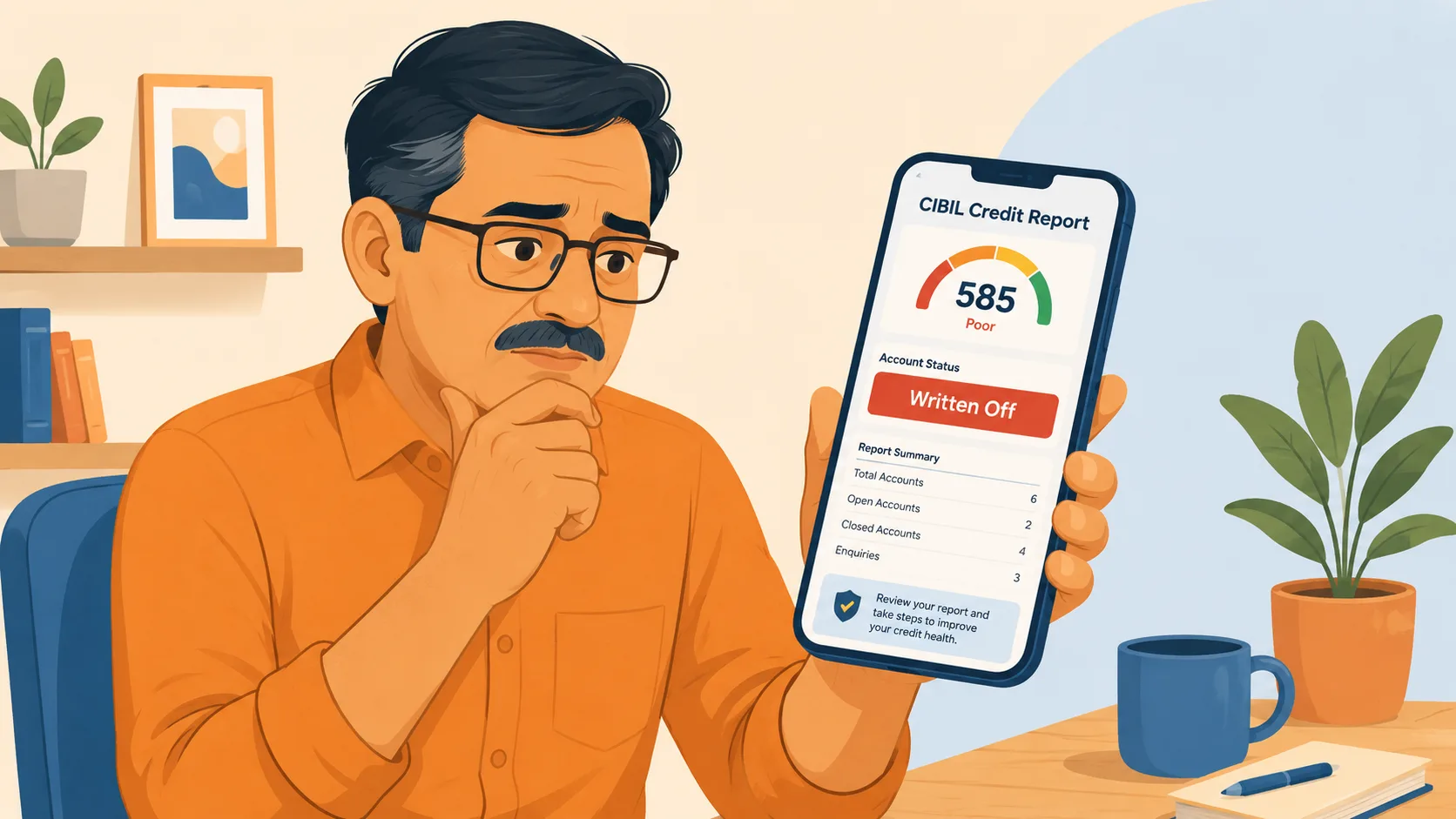
Your CIBIL score drops 100–150 points. The Written Off tag stays on your report for up to 7 years.
Recovery agents can still contact you. The bank can sell the debt to a collection agency. Legal action remains possible.
Loan settlement is the cleaner way out. FREED helps you work through the process with your bank to get it resolved properly.
What Does "Bad Debts Written Off" Actually Mean?
A bad debt written off means your bank removed the loan from their active records. The loan is no longer on their working books but you still legally owe every rupee.
This is an accounting move, not a pardon. When a borrower stops paying for a prolonged period, the RBI requires the bank to clean up their records. The bank moves the loan from their active files to a separate category. They call it a write-off.
Under RBI's Master Circular on Income Recognition and Asset Classification, a loan becomes an NPA (Non-Performing Asset, a loan the bank has stopped treating as healthy) after 90 days of missed payments. After further non-payment, the bank writes it off typically around 180 days or more.
Once written off, the loan shows on your CIBIL report as "Written Off." The bank can still recover the money through a collection agency, through direct recovery calls, or through legal action. The 7-year CIBIL retention clock starts from the date the write-off is reported.
The file did not disappear. The bank moved it from one shelf to another.
Bad Debt Write-Off vs Loan Settlement vs Loan Closed: What Is the Difference?
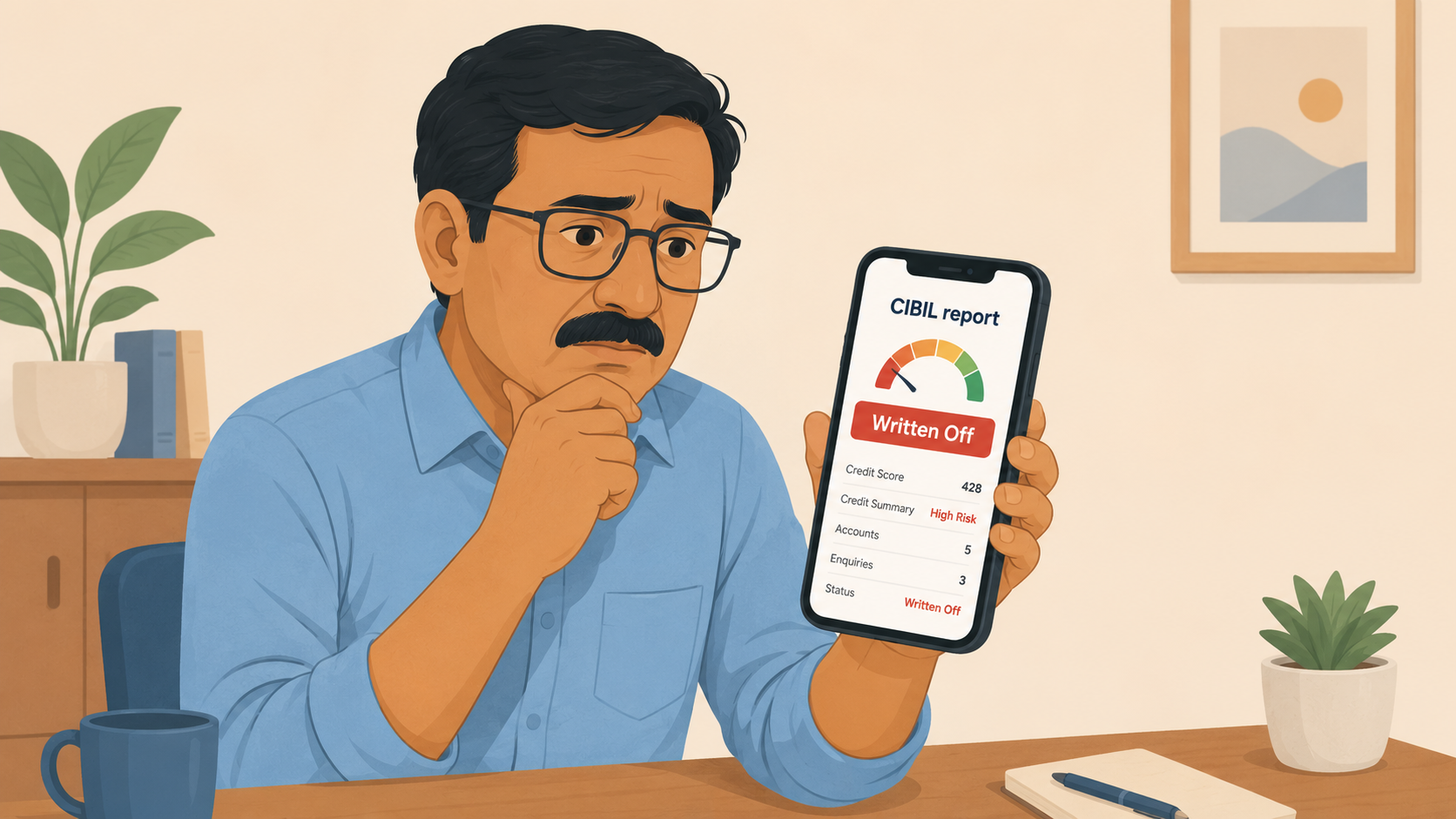
Status | What It Means | CIBIL Impact | Future Loan Chances |
Closed | Fully repaid on time | Positive | High |
Settled | Paid a reduced amount through a formal agreement | May affect future borrowing decisions | Depends on the lender's assessment and overall credit history |
Written Off | Bank removed from active records after prolonged non-payment | May significantly affect future borrowing decisions | Depends on the lender's assessment and overall credit historys |
Post-Settled (after write-off) | Cleared after write-off through a settlement agreement | Updates to "Settled" are better than "Written Off" | Future borrowing outcomes depend on several factors, including repayment behaviour and lender assessment |
These statuses are treated differently by lenders. Understanding what each one means can help you make a more informed decision about the next steps available to you.
Settlement is not something a borrower chooses out of preference. Banks only consider it when you are in genuine financial difficulty and truly unable to repay the full amount. It is a last resort, but when it is the right step, settlement may help resolve the account with the lender through a formal agreement. That is what FREED helps you work toward.
Why Does a Bank Write Off Your Loan?
Write-offs happen for a few clear reasons none of them mean you are off the hook.
- 180 or more days of non-payment. Under RBI NPA rules, sustained non-payment triggers a mandatory classification change. The bank's accounts must reflect reality.
- Multiple failed recovery attempts. The bank tried calling, sent agents, sent notices. None of it produced a payment.
- Cost of recovery exceeds the loan amount. For smaller loans, chasing repayment can cost more than the loan is worth. The bank writes it off internally.
- Quarterly or yearly book cleanup. Banks do regular accounting reviews. Loans stuck in NPA for long enough get moved off the active books.
- Borrower untraceable. If the bank cannot locate you, the loan gets written off but the debt follows you when you resurface.
It is not you being let off. It is the bank moving the file to another shelf.
How Bad Debts Written Off Hits Your CIBIL Score
A write-off typically causes a score drop of 100–150 points. Where exactly it lands depends on your full credit history, how many other accounts you have, and how those are performing.
Every new loan application during this period is likely to be rejected. Banks and NBFCs use auto-decisioning systems that flag "Written Off" status immediately.
Even after you clear the debt, the "Settled" tag remains on your report. It does not disappear; it changes from one negative status to a slightly less negative one. The 7-year clock runs from the date of reporting, not from the date you pay.
The score recovers gradually if you keep all other credit accounts clean:clean no new missed payments, no high credit card utilization, and no fresh hard inquiries you do not need.
Does "Written Off" Mean You Do Not Have to Pay?
No. The legal obligation to repay does not disappear because the bank changed how they categorize the loan internally.
The debt remains your legal liability. The bank can sell it to an ARC (Asset Reconstruction Company, a firm that buys written-off debts from banks and pursues recovery). They can assign it to a collection agency. They can file a civil suit. SARFAESI (a law that lets banks take property on secured default) can apply to secured loans even after write-off.
For unsecured loans like personal loans and credit cards, asset seizure without a court order is not possible but legal proceedings are.
The Limitation Act, 1963 gives lenders 3 years from the date of your last payment or last written acknowledgement of the debt to file a recovery case. This clock resets if you make a partial payment or send any written communication acknowledging the debt without a formal settlement agreement in place. One wrong step can restart it.

FREED Expert Tip
Most borrowers think write-off means freedom. It is the opposite. The bank moved the file from 'active recovery' to 'pursue later.' The debt is still alive. Until you settle it properly with the right paperwork the file stays open and your CIBIL keeps paying the price.
FREED Settlement ExpertWhat the Law Says About Written-Off Loans

What the Law Says
Under RBI's Master Direction on Income Recognition and Asset Classification, a loan overdue for 90 days becomes NPA, and prolonged non-payment leads to write-off. Under the Limitation Act, 1963, a bank has 3 years from the date of your last payment or written acknowledgement to file a recovery case. This clock can restart with certain actions. Under the RBI's Fair Practices Code, recovery agents cannot harass you, threaten you, or contact you outside 8 AM and 7 PM. Your CIBIL report retains the Written Off status for 7 years from the date of reporting. These rules exist to protect you; knowing them is the starting point for fixing the situation.
Talk to a FREED Expert →How to Get a Written-Off Status Resolved (What FREED Does for You)
This is not a process most borrowers can navigate alone not because it is impossible, but because the steps require specific documentation, correct sequencing, and follow-through with multiple parties at the same time.
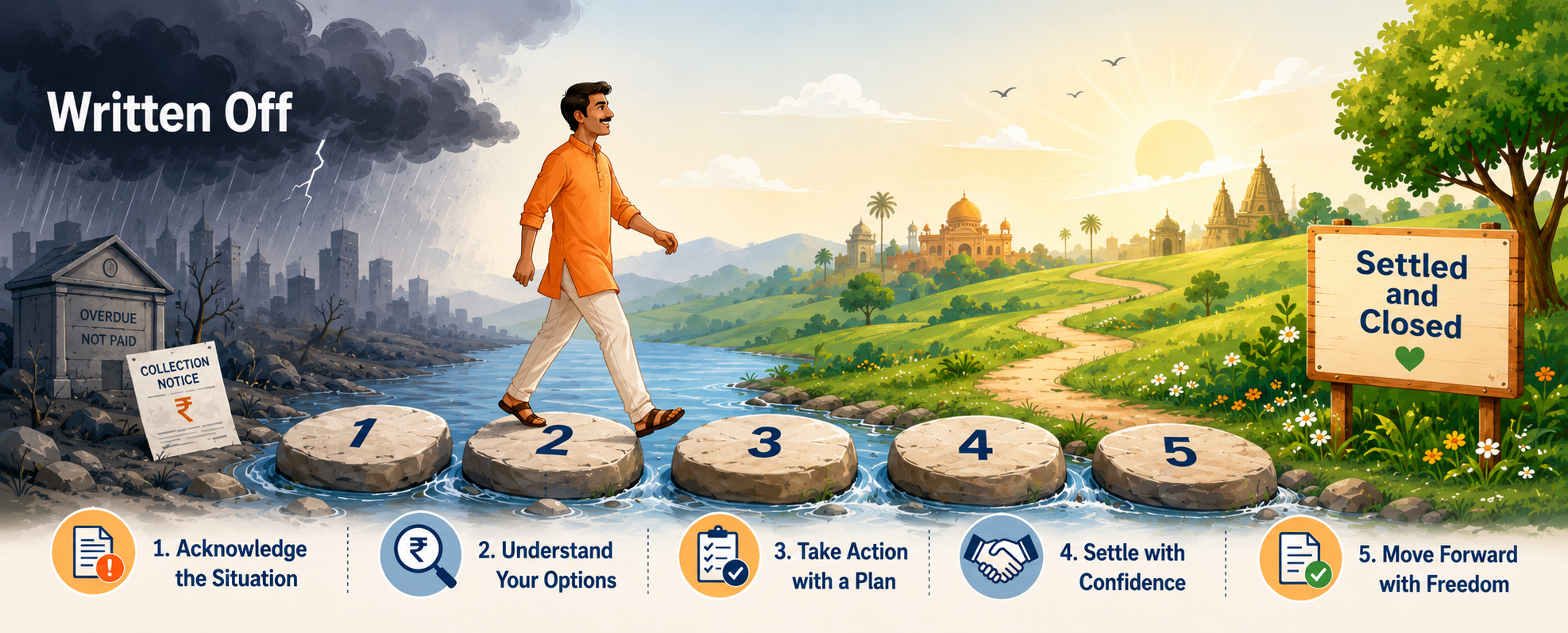
Here is how FREED handles it for you:
- Find the actual outstanding amount. The figure on your CIBIL report may not match what your bank calculates as the current outstanding. FREED helps you get the correct figure directly from your bank before any discussions begin. .
- Negotiate a settlement. FREED talks to your bank's recovery or collections team directly. The goal is a reduced one-time payment the amount that settles the account properly as per both the bank's records and CIBIL.
- Build a payment plan you can actually manage. Where needed, FREED arranges a structured monthly savings plan so you are not asked to produce a large sum at once.
- Secure the right closure documents. FREED ensures the bank issues both the Settlement Letter and the No Dues Certificate (clearance letter confirming nothing further is owed). Both are needed. Many people get only one and face fresh problems later.
- Follow up until CIBIL updates. After the bank updates their records, FREED follows up with the bureau until the status on your CIBIL report changes from "Written Off" to "Settled"
Without this follow-through, the wrong status can sit on your report for months after you have already paid.

Stuck With a Written-Off Loan on Your CIBIL?
FREED can help you settle it the right way. Free consultation. No judgment
Get My Free Debt Assessment →How Long Does Written Off Stay on Your CIBIL Report?
7 years from the date the write-off is reported to the bureau. This is the direct answer.
Even after you pay and the status updates to "Settled," the tag stays for 7 years from the original reporting date. It does not restart from the date of settlement.
The impact of the tag reduces year on year especially if every other account you have is being maintained cleanly. New credit cards (including secured cards, where you deposit a fixed amount as collateral) and small, timely loans taken and repaid after settlement help rebuild the score faster.
You cannot erase the tag earlier unless it is there due to a genuine reporting error. If you paid but the bank failed to update the bureau, that is a dispute file it through the CIBIL portal. FREED can help with this paperwork if needed .

Mohit Juneja
Mohit Juneja writes educational content at FREED on debt management, credit scores, loan repayment, and borrowing best practices. His content is shaped by expert insights and industry knowledge, helping readers better understand their financial options and make informed decisions.
mohit.juneja@freed.care

FREED is India's trusted loan management platform. Founded in 2020 and headquartered in Gurugram, FREED has counselled 20 lakh+ people on personal loans, credit cards, and app loans. FREED charges fees only on successful settlement, not upfront. FREED does not handle secured loans (home loans, car loans, gold loans).
Media Mentions