Can I Use a Credit Card After Debt Settlement?
Just settled your debt? Wondering if credit cards are back on the table or off limits forever? Here's the honest answer, and exactly what to do next.
Mohit Juneja
Reviewed by FREED India, Debt Resolution Specialists
 4.7/5
4.7/5 ₹3,200Cr+
 20,000+
 20,00,000+4.7/5₹3,200Cr+20,000+20,00,000+
Key Takeaways

The card used in the settlement is almost always closed but that doesn't mean credit is gone forever.
You can get a new credit card after settlement, but approval depends on your CIBIL score, income, and behaviour post-settlement.
A "Settled" remark on your CIBIL report stays for up to 7 years but its impact reduces over time with responsible financial behaviour.
Rush back into credit too quickly and you risk repeating the same cycle. Rebuild slowly and strategically.
FREED helps you understand your credit report, improve your score, and plan the right next steps after settlement.
What Happens to Your Credit Card After Settlement?
When a credit card debt is settled meaning the bank agrees to accept less than the full amount owed, a few things happen immediately.
The card is closed. In almost all settlement cases, the credit card account involved in the settlement is permanently shut. You won't be able to use it again. This is a standard condition banks apply when agreeing to a settlement.
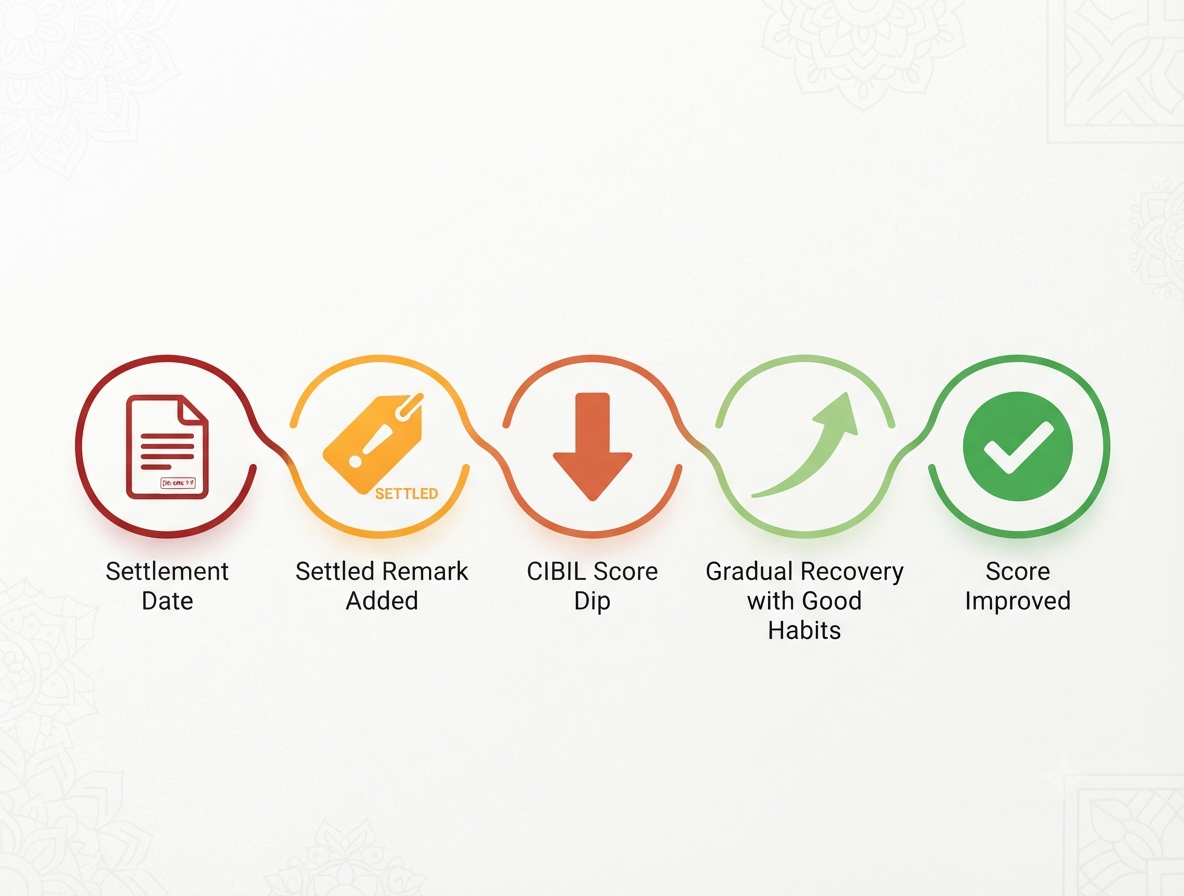
A "Settled" remark appears on your CIBIL report. This is different from "Closed" or "Paid in Full." The "Settled" status signals to future lenders that you did not repay the full amount originally agreed upon. Banks treat this as a risk indicator.
Your credit score drops. Settlement, especially after months of missed payments leading up to it, typically causes a significant dip in your CIBIL score. The size of the drop depends on how the account was handled before settlement.
Other cards may be affected. If you have other credit cards with the same or different banks, those lenders can see your credit report. Some may reduce your limit, increase your interest rate, or close your account even if you never missed a payment on that card.
This sounds harsh. But it is not the end of the road.
Can You Get a New Credit Card After Settlement?
Yes, but not immediately, and not without some groundwork.
Most banks will be cautious about issuing a new credit card to someone with a recent "Settled" remark on their CIBIL report. The remark stays on your report for up to 7 years from the date of the first default - but its weight reduces over time, especially as you build positive credit history on top of it.
Here is what typically happens:
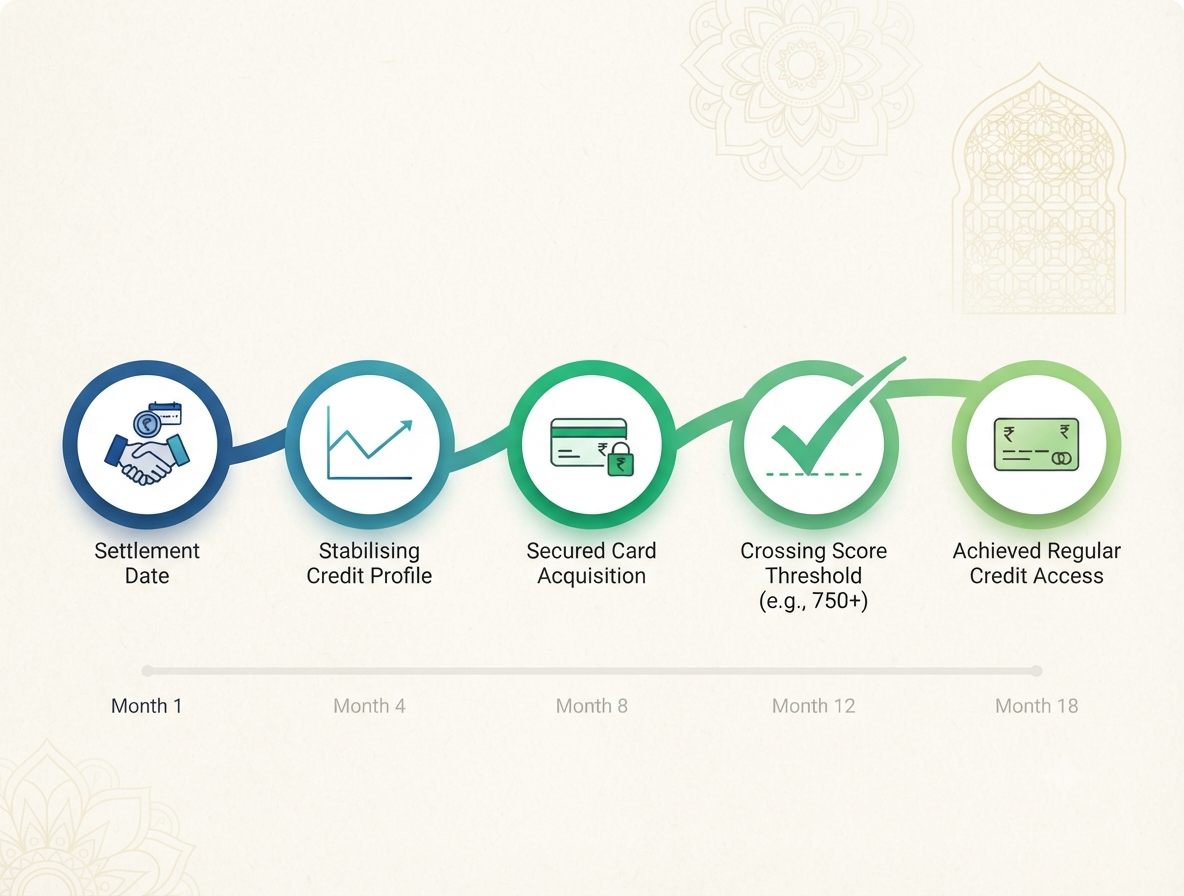
In the first 6–12 months after settlement: Most mainstream banks will decline a new credit card application. Your score is likely at its lowest point, and the settlement remark is fresh. This is not the time to apply.
After 12–18 months of consistent, clean financial behaviour: Your score begins to recover. Some banks, especially those offering entry-level or secured credit cards, may consider your application.
After 2–3 years: With a rebuilt CIBIL score (ideally above 700) and a clean repayment track record since settlement, your options expand meaningfully.
The key is what you do in the months after settlement, not just waiting for time to pass.
What Banks Look at Before Approving You
Even after settlement, banks can say yes, if your current profile looks strong enough. Here's what they check:
Current CIBIL Score: A score above 700 significantly improves your chances. Below 650, most applications will be declined.
Time Since Settlement: The more recent the settlement, the lower your chances. Banks want to see a gap and positive behaviour during that gap.
Income Stability: A steady, documented income tells the bank you can service a card today, regardless of what happened in the past.
Payment Behaviour Since Settlement: Have you been paying all remaining EMIs, bills, and any other obligations on time? This is the strongest signal of rehabilitation.
Debt-to-Income Ratio: Banks assess how much of your monthly income is already committed to existing obligations. The lower this is, the better.
How to Rebuild Credit - Step by Step
Settlement is a reset, not a life sentence. Here's how to rebuild correctly:
- 1
Step 1: Clear any remaining dues first.
Before thinking about new credit, make sure there are no other unpaid balances, unresolved EMIs, or pending defaults. Any active problem on your report will undo everything else you try to do.
- 2
Step 2: Check your CIBIL report carefully.
After settlement, get your credit report from CIBIL or any bureau. Check that the settled account is correctly marked. If there are errors like an account still showing as "outstanding" after settlement, raise a dispute immediately. Errors can silently prevent score recovery.
- 3
Step 3: Start with a secured credit card.
A secured credit card is issued against a fixed deposit (FD). You deposit ₹10,000–₹25,000 as collateral, and the bank gives you a card with a matching or slightly lower limit. Since the bank's risk is covered by the FD, approval is much easier even with a low score. Use this card for small, monthly expenses, groceries, phone bill, one subscription.
- 4
Step 4: Keep utilisation below 30%.
Whether it's a secured card or a new regular card later, never use more than 30% of your available limit at any time. This improves your credit utilisation ratio - a key factor in your CIBIL score.
- 5
Step 5: Pay every bill not just the credit card on time.
Your mobile postpaid bill, electricity bill, any remaining loan EMIs, all of it shows up or influences your credit profile. On-time payments across every obligation accelerate recovery.
- 6
Step 6: Don't apply for multiple cards or loans at once.
Every credit application triggers a hard inquiry. Multiple hard inquiries in a short period signal desperation to banks and hurt your score further. Be selective. Apply only when you're reasonably confident of approval.
Things NOT to Do After Settlement
These are the most common mistakes people make after settling a debt - and all of them undo the progress:
Applying for multiple credit cards immediately. Every rejection is a hard inquiry. Multiple rejections in quick succession signal financial distress and make recovery harder, not faster.
Using new credit to fund lifestyle expenses. A new card is a tool for rebuilding credit, not for spending freely. The moment it becomes a source of funds rather than a credit-building instrument, the cycle restarts.
Missing payments on the new card or any existing obligation. One missed payment post-settlement erases months of rebuilding effort. Set up auto-pay or calendar reminders. Make this non-negotiable.
Ignoring the CIBIL report. Many people assume their report updates automatically and correctly. It doesn't always. Check your report every 3–4 months. Raise disputes for any errors promptly.
Taking a personal loan immediately after settlement. Banks may offer personal loans even with a lower score - but at very high interest rates. Taking on new high-interest debt right after settling old debt is how people end up needing help again within a year or two.

What the Law Says:
Under RBI guidelines and the Credit Information Companies Regulation Act, you have the right to dispute any incorrect information on your credit report. Bureaus like CIBIL are legally required to investigate and respond to disputes within 30 days. If the settled account is not correctly updated on your report after settlement, submit a dispute online directly with CIBIL or through FREED's Credit Insights tool.
Know your credit rightsAlternatives to Credit Cards While Rebuilding
If you're in the 6–18 month rebuilding window and don't have a card yet or don't want one these options work:
Debit card with UPI: For all daily spending, a debit card works identically to a credit card at most merchants. It keeps you within your actual budget since it draws from your own funds.
Prepaid cards: Some banks and fintechs offer prepaid cards that function like credit cards but are loaded with your own money. Good for online transactions without touching a credit line.
Build an emergency fund in parallel: While rebuilding credit, build a small emergency fund simultaneously. ₹10,000–₹20,000 in a separate account means you won't need credit when something unexpected hits, which protects your recovery from being derailed.
Consider a small secured loan: If a secured credit card isn't available, a small loan against FD repaid on time, also builds positive credit history. Talk to your bank about this option.
Are You in a Loan Trap? Quick Check
Move the slider to your total EMIs as a % of monthly salary. See your debt stress level instantly.
EMIs as % of Monthly Salary
How FREED Helps After Settlement
Getting out of debt through settlement is step one. Rebuilding is step two and it's where most people feel lost.
FREED doesn't disappear after your debt is resolved. We help you:
Understand your CIBIL report: Know exactly what's on it, what it means, and what needs to be corrected.
Track your score recovery: See how your actions, paying bills, keeping utilisation low, avoiding hard inquiries are moving your score over time.
Plan the next steps: When to apply for a secured card. When to approach a bank for a regular card. How to improve your score before any big loan application.
Handle any errors or harassment: If the settled account is not correctly updated, or if any lender continues to contact you after settlement, FREED helps you take the right action.
Over 60,000 Indians have used FREED to get out of debt and we help them rebuild what comes after, too.

Mohit Juneja
Mohit Juneja writes educational content at FREED on debt management, credit scores, loan repayment, and borrowing best practices. His content is shaped by expert insights and industry knowledge, helping readers better understand their financial options and make informed decisions.
mohit.juneja@freed.care

FREED is India's trusted loan management platform. Founded in 2020 and headquartered in Gurugram, FREED has counselled 20 lakh+ people on personal loans, credit cards, and app loans. FREED charges fees only on successful settlement, not upfront. FREED does not handle secured loans (home loans, car loans, gold loans).
Media Mentions