Unsecured loans explained meaning types benefits
Most of the borrowing most people do in India, a personal loan, a credit card, an education loan without collateral, falls into a single, specific category: unsecured credit. Understanding what genuinely distinguishes this from secured borrowing changes how you evaluate the interest rate, the risk, and whether a specific loan is actually the right choice for your situation.
Mohit Juneja
Reviewed by FREED India, Debt Resolution Specialists
 4.7/5
4.7/5 ₹3,200Cr+
 20,000+
 20,00,000+4.7/5₹3,200Cr+20,000+20,00,000+
Key Takeaways

An unsecured loan is credit extended without any asset pledged as collateral, meaning the lender's confidence rests entirely on your creditworthiness and promise to repay, not on a specific asset they could claim if you default.
The most common unsecured credit types in India are personal loans, credit cards, many education loans, unsecured business loans, and BNPL, each suited to different needs and carrying different terms.
Because lenders take on more risk without collateral, unsecured loans generally carry meaningfully higher interest rates than secured loans like a home or vehicle loan, a cost that needs to be weighed honestly against the convenience and speed they offer.
The genuine benefits, faster approval, no asset at risk, no need to own qualifying collateral, are real and specific, but they come paired with specific risks, particularly the direct impact on your credit score and legal standing if repayment becomes difficult.
If unsecured debt, credit cards or personal loans, has already grown into an amount that feels difficult to manage, FREED can help through consolidation or settlement.
What Makes a Loan "Unsecured" in the First Place
An unsecured loan is credit extended by a lender without requiring you to pledge any specific asset, property, a vehicle, gold, fixed deposits, as security against the amount borrowed.
This means that if the borrower defaults, the lender has no specific, pre-agreed asset it can directly seize and sell to recover its money. Instead, the lender's only recourse is through legal action to recover the outstanding amount, and reporting the default to credit bureaus, which then affects the borrower's ability to access credit in the future.
Because the lender is taking on this additional risk, no specific asset to fall back on, the entire underwriting process for an unsecured loan is built around a different question than a secured loan asks: not "what can we claim if this goes wrong," but "how confident are we, based on this person's income and credit history, that it will not go wrong at all."

Considering an unsecured loan or already managing one that feels unclear?
Talk to a FREED Expert for free.
Connect with FREED ExpertUnsecured vs Secured: The Distinction That Actually Matters
A secured loan, a home loan, a vehicle loan, a loan against property or gold, requires a specific asset to be pledged as collateral. If the borrower defaults, the lender has a direct, legal right to seize and sell that specific asset to recover the outstanding amount.
An unsecured loan carries no such backing. This single structural difference is what explains nearly every other distinction between the two categories, interest rates, approval speed, required documentation, and the consequences of default. Recognising which category a specific loan falls into is the first, most useful step in evaluating it accurately, since the label alone often does not make the distinction obvious, an education loan, for instance, can be secured or unsecured depending on the amount and the specific bank's policy.
Why Unsecured Loans Carry Higher Interest Rates
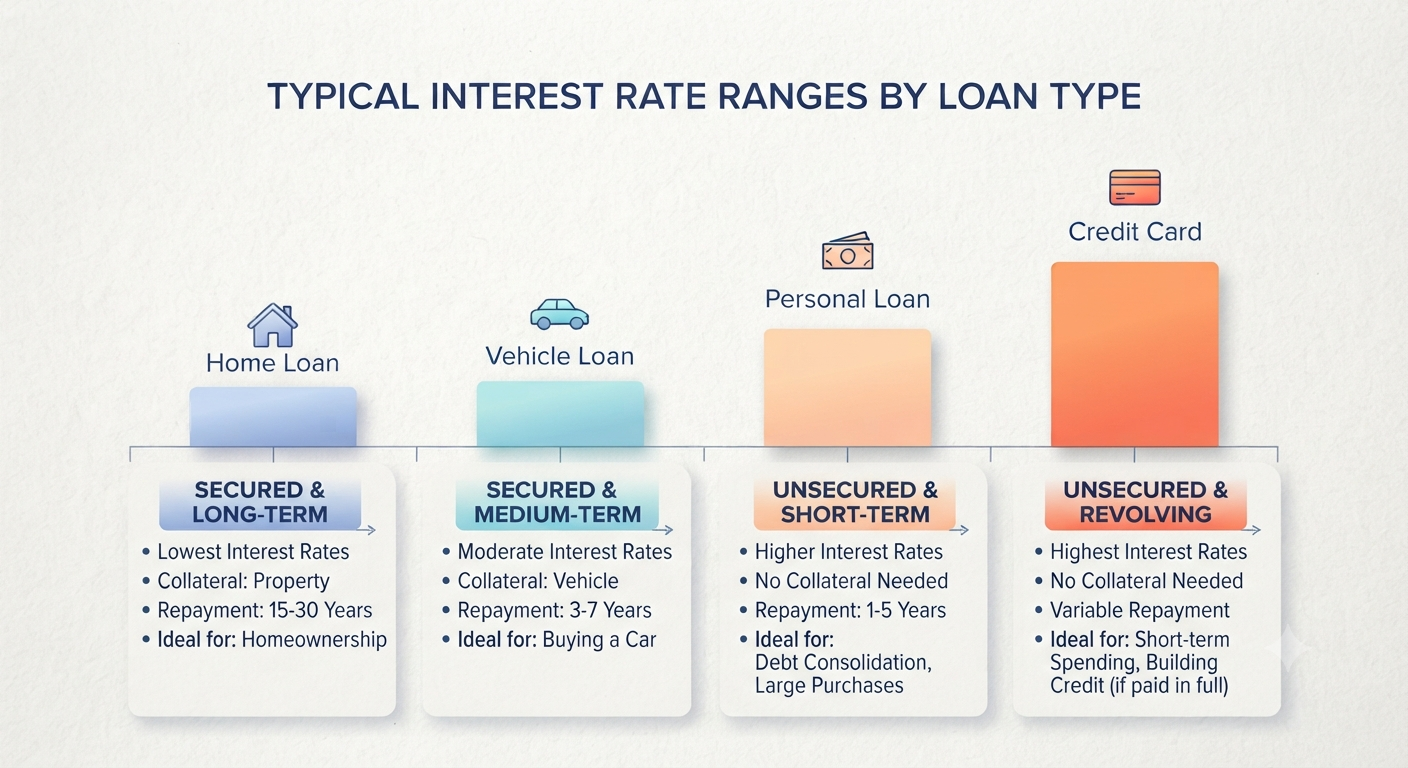
The absence of collateral is directly, mathematically connected to the higher interest rates unsecured loans typically carry compared to secured borrowing for a comparable amount.
A lender extending a secured loan has a specific, tangible asset to recover value from in the event of default, which meaningfully reduces the lender's actual financial risk, and this reduced risk is reflected in a lower interest rate. An unsecured loan carries no such protection, the lender's entire risk assessment rests on the borrower's credit history and income, a genuinely less certain basis than a specific asset, and the interest rate charged reflects this additional uncertainty directly.
This is precisely why a personal loan, unsecured, typically carries a meaningfully higher interest rate than a home loan, secured, of a similar size, and why understanding this underlying reason, rather than simply accepting the rate as given, helps clarify why the specific type of loan chosen for a specific need matters considerably to its total cost.
Type 1: Personal Loans
Personal loans are the most common, general purpose form of unsecured borrowing, extended for any legitimate personal need, a medical expense, a wedding, home renovation, debt consolidation, without requiring a specific stated purpose tied to an asset.
They typically range from a modest amount up to several lakhs of rupees, with tenures generally between 1 and 5 years, and interest rates, depending on the borrower's credit profile, generally in the range of 10 to 24% per year, considerably lower than credit card interest but meaningfully higher than most secured loans.
Approval is typically based heavily on credit score and income stability, and can often be processed within a day or two for borrowers with a strong existing credit profile, making it one of the faster forms of credit access available for a genuine, immediate need.
Type 2: Credit Cards
A credit card is, structurally, a revolving form of unsecured credit, extended based on your credit profile without any asset pledged, allowing repeated borrowing and repayment against an approved limit.
Used well, cleared in full every month, a credit card functions as a convenient, genuinely low cost payment tool. The unsecured nature becomes financially significant specifically when a balance is carried over, at which point interest of 36 to 42% per year applies, among the highest rates of any common unsecured credit type, reflecting the considerable flexibility and minimal ongoing underwriting involved in this specific form of credit.
Type 3: Education Loans (in Certain Cases)
Education loans occupy a specific middle ground. Smaller education loans, particularly for study within India, are frequently unsecured, extended based on the student's or co-applicant's credit profile and the reputation of the institution, without requiring a specific asset pledged.
Larger education loans, particularly for study abroad or at higher amounts, frequently do require collateral, a family property or a fixed deposit, making them secured loans despite the same general "education loan" label. This distinction matters directly for the interest rate and approval process, since the unsecured version of an education loan will carry a meaningfully higher rate than the secured version, even from the exact same lender.
Type 4: Business Loans Without Collateral
Many banks and NBFCs offer unsecured business loans, particularly to small and medium enterprises, based on the business's revenue history, banking relationship, and the owner's personal credit profile, without requiring specific business or personal assets to be pledged.
These loans are generally faster to access than secured business financing, since no asset valuation or legal collateral process is required, but they typically carry a meaningfully higher interest rate, and frequently require a personal guarantee from the business owner, which, as covered in other blogs on this topic, creates direct personal liability even though the loan itself is technically unsecured against any specific asset.
Are You in a Loan Trap? Quick Check
Move the slider to your total EMIs as a % of monthly salary. See your debt stress level instantly.
EMIs as % of Monthly Salary
Type 5: BNPL and Short Term Digital Credit
Buy Now Pay Later services and similar short term digital credit products are a newer, increasingly common form of unsecured credit, extended based on a quick, often automated assessment of creditworthiness, without any asset pledged, for a specific purchase or a short repayment period.
These typically carry no interest if repaid within a defined interest free window, but shift to meaningfully higher rates, often comparable to or exceeding personal loan rates, once that window passes, alongside processing and late fees that can add up considerably if not tracked carefully across multiple, simultaneous BNPL commitments.
Not sure which type of credit actually fits your specific need?
Talk to a FREED Expert for free.
Talk to a FREED ExpertThe Genuine Benefits of Unsecured Loans
Unsecured loans offer several specific, genuine advantages worth recognising directly, rather than viewing this category of credit only through the lens of its higher cost.
No asset is put directly at risk, a genuine medical emergency or urgent need can be addressed without pledging your home, vehicle, or savings as collateral. Approval and disbursal are generally considerably faster, since no asset valuation, legal verification, or collateral documentation process is required. And unsecured credit is accessible to people who may not yet own a qualifying asset to pledge, particularly earlier in a financial life, when a secured loan option may not even be available regardless of preference.
These benefits are real and specific, and for a genuine, appropriately sized need, an unsecured loan can be the more practical, and sometimes the only realistically available, choice.
The Specific Risks Worth Weighing Honestly
Alongside these benefits, unsecured credit carries specific risks that deserve equally honest attention. The interest rate is meaningfully higher than secured alternatives, meaning the total cost of borrowing the same amount is considerably greater over the loan's tenure.
A default on unsecured credit, while not resulting in a specific asset being seized, causes significant, direct damage to your credit score and credit history, considerably affecting future borrowing ability, and the lender retains full legal recourse to pursue repayment through the courts, a genuine, enforceable liability regardless of the absence of pledged collateral.
Approval for larger amounts is also generally more limited than with secured borrowing, since the lender's risk tolerance without collateral is naturally more conservative, meaning unsecured credit is typically better suited to moderate, specific needs rather than very large borrowing requirements.
What Lenders Actually Look At for Unsecured Approval
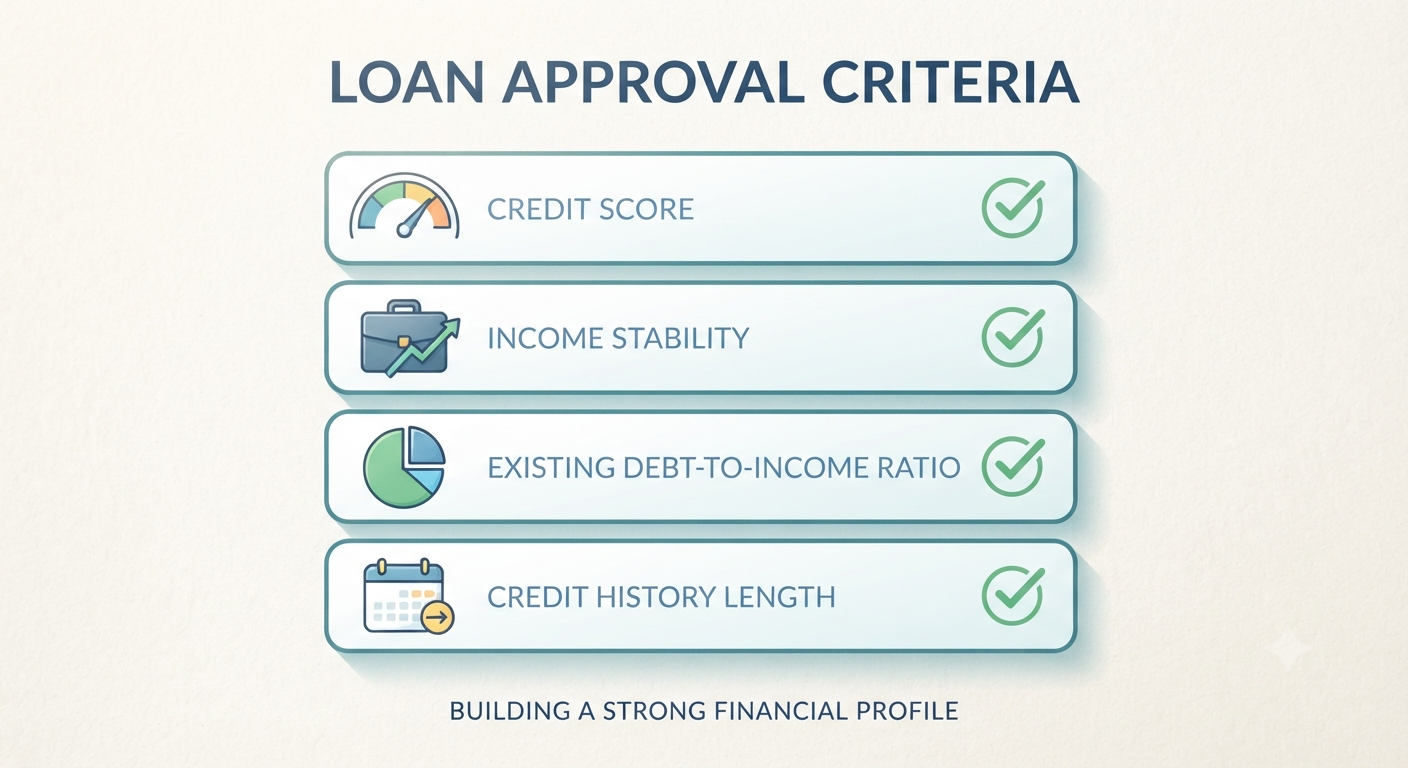
Since no asset backs the loan, lenders assessing an unsecured credit application rely heavily on a specific set of indicators, your credit score, generally requiring at least 650 to 700 for reasonable terms, your income stability and employment history, your existing debt to income ratio, how much of your income is already committed to other EMIs, and your overall credit history length and mix.
Because these factors carry more weight in the absence of collateral, a genuinely strong credit profile matters considerably more for unsecured approval and pricing than it does for a secured loan, where the collateral itself provides the lender with additional confidence independent of the borrower's specific credit history.
How to Compare Unsecured Loan Offers Properly
When comparing unsecured loan offers, whether personal loans, business loans, or education loans, the advertised interest rate alone is not sufficient for an accurate comparison. Request and compare the Annual Percentage Rate, which includes processing fees and other charges, alongside the interest rate, and calculate the total amount that will actually be repaid over the full tenure for each specific offer.
Also compare prepayment terms directly, since unsecured loans vary considerably in whether and how much they penalise early repayment, a detail that matters considerably if you anticipate being able to pay off the loan faster than its full tenure at some point.

What the Law Says
Under RBI's Fair Practices Code, all lenders offering unsecured credit, personal loans, credit cards, business loans, are required to disclose the full Annual Percentage Rate, including all fees and charges, clearly and in writing before an agreement is signed, specifically so that unsecured borrowing, despite its inherently higher cost, can still be compared and evaluated transparently rather than based only on an advertised, incomplete rate.
Reduce My EMIWhen an Unsecured Loan Is the Right Choice, and When It Is Not
An unsecured loan is generally the right choice for a genuine, moderate sized need where speed and the absence of pledged collateral matter, and where the interest cost, calculated honestly using the true APR, is genuinely affordable within your existing budget without straining your overall debt to income ratio.
It is generally not the right choice when a secured alternative is realistically available at a meaningfully lower cost for the same purpose, when the amount needed is large enough that the unsecured interest rate would create a genuinely difficult repayment burden, or when the underlying need reflects an ongoing income shortfall rather than a specific, one time expense, a situation an unsecured loan will not resolve and may, if repeated, actively worsen.
When Unsecured Debt Has Already Become Difficult to Manage
For some people, unsecured credit, one or more personal loans, credit card balances, has already accumulated to a point where the combined monthly repayment is genuinely difficult to manage within current income, regardless of how the borrowing initially came about.
Since unsecured debt carries no collateral, there is no asset directly at risk of seizure, but the credit score damage and legal recourse available to lenders remain fully real, and addressing this kind of debt directly, rather than allowing it to continue compounding, is considerably more effective than continued minimum payments alone.
FREED's Debt Consolidation Program combines multiple unsecured debts, personal loans and credit card balances, into one lower interest loan with a single, manageable EMI, directly reducing the combined cost of this specific category of borrowing.
FREED's Debt Resolution Program negotiates a reduced settlement for unsecured debt that cannot realistically be repaid in full, on average 56% less than the original outstanding.
A free consultation can assess your specific unsecured debt situation and recommend the most effective path forward.
Unsecured debt already grown harder to manage than expected?
Talk to a FREED Expert for free.
Talk to a FREED Expert
Mohit Juneja
Mohit Juneja writes educational content at FREED on debt management, credit scores, loan repayment, and borrowing best practices. His content is shaped by expert insights and industry knowledge, helping readers better understand their financial options and make informed decisions.
mohit.juneja@freed.care

FREED is India's trusted loan management platform. Founded in 2020 and headquartered in Gurugram, FREED has counselled 20 lakh+ people on personal loans, credit cards, and app loans. FREED charges fees only on successful settlement, not upfront. FREED does not handle secured loans (home loans, car loans, gold loans).
Media Mentions