Can I Consolidate My Debt? Here's the Answer
Can I consolidate my debt? You may be eligible for debt consolidation if you meet a lender's income, credit, debt and repayment criteria. Being current on your payments can help, but eligibility requirements vary by lender and product. Debt consolidation is meant for borrowers who can still repay but are stretched managing multiple EMIs, not a rescue for missed payments. The honest answer depends on a few specific factors, covered below.

Mohit Juneja
Reviewed by FREED India, Debt Resolution Specialists
 4.7/5
4.7/5 ₹3,200Cr+
 20,000+
 20,00,000+4.7/5₹3,200Cr+20,000+20,00,000+
KEY TAKEAWAYS

Debt consolidation is generally available to borrowers who are current on their payments, have stable income, and a reasonably healthy credit profile. Exact requirements vary by lender.
It's a preventative option, for people who can still repay but want a lower, simpler EMI, not for those who've already defaulted.
If you've missed one or two EMIs, that doesn't automatically rule you out. Talk to a counsellor for an assessment rather than assuming no.
Consolidation does not damage your CIBIL score, it tends to improve as multiple accounts close and you move to one on-time payment.
FREED assesses your full financial profile and matches you to a lending partner, rather than you guessing whether you'd qualify with any one bank.
Can I Consolidate My Debt? The Short Answer
Borrowers who are current on their payments, have verifiable income and meet a lender's credit and debt criteria may be eligible for consolidation. Exact requirements vary. Exact eligibility varies by lender though, there's no single universal threshold that applies everywhere.
Two things matter most here. Consolidation is preventative by design, it's built for borrowers who haven't defaulted, not a rescue mechanism for someone already behind. The actual decision comes down to income stability, your credit profile, and whether the numbers genuinely work out to a lower blended rate than what you're currently paying across everything combined. Before going further, it's worth checking your current EMI load directly, since that gives you a real sense of where you stand rather than a general impression based on how stressed the monthly juggling feels.
This question tends to come from a specific worry, and it's worth naming that directly before going any further.
Why This Question Comes Up in the First Place
Someone juggling multiple EMIs each month often assumes their credit score or income simply isn't "good enough" to qualify, and never bothers checking at all. That assumption is understandable, but it's usually wrong, or at least incomplete.
Eligibility criteria differ meaningfully across banks, NBFCs, and matched services. Someone rejected by one lender can genuinely still qualify elsewhere, since each institution weighs the same information slightly differently. There's also a common mix-up worth clearing up directly: people often confuse "struggling to manage multiple payments" with "not creditworthy." These are genuinely different things, and the first one is exactly who debt consolidation exists for in the first place, not a disqualifying factor.
Rather than guessing based on assumption, here's the actual checklist worth running through honestly.
The Checklist: Are You a Fit for Debt Consolidation?
A few concrete factors determine whether consolidation is genuinely a fit for your situation, worth checking one by one rather than assuming any single factor decides it alone.
You're current on all your payments, not behind. This is the single most important factor, consolidation assumes an account still in good standing.
You have a stable, verifiable income, whether that's a salaried position or self-employment with proper documentation behind it.
Your credit history shows consistent repayment, even if the score itself isn't perfect, lenders read the pattern, not just the number.
Your total debt is unsecured. Personal loans, credit cards, BNPL, and payday loans all qualify. Home loans, car loans, and other secured debt don't. Checking every active loan currently sitting against your name is the clearest way to actually confirm which category each of your debts falls into.
The math works. A consolidated rate genuinely lower than what you're currently paying combined is what makes the whole move worthwhile in the first place.
Lenders don't just take your word for any of this, though. Here's how they actually check it.
How Lenders Actually Decide Eligibility
This assessment happens whether you apply to a bank directly or go through a matched service, the underlying checks are broadly similar either way. What differs is who actually does the comparison work on your behalf.
Income and employment verification. The lender confirms income stability through salary slips, bank statements, or self-employment documentation.
Credit history and bureau check. Your repayment history and current score are pulled from the credit bureau to assess overall risk.
Existing debt and repayment capacity review. The lender weighs what you already owe against what you earn to judge whether a new EMI genuinely fits.
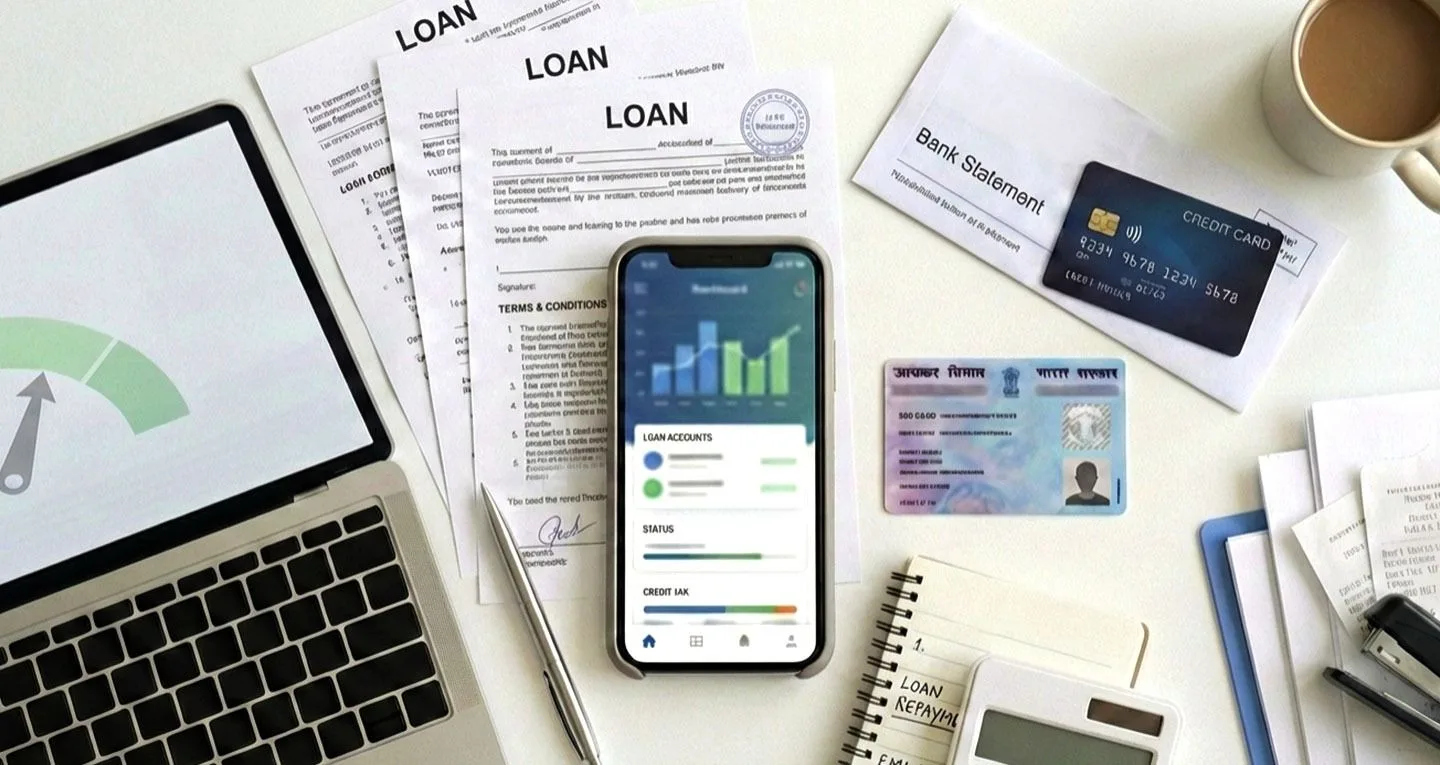
Documentation. KYC (know your customer, standard identity verification), income proof, and existing loan or card statements are submitted to support the application.
Final offer and terms. If approved, the lender issues a Key Facts Statement showing the rate, fees, and terms before you sign anything.
The final rate and approval depend on this full picture together, never any single factor viewed in isolation.

What the Law Says
Under RBI's Key Facts Statement framework, regulated entities must provide a standardised KFS for applicable retail and MSME term-loan products. The KFS sets out key loan terms and costs to help borrowers understand the borrowing arrangement before accepting it.
Talk to FREED's TeamWhat If You Don't Check Every Box?
Most competitor content treats eligibility as a rigid pass or fail list. Real situations are rarely that clean, and a few common in-between cases deserve an honest, direct answer.

You've missed one or two EMIs. This doesn't automatically disqualify you. Talk to FREED's team, they'll assess your situation and let you know if you're eligible, rather than assuming the answer is no on your own.
You're self-employed with variable income. More documentation may genuinely be needed, ITRs, bank statements, but it doesn't rule you out on its own.
Your credit score has taken a hit from late payments in the past, but you're current now. Lenders weigh recent behaviour meaningfully, not just the raw number sitting on your report.
None of these scenarios guarantee approval outright, that genuinely depends on a full assessment, not a simple checklist match. But none of them should stop you from actually finding out either.

Freed Expert Tip
Missed a payment or two? That doesn't automatically disqualify you. Get an assessment instead of assuming the answer is no.
Check My Consolidation OptionsWhat Are Your Options
Two genuine paths exist here, and the right one depends on how much comparison work you want to do yourself versus having someone handle it for you.
The first is checking eligibility criteria yourself against a specific bank or two before applying, this suits someone who already has a banking relationship they trust and would rather work within it directly. The second is getting a single assessment that covers your full financial picture at once, rather than guessing your way through bank after bank on your own.
Neither path is inherently better, the second simply saves research time for someone who'd rather not compare multiple lenders' differing criteria one by one. How FREED specifically handles that second path is worth understanding directly.
How FREED Helps
Instead of checking your own eligibility against multiple banks' differing criteria one by one, FREED assesses your full financial profile once, income, existing debts, and repayment history all reviewed together in a single pass.
Based on that assessment, FREED matches you to a lending partner from its own network, rather than leaving you to guess which bank might actually approve you. If a genuine match is found, the lending partner disburses one new consolidated loan that pays off your eligible existing debts directly. The result is one loan, one EMI, generally lower than the collective total you were paying across everything separately before. FREED's fee structure is success-based, charged only once consolidation actually completes.
Worth being direct about something that matters here: if someone isn't eligible right now, FREED's team tells them that plainly, rather than pushing an application forward that won't actually work out. That's a trust signal worth stating clearly, not something to soften or hide behind vague language.
FREED has counselled over 20,00,000 people and managed more than ₹3,200 crore in debt through this process, with EMI reductions of up to 50%* and rates starting from 11.99%* for those who qualify.
*Rates and outcomes depend on individual eligibility and the specific lending partner matched.

What to Do Next If You're Not Sure
If you're still genuinely unsure after everything above, a few calm, practical next steps are worth taking rather than continuing to guess.
Run through the checklist above honestly. Most people qualify for something, even if not the single lowest advertised rate they've seen somewhere online.
If you've missed a payment or two, don't assume you're disqualified. Get an actual assessment instead of guessing your own answer in advance.
If the math from the calculator looks worthwhile, that's a stronger signal to actually apply than the eligibility question on its own ever could be.
Sources
Claim | Source |
RBI requires a standardised Key Facts Statement before signing a new retail loan, effective October 1, 2024 | RBI Circular RBI/2024-25/18, "Key Facts Statement (KFS) for Loans & Advances" (April 15, 2024) |

Mohit Juneja
Mohit Juneja writes educational content at FREED on debt management, credit scores, loan repayment, and borrowing best practices. His content is shaped by expert insights and industry knowledge, helping readers better understand their financial options and make informed decisions.
mohit.juneja@freed.care

FREED is India's trusted loan management platform. Founded in 2020 and headquartered in Gurugram, FREED has counselled 20 lakh+ people on personal loans, credit cards, and app loans. FREED charges fees only on successful settlement, not upfront. FREED does not handle secured loans (home loans, car loans, gold loans).
Media Mentions