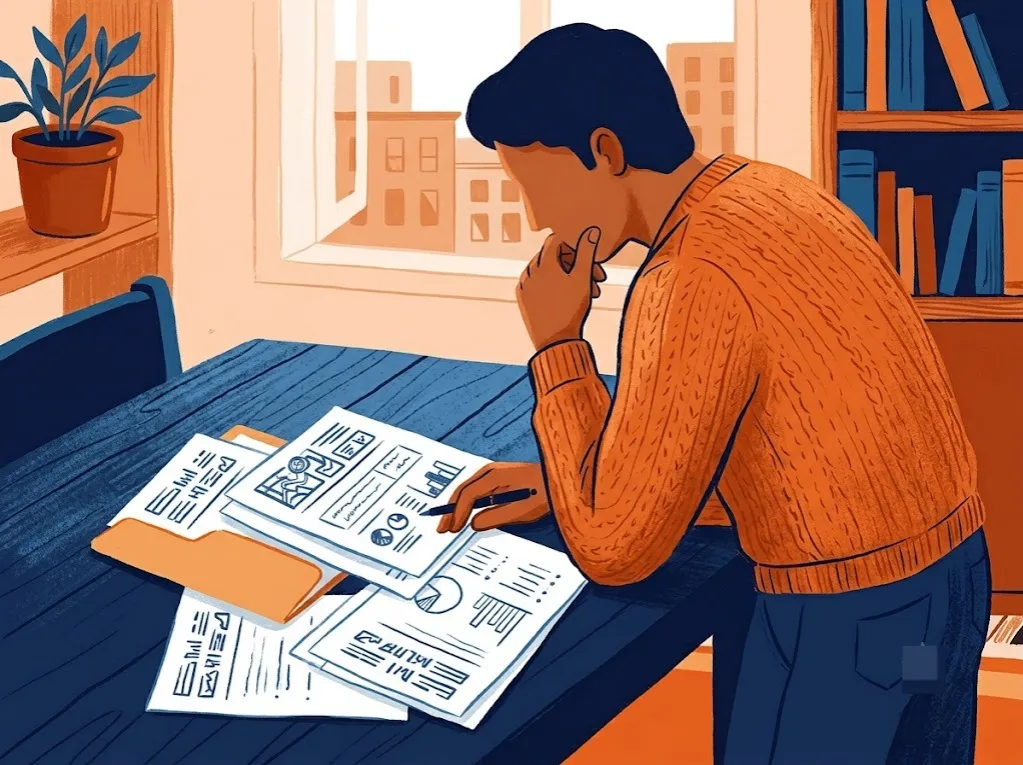
Joint Debt Consolidation Loan With Your Spouse: Is It a Good Idea?
A joint debt consolidation loan is one new loan taken by you and your spouse together. It pays off your existing loans and cards. You get one EMI. Both of you are fully responsible for it, and it shows on both credit reports. It can help when one income is not enough.
Mohit Juneja
Reviewed by FREED India, Debt Resolution Specialists
 4.7/5
 ₹3,200Cr+
 20,000+
 20,00,000+4.7/5₹3,200Cr+20,000+20,00,000+
Key Summary

A joint loan can raise your approval chances because the bank counts both incomes.
Both of you are fully responsible. The bank can ask either one for the whole EMI.
Every payment, on time or late, shows on both credit reports.
Check each other’s scores and EMIs first. A weak profile can pull the other down.
Joint is not the only route. Many people ask whether a solo plan works first.
Why Do Couples Think About a Joint Debt Consolidation Loan?
The month-end maths has started to feel heavy. Two salaries come in. Several EMIs and card bills go out, each on its own date. You both feel it, and you’ve both wondered if there’s a better way.
If that sounds like your home, you’re in good company. Many couples reach this point together. It isn’t a failure. It’s what happens when small EMIs and card dues stack up faster than pay rises.
Say you pay five EMIs on five different dates (illustrative). One date slips, and the stress spills into the whole week. Neither of you did anything wrong. The system just got crowded.
So the idea arrives: one loan, one EMI, both names. A joint debt consolidation loan is a single new loan, taken together, that pays off your old loans and cards. It sounds simple. But tying two people to one loan deserves a calm look.
This guide covers how it works, what it means for both credit reports, and when it makes sense. It also covers when a solo route may suit you better.
First, the basics.
What Is a Joint Debt Consolidation Loan and How Does It Work?
You and your spouse apply together. The bank looks at both profiles, not just one. If the bank approves, the new loan pays off your existing eligible loans and cards. After that, you owe one lender one EMI.
The second person on the loan is called a co-applicant (a second borrower who shares the loan with you). Most Indian lenders treat co-borrower and co-applicant as the same thing. So if you see both terms, they usually mean the same role. A guarantor is different, and we cover that later.
Here’s how a joint application usually runs:
Both of you share your details, ID, and income papers.
The lender checks both credit reports and incomes.
On approval, the new loan pays your old dues directly.
You’re left with one EMI, one date, and one lender.
What changes in daily life? Instead of five payments, you track one. That can lighten the mental load, especially for couples who split bills between two accounts.
It doesn’t cut your debt by itself. It reshapes it. The new loan has its own rate and term, so check both before you agree. The new loan can only be used to pay existing eligible debt. For the wider idea, read how to consolidate all your debt into one loan.
Want to see where your EMIs stand today? Try the calculator below.
How Does Combined Income Help You Qualify?
Two incomes can make it easier for a bank to say yes. A lender wants to know your monthly income can carry the new EMI. With two earners, that picture often looks stronger.
A joint application can also lower how much of your income goes to EMIs together. That share is called FOIR (how much of your salary goes to EMIs). The usual warning line is 50%. When more than half of your take-home pay goes to EMIs, the burden is high.
Here’s an illustration. All figures are illustrative.
Case | Combined take-home | Total EMIs | Share of income |
|---|---|---|---|
Priya alone | ₹50,000 | ₹30,000 | 60% |
Priya and spouse, spouse has no EMIs | ₹90,000 | ₹30,000 | 33% |
Priya and spouse; spouse has ₹10,000 of EMIs | ₹90,000 | ₹40,000 | 44% |
Look at the third row. If your spouse has EMIs of their own, those count too. So combined income helps, but it doesn’t erase what either of you already owes.
One honest limit. Both profiles are checked, not just the stronger one. A high income on one side can’t fully cover a weak record on the other.
Not sure where you stand? Your EMI Score is a quick self-check of how heavy your EMIs are against income. For the general rules, read debt consolidation eligibility.
Joint Liability: What Does It Mean for You Both?
This is the most important part, so let’s say it calmly. Joint liability (both of you owe the full amount) means each of you is responsible for the whole loan. It isn’t split half and half.
If one of you can’t pay, the bank can ask the other for the full EMI. It doesn’t have to chase each of you for a share. Notices and reminders usually go to both names.
This isn’t about distrust. It’s simply how a joint loan works. Knowing it before you sign lets you plan around it.
Day-to-day, it looks like this:
Both names sit on the loan agreement until the loan is paid or formally changed.
A late payment affects both of you, whoever was meant to pay.
Neither of you can step out of the loan without the bank agreeing.
A co-applicant and a guarantor aren’t the same. A co-applicant shares the loan and the income. A guarantor agrees to repay the loan if the borrower defaults, subject to the guarantee agreement. Under Section 128 of the Indian Contract Act, 1872, a guarantor's liability is generally co-extensive with that of the principal borrower unless the contract provides otherwise. A lender may therefore pursue the guarantor for repayment without necessarily exhausting recovery options against the principal borrower first. Both carry real responsibility. For the guarantor side, read: Does being a guarantor affect your CIBIL score?

What the Law Says
Under Section 43 of the Indian Contract Act, 1872, when two or more people make a joint promise, the lender can, unless the agreement says otherwise, ask any one or more of them to pay the whole amount. In plain words: the bank can come to either of you for the full EMI. Source: Indian Contract Act, 1872, Section 43
Read how a guarantor affects CIBILHow Does a Joint Loan Affect Both CIBIL Scores?
Every EMI on a joint loan shows on both credit reports. That’s true in good months and hard ones.
On-time payments help both of you. Each paid EMI adds to a clean record. Over time, that builds both profiles together.
A missed EMI hurts both reports. Credit bureaus don’t decide who “should” have paid. They see two names on one loan, so they record the same status for both.
Now the part many couples miss. The consolidation loan itself doesn’t drop your score. It tends to improve it. Your old loans and cards get paid off, so your balances fall. You also move to one regular EMI on one loan.
A joint loan does link your records, though. If one partner already has late payments, the lender sees them. That can slow the application for both of you. So check each other’s report first, before you apply.
Want a closer look at score effects? See debt consolidation and your credit score.
We haven’t given any score numbers here. They vary from person to person, and no one can promise a figure.

Is a Joint Debt Consolidation Loan a Good Idea? Pros and Cons
It can be, for some couples. It isn’t right for everyone. Here’s a fair look at both sides.
What can help
Higher approval chances, because the bank counts both incomes.
One EMI and one date, instead of many.
A shared load. Neither of you carries it alone.
What to weigh
Shared risk. If payments slip, both reports take the hit.
Strain at home. Money stress can sit between you if one income drops.
A harder exit. Removing a name needs the bank’s approval.
The table puts three routes side by side. No column is “best”. It depends on your situation.
Joint consolidation loan | Solo consolidation loan | Solo plan via FREED | |
|---|---|---|---|
Who is responsible | Both fully | One person | One person |
Income counted | Both | One | One |
Effect on spouse’s credit | Yes | None | None |
Approval chances | Often higher | Depends on one profile | Based on your profile |
Exit if things change | Needs bank approval | Simpler | Simpler |
Rates and ranges shown are indicative. Final terms decided by the bank. FREED is not a Loan Provider. No outcome is guaranteed. Please verify directly with your bank.
When it tends to work well
You both earn, and both reports are in good shape.
You’ve talked openly about money and agree on a plan.
You’re both still paying on time but feel stretched.
When to think twice
One partner has a patchy record, and you’d rather not link it.
You haven’t agreed who pays if one income drops.
One of you prefers to keep finances separate. That’s a fair choice, and a solo route may fit better.
For more on the downsides, read the disadvantages of debt consolidation.
What Happens If You Separate or One of You Stops Paying?
This is a hard question to ask. But it’s kinder to ask it now than later.
Separation doesn’t cancel the loan. The bank usually keeps billing both names until the loan is paid, refinanced, or formally changed. It doesn’t matter who lives where.
Removing one name needs the bank’s approval. The remaining person usually has to qualify on their own income and record. That isn’t always possible, so plan for it.
If one of you stops paying, the other is still responsible for the EMI. The bank can ask either of you for the full amount. Late payments show on both credit reports.
A few habits can protect you both:
Write down who pays what, and from which account.
Agree what happens if one income drops or stops.
Set a date each year to review the plan together.
Keep copies of every statement and letter.
These aren’t legal steps. They’re habits that keep a hard talk from becoming a crisis. For more on talking about shared debt, read financial counseling for couples: how to manage joint debt together.
If things get tense, talk to the lender early. Don’t wait for the bank to call you.
How to Apply for a Joint Debt Consolidation Loan, Step by Step
Here’s the general process. It works whether you choose a joint or solo route. For the wider process, see how to apply for debt consolidation.
List every loan and card you both have. Write down the amount, EMI, and due date. You can’t compare options without the full picture.
Check both credit reports. Look for mistakes or old dues. A clean report helps both of you.
Add up your combined EMI share. If more than half of income goes to EMIs, consolidation is worth a look.
Talk about the “what if” first. Agree who pays if one income drops. A written note avoids stress later.
Compare a joint plan with a solo plan. Joint can raise approval chances but ties you both. Solo keeps one name on the loan.
Apply together and keep documents ready. Both of you usually need ID, address, and income papers. Missing papers slow things down.
Pay the new EMI from a shared date. Set auto-pay so neither of you misses it. One missed date shows on both reports.
A joint debt consolidation loan takes time to set up. Don’t rush step 4. It’s the one couples skip most often.
How FREED Helps If You Are Considering a Joint Loan
FREED’s Loan Consolidation Plan, also called the Debt Consolidation Program (“Reduce My EMI”), is for people who can still repay but need a smarter way to manage their debt.
Here’s what FREED does for you. FREED looks at your full picture: your loans, cards, and income. It then matches you to a lending partner from its network. The partner’s new loan pays off your existing eligible dues. You’re left with one lower EMI and one date.
The lending partner reviews your profile and decides on terms, including whether a co-applicant fits. FREED handles the process end to end. The fee is success-based. It’s charged only when consolidation is completed. No outcome is guaranteed.
If you’re unsure whether you qualify, FREED’s team can assess your situation in a free call and let you know what options are available.
FREED covers unsecured loans and cards only. You can read more at FREED’s Debt Consolidation Program.
Rates and ranges shown are indicative. Final terms are decided by the bank. FREED is not a Loan Provider. No outcome is guaranteed. Please verify directly with your bank.

Mohit Juneja
Mohit Juneja writes educational content at FREED on debt management, credit scores, loan repayment, and borrowing best practices. His content is shaped by expert insights and industry knowledge, helping readers better understand their financial options and make informed decisions.
mohit.juneja@freed.care

FREED is India's trusted loan management platform. Founded in 2020 and headquartered in Gurugram, FREED has counselled 20 lakh+ people on personal loans, credit cards, and app loans. FREED charges fees only on successful settlement, not upfront. FREED does not handle secured loans (home loans, car loans, gold loans).
Media Mentions