Can I Combine All My Loans Into One? Here's the Answer
Can you combine all your loans into one? Not quite. Many unsecured debts, including credit-card dues and some personal loans, may be eligible for consolidation, depending on the lender and product. Secured debts such as home loans, car loans, gold loans and loans against property are generally handled through different refinancing or top-up products rather than standard unsecured consolidation. The honest answer is "most of it," not "all of it."
Mohit Juneja
Reviewed by FREED India, Debt Resolution Specialists
 4.7/5
 ₹3,200Cr+
 20,000+
 20,00,000+4.7/5₹3,200Cr+20,000+20,00,000+
KEY TAKEAWAYS

Unsecured debts, credit cards, personal loans, BNPL, payday loans, peer-to-peer loans, can generally be combined into one consolidated loan.
Secured debts, home loans, car loans, gold loans, education loans, loan against property, are excluded from this kind of consolidation. They're backed by collateral and handled differently.
Some lenders offer a separate route, a top-up loan on an existing home loan or a loan against property, that can pull in unsecured debt too. This is a different product with different trade-offs.
Combining loans does not reduce the total amount you owe. It restructures how you repay it, into one EMI at, ideally, a lower blended rate.
FREED's Debt Consolidation Program covers the unsecured side specifically, credit cards and unsecured loans, not home loans, car loans, or other secured debt.
Can I Combine All My Loans Into One? The Short Answer
Most of it, not all of it. That's the honest, complete answer.
Unsecured debt, credit cards, personal loans, BNPL, and similar balances, is generally combinable because it isn't tied to a specific asset. Because unsecured debt is not backed by a specific asset, a new eligible loan may be used to repay those balances, subject to the new lender's terms and the existing lenders' settlement requirements.
Secured debt works differently. Home loans, car loans, gold loans, and loan against property are backed by collateral, and closing one of these means releasing the lender's claim on that asset. Standard unsecured consolidation products generally do not repay secured loans. Secured debt may instead be addressed through refinancing, balance-transfer or top-up products, depending on the lender and borrower's circumstances. It's a bigger, separate transaction, not a variation of the same process.
Before deciding anything, it helps to list out exactly what you currently owe, split by secured versus unsecured, so you're working from your real numbers instead of a general assumption.
This catches people off guard because "combine ALL my loans" sounds like a complete fix. It's worth explaining exactly where that gap sits.

Why People Assume All Their Loans Can Be Combined
"Consolidation" sounds like it means everything gets merged into one place, so it's a fair guess that a home loan and a credit card would end up together. It's a reasonable assumption, not an uninformed one.
Part of it is how the idea gets marketed. "Combine your debts" or "one EMI for everything" rarely specifies the secured-versus-unsecured distinction upfront, so the phrase does more promising than the product actually delivers.
The other part is that secured and unsecured debt are fundamentally different products. One is backed by an asset the lender can claim if you stop paying. The other isn't. That difference is exactly why they're handled separately, not an arbitrary rule someone invented.
Here's the actual breakdown of what's combinable and what isn't.
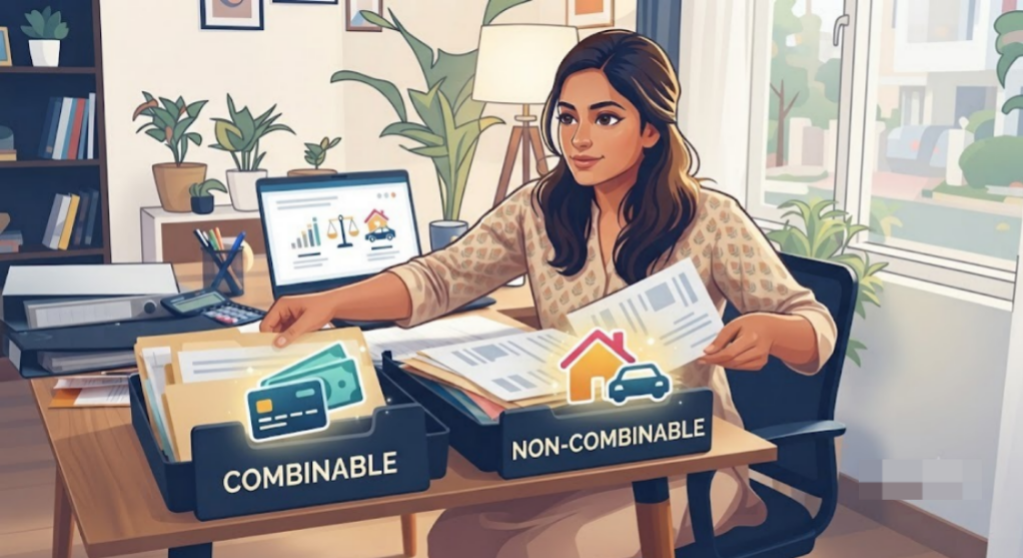
Which Loans Can Actually Be Combined
Generally combinable (unsecured):
Credit card dues
Personal loans
BNPL and instant loan app balances
Payday loans
Peer-to-peer loans
Generally not combinable through standard consolidation (secured):
Home loans
Car loans
Gold loans
Education loans
Loan against property, and any loan backed by collateral
The unsecured side is usually where consolidation delivers the most savings, and it's easy to see why. Credit card interest in India typically runs 30% to 40% a year, while personal loans generally range from around 10% up to the low 30s depending on the lender and your profile. Bringing several high-rate balances under one lower rate is where the real gap gets closed. Check the combined burden of just your unsecured side before assuming anything about what a consolidated EMI would look like.
Here's how the combining process actually works for the loans that do qualify.
How Combining Multiple Loans Actually Works
This process focuses on the unsecured debts identified above. Secured loans follow a separate route, covered honestly in the next section.
List your eligible unsecured debts. Note every credit card, personal loan, BNPL balance, and other unsecured debt, its amount, rate, and due date.
Calculate your blended rate. Work out the effective average interest rate across just the unsecured debts you listed.
Compare or get matched to a consolidation loan. Either compare banks and unsecured loan options yourself or use a matched approach that reviews your full unsecured picture at once.
Apply with your documents. Submit income proof, existing debt statements, and KYC documents to your chosen lender.
The new loan pays off the old ones. Once approved, the consolidated loan clears the eligible unsecured debts, leaving you with one EMI for that portion.
Approval depends on the lender's own assessment, the same as with any loan application. Nothing here is automatic just because the process is well understood.

What the Law Says
For new retail and MSME term loans sanctioned on or after October 1, 2024, RBI's KFS framework requires regulated entities to provide eligible borrowers with a standardised Key Facts Statement before execution of the loan contract. The framework covers applicable term loans and expressly exempts credit-card receivables.
Talk to FREED's TeamWhat About Secured Loans? The Honest Answer
Secured loans generally aren't combined with unsecured debt through standard personal-loan-based consolidation. Closing a secured loan releases the lender's claim on the collateral behind it, and that's a bigger, separate transaction than what a consolidation loan is built to do.
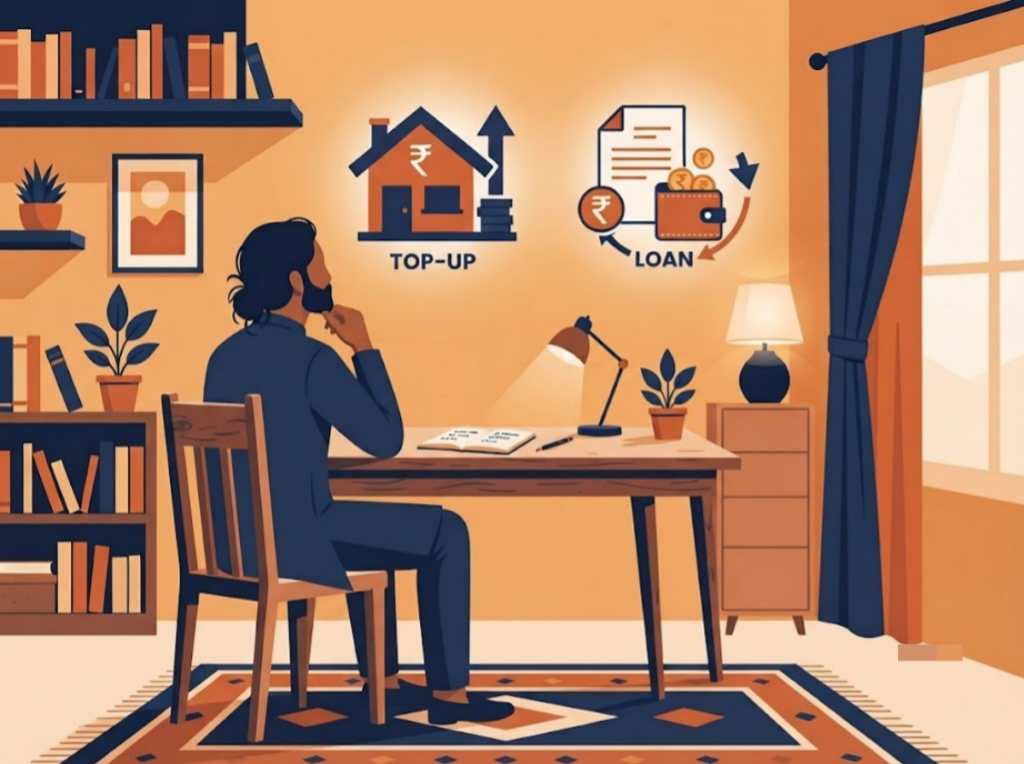
That said, a smaller route does exist in the market. Some borrowers use a top-up loan on an existing home loan, or a loan against property (LAP), to pay off high-interest unsecured debt. This is generally priced closer to secured-loan rates than unsecured ones, which usually makes it cheaper on paper. But it comes with a real trade-off: you're putting an asset, your home or other property, on the line for debt that was never originally secured against it. That's a meaningfully different risk than an unsecured consolidation loan carries, where the worst case doesn't touch anything you own outright.
This route is a genuinely different decision than standard consolidation, and it deserves its own separate research if you're actually considering it, not something to default into just because the headline rate looks lower.
Given this split, here's how to think about what to actually do next.
What Are Your Options
For your unsecured debt, consolidating into one loan is the direct path, whether you compare lenders yourself or use a matched approach that handles the comparison for you.
For your secured debt, the simplest and safest route is usually to keep managing it as-is, on its own track, at its own rate. If you're genuinely considering a top-up loan or LAP to address other debt, that's a separate decision outside the scope of unsecured consolidation, and it deserves its own research rather than being folded into this one.
Here's how FREED specifically helps with the unsecured side.

Freed Expert Tip
Tackle your unsecured debt first, cards and personal loans usually carry the highest interest and are what standard consolidation can actually address.
Check My Consolidation OptionsHow FREED Helps
FREED reviews your full unsecured debt picture, every eligible card and loan, before matching you to a lending partner from its network based on your EMI-to-income math.
If approved and subject to the programme's terms, the new loan may be used to repay eligible unsecured debts covered by the programme. The result is one loan and one EMI for that portion of your debt, lower than the collective total across separate accounts before.
Here's the part worth stating plainly, since it's the whole point of this blog: this covers unsecured debt only. Home loans, car loans, gold loans, and loan against property stay outside FREED's program entirely. If your secured debt is part of what's weighing on you, this isn't the tool for that, and FREED won't pretend otherwise.
The fee is success-based, charged only once consolidation is completed. Consolidation itself doesn't hurt your CIBIL score the way a default or settlement would. What happens to your score afterward depends on your repayment behaviour, not a promise anyone can make in advance.
Across the program, FREED has counselled over 20,00,000 customers and managed more than ₹3,200 crore in debt.
Tips If You Have Both Secured and Unsecured Debt
Tackle the unsecured side first. It's usually the highest-interest debt you're carrying, and it's the part standard consolidation can actually address directly.
Keep secured loans, home and car, on their own track. Continue paying as agreed. They generally carry better rates than unsecured debt and shouldn't be lumped into a consolidation decision that wasn't built for them.
If the secured debt itself is the problem, missed payments, risk to the asset, that's a different conversation entirely, one to have directly with that specific lender. A personal-loan consolidation doesn't solve that, and treating it like it does just delays the real conversation.
Sources
Claim | Source |
Since October 1, 2024, banks and NBFCs must give borrowers a standardised Key Facts Statement before signing new retail loans. | RBI/2024-25/18, DOR.STR.REC.13/13.03.00/2024-25, April 15, 2024 Key Facts Statement (KFS) for Loans & Advances |

Mohit Juneja
Mohit Juneja writes educational content at FREED on debt management, credit scores, loan repayment, and borrowing best practices. His content is shaped by expert insights and industry knowledge, helping readers better understand their financial options and make informed decisions.
mohit.juneja@freed.care

FREED is India's trusted loan management platform. Founded in 2020 and headquartered in Gurugram, FREED has counselled 20 lakh+ people on personal loans, credit cards, and app loans. FREED charges fees only on successful settlement, not upfront. FREED does not handle secured loans (home loans, car loans, gold loans).
Media Mentions