Personal Loan Balance Transfer: How to Move Your Loan to a Lower Interest Rate
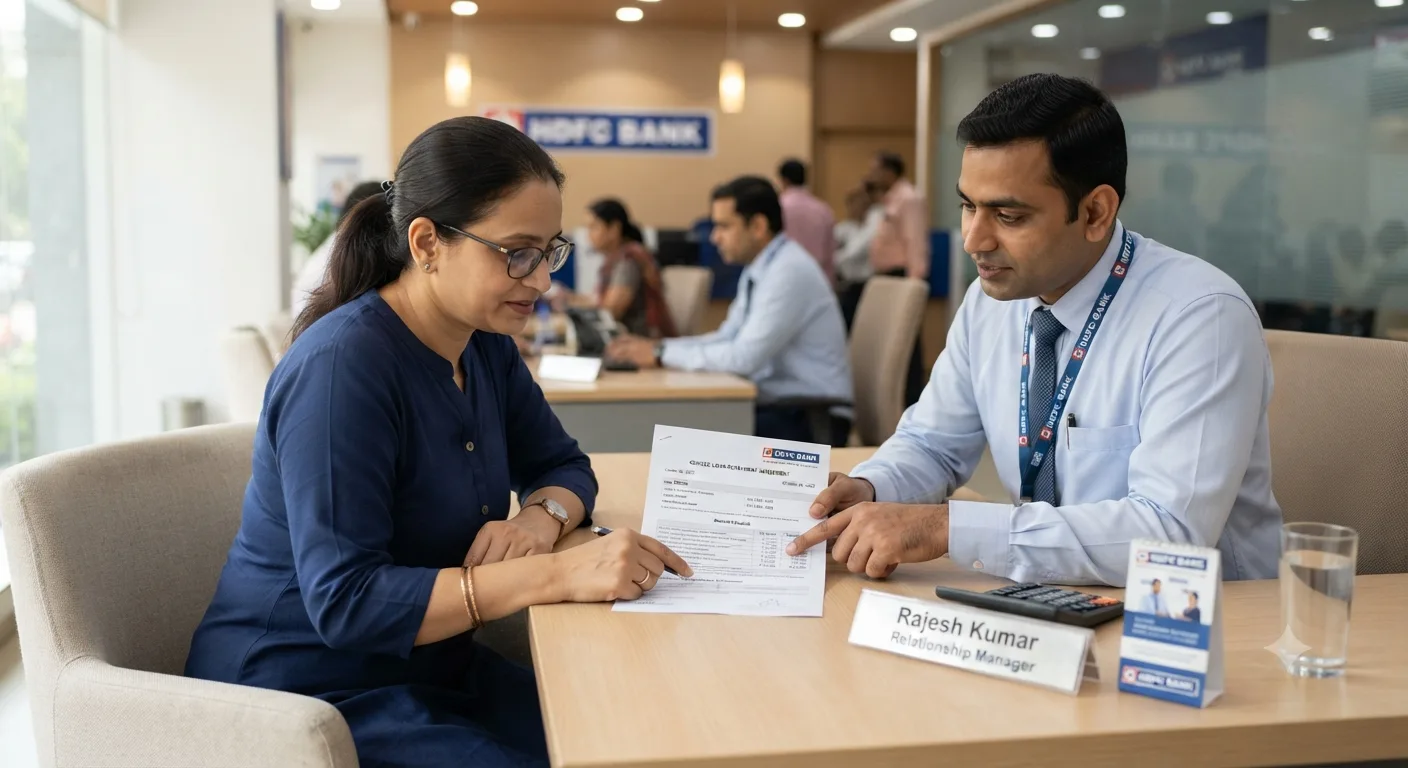
Personal loan balance transfer is the process of moving your existing personal loan's outstanding amount from your current bank or NBFC (non-bank loan company) to a new one offering a lower interest rate. The new bank pays off your old bank, and you start repaying the new bank at a lower rate. It reduces your EMI and total interest, if done at the right time.

Mohit Juneja
Reviewed by FREED India, Debt Resolution Specialists
 4.7/5
4.7/5 ₹3,200Cr+
 20,000+
 20,00,000+4.7/5₹3,200Cr+20,000+20,00,000+
KEY TAKEAWAYS

A personal loan balance transfer works best in the first half of the loan's repayment period, when most of the interest is still unpaid.
On a Rs. 5 lakh loan over 5 years, reducing the rate from 16% to 13% saves approximately Rs. 48,000 in total interest.
The real cost of a transfer is not just the new interest rate. It includes the old bank's prepayment penalty (2%–6% of outstanding) and the new bank's processing fee (up to 2%).
Many lenders may require a stronger credit profile to offer a lower interest rate, although eligibility varies. A balance transfer on an overdue loan account is rarely approved. The account must be standard, with no missed payments, at the time of applying.
What Is a Personal Loan Balance Transfer and How Does It Work?
When you do a personal loan balance transfer, you apply to a new bank or NBFC for a fresh loan. The new bank checks your application the same way it would for any new loan: your income, CIBIL score, employment type, and how regularly you have been paying your current loan.
If the new bank approves, it sends a cheque or demand draft directly to your old bank. Your old loan closes. You then get a No Objection Certificate (NOC, a clearance letter from the old bank confirming the account is fully settled). After that, you repay only the new bank, at a lower interest rate, for the rest of the repayment period.
One thing to understand clearly: the amount you transfer is the outstanding amount, meaning what is still left to repay. It is not the original loan amount. If you borrowed Rs. 5 lakh and have already repaid Rs. 1.5 lakh, the outstanding is around Rs. 3.5 lakh. That is the number the new bank works with.
Personal loans and credit card balances are eligible for a balance transfer. Credit card balance transfers work differently and are a separate process. Secured loans like home loans or car loans have their own transfer process and are not covered here.
Personal loans in India grew over 20% year-on-year in 2024, according to RBI data. With more options available through digital lenders and fintechs, borrowers are increasingly exploring balance transfers to reduce their EMI burden. A balance transfer is essentially a fresh loan at the new bank, the credit check is nearly the same as a new loan application.
When Does a Personal Loan Balance Transfer Actually Make Sense?
Not every balance transfer saves money. Four conditions need to hold, and all four matter.
- 1
The new rate is at least 1.5%–2% lower than your current rate.
A smaller difference rarely covers the transfer costs. If your current rate is 16% and the new offer is 15.2%, run the full math before applying. The savings may disappear once you add the prepayment penalty and processing fee.
- 2
You are in the first half of the loan's repayment period.
Personal loans are structured so the bank collects most of the interest in the early months. By the second half, you are mostly repaying the principal. A lower rate on a mostly-principal balance saves much less than it looks.
- 3
The transfer costs are less than the interest saved.
Add the prepayment penalty at the old bank (2%–6% of the outstanding principal) and the processing fee at the new bank (up to 2% of the loan amount). Subtract both from the total interest saving. If the number is still positive, proceed.
- 4
Your CIBIL score has genuinely improved since your original loan.
This is what gets you a better rate. If your score is the same as when you first borrowed, the new bank may offer you the same rate, or worse. The transfer makes no sense then. On a Rs. 5 lakh loan over 5 years, reducing the rate from 16% to 13% saves approximately Rs. 48,000 in total interest. Transfer

When a Personal Loan Balance Transfer Is NOT Worth It
Most articles push balance transfer as universally smart. It is not. Here are the situations where it does not make sense.
- The loan is in the last 12–18 months of repayment. Most of the interest has already been paid. The savings on the remaining principal will not cover transfer costs.
- The rate difference is less than 1.5%. Too small to offset the fees on both sides.
- The old bank charges a prepayment penalty of 4%–6%. This erases months of savings before they start.
- Your CIBIL score has not improved since the original loan. The new bank may offer a rate no better than the current one, making the whole exercise pointless.
- The loan account has any overdue or missed EMIs. Most banks and NBFCs will not approve a balance transfer on an account that is not current.
- The remaining outstanding is very small. A 2% processing fee on Rs. 50,000 outstanding is Rs. 1,000. The application creates a hard enquiry that lenders may consider when evaluating future applications. The paperwork, time, and a hard enquiry on your CIBIL report may not be worth that.
Prepayment penalties range from 2%–6% of outstanding principal. Processing fees at the new bank, up to 2% of the loan amount, are non-refundable even if the transfer is not completed. On Rs. 3 lakh outstanding, a 2% processing fee alone is Rs. 6,000 upfront before a single EMI saving begins.
Before applying anywhere, calculate the break-even point: how many months of lower EMI does it take to recover the total cost of the transfer? If that number is higher than the months you have left to repay, the transfer costs more than it saves. Stay put.

FREED Expert Tip
Before applying for a balance transfer, ask your current bank for a pre-closure statement. It shows the exact outstanding amount, the prepayment penalty, and the foreclosure charge. Then ask the new bank for a quote on the total processing fee. Subtract both from the projected interest saving. If the net saving is positive and meaningful, proceed. If not, stay put.
Talk to an ExpertPersonal Loan Balance Transfer Eligibility: What Banks Actually Check
The new bank treats a balance transfer like a fresh loan application. The only extra document is the foreclosure letter (a letter from your current bank confirming the outstanding amount and that the bank agrees to close the loan on receipt of full payment).
Here is what the new bank looks at:
- CIBIL score of 670 or above. Scores below this rarely unlock a meaningfully lower rate. A transfer at the same rate, after paying transfer costs, leaves you worse off.
- Active loan account with no overdue or missed EMIs. The account must be current at the time of applying. Clear any pending dues first.
- Minimum 6–12 EMIs paid on time. New banks want to see a consistent repayment track record.
- Stable income. Salary slips, ITR, or bank statements from the last 3–6 months.
- Age between 21 and 60 years at the time of application.
- Employment status: salaried or self-employed with verifiable income.
- Foreclosure letter from the current bank. Issued on request, usually within a few days. It confirms the outstanding amount and prepayment penalty.
Most banks require a minimum of 6–12 paid EMIs before accepting a balance transfer application. Overdue accounts are almost always rejected for balance transfers. Clear any pending dues before applying.

What the Law Says
Per RBI guidelines, if a personal loan is on a floating interest rate, banks cannot charge a prepayment penalty. [(RBI Circular DBOD.Dir.BC.No.110/13.03.00/2013-14: https://www.rbi.org.in/commonman/english/scripts/Notification.aspx?Id=1381 )] Fixed-rate personal loans may attract prepayment or foreclosure charges, the exact percentage varies by lender, typically ranging from 2% to 5% of the outstanding principal plus applicable GST. Always confirm whether your loan is fixed or floating before calculating transfer savings.
Review Your Loan OptionsHow to Do a Personal Loan Balance Transfer: Step by Step
The full process typically takes 7–15 days with complete documentation. One important note: do not stop the current loan's NACH mandate (auto-payment permission) until the new bank confirms the old loan has been fully paid and the account closed.
- 1
Check your current loan's outstanding, rate, and prepayment penalty.
Log into your bank's app or net banking and find the loan account summary. Then request a pre-closure statement. It shows the exact outstanding principal, the prepayment penalty (called a foreclosure charge), and the total amount needed to close the account. This is the number the new bank needs.
- 2
Check your CIBIL score before applying anywhere.
A score of 670 or above opens balance transfer options at most banks. Below that, the rate offered may be no better than your current one. The application creates a hard enquiry that may be considered by lenders during future credit assessments.
- 3
Compare offers from 2–3 banks or NBFCs.
Look at the new interest rate, the processing fee, and whether there is a lock-in period before prepayment is allowed. Calculate the total cost: prepayment penalty at the old bank plus processing fee at the new bank. The interest saving must exceed both.
- 4
Apply to the chosen bank and submit documents.
Documents needed: PAN and Aadhaar, last 3–6 months of salary slips or ITR, last 6 months of bank statements, the existing loan agreement, the repayment schedule, and the foreclosure letter from the current bank. Submit everything together to avoid delays.
- 5
Wait for the new bank to pay the old bank, then confirm closure.
Once approved, the new bank pays the outstanding amount directly to the old bank. Collect the NOC (No Objection Certificate, the clearance letter confirming the old loan is fully closed). Do not stop the auto-payment on the old loan until the NOC is in hand. Check the CIBIL report 45 days later to confirm the old loan shows as closed
What Are the Real Charges in a Personal Loan Balance Transfer?
Charge | Who Pays It To | Typical Amount | When It Applies |
Foreclosure / prepayment penalty | Old bank or NBFC | 2%–6% of outstanding principal | When old loan is closed early |
Processing fee at new bank | New bank or NBFC | Up to 2% of loan amount | At application or disbursal |
GST on both fees | Government via the bank | 18% on both | On every fee charged |
CIBIL report pull fee | New bank (passed to borrower) | Up to Rs. 300 | At application stage |
Overlap interest | Old bank | 1–2 days of daily interest | If EMI falls due during transfer window |
Note: These are general indicators. Actual charges vary by bank and loan agreement. Always ask for a full fee schedule before applying. FREED is not a Loan Provider. No outcome is guaranteed. Please verify directly with your bank or NBFC.

What Are Your Options If a Balance Transfer Does Not Work for Your Situation?
If the math does not work, or your CIBIL score does not qualify, or the loan account has overdue amounts, there are still other paths worth exploring, in this order.
Talk to your current bank directly. Ask whether the bank can reduce the EMI or change the repayment plan. Banks sometimes agree to extend the tenure or offer a short break, especially if you have a clean repayment history. This costs nothing to ask.
Merge all loans into one lower EMI through consolidation (combining all loans and credit card dues into one new loan with a single, lower monthly payment). If you have multiple loans running at the same time, a debt consolidation plan can reduce your total monthly outflow without a balance transfer on any single loan.
Do the balance transfer once your CIBIL score improves to 670 or above. If the score is too low right now, it is worth spending 6–12 months paying on time and reducing credit card utilisation before applying. A 20-point improvement can shift the rate offered by a full percentage point or more.
If repayment has become genuinely impossible despite trying everything above, loan settlement (paying a reduced lump sum as full and final payment) may be worth discussing for unsecured loans only. This applies only when repayment is truly no longer possible, not as a shortcut. A settled account is reported as 'Settled,' which may be considered by future lenders.
How Loan Settlement Helps When Repayment Has Become Genuinely Impossible
Settlement is not something a borrower chooses out of preference. Banks and financial companies only consider it when you are in a genuine financial difficulty and are truly unable to repay the full amount. It is a last resort, not a shortcut.
For the borrower who has already tried every other option, talked to the current bank, explored consolidation, checked whether a balance transfer makes sense, and still cannot repay, settlement is the path that brings the debt to a final close on unsecured loans.
FREED works through a structured plan. Once a borrower enrolls, FREED prepares the documents, drafts the settlement letters, and handles the back-and-forth with the bank. The borrower saves a fixed monthly amount into a dedicated savings account (the SPA, or Special Purpose Account). Once enough has built up, FREED negotiates with the bank on the borrower's behalf. The bank decides the final settlement terms. If accepted, the loan is marked as "Settled" and the bank issues a settlement letter.
FREED helps borrowers settle their unpaid/overdue loans at up to 50% less*. The "Settled" mark on the CIBIL report stays for up to 7 years. Settlement affects the credit score and makes future loan applications harder for that period. These are real consequences and should be weighed carefully.
Settlement is for unsecured loans only: personal loans, credit cards, and similar. It does not apply to home loans, car loans, or any secured debt.
*Rates and ranges shown are indicative. Final terms decided by the bank. FREED is not a Loan Provider. No outcome is guaranteed. Please verify directly with your bank.
Are You in a Loan Trap? Quick Check
Move the slider to your total EMIs as a % of monthly salary. See your debt stress level instantly.
EMIs as % of Monthly Salary
Things That Actually Help You Get the Best Deal on a Balance Transfer
Check the CIBIL score first and fix any errors before applying.
Correcting reporting errors helps ensure your credit report accurately reflects your repayment history. Raising the score even slightly can improve the rate the new bank offers.
Negotiate the processing fee.
Banks sometimes waive the processing fee entirely for borrowers with strong credit profiles or on pre-approved balance transfer offers, ask directly. The worst they can say is no. Some banks also reduce the fee if the loan amount is large.
Apply to one or two banks maximum, not more.
Multiple applications in a short period may affect how lenders assess future applications. Multiple applications in a short period look like financial stress to the credit bureaus. Compare offers before applying, then pick the strongest one.
Time the transfer at least 6 months before the midpoint of the loan period.
After the midpoint, most of the interest has already been paid. The rate saving on the remaining mostly-principal balance is small. The earlier in the loan the transfer happens, the more interest is still unpaid and the more there is to save.
Check whether the new bank's rate is fixed or floating.
A floating rate can look attractive today and rise over the repayment period. Ask for the full rate history and any rate revision conditions before signing.
A balance transfer is not a debt solution. It is a cost optimisation. It works best for borrowers who are paying on time but paying too much interest. Check your CIBIL report 45 days after the transfer completes to confirm the old loan shows as closed and the new one is reporting correctly.


Mohit Juneja
Mohit Juneja writes educational content at FREED on debt management, credit scores, loan repayment, and borrowing best practices. His content is shaped by expert insights and industry knowledge, helping readers better understand their financial options and make informed decisions.
mohit.juneja@freed.care

FREED is India's trusted loan management platform. Founded in 2020 and headquartered in Gurugram, FREED has counselled 20 lakh+ people on personal loans, credit cards, and app loans. FREED charges fees only on successful settlement, not upfront. FREED does not handle secured loans (home loans, car loans, gold loans).
Media Mentions