RBI Master Circular on Recovery Agents: Rules Banks Must Follow
RBI no longer has one master circular on recovery agents. The rules now sit in each lender type’s Responsible Business Conduct Directions. RBI issued the final recovery-agent rules on 6 August 2026. They apply to banks and NBFCs from 1 January 2027.

Mohit Juneja
Reviewed by FREED India, Debt Resolution Specialists
 4.7/5
 ₹3,200Cr+
 20,000+
 20,00,000+4.7/5₹3,200Cr+20,000+20,00,000+
Key Summary

The rules sit in RBI Directions for each lender type, not in one master circular.
From 1 January 2027, banks must use certified agents and publish a list of their agencies.
Banks must tell you who is coming at least one day before the first visit.
If a bank or agent breaks the rules, complain to the bank first, then to RBI through its Complaint Management System.
Is there an RBI master circular on recovery agents?
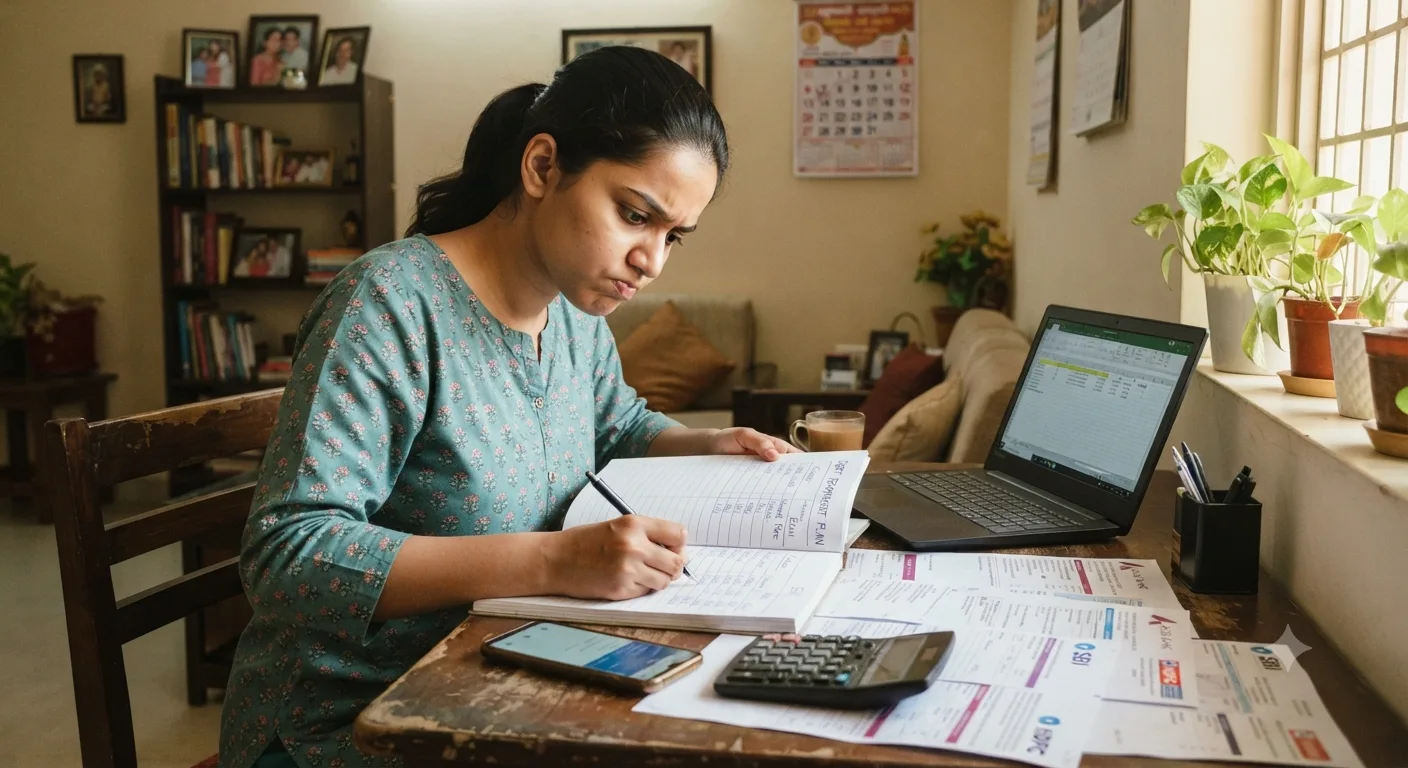
If you searched for the RBI master circular on recovery agents, you will not find one document. RBI moved most conduct rules into consolidated Directions in 2025. It then issued final recovery-agent rules in August 2026. This blog shows which document applies to your lender and what banks must do. It also shows what changes on 1 January 2027, and how to check whether your bank is following the rules.
Not one single document, not now. This surprises many people, so here is how it got here.
For years, people used the words “master circular” for any big RBI rule list. RBI’s website still files the 12 August 2022 circular on recovery agents (RBI/2022-23/108) under its Master Circulars. That is likely the document many people mean when they search for this topic.
Then the format changed. In November 2025, RBI moved many of its rules into consolidated Master Directions, one set for each type of lender. In August 2026, it issued final recovery-agent rules as amendments to those Directions. Our RBI recovery agent rules 2026 guide covers the amendments from the borrower’s side.
So there is no single master circular to download today. The 2022 instructions are what you can rely on right now. The new Directions start on 1 January 2027. For you, the practical point is simple. Your lender must follow the RBI text that applies to its type. If you want the borrower's view of loan recovery, read RBI guidelines for loan recovery. The next sections show which text covers your loan, and what it asks of your bank.

Know Where You Stand Before the Next Call
See your loans and credit position in plain words before you talk to your lender.
Check My Credit InsightsWhich RBI document applies to my lender?
The answer depends on what kind of lender gave you the loan. Your loan agreement names it, usually on the first page.
| Your lender | RBI document | Effective |
|---|---|---|
| Commercial bank (not small finance, payments, regional rural or local area banks) | Commercial Banks (Responsible Business Conduct) Fourth Amendment Directions, 2026 (RBI/2026-27/223) | 1 January 2027 |
| NBFC | NBFC (Responsible Business Conduct) Third Amendment Directions, 2026 (RBI/2026-27/230) | 1 January 2027 |
| Housing finance company | HFC Third Amendment Directions, 2026 (RBI/2026-27/231). It points to the NBFC rules | 1 January 2027 |
| All India Financial Institution | AIFI Third Amendment Directions, 2026 (RBI/2026-27/229) | 1 January 2027 |
| Small finance, local area, regional rural, urban and rural co-operative banks | Each has its own amendment of 6 August 2026 | 1 January 2027 |
The rules are largely the same across lender types, with small differences. So if your lender is not a commercial bank, the checklist in the next section still gives you a good picture. Check the lender’s own text for the small differences. Not sure which one is yours? Your loan agreement names the lender and its type.
A loan app is covered only when an RBI-regulated bank or NBFC is behind it. The app’s loan agreement should name that lender. If it names no regulated lender, the RBI rules may not reach it. In that case, read what to do about fake loan app harassment and use the cybercrime route for threats.
Credit cards have their own recovery rules, which this blog does not cover. See RBI guidelines for credit card recovery agents.
This is general information. The RBI text is the final source.
Not Sure What Your Lender Can Do?
FREED Shield helps you understand your rights as a borrower when recovery pressure starts.
Know Your RightsWhat rules must banks follow for recovery agents?
Here is the checklist, grouped by stage. It is built from the commercial banks text, effective 1 January 2027. For the borrower-side view, read what recovery agents can and cannot do.
Before hiring an agency
- The bank must have a written recovery policy. It covers escalation, a code of conduct, and how to treat borrowers in financial difficulty. This sets the tone for everything after. See how recovery agents are appointed.
- It must check an agency and its agents before hiring, and again from time to time. One check at the start is not enough.
- It may use only agents with the IIBF Debt Recovery Agent certificate. This is the main new duty for agents. Here is how to verify a recovery agent’s IIBF certificate.
- It must get a written promise that the agency’s agents will follow the bank’s code. The bank stays answerable for their conduct.
Telling you who is involved
- It must publish a list of its recovery agencies on its website, updated within seven calendar days of any change. You can look up the agency yourself. Not sure who counts? Read who is a recovery agent.
- It must give you the agency’s details at least one day before the first in-person visit. A visit with no notice is a red flag. See whether a recovery agent can visit your office.
- It must tell you if the agency changes during recovery. A new agent should not appear without word.
How and when they contact you
- Contact is allowed only between 8 AM and 7 PM, unless you expressly allow another time. More on calls and home visits under loan recovery rules.
- Agents should avoid sensitive times, such as a death in the family or a medical emergency.
- Agents must carry ID and authorisation, and give receipts for any money taken. Never hand over cash without a receipt.
What is not allowed
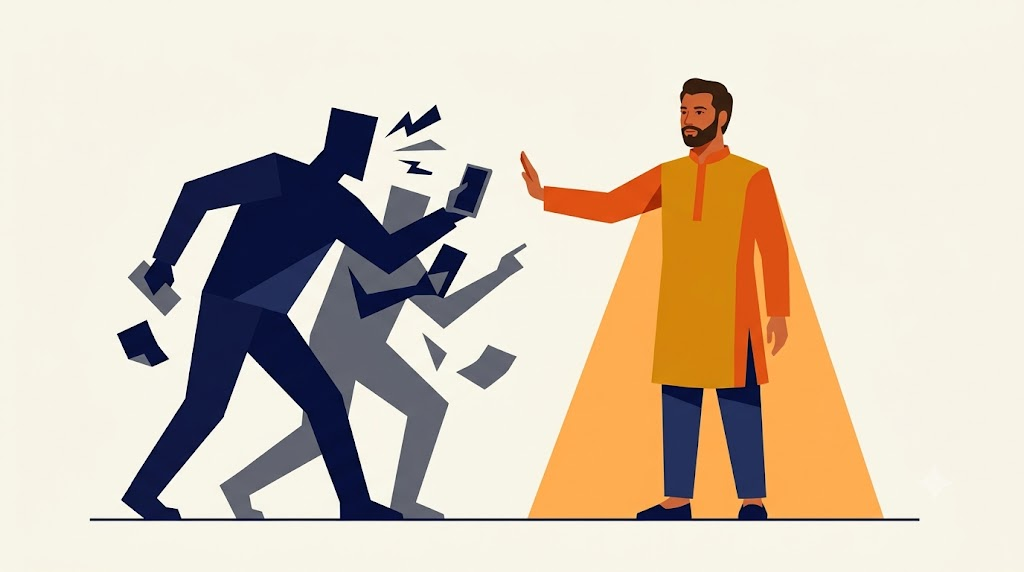
- No abusive language, threats, harassment or violence. No posting your details or recordings on social media. No false statements about your debt. No threatening or anonymous calls. For the full prohibited list, read RBI recovery agent rules.
Records and complaints
- The bank must log call times and numbers, record calls, and tell you when a call is recorded. Records are kept for six months. This gives your complaint something solid to rest on.
- It must run a dedicated recovery grievance process. Recovery messages must show the grievance officer’s name, email, phone number, and address.
- It may use your data only as needed for recovery.
These rules apply to recovery from borrowers in default. Taking over security on a secured loan has its own rules and is outside this blog. For the wider picture, see bank loan recovery rules: what banks can and cannot legally do.

FREED Expert Tip
Many borrowers do not know recovery agents must be certified. Ask for the name, agency, and ID. A genuine agent will not mind, and your notes become part of your call log.
Know Your RightsWhat changes on 1 January 2027?
Until that date, you can rely on the older instructions. After it, each lender’s own Directions apply. Nothing in this table is in force before 1 January 2027, except the first row.
| Topic | Today | From 1 January 2027 |
|---|---|---|
| Calling hours | RBI told lenders in August 2022 not to call before 8 AM or after 7 PM | Written into each lender’s Directions |
| Agent certification | Not uniform across lenders | IIBF certificate required. NBFC text gives existing agents one year. Bank text sets no separate window |
| Who is calling | No uniform duty | Public list of agencies. One day’s notice before the first visit |
| Call records | No uniform duty | Recorded and kept for six months |
| Grievance | Bank’s general process | Dedicated recovery grievance process |
| Phone locking | Not addressed in one place | Strict limits (see below) |
The change is mostly about proof. Today, you often have only your word against the agent’s. From 1 January 2027, the bank must keep a record, name its agency and give you a grievance contact. That makes a complaint easier to back up.

What the Law Says
RBI Commercial Banks (Responsible Business Conduct) Fourth Amendment Directions, 2026, issued 6 August 2026 and effective 1 January 2027. Banks may contact you only between 8 AM and 7 PM unless you allow otherwise. They must give you the recovery agency’s details at least one day before the first in-person visit. They must keep call records for six months.
Know Your RightsWhat are the new phone-locking limits for phone loans?
These limits are for loans taken to buy a phone.
- A lender can lock only the phone it financed, and only if your loan agreement allows it. There is no restriction until the loan is 30 days past due. Here is how NPA and SMA stages work.
- Full restriction can come only after 60 days. Incoming calls, SMS, and emergency SOS must stay on.
- Restrictions must be lifted within one hour of repayment. For a wrongful or delayed lift, the lender pays ₹250 an hour, capped at the loan amount.
The lender also may not use your phone’s contacts, messages, or location for recovery.
See How Much of Your Salary Goes to EMIs
Get a free EMI Score from 0 to 100 based on your income and EMIs.
Check My EMI ScoreHow can I check if my bank is following the rules?
You can run this check on any lender. It takes a few minutes, and you do not need any special tool.
- Look for the agency list. From 1 January 2027, your lender’s website must list its recovery agencies. Find the page and note the agency names.
- Find the grievance details. Check your loan agreement and recovery messages for the grievance officer’s name, email, and phone. If they are missing, note that.
- Ask the caller three things. Their name, their agency, and their authorisation. Also ask whether the call is recorded. The debt recovery agent certificate guide shows what to look for.
- Keep a simple log. Write the date, time, and number of every call and visit. Add one line on what was said. How to document threat calls from recovery agents goes deeper.
- Compare with the checklist. Put your log next to the 14 points above. Mark each one that was not followed.
Illustrative example: Priya, who has a personal loan from an NBFC, gets a call at 8:45 PM. The caller gives no agency name. She notes the time and number, and asks for the agency in writing. Next day, she checks the lender’s website and her loan papers. Now she has a dated record to write her complaint from.
A genuine agent will not mind these questions. If answers are missing, that is worth noting in your log.
Want Someone to Look at Your Call Log?
Talk to the FREED team about what you are facing and what is open to you.
Settle My LoansWhat if my bank or its agent breaks these rules?
Complaining is your right, and it works best when it is calm and in writing. Here is the short path.
- Write to the lender’s grievance officer. Attach your log and any proof. A sample complaint letter against recovery agents can help you start.
- Escalate to RBI. If the lender does not respond within 30 days, or you are dissatisfied with its response, you can escalate your complaint through RBI’s Complaint Management System at cms.rbi.org.in. Generally, you must file within one year of receiving the lender’s response, or within one year and 30 days of your original complaint if no response is received. Filing is free.
- Go to the police for threats or violence. You can do this alongside step 2.
For the full steps, read how to file a complaint against a recovery agent. The RBI complaint process for recovery agent harassment is also worth reading before you write your first letter. If the calls are hurting your health, read about mental harassment by a bank.
When recovery conversations cross the line into abusive, threatening, or harassing behaviour, FREED provides an added layer of support through FREED Shield, a dedicated borrower-support service. FREED Shield helps you understand your rights as a borrower and can assist you in preparing and submitting a complaint through the appropriate channels where necessary.
It steps in when a recovery call has turned abusive or threatening, or when an agent has visited your home or office without following the correct protocol. Standard recovery calls are not a trigger.
FREED Shield is open to everyone, not only FREED customers. It also covers legal notice support. FREED’s in-house team checks whether a notice is real and helps you draft a reply. This is before any court case starts. Read more on legal notices for loan recovery.
Facing Threats or Odd-Hour Calls?
FREED Shield is open to everyone facing recovery pressure.
Get FREED Shield SupportWhat if I cannot repay my loan right now?
Recovery calls usually begin because payments have become hard. If that is where you are, you are not alone. Many careful people reach this point. Our guide on what a personal loan defaulter faces legally explains what banks can and cannot do.
Start by asking your lender for a changed plan, such as a longer tenure or a short break. Ask in writing, and keep a copy. A lender often prefers a plan to a missed payment.
If you are still paying EMIs but stretched across several loans, FREED’s Loan Consolidation Plan (Reduce My EMI) may help. FREED assesses your profile and matches you to a lending partner from its network. One new loan pays off the old ones, leaving you with one lower EMI. Your CIBIL score does not drop with consolidation. It starts to improve. FREED charges a success-based fee, and the evaluation fee is non-refundable. Read what is loan consolidation to see how it works.
Two tools can help you see where you stand. Credit Insights shows your loans and credit position in plain words. The EMI Score shows how much of your salary your EMIs take. Both are open to everyone.
If you have already missed payments, please talk to the FREED team instead of guessing whether you qualify. They will look at your situation and tell you what is open to you.
*Rates and ranges shown are indicative. Final terms decided by the bank. FREED is not a Loan Provider. No outcome is guaranteed. Please verify directly with your bank.
Holding Several EMIs and Want One?
FREED’s Loan Consolidation Plan combines multiple loans into one EMI.
Reduce My EMI
Mohit Juneja
Mohit Juneja is FREED’s Content & Communication Lead with 12+ years of experience across content, media, advertising and digital communications. He holds a postgraduate diploma in Communications from Xavier Institute of Communications, Mumbai, and has worked with organisations including NDTV, The Indian Express, McCann Worldgroup and NABARD.
At FREED, he leads content and communication across loan management, debt resolution, debt consolidation and financial well-being. His work combines research, storytelling and consumer-focused communication to make complex financial topics easier to understand and act on. He has also scripted and produced 11 documentaries on rural development and agriculture for NABARD, with film's selected for the Mumbai International Film Festival.
mohit.juneja@freed.care

FREED is India's trusted loan management platform. Founded in 2020 and headquartered in Gurugram, FREED has counselled 20 lakh+ people on personal loans, credit cards, and app loans. FREED charges fees only on successful settlement, not upfront. FREED does not handle secured loans (home loans, car loans, gold loans).
Media Mentions