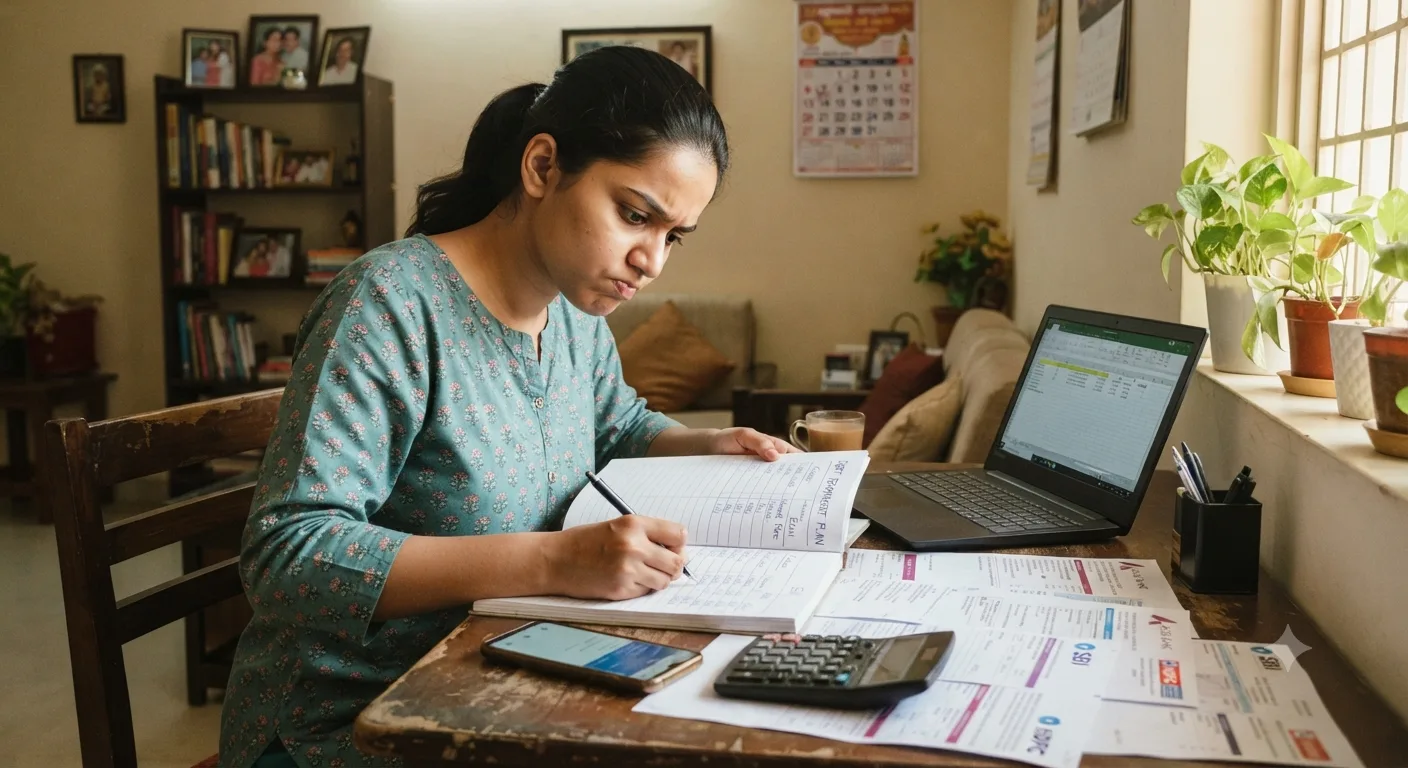
What RBI Says Recovery Agents Cannot Do to You (Full 2026 Guide)
What Are RBI Guidelines for Loan Recovery Agents? RBI guidelines for loan recovery agents are rules set by the Reserve Bank of India that every bank and NBFC must follow when collecting unpaid loans. These rules say when agents can call, what they can say, and what they are strictly not allowed to do. Breaking these rules is not a policy matter. It is a legal violation.
Mohit Juneja
Reviewed by FREED India, Debt Resolution Specialists
 4.7/5
4.7/5 ₹3,200Cr+
 20,000+
 20,00,000+4.7/5₹3,200Cr+20,000+20,00,000+
KEY TAKEAWAYS

RBI's Fair Practices Code says recovery agents can only contact you between 8am and 7pm
Agents cannot threaten you, abuse you, contact your family or employer, or visit your home without prior notice
Banks remain responsible for ensuring outsourced recovery agents follow RBI guidelines and applicable regulations.
If an agent crosses the line, you can complain to your bank, the RBI Ombudsman, or the police depending on what happened
If the harassment has started, the root cause is the outstanding loan, resolving the underlying debt through an appropriate repayment, restructuring, or settlement option addresses the root cause of the issue.
A "Settled" status on your CIBIL report can stay for up to 7 years. Settlement is a last resort, not a first step
What Are RBI Guidelines for Loan Recovery Agents?
RBI guidelines for loan recovery agents are a set of rules under the RBI's Fair Practices Code (FPC) that govern how banks and NBFCs (non-bank loan companies) can collect overdue debt. These rules cover everything: the timing of calls, the language agents can use, how they must behave at your doorstep, and what happens when they don't follow them.
The Reserve Bank of India (RBI) is the central bank of India. It controls every bank and NBFC operating in the country. When the RBI issues binding regulations, regulated lenders are expected to comply with them.
The Fair Practices Code was first introduced in 2003. It has been updated several times since, most recently through the RBI's 2022 master directions on outsourcing. These updates tightened the rules on what banks can allow their collection partners to do.
These guidelines apply to every kind of unsecured loan recovery: credit card dues, personal loan EMIs, BNPL (buy-now-pay-later) outstanding, and loan app balances. If you borrowed money without putting up any property as guarantee and recovery has started, the RBI's rules apply.
One thing most borrowers don't know: Outsourcing recovery activity does not remove the bank’s responsibility for ensuring compliance. If an agent working for your bank harasses you, your bank may be held accountable for recovery practices carried out on its behalf. The outsourcing contract does not protect them.
A 2024 RBI report on banking ombudsman complaints found that recovery-related grievances remain among the top 5 complaint categories received every year. Over 90% of such complaints are about rule violations clearly listed in the FPC. Many complaints arise from situations where borrowers believe recovery guidelines were not followed.

What Are RBI Guidelines for Loan Recovery Agents?
FREED has helped 60,000+ Indians understand their rights and resolve their loans legally.
Talk to a FREED Expert FreeFREED Expert Tip
RBI's Fair Practices Code is not optional guidance. It is a binding regulation. If your bank says "we cannot control what the agent does," that position may not align with RBI outsourcing and oversight expectations. The bank owns the agent's conduct.
Know Your Rights Under RBI RulesWhat Recovery Agents Cannot Do to You (Full List)
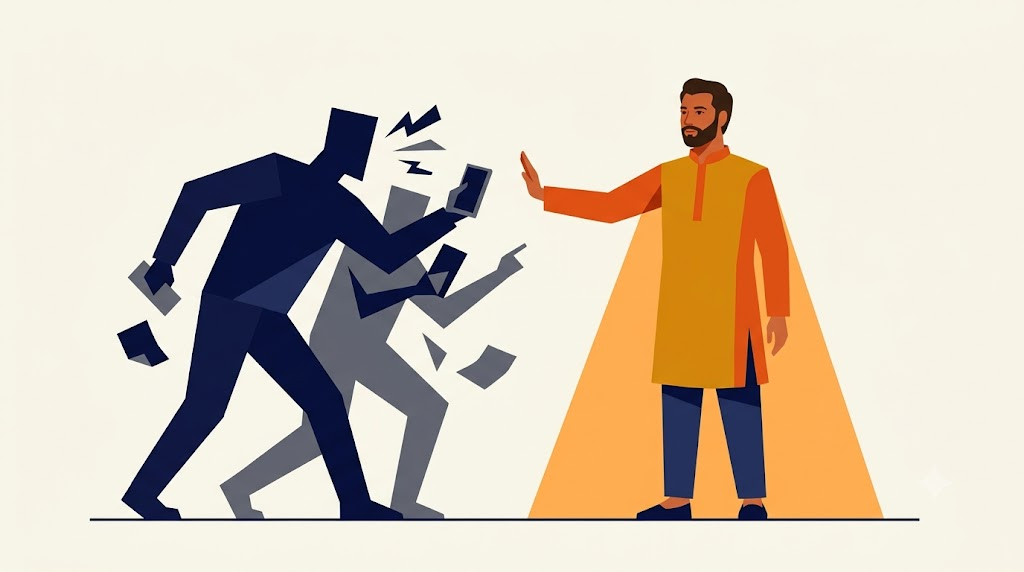
This is the list every borrower should read. Each of these is a direct rule violation under RBI guidelines. If any of this is happening to you right now, the agent is not bending a rule. They are breaking one.
- 1
Call before 8am or after 7pm-
RBI's Fair Practices Code is specific: contact with borrowers must only happen between 8am and 7pm. Any call outside this window, whether at 11pm or 5am, is a clear violation. Save the call log. Note the time and number.
- 2
Call your office, manager, or colleagues to pressure you -
An agent can try to reach you. They cannot go through your workplace to embarrass you into paying. Improperly contacting your employer to pressure you may violate RBI recovery and privacy guidelines.
- 3
Call or visit your family members, neighbours, or friends to shame you -
Your loan is your matter. Your parents, siblings, in-laws, neighbours, none of them are responsible for it. Using family members or neighbours to create pressure may violate RBI recovery guidelines.
- 4
Use abusive, threatening, or filthy language -
Agents must maintain basic civil communication. Abuse, slurs, threats, or language designed to frighten you is not a grey area. This may constitute a violation of RBI recovery guidelines. It is also potentially criminal under the IPC.
- 5
Visit your home or office without giving prior notice -
Agents can visit if required. But they must inform you in advance. Unexpected visits without proper communication can create borrower distress and may not align with RBI expectations. Unexpected visits without proper communication can create borrower distress and may not align with RBI expectations.
- 6
Threaten arrest, jail, or a criminal case to scare you -
This is one of the most common scare tactics. A recovery agent has zero power to arrest you, file a criminal case against you, or send you to jail. Non-payment of an unsecured loan is a civil matter, not a criminal one. Any statement suggesting otherwise is incorrect.
- 7
Pretend to be a lawyer, police officer, or court representative -
This may amount to serious misconduct and should be reported. An agent who misrepresents their identity to coerce payment can be reported to the police. It is not just a rule violation. It is a criminal offence.
- 8
Demand money beyond what you actually owe -
The amount an agent can collect is the outstanding principal (the actual amount you borrowed), accrued interest, and applicable penalties. Nothing more. Any demand beyond this has no legal basis.
- 9
Share your name, photo, or debt details on social media or WhatsApp groups -
This may violate borrower privacy protections and RBI recovery guidelines. Publishing a borrower's personal information to shame them publicly is illegal.
- 10
Take or threaten to take anything from your home -
A personal loan, credit card, or BNPL loan has no asset attached to it. No agent has any legal right to seize your phone, television, vehicle, or any other property. If anyone attempts this, it may require immediate police attention.
- 11
Keep calling after you have asked for all communication in writing -
You have the right to request written communication only. Once you send this request in writing, continued calls may raise compliance concerns depending on the circumstances.

What the Law Says
The Supreme Court of India, in ICICI Bank vs. Prakash Kaur (2007), held that banks cannot use musclemen or strongarm tactics for loan recovery. The court ruled that recovery agents using force, threats, or intimidation can attract criminal liability on the bank itself, not just the agent. Relevant RBI circulars: Master Circular on Fair Practices Code (DBOD.Leg.No.BC.55/09.07.005/2003-04, updated via Master Direction 2016); RBI Circular on Outsourcing of Financial Services (2006, updated 2022); Master Direction DNBR.PD.007/03.10.119/2016-17 for NBFCs.
Know Your Rights Against Illegal Recovery TacticsWhen Recovery Agents Are Crossing the Line, and When They Are Not
✅ Legal Recovery | ❌ Harassment, Crossed the Line |
Calls between 8am and 7pm | Calls at midnight, 5am, or outside permitted hours |
Polite reminder of outstanding dues | Abuse, threats, filthy language, intimidation |
Sends written notice by post or email | Threatens to come with people or force entry |
Contacts only you, the borrower | Calls your boss, parents, or neighbours |
Correctly identifies as agent of X bank | Pretends to be a police officer, lawyer, or court official |
Explains repayment or settlement options | Says you will be arrested or jailed if you do not pay today |
Follows up on a missed EMI | Demands more than the actual outstanding amount |
Visits with prior information | Surprise visits or group visits designed to intimidate |
Sends SMS or email during permitted hours | Posts your name or photo in WhatsApp groups or on social media |
If your experience resembles the situations in the right column, the conduct may violate RBI guidelines and should be reviewed.
Are You in a Loan Trap? Quick Check
Move the slider to your total EMIs as a % of monthly salary. See your debt stress level instantly.
EMIs as % of Monthly Salary
What to Do If a Recovery Agent Is Breaking RBI Rules
If an agent has crossed the line, here is exactly what to do. Each step builds on the last.
- 1
Document Everything Right Now -
Record calls (recording for personal legal protection is permitted in most Indian states). Screenshot WhatsApp messages, missed call logs, and threatening texts. Write down dates, times, what was said, and who said it. A complaint without proof takes longer. A complaint with proof moves fast.
- 2
Send a Written Complaint to Your Bank -
Every bank has a designated grievance officer. Email them with the subject: "Formal Complaint, Recovery Agent Harassment." Send the same letter by registered post to the bank's registered address. By RBI rules, your bank must respond within 30 days. Keep copies of everything you send.
- 3
Escalate to the RBI Ombudsman If the Bank Ignores You -
If your bank does not respond within 30 days, or the response does not resolve the issue, go to the RBI's Complaint Management System. You do not need a lawyer. The Ombudsman has the power to direct the bank to take corrective action.
- 4
File a Police FIR for Physical Threats or Impersonation -
If the agent threatened violence, physically intimidated you, pretended to be a police officer, or threatened criminal action, file a First Information Report (FIR) at your nearest police station. Bring your call recordings and screenshots. This is a criminal matter, not just a banking one.
- 5
File a Cyber Cell Complaint for Online Harassment -
If the agent posted your personal information publicly, sent threatening messages, or harassed you through WhatsApp or social media, report it at cybercrime.gov.in or at your local cyber cell. This track runs separately from the banking complaint and can run at the same time.
- 6
Solve the Root Cause -
All of the above can slow or stop the harassment temporarily. The root cause is the outstanding loan. Recovery-related communication generally continues until the debt is resolved through repayment, restructuring, or settlement. If repayment has become genuinely impossible, FREED can help you understand what your options are. We assess your financial situation first, then tell you what is possible.

FREED Expert Tip
Formal communication channels often help reduce confusion and improve coordination during resolution discussions. Communication may increasingly move through formal channels. The chain of pressure cuts off at the source.
Move Your Case to Formal ResolutionRBI Guidelines for Credit Card Recovery Agents, Specific Rules
Credit card recovery has its own layer of rules, and in several ways they are stricter than those for personal loans.
Before a bank can classify your credit card account as an NPA (loan marked as bad by the bank, usually after 90 days of no payment), it must give you at least 30 days advance notice. If your bank moved to NPA classification without this notice, that is itself a violation you can raise in a complaint.
No credit card recovery agent can collect cash from you without issuing an official receipt. If anyone arrives at your home to collect cash and has no formal receipt-issuing capability, do not pay. Ask for a bank-issued written receipt. Insist on it.
Settlement for credit card dues is only considered in cases of genuine financial hardship. The terms, including the amount, the timeline, and the CIBIL update, are decided by the bank. Not the agent. Agents have no authority to promise a settlement amount. They are not the ones who approve it.
RBI data shows that credit card outstanding in India crossed ₹2.7 lakh crore in 2024. With this scale of outstanding, recovery pressure on borrowers has increased significantly. More accounts in collections means more agents working them, and more chances of violations.
If the harassment is specifically about credit card dues, mention this in any complaint you file. Credit card complaints often get routed to a specialised team at the bank.
Why Negotiating Directly With the Recovery Agent Does Not Work
This is worth understanding clearly, because many borrowers spend months trying to reason with field agents and getting nowhere.
The agent calling you is at the bottom of the recovery chain. They work on commission. Their job is to recover as much money as possible, as fast as possible. They have no authority to approve a settlement. They cannot change your loan terms. They cannot tell the bank to update your CIBIL.
Any promise an agent makes about settling your loan for a lower amount is not worth acting on without written confirmation from the bank. Many borrowers have paid agents informally and received nothing from the bank in return.
The person who can actually approve a settlement is the bank's collections team or a senior officer. Getting to that point requires:
- A formal written application to the bank
- Financial documentation showing your actual income and expenses
- A correctly worded settlement letter that protects your interests, including a CIBIL update commitment, NOC (clearance letter from the bank), and a no-dues clause
- Follow-up to ensure the settlement is correctly reflected with CIBIL within the agreed timeline
At FREED, our counsellors handle the back-and-forth with the bank on your behalf. We prepare your documents, draft your settlement application, follow up until the paperwork is complete, and get the CIBIL closure letter worded correctly so the account reporting process is handled correctly afterward. Your score begins to recover afterward. We have helped settle 20,000+ accounts across banks and NBFCs across India.
Rates and ranges shown are indicative. Final terms are decided by the bank or NBFC. FREED is not a loan provider. No outcome is guaranteed. Please verify directly with your bank.
Recovery agents calling? You do not have to face this alone.
FREED has helped 60,000+ Indians navigate recovery-related challenges and resolve loans legally.
Talk to a FREED Expert FreeHow to File a Complaint Against a Recovery Agent (Step-by-Step)
- 1
Email the Bank's Grievance Cell -
Every bank has a published grievance email on their website. Search for "[Bank name] grievance officer email." Send a detailed email with dates, times, what was said, and any recordings or screenshots attached.
- 2
File on the RBI Ombudsman Portal -
Visit cms.rbi.org.in. If the bank has not resolved your complaint within 30 days, you are eligible to escalate here. The process is free. No lawyer needed. The Ombudsman can direct the bank to take action.
- 3
File a Consumer Forum Complaint for Documented Loss -
If you suffered a measurable financial or personal loss because of the harassment, you can file at the District Consumer Disputes Redressal Forum in your city. This track allows you to claim compensation.
- 4
File a Police FIR for Threats, Abuse, or Physical Intimidation -
Go to your nearest police station with your call recordings and screenshots. Threats of violence, impersonation of legal officials, and physical intimidation are criminal acts.
- 5
File a Cyber Cell Complaint for Online Harassment -
If the agent threatened to publish your personal details, shared your information in WhatsApp groups, or sent threatening messages online, file at cybercrime.gov.in or at your local cyber cell.
How FREED gives you support against harassment
At FREED, we do not just tell you your rights. We step in and act on them with you.
When you enrol with FREED, you also get access to FREED Shield, a tool to help you understand your rights as a borrower and even then if the harassment doesn’t stop. We equip you with the right method to report harassment with proof to the lender.
What we do not do: we do not make payments on your behalf, and we do not guarantee outcomes. Every case is different. What we do is make sure your case is presented correctly and followed through properly.
Stop the calls. Start the solution.
One free call. We tell you exactly where you stand and what is possible.
Get My Free Debt Assessment
Mohit Juneja
Mohit Juneja writes educational content at FREED on debt management, credit scores, loan repayment, and borrowing best practices. His content is shaped by expert insights and industry knowledge, helping readers better understand their financial options and make informed decisions.
mohit.juneja@freed.care

FREED is India's trusted loan management platform. Founded in 2020 and headquartered in Gurugram, FREED has counselled 20 lakh+ people on personal loans, credit cards, and app loans. FREED charges fees only on successful settlement, not upfront. FREED does not handle secured loans (home loans, car loans, gold loans).
Media Mentions