RBI Guidelines for Credit Card Recovery Agents: What They Cannot Do
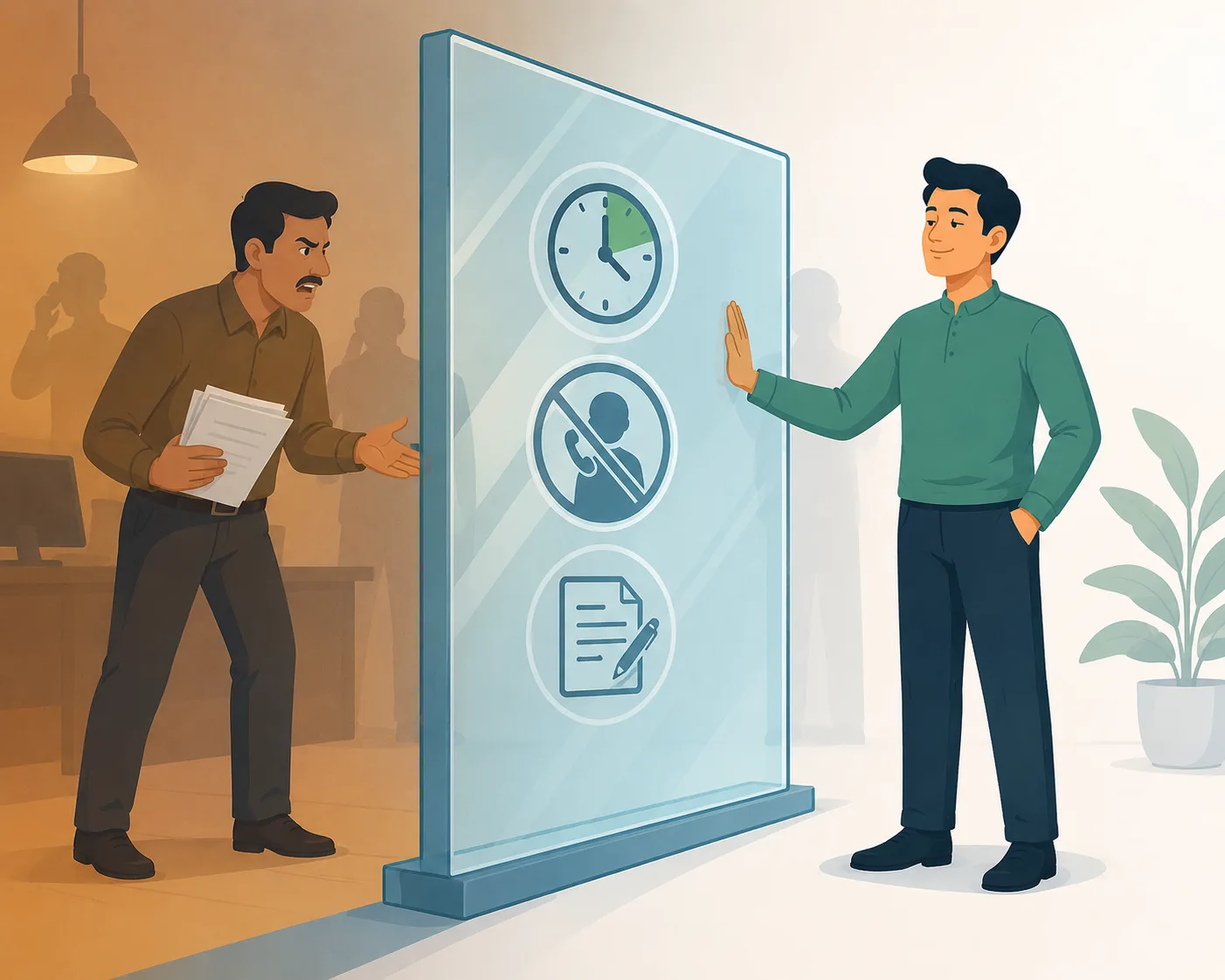
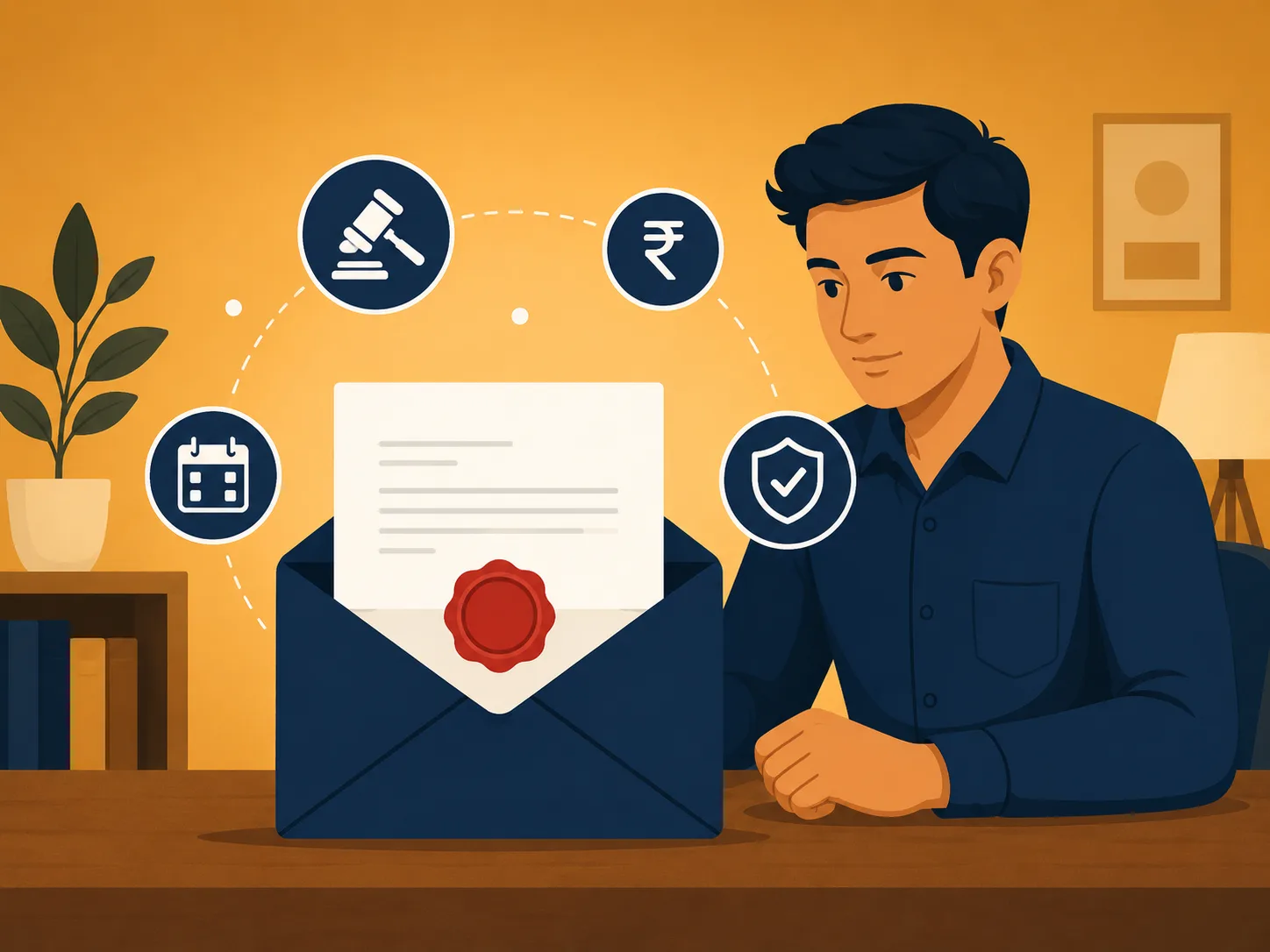
RBI guidelines for credit card recovery agents are legally binding rules that govern how and when a bank's recovery agent can contact you if you've missed credit card payments. Under the RBI's Fair Practices Code, agents cannot call outside fixed hours, use threats or abusive language, or contact your employer or family. These are your rights. If these guidelines are not followed, you can raise a complaint through the appropriate channels.
Mohit Juneja
Reviewed by FREED India, Debt Resolution Specialists
 4.7/5
4.7/5 ₹3,200Cr+
 20,000+
 20,00,000+4.7/5₹3,200Cr+20,000+20,00,000+
Key Takeaways

Recovery agents can only contact you between 8 AM and 7 PM. WhatsApp, SMS, and digital messages are included in this rule.
Threatening language, public shaming, and false legal threats are strictly banned under RBI's Fair Practices Code
Banks remain responsible for overseeing authorised recovery agents acting on their behalf.
If harassment continues, you can escalate to the RBI Integrated Ombudsman at cms.rbi.org.in at no cost
A missed credit card payment is a civil matter, not a criminal offence. Agents cannot threaten arrest.
What Are RBI Guidelines for Credit Card Recovery Agents?
RBI guidelines for credit card recovery agents are rules set by the Reserve Bank of India (RBI) that every bank, NBFC (non-banking financial company), and their third-party recovery firms must follow. These rules come from two main sources: the RBI's Fair Practices Code and the Master Directions on Outsourcing of Financial Services, most recently updated in late 2024.
The guidelines cover what agents can say, when they can call, where they can visit, and how they must behave. They apply whether the recovery agent works directly for the bank or has been hired from an outside agency.
One important principle runs through all of it: vicarious liability. This means the bank is legally responsible for everything a recovery agent does on its behalf. If an agent from an outside firm harasses you, the complaint goes to the bank, not just the agency. The bank cannot pass the blame. https://www.rbi.org.in/Scripts/BS_PressReleaseDisplay.aspx?prid=57594)]
Banks must also publish their Board Approved Recovery Policy on their official website. This tells you exactly what their agents are and are not permitted to do. If you want to check what HDFC, ICICI, SBI, or any other bank allows, look for this document on their site.
These are your rights as a borrower. They exist regardless of how much you owe or how long you've missed payments.
What Are the Contact Hours a Recovery Agent Must Follow?
The rule is straightforward. A recovery agent can only contact you between 8 AM and 7 PM. This applies to every channel: phone calls, WhatsApp messages, SMS, automated voice bots, and any other digital communication.
A payment reminder sent at 9 PM is an RBI violation. A call at 6:30 AM is an RBI violation. There are no exceptions based on the amount owed or how old the debt is. [(RBI Responsible Business Conduct Directions, effective July 1, 2026: https://freed.care/blog/rbi-guidelines-for-loan-recovery)]
The 2025 updates to RBI's guidelines added an important provision: banks must now maintain digital logs of all agent contact attempts. These logs must record the time, channel, and nature of the communication. This matters for you. If you claim a contact happened outside allowed hours, the burden of proof now falls on the bank to show it didn't. Screenshot every message you receive with the timestamp visible. Save call logs with dates and times. This is your evidence. [(RBI Digital Lending Directions 2025, effective May 8, 2025: https://www.rbi.org.in/Scripts/BS_PressReleaseDisplay.aspx?prid=57594)]
Automated calls are covered by the same rule. A bot calling you at 8 PM is as much a violation as a human agent doing the same.

FREED Expert Tip
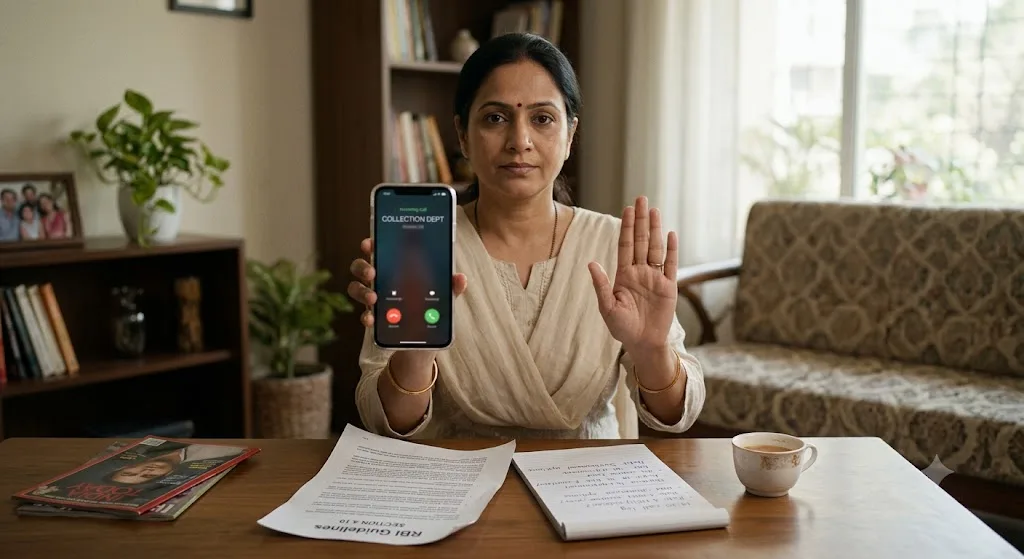
If a recovery agent contacts you outside 8 AM to 7 PM, even via WhatsApp, screenshot it with the timestamp immediately and save it. That evidence may help support a complaint. FREED's team can help you prepare that complaint if you need support.
Talk to a FREED ExpertWhat Can Recovery Agents Never Do Under RBI Rules?
These are the clear prohibitions. Any one of them, if violated, is grounds for a formal complaint.
- 1
Use abusive, threatening, or intimidating language
Agents must remain polite and factual at all times. Raised voices, insults, or threatening words are a direct violation of the Fair Practices Code, regardless of how much you owe.
- 2
Threaten you with arrest for not paying
Non-payment of a credit card bill is a civil matter, not a criminal offence. Agents have no authority to threaten arrest. If an agent tells you that you will be arrested, that statement itself is a violation of RBI Circular RBI/2022-23/108 and grounds for a complaint.
- 3
Contact your employer, family members, or friends to pressurise repayment
Recovery agents should not improperly disclose your debt information to unrelated third parties. Disclosing your loan details to any third party without your consent is strictly prohibited.
- 4
Call repeatedly on the same day
Multiple calls in a single day, designed to harass or wear you down, are not allowed.[(RBI/2022-23/108: https://www.rbi.org.in/Scripts/NotificationUser.aspx?Id=12378&Mode=0)]
- 5
Contact you during bereavements, festivals, or marriages
RBI sensitivity mandates require agents to stop contact during these periods if you inform them. [(https://freed.care/blog/rbi-guidelines-for-loan-recovery)]
- 6
Force entry into your home
An agent cannot push past your door or enter without your permission. That is trespassing and a criminal offence. [(https://vakilsearch.com/bns/sections/329)
- 7
Seize or remove personal belongings without a court order
No agent has the authority to take your property. Only a court-issued order allows asset seizure.
- 8
Lie about the amount you owe
Agents cannot inflate the outstanding amount or add charges that don't exist in your loan agreement.
- 9
Make false legal threats
Threatening a criminal case when none exists, or implying a lawsuit has already been filed when it hasn't, is a prohibited misrepresentation.
Can a Recovery Agent Visit Your Home or Office?
Yes. A recovery agent can visit you in person. But there are conditions, and they are firm.
Before any visit, the agent must give you prior notice. They cannot show up unannounced. When they arrive, they must carry a valid ID card issued by the bank and a written authorisation letter confirming they are acting on the bank's behalf. If they cannot produce both documents, you are not obligated to engage with them. (https://www.rbi.org.in/scripts/NotificationUser.aspx?Id=12848&Mode=0 )
You have the right to choose the time and place of any in-person meeting. If the proposed time doesn't work, you can reschedule. The agent must respect that. (https://rbi.org.in/Scripts/NotificationUser.aspx?Id=12378&Mode=0 )
At a workplace, the rules are stricter. The agent cannot disclose the nature of their visit to your colleagues, manager, or anyone else at your office. They cannot create a scene, raise their voice, or embarrass you in front of others. The visit must remain private and civil. If the agent does anything that draws attention to your debt situation at your workplace, that is a reportable violation.
If you ask an agent to leave your home or office, they must leave. Staying after being asked to go is trespassing. (https://vakilsearch.com/bns/sections/329 )

What the Law Says
Under the RBI's Fair Practices Code, banks may be held accountable for the conduct of authorised recovery agents. A complaint to the bank is a complaint against the bank, not just the agency it hired.
Get Free Debt AssessmentWhat Are the Special Rules for Digital Lending App Recovery?
Loan apps (app-based lending platforms) are increasingly the source of the worst recovery behaviour. Contact list scraping, mass shaming messages sent to everyone in your phonebook, bots calling from rotating numbers hundreds of times a day. These are real and documented.
The RBI Digital Lending Guidelines (updated through 2024) explicitly cover this. App-based financial companies are subject to the same Fair Practices Code as banks. They cannot access your phone contacts, photos, or location data for recovery purposes. They cannot send messages to people in your phonebook disclosing your debt. They cannot use collection bots that make automated calls in bulk or at off-hours. (https://www.rbi.org.in/scripts/NotificationUser.aspx?Id=12848&Mode=0 )
If a loan app is doing any of these things, report it to cybercrime.gov.in. If the app is not registered with the RBI, it has no legal standing to recover the debt at all. An unregistered digital lender has no authority to contact you for recovery. Any threats they make carry no legal weight. (https://www.rbi.org.in/Scripts/Sachet.aspx + https://cybercrime.gov.in )
Check whether the app appears on the RBI's list of registered NBFCs and payment aggregators before engaging with their recovery calls at all.

Are Recovery Agents Crossing the Line?
Talk to a FREED counsellor. They'll help you understand your rights and what to do next.
Talk to a CounsellorWhat Happens When Your Credit Card Debt Gets to a Recovery Agent?
When you miss credit card payments, the bank's internal system tracks it through DPD (Days Past Due). This is the number of days since your last missed payment. At first, the bank's own collections team handles outreach. This is usually automated reminders and in-house calls.
If the account continues in default, the bank flags it internally and can outsource recovery to a third-party agency. This is when most borrowers start receiving calls from numbers they don't recognise. The chain is: card issuer (the bank), then internal collections team, then an external recovery agency acting on the bank's instruction.
One important protection: the bank cannot transfer your account to a recovery agent if you have already raised a grievance (formal complaint) with the bank about the same account. The grievance must be resolved first. This is a direct protection you can use. (https://www.rbi.org.in/Scripts/BS_PressReleaseDisplay.aspx?prid=62215 )
At 90+ days past due, the account moves into NPA (loan the bank has classified as bad debt, usually after 90 days of non-payment) status. Banks track this closely because NPA classification has regulatory implications for them. This is also when banks are more open to discussing revised repayment plans, if you ask.
FREED Expert Tip
If your total EMIs eat up most of your take-home salary, speak to your bank about restructuring your repayment plan before the situation escalates to recovery agents. FREED's team can also take a look at your full picture and help you understand what's available.
Talk to a FREED ExpertWhat Are Your Options When Calls Get Threatening or Abusive?
Document first. Act second. Here's the path.
- 1
Collect your evidence.
Save call recordings, WhatsApp screenshots with timestamps, and SMS messages. Note the date, time, and phone number for every contact. A clear log of violations is your strongest protection.
- 2
Write to the bank's Grievance Redressal Officer (GRO).
Every bank must publish the GRO's contact details on its website. Send a formal email with your loan account details, a description of what happened, and the evidence you've collected. The bank is legally required to respond within 30 days. Keep a copy of everything you send. (https://taxguru.in/rbi/rbi-issues-reserve-bank-integrated-ombudsman-scheme-2026.html )
- 3
Escalate to the RBI Integrated Ombudsman.
If the bank doesn't respond in 30 days or gives you an answer that doesn't resolve anything, file online at cms.rbi.org.in. This service is free. The Ombudsman can issue binding orders against the bank and, in proven cases, can award compensation up to ₹1 lakh for mental anguish caused by the harassment. (https://taxguru.in/rbi/rbi-issues-reserve-bank-integrated-ombudsman-scheme-2026.html )
- 4
File a police complaint if threats were physical or criminal.
In cases of criminal intimidation, physical threats, or actual physical harassment, file an FIR (First Information Report) at your local police station. IPC Sections 506 (criminal intimidation) and 503 (threatening someone) apply. A missed payment is a civil matter. You are the party whose rights have been violated.
How FREED Can Help If Harassment Has Started
When recovery calls get threatening, most people don't know where to start. FREED has helped over 20,000 borrowers work through exactly this kind of situation. FREED's team can help you understand your rights clearly, and, helps you settle your loans. FREED handles the paperwork and the process so you don't have to figure it out alone.
If you're also finding it genuinely difficult to keep up with credit card payments, that's a separate conversation worth having. Settlement is not something a borrower chooses out of preference. Banks only consider it when repaying in full has become genuinely difficult. FREED's Loan Settlement Plan is for borrowers in that situation. It builds a savings fund in your name, then negotiates with the bank once sufficient funds are ready. You authorise every settlement before any money moves. The loan ends with a "Settled" mark on your CIBIL report, which stays for up to 7 years, and FREED helps borrowers settle their unpaid/overdue loans at up to 50%* less.
If that's not where you are yet, and you're still paying but stretched thin across multiple loans, FREED's Debt Consolidation Program gets all your eligible unsecured loans paid off through one new consolidated loan at a lower EMI. Your CIBIL score is not harmed. Unlike settlement, debt consolidation does not add a negative mark to your CIBIL report
One call to FREED's team is enough to understand which of these applies to your situation. No pressure. Just clarity.
How to File a Complaint Against a Recovery Agent
- 1
Document the Violation
Note the date, time, phone number, and nature of the interaction. Save call recordings, WhatsApp screenshots, or SMS with visible timestamps. Written records are your strongest protection.
- 2
Write to the Bank's Grievance Officer
Every bank must publish the contact details of its Grievance Redressal Officer (GRO) on its website. Send a formal email with your loan account details, a description of the incident, and the evidence you collected. The bank is legally required to respond within 30 days.
- 3
Escalate to the RBI Integrated Ombudsman
If the bank doesn't respond or gives an unsatisfactory answer, file online at cms.rbi.org.in. This is free. The Ombudsman can issue binding orders against the bank and, in proven cases, award compensation up to ₹1 lakh for mental anguish.
- 4
File a Police Complaint if Threats Were Physical
In cases of criminal intimidation, threats, or physical harassment, file an FIR at your local police station. IPC Sections 506 and 503 apply. You are the victim. A defaulted payment is a civil matter, not a criminal one.
What Recovery Agents Can and Cannot Do
Action | Allowed? | Notes |
Call between 7 AM and 7 PM | Yes | All channels: calls, SMS, WhatsApp |
Call before 7 AM or after 7 PM | No | Reportable RBI violation |
Ask you to repay | Yes | Must be polite and factual |
Use abusive or threatening language | No | Violates Fair Practices Code |
Contact your employer or family to pressurise | No | Strict prohibition |
Visit your home with prior notice and valid ID | Yes | Must carry authorisation letter |
Force entry into your home | No | Trespassing, criminal offence |
Claim you will be arrested for not paying | No | Non-payment is civil, not criminal |
Contact you during a bereavement or festival | No | RBI sensitivity mandates |
Access your phone contacts via app | No | RBI Digital Lending Guidelines |
This table is for general awareness only. Rules may vary by specific RBI circular updates. FREED is not a legal services provider. For advice specific to your situation, speak to FREED's counselling team or consult a legal professional.

Mohit Juneja
Mohit Juneja writes educational content at FREED on debt management, credit scores, loan repayment, and borrowing best practices. His content is shaped by expert insights and industry knowledge, helping readers better understand their financial options and make informed decisions.
mohit.juneja@freed.care

FREED is India's trusted loan management platform. Founded in 2020 and headquartered in Gurugram, FREED has counselled 20 lakh+ people on personal loans, credit cards, and app loans. FREED charges fees only on successful settlement, not upfront. FREED does not handle secured loans (home loans, car loans, gold loans).
Media Mentions