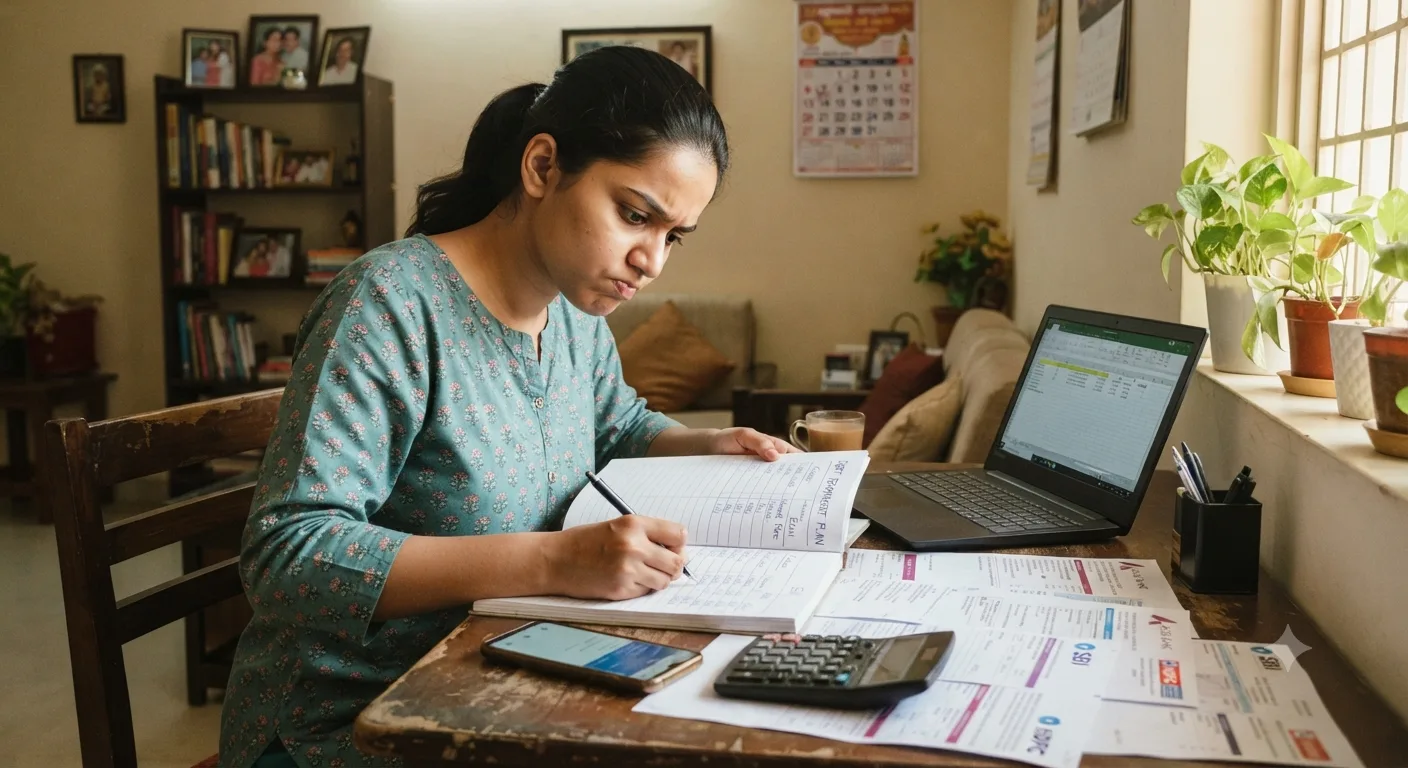
Mental Harassment by a Bank: What Counts, What You Can Do
Mental harassment is not simply a label for an unpleasant recovery call. Depending on the conduct and the forum involved, borrowers may be able to seek redress for harassment, mental anguish or loss caused by improper recovery practices. It covers a pattern of conduct, repeated abusive calls, threats, or contact with your family, designed to cause psychological distress beyond the legitimate purpose of collecting a debt. It comes with a real compensation remedy, not just a complaint.
Mohit Juneja
Reviewed by FREED India, Debt Resolution Specialists
 4.7/5
4.7/5 ₹3,200Cr+
 20,000+
 20,00,000+4.7/5₹3,200Cr+20,000+20,00,000+
KEY TAKEAWAYS

Mental harassment by a bank is a specific legal claim, not just any unpleasant recovery call.
Under the applicable RBI Ombudsman framework, compensation may be available for mental anguish, harassment and loss of time, subject to the scheme's conditions and the facts of the complaint.
A threatening statement about arrest may amount to criminal intimidation where the facts satisfy the elements of Section 351 of the BNS. An unpaid loan by itself does not automatically make a borrower liable to arrest.
Filing a mental harassment claim doesn't erase the underlying debt, it addresses the conduct, not the amount owed.
You're entitled to file for free, no lawyer required, at the RBI Ombudsman or your district Consumer Dispute Redressal Commission.
What Counts as Mental Harassment by a Bank?
Harassment is often easier to establish when there is a documented pattern of conduct, but a single serious incident should also be documented and assessed on its own facts. Examples may include repeated abusive or threatening communications, improper disclosure of debt information, intimidation, or other collection practices that go beyond legitimate recovery activity.
It's worth being clear about what this isn't. A bank reminding you of an overdue payment, even repeatedly, isn't harassment on its own, that's ordinary follow-up on a legitimate debt. The line sits where conduct stops serving the purpose of collection and starts serving the purpose of causing distress.
This article stays focused specifically on the legal claim, what counts, and what you can actually get for it. FREED already has full conduct checklists elsewhere covering exactly what recovery agents can and can't do, calling hours, disclosure requirements, and the rest, in the guide on how to handle bank recovery agents and know your rights. That's worth reading if you're still working out whether specific conduct crosses a line. This piece picks up from there, at the point where you're asking a different question: what does the law actually call this, and what can you do about it?

Not Sure If What You're Facing Counts?
Talk to FREED, free and confidential.
Talk to a FREED CounsellorWhy "Mental Harassment" Is a Specific Legal Term, Not Just a Feeling
"Mental harassment" isn't a vague, catch-all complaint category, it's a specific term that appears directly in the RBI Ombudsman Scheme and in Consumer Protection Act language as "mental agony," each carrying its own defined, claimable remedy attached to it.
This distinction matters more than it might seem at first. A general rights complaint asks a bank to stop conduct that's already crossed a line, it's forward-looking, aimed at making bad behaviour stop. A mental harassment claim is different, it asks for compensation for harm that's already been caused, looking backward at what happened and what it cost you, not just forward at what should change. If the conduct you're dealing with is closer to a registered lender's recovery agent overstepping specific rules, rather than the deeper question of harassment and compensation, FREED's guide on recovery agent harassment and the RBI complaint process covers that ground in detail.
This is the specific angle this article focuses on, the legal definition and the compensation route, not a re-explanation of the general "what recovery agents can and can't do" ground already covered elsewhere on freed.care. If you haven't already, understanding the baseline rules first, covered in FREED's guide on RBI's guidelines for recovery agents, gives useful context for judging where ordinary follow-up ends and harassment genuinely begins.

What the Law Says
Under the RBI's RB-IOS (Reserve Bank - Integrated Ombudsman Scheme) 2026, the Ombudsman can award compensation of up to ₹3 lakh specifically for mental harassment and loss of time, at no cost to the complainant.
Talk to FREED's TeamWhat Can You Actually Get for Mental Harassment by a Bank?
Two real compensation routes apply here, worth understanding concretely rather than in the abstract.
The RBI Ombudsman, under RB-IOS 2026, effective from July 1, 2026, can award compensation of up to ₹3 lakh for loss of time, expenses incurred, and harassment or mental anguish. This sits separately from, and on top of, the Ombudsman's power to award up to ₹30 lakh for consequential loss suffered due to a deficiency in service. Beyond compensation, the Ombudsman can also direct the bank to actually fix the underlying issue behind the complaint.
The Consumer Protection Act 2019 route, filed at your district Consumer Dispute Redressal Commission, allows a claim specifically for mental agony and harassment where the conduct caused documented distress. Unlike the Ombudsman's defined cap, compensation here is decided case by case, based on the specifics of what happened and what you can demonstrate.
It's worth being direct about one thing: compensation isn't automatic under either route. Both depend on the severity of the conduct and, just as importantly, the quality of the evidence you're able to present. RBI itself has clarified this explicitly, the compensation ceiling is not a guaranteed payout, it's a cap on what can be awarded when a case is properly established.
FREED Shield helps a borrower understand which of these two routes actually fits their situation and helps prepare the complaint itself, without filing it on the borrower's behalf, that step stays with you throughout.
Understand Your Options With FREED Shield
Know your rights before you file.
Talk to FREED About Recovery HarassmentHow Do You Prove Mental Harassment Happened?
This is where most claims actually succeed or fail, so it's worth being specific about what genuinely strengthens a case.
A documented pattern, not one call. Dates, times, and a short summary of each contact, kept consistently rather than reconstructed from memory weeks later. A pattern is what distinguishes harassment from an isolated bad interaction, and documentation is the only thing that reliably proves a pattern exists.
The exact language used, especially anything threatening or abusive, written down as close to verbatim as you can manage immediately after the call. The specific words matter more than a general impression that "they were rude."
Preserve call recordings, messages and screenshots where lawfully available. Their evidentiary value can depend on the circumstances and the forum hearing the complaint. These are often the single strongest piece of evidence in any harassment claim, since they remove any ambiguity about what was actually said.
The agent's name, and the bank or agency they claimed to represent. This ties specific conduct to a specific, identifiable source, which matters when a bank later reviews the complaint internally.
Here's the honest reality worth stating plainly: A single rude call may be harder to establish as serious harassment without additional context or evidence, but it should still be documented, particularly if the conduct escalates.

Freed Expert Tip
Start a simple log the first time something crosses the line, date, time, what was said. A pattern is what makes a mental harassment claim credible, not one bad call remembered weeks later.
Check your optionsWhere Do You File for Compensation?
Comparison Table: Where to File
Route | What It's For | Typical Cost |
RBI Ombudsman | Pattern of harassment, no criminal threat involved | Free |
Consumer Dispute Redressal Commission | Documented mental agony or financial harm, no lawyer required | Free to low filing fee |
Police / FIR | Criminal intimidation, threats of arrest, impersonation, physical threats | Free |
FREED Shield can help you work out which route genuinely fits your specific situation before you file anything, though the borrower is always the one who submits the complaint itself. If instead the account has already moved deep into recovery and you're trying to understand where things stand there, FREED's explainer on NPA classification and the SMA recovery stages is worth reading alongside this piece.
What This Doesn't Cover
It's worth being direct about the limits here, since it changes how you should think about a claim like this.
A mental harassment claim addresses the conduct, it does not erase, reduce, or pause the underlying debt. The amount you owe still exists, and it can still accrue interest and charges while a complaint is pending, filing doesn't put the debt itself on hold. Compensation isn't automatic or guaranteed either, both routes assess severity and evidence on a case-by-case basis, not a fixed formula.
This also isn't a substitute for actually addressing the debt itself. If repayment has genuinely become impossible for you, that's a separate conversation entirely, about settlement or consolidation, not something a harassment claim resolves on its own. If you're dealing with harassment on a credit card specifically rather than a personal loan, FREED's guide on credit card recovery agent harassment and your legal rights covers that product-specific angle.
FREED helps address both sides, the harassment and the underlying debt, but through genuinely separate, appropriately matched channels, not by folding one into the other.
What the Law Says
A threat to have you arrested over an unpaid loan is criminal intimidation under BNS Section 351, since an unpaid loan is a civil matter, not a criminal one.
Check your optionsHow FREED Helps
FREED does not file complaints on a borrower's behalf, and it doesn't directly stop harassment itself. It's worth being precise about that upfront, rather than overstating what FREED Shield actually does for you.
When recovery conversations cross the line into abusive, threatening, or harassing behaviour, FREED provides an added layer of support through FREED Shield, a dedicated borrower-support service. FREED Shield can help you understand the appropriate route and prepare the complaint or supporting documents. The borrower remains responsible for submitting the complaint.
In practice, that means FREED Shield helps you recognise what genuinely crosses the line, based on everything covered in this article, and helps prepare a complaint or letter reflecting the actual pattern and evidence you've gathered, but you file it yourself. If the harassment is tied to a debt that's also become genuinely unmanageable, that's a separate matter, and FREED's Debt Resolution or Debt Consolidation Programs address that side specifically, once the harassment itself is being handled through the right channel.
What Helps If You're Considering a Mental Harassment Claim
- Start documenting from the first incident that crosses the line. Don't wait until it's happened many times to begin, a log started early is far stronger than one reconstructed after the fact.
- Keep records in one place. A dated notes app entry or a single dedicated folder works well, the point is consistency, not sophistication.
- Know which route fits before filing. The Ombudsman for a pattern of conduct, police for a criminal threat, don't default to the wrong one just because it's the first thing that comes to mind.
- Remember the underlying debt is a separate matter. Addressing it doesn't require dropping a harassment claim, and pursuing a harassment claim doesn't require ignoring the debt, the two can be handled in parallel, through their own appropriate channels, and FREED's guide on who a recovery agent actually is and what they're allowed to do is a useful reference point if you're unsure whether the person contacting you even holds that role legitimately.
A free conversation with FREED can help sort out which parts of your situation need which kind of help, rather than trying to force everything through a single channel.
Sources
Claim | Source |
The RBI Ombudsman can award compensation of up to ₹3 lakh for mental harassment, anguish, and loss of time, and up to ₹30 lakh for proven consequential financial loss | RB-IOS 2026 FAQs, rbi.org.in, Reserve Bank of India, effective July 1, 2026 |
A complaint can be filed with the RBI Ombudsman if unresolved within 30 days of the bank complaint, and must reach the Ombudsman within 90 days of that window closing | Same RB-IOS 2026 FAQs, Reserve Bank of India |
A threat to injure a person's body, reputation, or property, including a threat of arrest, to cause alarm or compel action, is criminal intimidation under BNS Section 351 | Bharatiya Nyaya Sanhita, 2023, Section 351 |

Mohit Juneja
Mohit Juneja writes educational content at FREED on debt management, credit scores, loan repayment, and borrowing best practices. His content is shaped by expert insights and industry knowledge, helping readers better understand their financial options and make informed decisions.
mohit.juneja@freed.care

FREED is India's trusted loan management platform. Founded in 2020 and headquartered in Gurugram, FREED has counselled 20 lakh+ people on personal loans, credit cards, and app loans. FREED charges fees only on successful settlement, not upfront. FREED does not handle secured loans (home loans, car loans, gold loans).
Media Mentions