Payment Recovery Agents: Who They Are and What Rights You Have
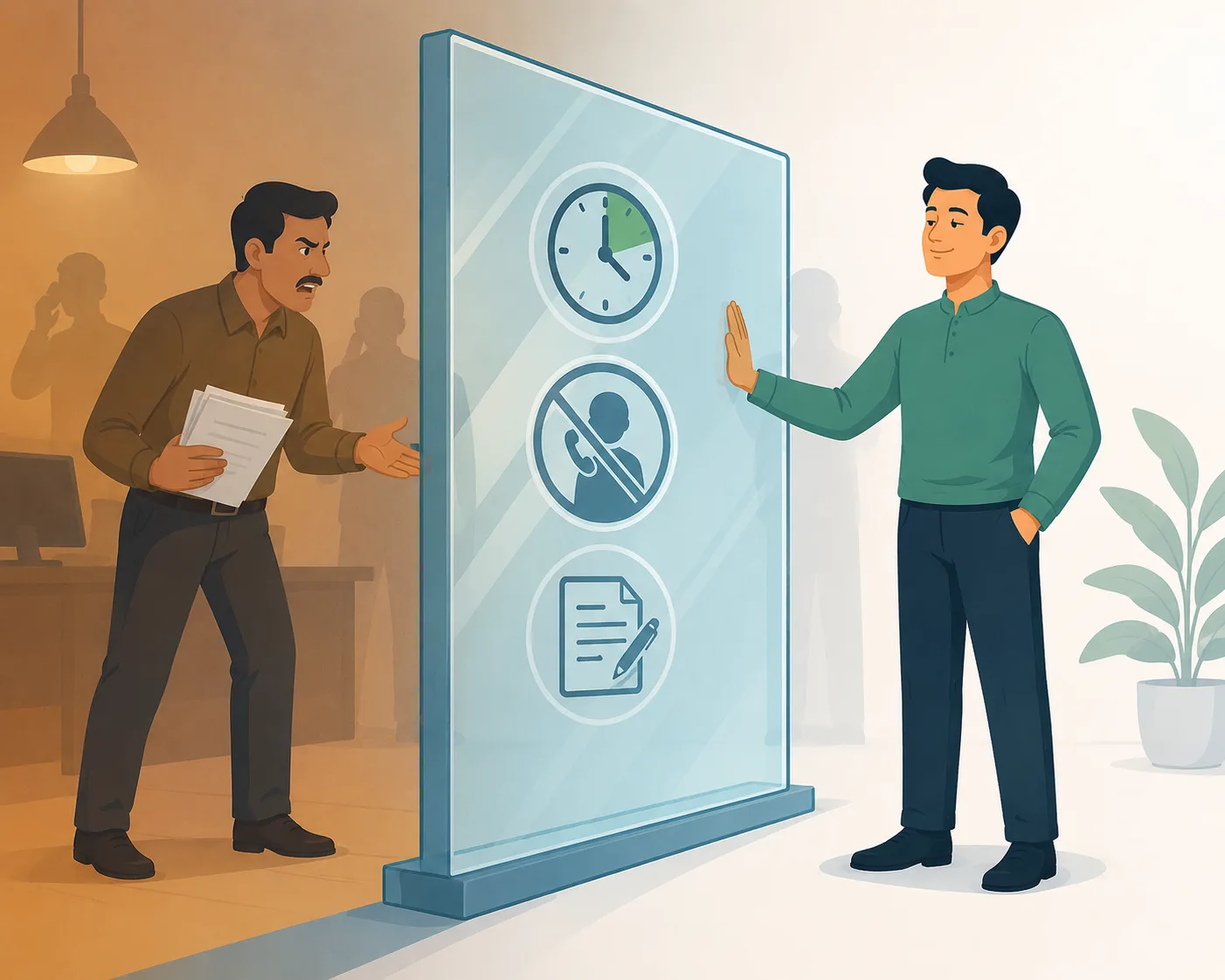
Payment recovery agents are people hired by banks or financial companies to collect overdue loan payments from borrowers. They work on behalf of the bank, not the courts, not the police. Under RBI rules, they must follow strict limits on when they can call, what they can say, and who they can contact.

Mohit Juneja
Reviewed by FREED India, Debt Resolution Specialists
 4.7/5
4.7/5 ₹3,200Cr+
 20,000+
 20,00,000+4.7/5₹3,200Cr+20,000+20,00,000+
Key Takeaways

Payment recovery agents can only call between 8 AM and 7 PM. Calls outside this window break RBI rules.
Recovery agents should not disclose your loan information to unrelated third parties or discuss your loan with family members or your employer.
RBI has been tightening agent oversight, including stronger feedback and tracking on recovery agencies with repeat violations.
Banks remain responsible for overseeing authorised recovery agents and addressing complaints regarding their conduct.
If the bank does not resolve your complaint within 30 days, you can escalate to the RBI Ombudsman online for free.
What Is a Payment Recovery Agent and What Do They Actually Do?
A payment recovery agent is a person or agency a bank or NBFC (non-bank financial company) hires to follow up when EMIs go unpaid. Here is how it usually plays out. The bank assigns your overdue account to the agent. The agent contacts you to remind you of the amount and to discuss repayment.
Their job is to collect or negotiate, not to punish you. They are not police, not court officials, and not bailiffs. They have no legal power beyond what the bank has authorised them to do.
A loan is usually marked as an NPA (a loan the bank classifies as bad, generally after 90 days of missed payment) before recovery activity becomes more serious. Banks are also expected to address or respond to any complaint you've already raised before pushing the matter further with an agent.
Recovery agents calling you is a sign the bank wants repayment, not a sign of legal trouble already underway.

What Rules Do Payment Recovery Agents Have to Follow?
RBI sets clear limits on how recovery agents must behave. Here is the full list.
- They can only contact you between 8 AM and 7 PM.
- They must use polite, professional language at all times.
- They cannot threaten you in any way.
- They must carry a valid ID card.
- They must carry a written authorisation letter from the bank.
- They should not discuss your loan with your family or employer.
- They cannot discuss your loan or default status publicly.
- Banks are expected to maintain records of recovery communication as part of their oversight obligations.
- Banks are generally expected to inform you before assigning your account to a recovery agent, though specific timelines may vary by bank and loan type.
- Agents are expected to be trained before they're allowed to contact borrowers.
These rules exist under RBI's Fair Practices Code for banks and NBFCs.

FREED Expert Tip
Every recovery agent must show you an ID and an authorisation letter from the bank. Ask for it before any conversation.
Read MoreWhat Can a Payment Recovery Agent Not Do?
If any of this happens to you, it is not just follow-up. It is harassment, and it is against the rules.
- They cannot call before 8 AM or after 7 PM.
- They cannot use abusive or threatening language.
- They cannot shout, insult, or intimidate you.
- They should not contact your relatives, employer, or neighbours about your loan.
- They cannot create a public scene or shame you.
- They should not visit your home without prior notice or outside reasonable hours.
- Recovery agents are not authorised to seize your property. Any seizure of assets requires a proper court process.
- They cannot falsely claim that the police will arrest you. Debt is a civil matter, not a criminal one.
- They cannot impersonate a police officer, lawyer, or court official.
Criminal intimidation, like a direct threat, can fall under the Bharatiya Nyaya Sanhita (BNS) Section 351 or IPC Section 506 in states where IPC still applies. Unfair recovery practices can also be challenged under the Consumer Protection Act, 2019.

What the Law Says
Under RBI guidelines, the bank is legally responsible for every action its recovery agent takes. Banks may be held accountable for the conduct of authorised recovery agents acting on their behalf.
Talk to a FREED ExpertHow to Stop Recovery Agent Harassment, Step by Step
- 1
Document everything from today.
Start saving call logs, screenshots of messages, WhatsApp chats, and details of any visit. Write down the date, time, and what was said. This is your evidence. Without it, complaints are harder to act on.
- 2
Ask for the agent's authorisation letter.
Every agent must carry a letter from the bank saying they're authorised to contact you. Ask for it at the start of any interaction. If they can't show one, note that down and include it in your complaint.
- 3
Send a written complaint to the bank.
Email the bank's Grievance Redressal Officer. You can find their name and email on the bank's website; banks are required to publish this. Include the dates, the agent's name if you have it, what happened, and copies of your evidence. Ask for a written response.
- 4
Escalate to the RBI Ombudsman.
If the bank does not act within 30 days of receiving your complaint, you can file online at cms.rbi.org.in. It is free and you do not need a lawyer. Attach your complaint history and evidence. The RBI can review the complaint and direct the bank to address the concerns raised.
- 5
File a police complaint if threatened.
If an agent has made a direct threat, said you will be arrested, or visited your home in a threatening way, you can file an FIR for criminal intimidation. Speak to a legal adviser on which section applies in your state, as this depends on current law in your jurisdiction.

Getting Harassed? We'll Help You Handle It.
Free assessment. No commitment. A counsellor who knows your rights.
Talk to a Free CounsellorHow to File a Complaint Against a Recovery Agent
There's a clear order to follow if a recovery agent has crossed the line.
- Start with the bank's Grievance Redressal Officer. Every bank and NBFC is required to publish this contact on their website. Send a written complaint: the date and time of the incident, what was said or done, and the action you want taken. Ask for a complaint reference number so there's a paper trail.
- If the bank doesn't respond in 30 days, escalate to the RBI Ombudsman. This is done through the RBI CMS portal at cms.rbi.org.in. It's completely free, and you don't need a lawyer to file. Attach your written complaint, your evidence, and the bank's response, or lack of one.
- If there's a criminal threat, go to the police. Threats of arrest, violence, or any criminal intimidation can be reported as an FIR. The section that applies may depend on your state and current law a lawyer or legal aid centre can guide you quickly on this. You don't have to choose one path over the other; the police complaint and the RBI complaint can both run at the same time if needed.
This isn't a complicated process, and it doesn't cost anything. It's built specifically so a borrower can use it without legal help.
What Happens to Your Loan If Recovery Calls Have Already Started?
Recovery calls usually start after a couple of missed EMIs. If the account stays unpaid for around 90 days, the bank classifies it as an NPA (a loan marked as bad on the bank's books). Left unresolved, this can lead to further legal notices and a lasting impact on your CIBIL score.
At this stage, you have a few real options.
You can talk to the bank directly about a revised repayment plan. You can ask for restructuring, meaning a longer repayment period with a lower EMI, so the monthly amount becomes manageable again.
Settlement is not something a borrower chooses out of preference. Banks only consider it when you are in genuine financial difficulty and are truly unable to repay the full amount. It is a last resort, not a shortcut.
If you've reached that point, FREED's Debt Resolution Program can work with your bank to bring your total outstanding down by up to 50%*, depending on your case. FREED's counsellors handle the back-and-forth with the bank and help get your settlement documented properly, so you're not doing it alone.
Tips for Dealing With Recovery Agents Calmly and Legally
A few habits make these calls easier to manage.
Keep a record of every call: date, time, and what was said. Save screenshots of any messages. If you speak to an agent, you can say plainly, "I am aware of RBI guidelines, please limit communication to email," and that is a reasonable boundary to set.
Ask for the agent's authorisation letter at the start of any interaction. You're entitled to see it before discussing anything further.
Your debt is real, and the bank has the right to follow up on it. But you have an equal right to dignity and fair treatment while that follow-up happens.
Not Sure Where You Stand?
Talk to someone who understands debt resolution and borrower rights.
Book My Free CallWhat Recovery Agents Can and Cannot Do Under RBI Rules
Action | Allowed | Not Allowed |
Calling hours | 8 AM – 7 PM only | Calls before 8 AM or after 7 PM |
Language | Polite, professional | Threats, abuse, shouting |
Contacting family | Only to locate you if you're genuinely unreachable | Discussing your loan with relatives or your employer |
Home visits | With prior notice, during reasonable hours | Unannounced visits, public scenes |
Identification | Must show ID and authorisation letter | Cannot refuse to identify themselves |
Legal threats | Can state that legal action is a real possibility | Fake arrest threats, impersonating law enforcement |
Recovery agents work under instructions from the bank, not the courts. An unpaid loan is a civil matter, not a criminal offence. This table is for general awareness; specific rules may vary by loan type and bank.

Mohit Juneja
Mohit Juneja writes educational content at FREED on debt management, credit scores, loan repayment, and borrowing best practices. His content is shaped by expert insights and industry knowledge, helping readers better understand their financial options and make informed decisions.
mohit.juneja@freed.care

FREED is India's trusted loan management platform. Founded in 2020 and headquartered in Gurugram, FREED has counselled 20 lakh+ people on personal loans, credit cards, and app loans. FREED charges fees only on successful settlement, not upfront. FREED does not handle secured loans (home loans, car loans, gold loans).
Media Mentions