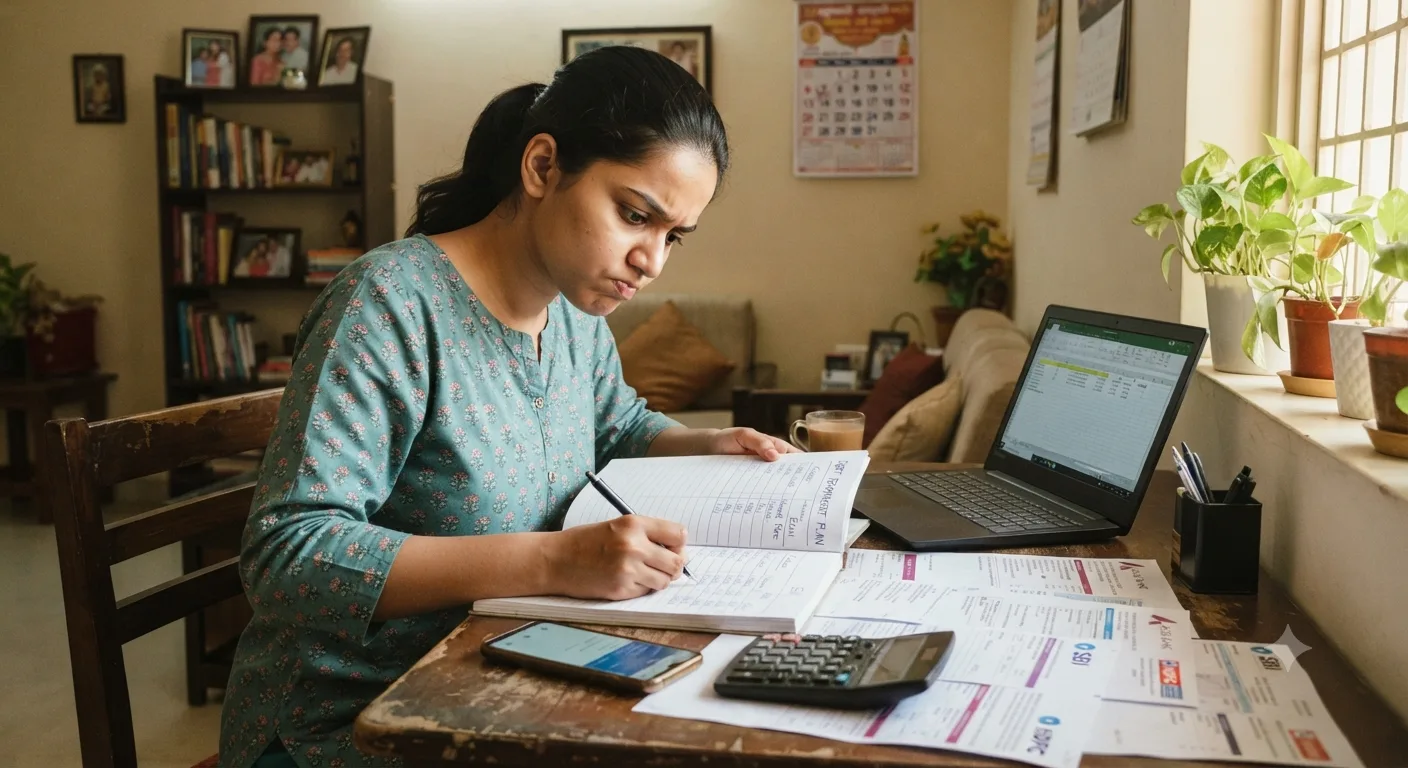
How to Handle Bank Recovery Agents: Know Your Rights
How to avoid bank recovery agents means knowing the RBI rules that limit what agents can do, and using those rules to protect yourself when calls, visits, or threats cross the line. The law gives you rights and options if recovery activity crosses the line. You don't have to accept every call, every visit, or every threat. The law gives you tools to push back. This article tells you exactly what they are.

Mohit Juneja
Reviewed by FREED India, SEO Intern
 4.7/5
4.7/5 ₹3,200Cr+
 20,000+
 20,00,000+4.7/5₹3,200Cr+20,000+20,00,000+
Key summury

Recovery agents can only contact you between 8 AM and 7 PM. Contact outside these hours is a direct RBI violation
Recovery agents should not improperly disclose your loan information to unrelated third parties. This is a privacy breach under RBI's Fair Practices Code
Under RBI's updated directions, banks are expected to maintain records of agent interactions. You can formally request these records from your bank.
You have the right to file a written complaint with your bank. If it goes unanswered, you can escalate to the RBI Integrated Ombudsman at zero cost
From 2026, RBI directions require recovery agents to hold a certification from the Indian Institute of Banking and Finance (IIBF). An agent without this is not operating within the expected guidelines.
What Exactly Are Bank Recovery Agents and Why Are They Calling You?
A recovery agent is not a police officer and has no power to arrest anyone. They are a third-party contractor, hired by a bank or NBFC (non-bank loan company) to follow up on overdue loan payments. Their only authority comes from a contract between the bank and the agency that employs them. Nothing more.
When a loan goes unpaid for a while, the bank typically tries calling from its own team first. If that does not lead anywhere, the account may be handed to a recovery agency. When a loan goes unpaid for a while, the bank typically tries calling from its own team first. If that does not lead anywhere, the account may be handed to a recovery agency. Under RBI guidelines, banks are expected to give you written notice before a recovery agent makes contact.
From July 1, 2026, every individual recovery agent must hold a certification from the Indian Institute of Banking and Finance (IIBF) before they can contact any borrower. This is meant to make sure the person calling you actually understands the rules they have to follow.
One more thing worth knowing: the bank stays responsible for its agent's conduct. If an agent behaves badly, the bank can be held accountable, not only the agency or the individual.
What Are Your Legal Rights When Recovery Agents Contact You?
These are not favours the bank is choosing to extend. They are rights you already hold.
The right to fair timing. Recovery agents can only contact you between 8 AM and 7 PM. No calls, visits, or messages outside this window, on any day of the week.
The right to privacy. An agent cannot tell anyone else about your loan, not your employer, not your family, not your neighbours. Sharing this information with a third party is a breach of RBI's Fair Practices Code, and can also fall under the Digital Personal Data Protection Act, 2023.
The right to dignity. Shouting, abusive language, or threats have no place in a recovery call. None of this is allowed, regardless of how overdue your payment is.
The right to identification. Every agent must carry an ID card and a written authorisation letter from the bank. You can ask to see both before discussing anything with them.
The right to be contacted appropriately. The right to be contacted appropriately. RBI guidelines state that a female borrower should be contacted only by a female agent.
The right to records. The right to records. Under RBI's updated directions, banks are expected to maintain a digital record of agent interactions. You can formally request these records from your bank.
If an agent threatens you with arrest over an unpaid loan, that behaviour may amount to criminal intimidation under the Bharatiya Nyaya Sanhita (BNS) 2024, Section 351. Consult a legal professional if this happens.

What the Law Says
Under RBI's Fair Practices Code, a bank is directly responsible for every action its recovery agents take. Banks may be held accountable for the conduct of authorised recovery agents. , not just the agent.
Know Your Recovery Agent RightsWhat Recovery Agents Cannot Legally Do: The Hard Limits
If you are reading this because someone is threatening you right now, here is what actually crosses the line.
An agent cannot call you between 7 PM and 8 AM. An agent cannot contact your employer, neighbours, or family about your loan without your consent. An agent cannot threaten you with arrest. A default on an unsecured loan is a civil matter — an agent has no legal authority to threaten criminal action.
In September 2024, RBI fined HDFC Bank ₹1 crore for recovery agents contacting customers outside permitted hours, among other compliance failures. Banks are watched.
If something an agent says or does does not match this list, that is worth writing down immediately.

Getting Threatening Calls From Recovery Agents?
Talk to a FREED counsellor about your options and your rights.
Talk to a CounsellorHow to Document Recovery Agent Calls the Right Way
Many borrowers want to push back against harassment but have nothing written down to support a complaint. This is usually why complaints go nowhere.
Every time an agent contacts you, note down four things: the date and time, the agent's name (ask for it directly), the bank or agency they say they represent, and exactly what was said. If the call happened outside 8 AM to 7 PM, note that clearly too.
Recording a call yourself is permitted in India when you are a party to the conversation. A simple written log even three lines per call in a notes app holds up better over time than relying on memory later.
If a call turns aggressive, you do not need to argue back or defend yourself. Note what happened and end the call. You can always follow up in writing afterward.
Banks are required to keep their own digital recordings of every agent interaction. You have the right to formally request these from your bank, and if they cannot produce them, that is itself worth raising as a separate concern.
Expert Tip
Before your next call from an unknown number, save the agent's name, bank name, and call time in a notes app. A short log written right after the call is worth more than trying to remember the details an hour later.
Read FREED's Guide to Filing a ComplaintStep-by-Step: How to File a Complaint Against a Recovery Agent
You can do every one of these steps yourself.
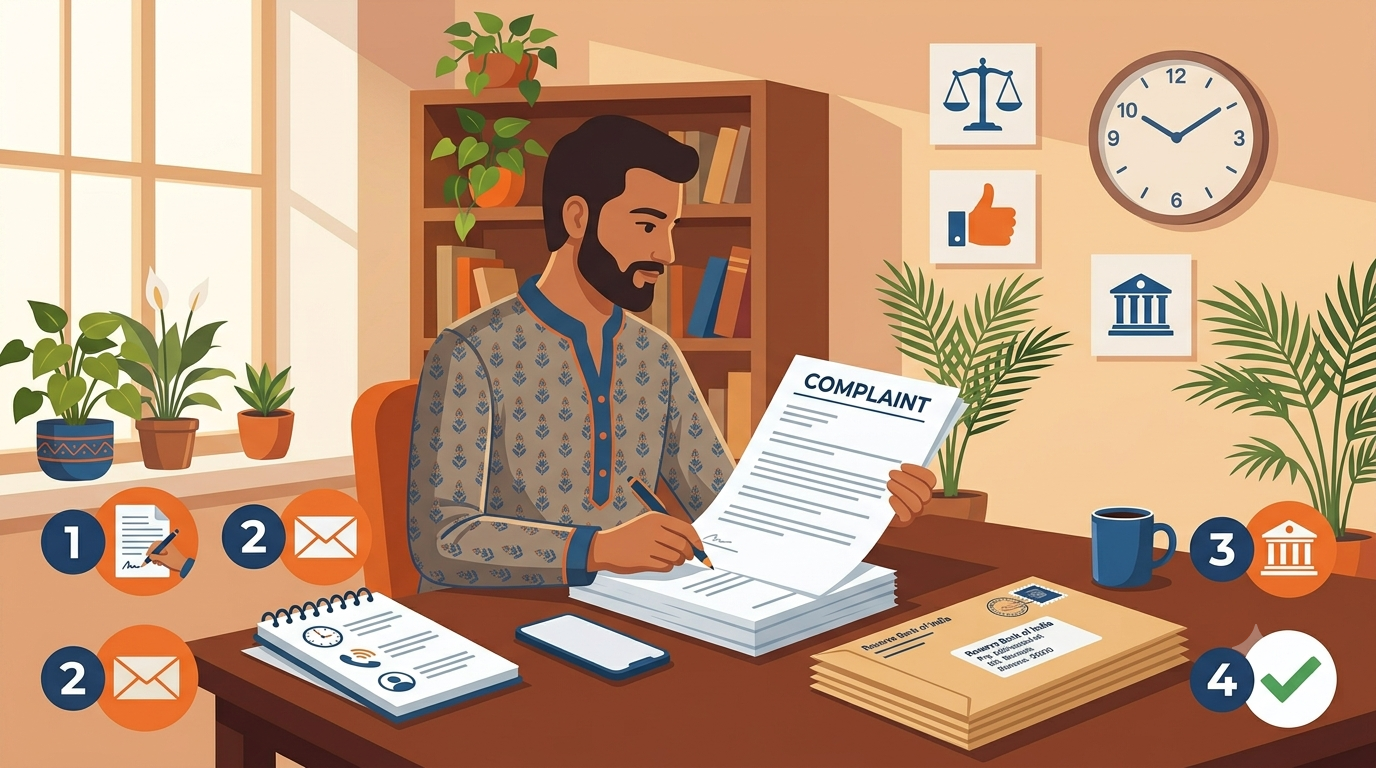
1) Write a formal complaint to the bank's Nodal Officer (the bank's designated contact for borrower grievances), with your call log attached.
2) Get a written acknowledgment from the bank confirming they have received your complaint.
3) Give the bank up to 30 days to respond and resolve the issue.
4) If the bank doesn't respond, or the response is unsatisfactory, escalate to the RBI Integrated Ombudsman at cms.rbi.org.in. This is free of cost.
5) If you have been threatened with physical harm, file an FIR at your local police station citing the threat under BNS 2024 Section 351.
6) For broader consumer protection violations, you can also approach a Consumer Court under the Consumer Protection Act, 2019.
If at any point this feels like too much to manage on your own, especially while everything else is also weighing on you, FREED's counsellors can help you put together your complaint and walk through these steps with you.
How to Reduce Unwanted Recovery Agent Contact
If a loan is genuinely owed, you cannot legally make all contact stop completely. What you can do is control how, when, and how often you are contacted.
Once you file a written complaint, the bank's grievance process begins and further contact outside that process goes against RBI guidelines. If contact continues in a way that breaks the Fair Practices Code, note it and escalate to the Ombudsman.
You can also ask the bank to switch to written communication only, such as email or registered post, instead of phone calls. This is not something the bank is legally required to agree to, but many banks accommodate it to avoid further complaints.
Recovery on a genuine debt does not disappear just by asking. But the way it happens, and how much it is allowed to disrupt your day, is something you have real say over.
What Are Your Options If the Debt Is Real and You Still Can't Pay?
If the calls are the immediate problem, the debt itself is usually the deeper one. It helps to know what comes next once you understand your rights and available options. Start by talking to the bank directly about your options. Ask whether your EMI can be lowered by extending your repayment time, whether a short payment pause is possible, or whether the loan plan itself can be changed to fit your current income.
If your income has genuinely stopped, and repaying in full is no longer realistically possible, loan settlement is the option that exists for that situation. Settlement is not something a borrower chooses out of preference. Banks and financial companies only consider it when you are in a genuine financial difficulty and are truly unable to repay the full amount.
If you go this route, know that your CIBIL report will show a "Settled" mark for up to 7 years, and the waiver you receive depends on your bank and your case, with FREED helps borrowers settle their unpaid/overdue loans at up to 50%* less.
FREED is available to help with this process for borrowers who decide settlement is the right path, handling the paperwork and the conversation with the bank. It is one option among the ones listed here, not the only path forward.

Common Myths About Bank Recovery Agents in India
A lot of fear around recovery calls comes from things that simply are not true.
Myth: Recovery agents can have me arrested. Fact: No. A default on an unsecured loan is a civil matter, not a criminal one. There is no arrest power here.
Myth: They can seize my phone or furniture. Fact: No agent has the authority to seize anything from you without a proper court order.
Myth:If they call my employer, there's nothing I can do. Fact: Contacting your employer about your loan goes against RBI's Fair Practices Code. Document it and file a written complaint with the bank.
Myth: Filing a complaint will make things worse. Fact: A written complaint puts the bank on record and gives you a formal escalation path if the behaviour continues.
Myth: I have to stay on the call every time they call. Fact: You can end the call the moment it turns threatening or abusive. You don't owe anyone an explanation on the spot.
Are You in a Loan Trap? Quick Check
Move the slider to your total EMIs as a % of monthly salary. See your debt stress level instantly.
EMIs as % of Monthly Salary

Mohit Juneja
Mohit Juneja writes educational content at FREED on debt management, credit scores, loan repayment, and borrowing best practices. His content is shaped by expert insights and industry knowledge, helping readers better understand their financial options and make informed decisions.
mohit.juneja@freed.care

FREED is India's trusted loan management platform. Founded in 2020 and headquartered in Gurugram, FREED has counselled 20 lakh+ people on personal loans, credit cards, and app loans. FREED charges fees only on successful settlement, not upfront. FREED does not handle secured loans (home loans, car loans, gold loans).
Media Mentions