Credit Card Recovery Agents Harassment: What Is Illegal and What You Can Do
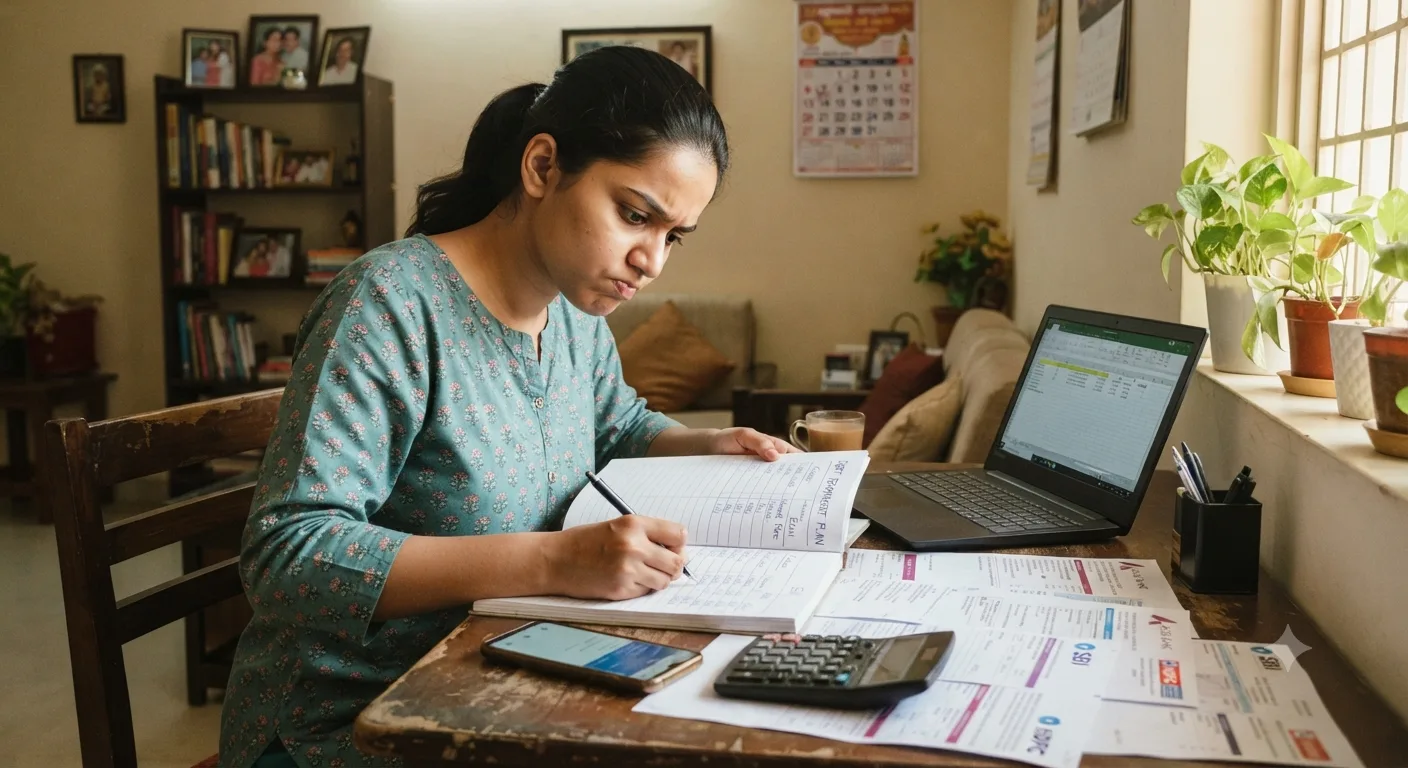
Credit card recovery agent harassment happens when a collection agent, hired by a bank or NBFC (non-bank loan company) to recover unpaid credit card dues, crosses the line from legal recovery into illegal conduct. This includes calls before 8 AM or after 7 PM, threats of arrest, contacting your family or employer, abusive language, and public shaming. RBI guidelines set clear expectations for how recovery agents should communicate with borrowers. If you believe those guidelines have not been followed, you can raise a complaint. . You have clear rights and a step-by-step complaint process to use them.

Mohit Juneja
Reviewed by FREED India, Debt Resolution Specialists
 4.7/5
4.7/5 ₹3,200Cr+
 20,000+
 20,00,000+4.7/5₹3,200Cr+20,000+20,00,000+
KEY TAKEAWAYS

Credit card recovery agents' harassment is illegal under RBI's Fair Practices Code and the RBI Master Direction on Outsourcing; banks are responsible for what their agents do
Agents can only call between 8 AM and 7 PM; calls outside these hours are a direct violation
Contacting relatives, neighbours, friends, or your employer about your credit card dues is prohibited, even once
Threatening arrest for a credit card default is a lie; non-payment of credit card bills is a civil matter, not a criminal one, unless there is proven fraud
If the bank does not resolve your harassment complaint within 30 days, the RBI Ombudsman can step in and award up to ₹1 lakh for mental anguish
What Counts as Credit Card Recovery Agent Harassment Under RBI Rules?
There is a clear line between legal recovery and illegal harassment. Recovery is legal. An agent calling you to remind you of dues, asking when you can pay, or explaining the consequences of continued non-payment is allowed. What crosses into harassment is specific and prohibited under RBI's Fair Practices Code.
Here is what agents cannot do:
- Call before 8 AM or after 7 PM, on any day
- Use abusive, threatening, or humiliating language on the call or in person
- Threaten arrest, police action, or criminal consequences for an unpaid credit card bill
- Call your mother, spouse, neighbour, colleague, or employer to mention your dues
- Visit your workplace in a way that discloses your debt to colleagues or embarrasses you publicly
- Impersonate a police officer, lawyer, or court official
- Call from multiple numbers to get around call blocking
Imagine an agent calling your mother to say you owe ₹80,000. That single call is a violation. Under RBI's Master Direction on Outsourcing (RBI Circular BC 21 on Fair Practices Code), every agent must carry an official ID card and a letter of authorisation from the bank. The bank holds vicarious liability (full legal responsibility) for every action the agent takes. If the agent crosses the line, the bank is the one who must answer for it.
Why Do Credit Card Recovery Agents Use Harassment Tactics?
Third-party collection agencies are often paid based on how much they recover. More money collected means more commission. That pressure leads some agents to use tactics that are faster and more frightening than anything a polite reminder call could achieve.
The late-night call at 11 PM. The "you'll be arrested tomorrow" threat. The call to your HR asking them to pressure you. None of these is a legitimate recovery method. These practices can be distressing for borrowers and are not in line with RBI's expectations for recovery conduct.
Under RBI rules, banks must publish a list of all empanelled recovery agencies on their website. Agents must have IIBF (Indian Institute of Banking and Finance) certification. Banks face regulatory penalties, including suspension of all recovery activities, when their agents are found to have engaged in misconduct.
The harassment is not a sign of how serious your situation is. It does not necessarily reflect the seriousness of your financial situation.
Ramesh is receiving 20 calls a day and has started avoiding his phone entirely. That is not a resolution. That is pressure without purpose, and it is illegal.

What the Law Says
Under the RBI's Fair Practices Code, the bank is fully responsible for its recovery agent's conduct. Harassment by the agent is treated as harassment by the bank itself.
For the full complaint process, seeWhat Specific Behaviours Are Illegal When Recovering Credit Card Dues?
Eight things a credit card recovery agent cannot legally do:
- 1
Call outside 8 AM to 7 PM.
Any call before 8 AM or after 7 PM is a direct violation of RBI's time-restriction rule. No exceptions.
- 2
Use abusive or threatening language.
Shouting, swearing, insulting, or humiliating a borrower on a call is prohibited. This applies to WhatsApp messages too.
- 3
Threaten arrest for an unpaid credit card bill.
Credit card default is a civil matter in India, not a criminal one. An agent claiming you will be arrested, that police are on their way, or that a warrant has been issued for your credit card default is lying. This is also a violation of the Fair Practices Code.
- 4
Contact relatives, friends, neighbours, or your employer.
Agents can only contact the borrower directly or a guarantor who formally signed the loan agreement. Calling anyone else, even once, to disclose your dues or apply pressure is prohibited.
- 5
Visit your workplace to create embarrassment.
An agent who shows up at your office and announces your debt to colleagues or a manager is committing a serious violation.
- 6
Physically threaten or intimidate.
Any physical threat falls under Section 503 (criminal intimidation) and Section 506 (punishment for criminal intimidation) of the Bharatiya Nyaya Sanhita (BNS) 2023. This is a police matter, not just an RBI complaint.
- 7
Impersonate a police officer, a lawyer, or a court officer.
Agents claiming to be from the police or the courts are committing fraud.
- 8
Claim jail time is coming for credit card dues.
Unless there is proven fraud, no borrower goes to jail for a missed credit card payment. Any agent making this claim is lying. For every one of these, you can file a formal complaint. The RBI Ombudsman can award up to ₹1 lakh for mental anguish caused by harassment. Under the Consumer Protection Act 2019, consumer courts are also an
How to Stop Credit Card Recovery Agent Calls: Practical Steps
- 1
Start a Documentation Folder Right Now
Open a notes app or create a folder on your phone. Every time a recovery agent calls, note: the date, the time, the number they called from, and a 2-line summary of what was said. Save all SMS messages and WhatsApp screenshots. In India, recording phone calls for personal use is legal. Use your phone's built-in call recorder if you
- 2
Ask for ID Before Any Discussion
If an agent calls or visits, ask for their full name, the name of the agency they work for, and the name of the bank they represent. Under RBI rules, agents must disclose this. If they refuse, make a note of it and include it in your complaint.
- 3
Send a Written Request to the Bank
Email the bank's customer care or grievance officer. State that you have been receiving calls outside permitted hours, or calls involving prohibited conduct (abusive language, threats, contact with third parties, whichever applies). Keep the email factual. Attach your call log. The bank is responsible for its agents' conduct. This email puts them on formal notice.
- 4
Respond to Agents With One Clear Statement
You do not need to argue, justify, or explain yourself. When called, say: "I am aware of my rights under RBI's Fair Practices Code. Please communicate in writing. Any harassment will be formally reported to the bank's grievance officer." Then end the call. This one statement, spoken or put in writing, often changes the nature of subsequent contact.
- 5
Escalate If the Bank Does Not Act in 30 Days
If the bank does not respond to your written complaint within 30 days, or if the response is unsatisfactory, take your documented evidence to the RBI Ombudsman at cms.rbi.org.in. The process is free, does not require a lawyer, and the RBI can direct the bank to take corrective action. For credit card harassment complaints, file at the Ombudsman office covering

FREED Expert Tip
Save every call log, screenshot, and message in a single folder on your phone. A complaint backed by documented evidence moves faster and gets taken more seriously than one without.
See the full complaint processHow to File a Complaint Against a Credit Card Recovery Agent
File in order. Each level only opens after the one before it has not been resolved.
File in order. Each level only opens after the one before it has not been resolved.
Level 1: Bank's Grievance Officer
Start here. File a written complaint with the bank directly by email or through their official grievance portal. Attach your evidence: call logs, screenshots, a recording if you have one. Most banks have a formal grievance system with multiple escalation levels internally. Use it. Keep a copy of everything you send.
Level 2: RBI Ombudsman at cms.rbi.org.in
You need to complain to the bank first and wait 30 days before the RBI Ombudsman can step in. If the bank has not resolved the complaint within 30 days or has given an unsatisfactory response, go to cms.rbi.org.in. The process is entirely free and does not require a lawyer. The Ombudsman can review your complaint and direct the bank to take appropriate action where applicable. For credit card complaints, file at the Ombudsman office that covers your billing address. The bank must respond to the Ombudsman within 15 days. Resolution timelines may vary depending on the case.
Level 3: Police Complaint or FIR
If an agent has made physical threats, shown up at your home or workplace in a threatening manner, or impersonated police or court officers, file an FIR (First Information Report) at your local police station. Cite BNS (Bharatiya Nyaya Sanhita) 2023 Section 503 (criminal intimidation) and Section 506 (punishment for criminal intimidation). This is separate from the RBI complaint and can happen in parallel.
Level 4: Consumer Court
Under the Consumer Protection Act 2019, if the bank ignores a formal complaint and the harassment causes documented distress, you can approach the consumer court in your district. Banks face penalties of up to ₹1 crore and more under Section 47A of the Banking Regulation Act for systemic violations.

Being Harassed and Cannot Pay Your Credit Card Dues?
Talk to a FREED counsellor for free. We help you understand your options and support you if you're dealing with recovery-related concerns.
Get My Free AssessmentWhat Happens After You File a Complaint: Realistic Expectations
Filing a complaint does not make everything stop overnight. Here is what typically happens.
At the bank level: The bank usually acknowledges the complaint, sometimes warns the agency, and occasionally reassigns the account to a different recovery team. The harassment often reduces. But the bank's priority is recovering the dues, not protecting your comfort. A politely worded response to your complaint is not the same as action.
At the Ombudsman level: The process takes 30 to 90 days on average. The bank must respond within 15 days of the Ombudsman sending them the complaint. The ₹1 lakh mental anguish award is possible for documented, serious harassment, but it is not automatic. The severity of what you experienced and the quality of your evidence both matter.
What does not change: Filing the complaint does not pause the underlying credit card dues. The debt still exists. Penalty interest and late charges continue to accumulate. The harassment may stop or be reduced significantly, but the amount owed does not disappear.
This is the honest part most blogs skip. If the credit card dues are genuinely unmanageable and the harassment is only the most visible symptom of a larger financial problem, stopping the calls is the first step, not the only one. FREED has counselled over 20 lakh customers and helped 20,000+ accounts settle. If the underlying debt is the real issue, there are options worth understanding.
What Should You Do If You Are Being Harassed and Cannot Pay the Credit Card Dues?
Settlement is not something a borrower chooses out of preference. Banks only consider it when you are in genuine financial difficulty and repaying the full amount is no longer realistic. It is a last resort, not a shortcut.
But before you reach that point, there are softer options to try first.
EMI conversion. Credit card debt (revolving credit that accumulates at 36 to 48% per year) can sometimes be converted into a fixed EMI loan at 12 to 18%. This does not clear the debt, but it makes it manageable. Ask your bank directly, in writing, whether an EMI conversion is available on your outstanding balance.
Credit card hardship plan or restructuring. Some banks offer a formal restructuring (changing repayment to a new schedule) for borrowers with documented financial difficulty. This keeps your credit report cleaner than a settlement.
Balance transfer. If your CIBIL score is still intact above 650, you may be able to move the outstanding balance to a lower-interest financial company. This only works before the account hits NPA (the loan is marked as bad by the bank, usually after 90 days of missed EMI).
Loan settlement as a last resort. If none of these options is workable because the inability to repay is ongoing and genuine, credit card loan settlement is legal and follows RBI's Compromise Settlement Framework. The waiver can reduce what you owe by up to 50%*, with an asterisk. The account is generally reported as "Settled" on your credit report, which may affect future borrowing decisions.
FREED's counsellors can help you understand your options, organise documents, and support you through the settlement process. FREED charges a fee only if the settlement is completed.
*Rates and ranges shown are indicative. Final terms decided by the bank. FREED is not a Loan Provider. No outcome is guaranteed. Please verify directly with your bank.
Your Credit Card Debt Does Not Have to Stay This Way
Free confidential assessment. No commitment. Real options explained clearly.
Book My Free CallSources
Topic / Claim in Content | Source Link |
Calling hours restricted to 8 AM–7 PM; ban on intimidation, harassment, contacting family/employer | https://rbi.org.in/Scripts/NotificationUser.aspx?Id=12378&Mode=0 (RBI Circular RBI/2022-23/108, Aug 12, 2022) |
Bank's vicarious liability for recovery agent conduct; ID card/authorisation letter requirement | https://rbi.org.in/commonman/English/scripts/notification.aspx?id=347 (RBI Circular RBI/2007-2008/296, Apr 24, 2008) |
RBI Ombudsman compensation for harassment complaints | https://rbidocs.rbi.org.in/rdocs/content/pdfs/SCHEME16012026_A.pdf — flag: the draft says "up to ₹1 lakh," but under RB-IOS 2026 (effective July 1, 2026) the cap is ₹3 lakh for mental anguish/harassment and ₹30 lakh for financial loss. This figure needs updating. |
Consumer Protection Act 2019 — consumer court route, Section 47A penalties | https://www.indiacode.nic.in/bitstream/123456789/16939/1/a2019-35.pdf |
BNS Section 503/506 for criminal intimidation | https://www.indiacode.nic.in/bitstream/123456789/20062/1/a202345.pdf — flag: Sections 503/506 are the old IPC numbers, not BNS. Under BNS 2023, criminal intimidation is Section 351, not 503/506. This needs correction before publishing. |
RBI Ombudsman complaint portal | |
RBI's Compromise Settlement Framework | https://www.rbi.org.in/scripts/NotificationUser.aspx?Id=12513&Mode=0 (RBI/2023-24/40, June 8, 2023) |
NPA classification at 90 days overdue | https://rbi.org.in/Scripts/BS_ViewMasCirculardetails.aspx?id=12472 |
Settlement reduces CIBIL score; "Settled" status visible for up to 7 years | No single statutory source exists for this — it's CICRA/CIBIL bureau retention policy, not an RBI rule. Closest official reference: https://www.indiacode.nic.in/handle/123456789/2058 (Credit Information Companies (Regulation) Act, 2005). Recommend verifying the 7-year figure directly with TransUnion CIBIL's published policy before publishing. |

Mohit Juneja
Mohit Juneja writes educational content at FREED on debt management, credit scores, loan repayment, and borrowing best practices. His content is shaped by expert insights and industry knowledge, helping readers better understand their financial options and make informed decisions.
mohit.juneja@freed.care

FREED is India's trusted loan management platform. Founded in 2020 and headquartered in Gurugram, FREED has counselled 20 lakh+ people on personal loans, credit cards, and app loans. FREED charges fees only on successful settlement, not upfront. FREED does not handle secured loans (home loans, car loans, gold loans).
Media Mentions