RBI Guidelines on Recovery Agents: What They Can and Cannot Do to You
RBI guidelines on recovery agents are rules issued by the Reserve Bank of India (RBI) that tell banks and NBFCs (non-bank loan companies) exactly how their recovery agents must behave. Agents can only call between 8 AM and 7 PM. They cannot threaten you, contact your family, or shame you publicly. If you believe these guidelines have not been followed, you can raise a complaint with the lender and, if needed, through the RBI's grievance process.
Mohit Juneja
Reviewed by FREED India, Debt Resolution Specialists
 4.7/5
4.7/5 ₹3,200Cr+
 20,000+
 20,00,000+4.7/5₹3,200Cr+20,000+20,00,000+
KEY TAKEAWAYS

RBI guidelines on recovery agents prohibit calls before 8 AM or after 7 PM, including WhatsApp messages and emails.
In FY24, over 85,000 complaints were filed with the RBI Ombudsman, a 42.7% jump from the previous year.
Agents cannot contact your employer, relatives, or neighbours about your loan without your written consent.
If a recovery agent violates these rules, the bank itself is legally liable, not just the agent.
Legal review recommended. Avoid specific compensation claims unless verified by the legal/compliance team.
What Are the RBI Guidelines on Recovery Agents?
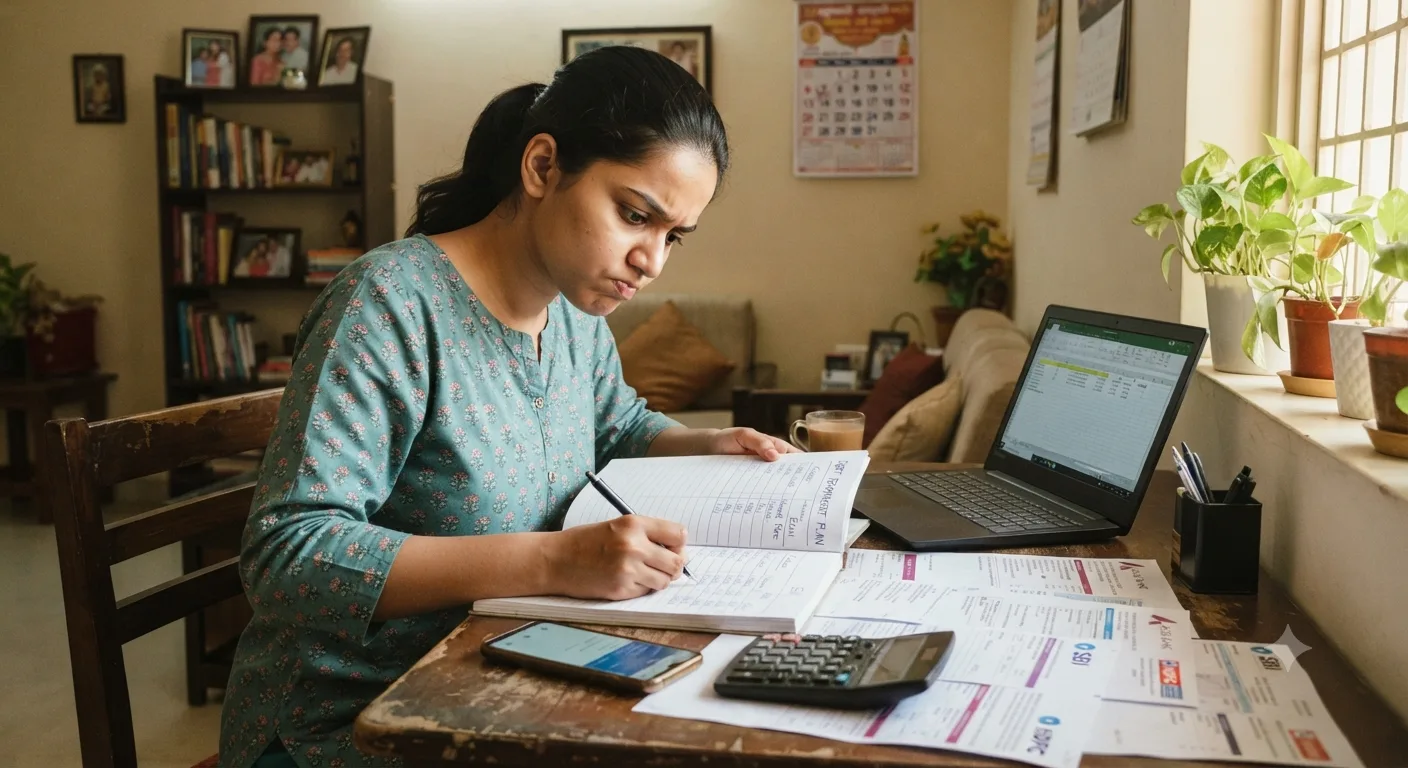
You got a call at 9 PM. The man on the other end spoke fast, used a threatening tone, and said things that didn't feel right. You didn't know what you were allowed to say back. Or whether you had to say anything at all.
That's exactly the situation the RBI's recovery agent guidelines exist to fix.
The Reserve Bank of India (RBI) has published a set of rules, primarily through the Fair Practices Code and the Master Direction on Outsourcing of Financial Services, that govern how every bank and NBFC (non-bank financial company) must instruct their recovery agents to behave. These are not suggestions. Banks are legally responsible for everything their agents do, whether those agents are salaried employees or third-party contractors.
The rules have been periodically tightened. The most significant updates came with the RBI Master Circular reinforcements in late 2024 and early 2025. And the penalties for breaking them are real. The RBI fined Bajaj Finance ₹2.5 crore specifically for recovery agent harassment violations. That's not a small number.
So if an agent called you late at night and used language that felt threatening, there's a rule against that. If someone contacted your family members, there's a rule against that too. And the bank that hired that agent is accountable for every one of those actions.

Struggling With Recovery Agent Calls?
A FREED counsellor will tell you exactly which rules were broken and what to do next. Free. Confidential.
Talk to a Free CounsellorWhat Can Recovery Agents Legally Do?
Recovery agents are not illegal. They have a legitimate job, which is to remind borrowers about overdue amounts and work toward repayment. Here's what they are actually permitted to do.
Call you between 8 AM and 7 PM on any day, including weekends.
Send written notices about your outstanding dues.
Visit your home but only after giving you prior written notice. A walk-in visit without any notice is not allowed.
Identify themselves fully before any conversation. Every agent must carry an authorisation letter from the bank and a certification card issued by IIBF (Indian Institute of Banking and Finance), the body that trains and certifies recovery agents.
Explain your outstanding loan amount clearly, including what you borrowed, what interest has been added, and what fees are pending.
That's the full scope of what they can do. Anything outside this list, whether the language used, the time of contact, or who else gets called, falls under the prohibited actions section.

FREED Expert Tip
Ask any recovery agent to show their bank authorisation letter before you say a word. If they cannot produce it, you are not you can ask them to identify themselves before continuing the conversation. .
FREED guide to recovery agent harassment rightsWhat Are Recovery Agents Not Allowed to Do?
Here's what recovery agents are not allowed to do under RBI guidelines.. Read it once carefully. If something on this list has already happened to you, it was a violation and you can report it.
- Call before 8 AM or after 7 PM. This applies to every form of contact: phone calls, WhatsApp messages, SMS, and emails. An automated message at 10 PM is a chargeable violation under the RBI Master Circular 2024 (§3.6).
- Contact your family members, relatives, neighbours, or friends about your loan without your explicit written consent.
- Contact your employer, HR department, or colleagues to discuss your dues.
- Use abusive, threatening, or intimidating language in any form.
- Enter your home without permission. Even with prior notice, you can refuse entry. Forced entry is illegal.
- Lie about the amount you owe, such as quoting inflated figures to pressure faster payment.
- Shame you publicly. This includes putting up posters outside your home or workplace, sharing your personal details on social media, or spreading information about your loan in your community.
- Send shaming messages to your phonebook contacts. This practice, where an agent sends messages to everyone on your contact list saying you owe money, is now specifically banned under the RBI Digital Lending Guidelines 2024-25.
- Use collection bots that call from rotating numbers. Repeated automated calls from different numbers designed to overwhelm you are prohibited.
- Access your phone's contact list, photos, or location data for recovery purposes.

What the Law Says
Under the RBI Master Circular 2024, a bank is fully liable for every action its recovery agent takes, even if that agent is a third-party contractor. The borrower can claim compensation directly from the bank, not just the agent.
know your rightsWhen Does Recovery Agent Harassment Actually Happen?
Ramesh is 38. He works in a small manufacturing unit in Nagpur. He missed 2 EMIs on his personal loan after a rough patch at work. Orders slowed down, his take-home dropped. He's not a defaulter by choice. But the calls have started.
Most borrowers in this situation don't know which calls are legal and which aren't. Here's the reality.
A loan can only be classified as NPA (loan marked as bad by the bank, usually after 90 days of missed EMIs) after the account has been overdue for 90 consecutive days. Before that point, aggressive harassment has no statutory basis at all. An agent calling you repeatedly at all hours during the first few weeks of a missed EMI is already outside the rules.
Once an account crosses into NPA territory, the bank has more formal grounds to initiate recovery. But even then, the same RBI rules apply. "Legal escalation" means a written notice. It means a call during allowed hours. It does not mean threats, public shaming, or contact with your employer.
In FY24, recovery agent complaints rose 42.7% year-on-year, reaching 85,281 complaints filed with the RBI Ombudsman. That's nearly 29% of all RBI Ombudsman grievances. And experts estimate that less than 5% of actual harassment cases ever make it to the Ombudsman. Most people either don't know they can complain or feel too overwhelmed to act.
You're reading this. That already puts you ahead.
Recovery Agents Crossing the Line? Get a Free Counsellor Call
A FREED counsellor will tell you exactly which rules were broken and what to do next. Free. Confidential.
alk to a Free CounsellorDo RBI Rules Apply to Loan Apps and Digital Lenders?
This is the question most people dealing with fintech app loans have, and it's one that most online articles get wrong or skip entirely.
Short answer: Yes, if the app is registered with the RBI, all Fair Practices Code rules apply to it. The RBI Digital Lending Guidelines 2024-25 specifically extend every recovery rule to digital lenders. That includes the calling time window, the ban on contacting your contacts, and the prohibition on shaming messages.
What the RBI explicitly banned under the 2024-25 guidelines:
- Accessing the borrower's phone contact list for recovery purposes
- Accessing photos, location data, or any other personal data stored on your phone
- Sending shaming messages to people in your phonebook
- Using collection bots that call from rotating numbers to overwhelm the borrower
Between April 2021 and November 2022 alone, around 13,000 complaints were filed specifically about digital lending app harassment. The RBI responded with stricter rules, and they're enforceable.
But there's a separate category: apps that are not RBI-registered. These apps operate outside the law. If you have a loan from an app that is not on the RBI's approved list, that app has no legal authority to collect from you using threatening tactics. If you receive threats from an unregistered lending app, report the matter to the Cyber Cell and seek guidance before making any payment.. Report it immediately to the Cyber Cell at cybercrime.gov.in. This is not a civil matter. It is a criminal one.
How to File a Complaint Against a Recovery Agent
his section is your action plan. Bookmark it. If harassment has already started, begin from Step 1 today.
Document everything, right now.
Write down every call: date, time, the number it came from, what was said. Screenshot every WhatsApp message, SMS, or social media contact. If your phone lets you record calls legally in your state, use it. Evidence is everything.
Write to the bank's Grievance Redressal Officer (GRO).
Every bank and NBFC has a GRO, their internal complaints officer. Email them directly with your evidence attached. Keep the subject line clear: "Complaint Against Recovery Agent [Your Loan Account Number]." Send it from an email ID linked to your account. The bank has 30 days to respond.
If no resolution in 30 days, file with the RBI Integrated Ombudsman Scheme.
Go to cms.rbi.org.in, the RBI's official complaints portal. Filing is free. No lawyer needed. No court required at this stage. The Ombudsman handles everything online. Your complaint must be filed within one year of the bank's final response, or within one year of the harassment if the bank never replied at all.
For physical threats, file an FIR.
If an agent threatened you physically, entered your premises without permission, or used criminal intimidation, go to your local police station and file an FIR. This is a separate track from the Ombudsman. You can do both simultaneously.
One important number: the RBI Ombudsman can award up to ₹1 lakh in compensation for verified harassment cases, including for mental anguish. That amount is in addition to any corrective action ordered against the bank.
Are You in a Loan Trap? Quick Check
Move the slider to your total EMIs as a % of monthly salary. See your debt stress level instantly.
EMIs as % of Monthly Salary
What Are Your Options If You Cannot Repay the Loan?
Settlement is not something a borrower chooses out of preference. Banks and financial companies only consider it when you are in genuine financial difficulty and repaying the full amount is no longer realistic. . It is a last resort, not a shortcut.
Before settlement, there are real options worth discussing with your bank.
EMI reduction through restructuring: You can request a change in your loan plan, with lower monthly payments spread over a longer repayment time. Banks are required under RBI rules to consider restructuring when a borrower cites verifiable financial distress.
Tenure extension: Ask the bank to extend your repayment time, which lowers each monthly EMI without changing the total principal.
Moratorium (temporary pause): Some banks allow a short payment break, typically 3 to 6 months, for borrowers going through documented financial difficulty. Interest usually continues to accrue, but it buys time.
Consolidation (merging all loans into one lower EMI): If you have multiple unsecured loans, such as a personal loan, credit card dues, and BNPL, consolidating them into a single repayment sometimes reduces the monthly burden.
If all of these are genuinely exhausted and you truly cannot pay, loan settlement becomes worth discussing. FREED's counsellors can look at your total debt, your income, and the type of loans you hold, and help you understand which option actually fits your situation. They can help you understand your options, organise documents, and support you through the process.
FREED works with unsecured loans: personal loans, credit cards, and app loans. Secured loans like home loans, education loan or car loans are not in scope.
Not Sure Which Option Is Right for You?
A FREED counsellor can show you your real options, no commitment, no pressure.
Book My Free CallTips for Dealing With Recovery Agent Calls
These are not conflict tactics. They're tools for staying calm, documenting properly, and protecting yourself legally.
Ask for their credentials before anything else.
Every time an agent calls, ask for their full name, the agency they work for, and the name of the bank that authorised them. If they can't provide these, the conversation ends there. You are not legally required to engage with anyone who cannot identify themselves properly.
Don't commit to anything verbally.
A recovery agent cannot legally modify your loan terms. Only your bank can change your EMI, waive charges, or restructure your loan. And only in writing. Never say "I'll pay by the 15th" on a call. A verbal commitment to an agent has no legal weight, but it can be used to pressure you further.
Keep every call short and documented.
Note the time, number, agent name, and a one-line summary of what was said. Do this immediately after every call, while it's fresh. If you're on WhatsApp, screenshot before you close the chat.
Use a standard response for calls you want to shut down:
"Please share your authorisation details in writing and direct all further communication to [your bank name]'s Grievance Redressal Officer. I will respond through proper channels."
This is not confrontational. It's legally appropriate. Agents who are operating within the rules will not have a problem with it.
Recovery Agent Rules: What Is Allowed vs. What Is Not
Action | Allowed by RBI | Not Allowed by RBI |
Calling between 8 AM and 7 PM | ✓ | |
Calling before 8 AM or after 7 PM | ✗ | |
Sending written notice before visiting | ✓ | |
Entering home without prior notice | ✗ | |
Identifying themselves with authorisation letter | ✓ | |
Contacting employer or colleagues | ✗ | |
Contacting family members without written consent | ✗ | |
Explaining outstanding dues clearly | ✓ | |
Using abusive or threatening language | ✗ | |
Accessing your phone contact list | ✗ | |
Public shaming on social media | ✗ | |
Sending shaming messages to phonebook contacts | ✗ |
This table is for general reference. Specific rules may vary by loan type and bank. For your individual situation, FREED's counsellors can review what applies to you.
About FREED
FREED is India's first debt relief company, founded in 2020 and headquartered in Gurugram. FREED helps borrowers dealing with unsecured loan debt, including personal loans, credit cards, BNPL, and app loans, understand their options and work toward resolution. FREED does not handle secured loans such as home loans or car loans.
When recovery conversations cross the line into abusive, threatening, or harassing behaviour, FREED provides support through FREED Shield, where borrowers can raise complaints with supporting evidence, which can then be escalated to the lender where appropriate. . FREED Shield helps you understand your rights as a borrower and can assist you in preparing and submitting a complaint through the appropriate channels where necessary.
Sources
Topic / Claim in Content | Source Link |
RBI's Fair Practices Code & recovery agent conduct rules (calling hours, harassment ban, bank liability) | https://rbi.org.in/Scripts/NotificationUser.aspx?Id=12378&Mode=0 and https://rbi.org.in/commonman/English/scripts/notification.aspx?id=347 |
RBI fined Bajaj Finance ₹2.5 crore for recovery agent harassment | https://www.rbi.org.in/Scripts/BS_PressReleaseDisplay.aspx?prid=50918 (RBI press release dated January 5, 2021) |
IIBF certification requirement for recovery agents | https://rbi.org.in/commonman/English/scripts/notification.aspx?id=347 |
RBI Digital Lending Guidelines ban on accessing contacts/photos, phonebook shaming, collection bots | https://rbidocs.rbi.org.in/rdocs/notification/PDFs/GUIDELINESDIGITALLENDINGD5C35A71D8124A0E92AEB940A7D25BB3.PDF — flag: this is the September 2022 version. RBI superseded it with the Reserve Bank of India (Digital Lending) Directions, 2025 (effective May 8, 2025), so "2024-25" in your draft should be updated to cite the 2025 Directions instead. |
FY24 stats: 85,281 recovery/loan complaints, 42.7% YoY jump, ~29% of total RBI Ombudsman complaints | https://rbi.org.in/Scripts/AnnualPublications.aspx?head=Annual+Report+on+Banking+Ombudsman+Scheme |
RBI Ombudsman compensation up to ₹1 lakh; 1-year filing deadline | https://rbidocs.rbi.org.in/rdocs/content/pdfs/SCHEME16012026_A.pdf — flag: both figures are now outdated. Under RB-IOS 2026 (effective July 1, 2026) the cap is ₹3 lakh for mental anguish/harassment, and the filing window is 90 days, not one year. These need updating to match the FAQ section of this same blog, which already has the newer numbers correct. |
RBI Ombudsman portal | |
Cyber Cell reporting for unregistered lending apps | |
BNS criminal trespass for forced entry | https://www.indiacode.nic.in/bitstream/123456789/20062/1/a202345.pdf (Section 329) |

Mohit Juneja
Mohit Juneja writes educational content at FREED on debt management, credit scores, loan repayment, and borrowing best practices. His content is shaped by expert insights and industry knowledge, helping readers better understand their financial options and make informed decisions.
mohit.juneja@freed.care

FREED is India's trusted loan management platform. Founded in 2020 and headquartered in Gurugram, FREED has counselled 20 lakh+ people on personal loans, credit cards, and app loans. FREED charges fees only on successful settlement, not upfront. FREED does not handle secured loans (home loans, car loans, gold loans).
Media Mentions