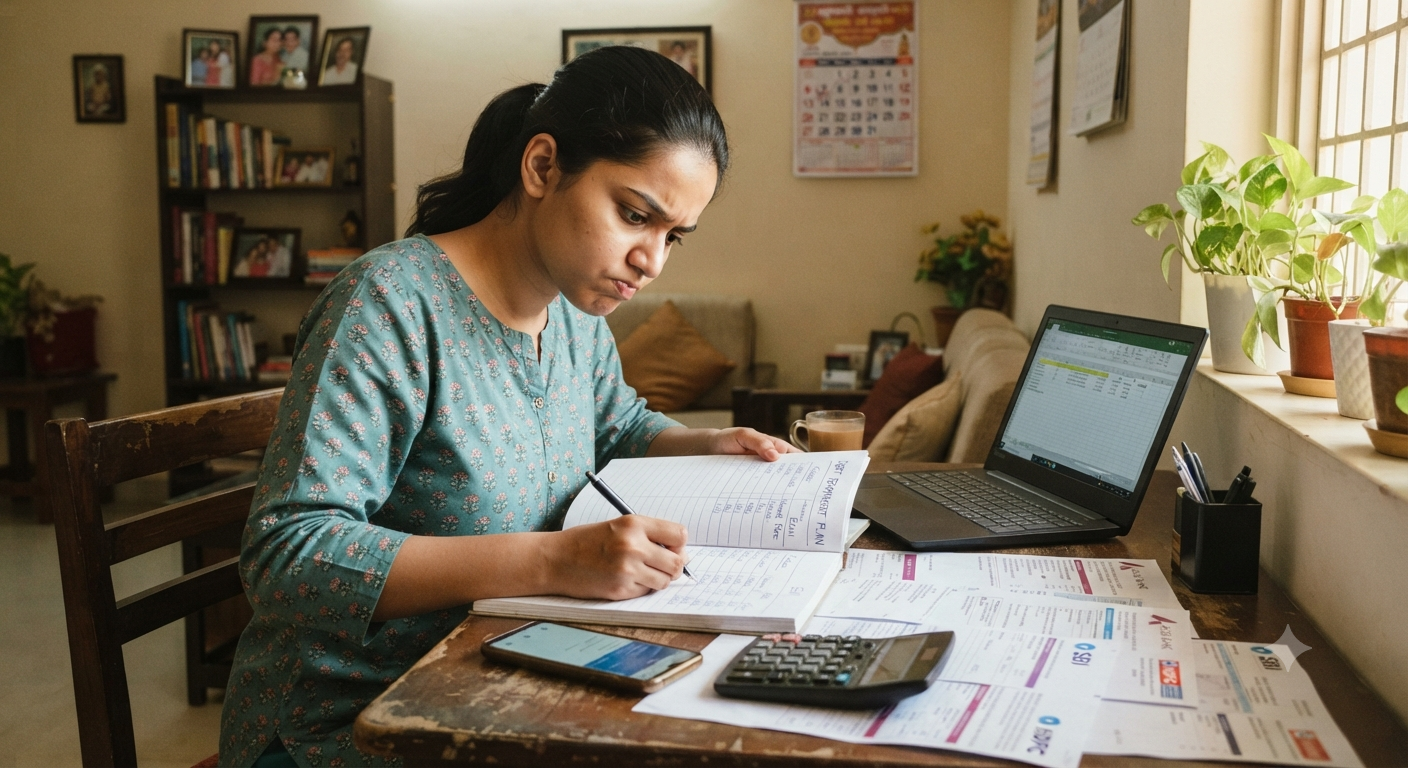
What is Recovery Harassment and How to Deal With It?
Getting threatening calls from recovery agents? Being abused or pressured to pay? You have legal rights - and they are being violated. This guide tells you exactly what is illegal, what to do, and how to make it stop.
Mohit Juneja
Reviewed by FREED India, SEO Intern

 4.7/5
4.7/5 ₹3,200Cr+
 20,000+
 20,00,000+4.7/5₹3,200Cr+20,000+20,00,000+
Key summury

Recovery agents have a legal right to contact you for repayment - but they do NOT have the right to threaten, abuse, or harass you.
Under RBI guidelines, agents cannot call before 8 AM or after 7 PM, cannot contact your family or employer, and cannot visit without prior notice.
If a recovery agent crosses the line - it is illegal. You can file a complaint with the bank and the RBI Banking Ombudsman.
The most important thing to do right now - start collecting proof. Recordings, screenshots, call logs. This is your evidence.
FREED Shield is a free tool that helps you report harassment instantly, escalate your complaint to the bank, and get counsellor support - all in one place.
What is Recovery Harassment?
When you miss loan payments or credit card EMIs, your bank has the right to contact you and ask for repayment. That is completely legal - and expected.
Recovery harassment is what happens when that contact crosses the line.
It starts with calls. First a few, then many. Then threats. Then abusive language. Then agents show up at your home or office without warning. Then they start calling your family, neighbours, or colleagues.
None of that is legal. All of it is harassment.
Recovery harassment is a serious problem in India - especially for people who are already under enormous financial stress. The calls add fear and mental pressure at the worst possible time.
But here's what most people don't know - you have strong legal protections. And you can use them today.
Are You in a Loan Trap? Quick Check
Move the slider to your total EMIs as a % of monthly salary. See your debt stress level instantly.
EMIs as % of Monthly Salary
First - When Does a Bank Start Recovery?
When you miss one payment, the bank marks your account as irregular. When you miss payments for 90 days or more, your account becomes a Non-Performing Asset (NPA). That's when recovery efforts intensify - and when harassment often begins.
Recovery agents work under pressure to collect dues. Some of them go too far.
Missing payments is a financial problem. Harassment is a legal problem. The two are completely separate - and no matter how much you owe, harassment is never acceptable.
What Recovery Agents Are Legally Allowed to Do
Banks and their recovery agents do have rights. Let's be clear about that.
They are allowed to:
- Call you to remind you about outstanding dues
- Send written notices and letters
- Visit your home or workplace - but only after giving notice and carrying an authorisation letter
- Discuss repayment options with you
- Move towards legal recovery if all else fails
This is fair. You borrowed money. They are entitled to ask for it back. The problem is not the asking - it is how some agents ask.
What is Illegal - Your Rights Under RBI Guidelines
The RBI has issued clear guidelines on how recovery agents must behave. These rules protect every borrower in India - no matter how much they owe.
Here is what recovery agents are strictly NOT allowed to do:
What They Cannot Do | Why It's Illegal |
Call before 8 AM or after 7 PM | Violates RBI's permitted calling hours |
Call repeatedly and excessively | Counted as harassment and intimidation |
Use abusive, threatening, or obscene language | Criminal offence under IPC |
Contact family, friends, neighbours, or employer | Third-party disclosure - strictly prohibited |
Visit your home without prior notice or authorisation letter | Trespassing and invasion of privacy |
Threaten physical harm | Criminal intimidation under IPC |
Publicly shame you - post your photo, name, or debt details | Violation of privacy laws |
Send morphed images or fake documents to scare you | Criminal offence |
Pretend to be a police officer or government official | Fraud and impersonation |
Send fake legal notices | Criminal offence |
If any of these are happening to you right now - your rights are being violated. You do not have to tolerate it.
How Recovery Harassment Affects Your Mental Health
This part is rarely talked about - but it is very real.
Constant phone calls. Threatening messages. Fear every time the phone rings. Anxiety when the doorbell goes. Shame when agents call your family or colleagues.
Recovery harassment is not just a legal problem. For many families, it becomes a mental health crisis.
People describe sleepless nights, inability to focus at work, constant fear, and strained relationships at home - all caused not by the debt itself, but by the harassment that followed.
You are not weak for feeling this way. Being threatened and intimidated every day is traumatic. And it is completely preventable - because the harassment is illegal and can be stopped.
Over 15,00,000 people have used FREED Shield to report and stop recovery harassment. You don't have to face this alone.
Step-by-Step: How to Deal With Recovery Harassment Right Now
- 1
Step 1 - Do Not Ignore Calls Completely
This feels counterintuitive. When you're being harassed, you want to stop picking up the phone. But completely ignoring calls makes things worse. Agents escalate - more calls, home visits, contacting family. Instead: pick up at least one call per day from each lender. Keep it short. Tell them you're aware of your dues and working on a resolution. Ask them
- 2
Step 2 - Know Your Rights - and Say It Out Loud
When a recovery agent crosses the line - say it clearly on the call. You can say: "I know RBI's guidelines for recovery agents. What you are doing is a violation. I am recording this call and will report it." Many agents back off immediately. They were counting on you not knowing your rights. You are not being rude. You
- 3
Step 3 - Collect Proof - This Is Your Most Important Step
Without proof, a complaint has no power. Start collecting evidence right now. What to collect: Call recordings - date, time, what was said, agent name if given Screenshots of threatening or abusive WhatsApp messages, SMS, or emails Details of home visits - date, time, who came, what they said or did Photos of any fake legal notices, morphed images, or
- 4
Step 4 - Communicate Your Hardship to the Bank in Writing
Send an email to your bank explaining your financial situation honestly. Say clearly that you are aware of your obligations and are working towards a resolution. Ask them to communicate through official written channels only. This creates a paper trail. It shows you are engaging in good faith - which matters if things go to legal proceedings later.
- 5
Step 5 - Report and Escalate Through FREED Shield
If harassment continues - escalate through FREED Shield. Here's how it works: On FREED Shield, you can: 1) Upload proof of abusive or threatening calls 2) Report calls made after 7 PM or before 8 AM 3) Report repeated and continuous calling 4) Report home or office visits without notice 5) Report calls made to your relatives, friends, or employer
How to File a Complaint Against a Recovery Agent - Step by Step
- 1
Step 1 - Upload your proof on FREED Shield
Go to freed.care/freed-shield. Upload your call recordings, screenshots, or any other evidence. Select the type of harassment from the list. FREED's team will review it.
- 2
Step 2 - FREED sends a complaint email to your lender
With your consent, FREED drafts and sends a formal complaint to your lender - professionally worded and with your evidence attached. No more struggling to find the right words or the right person to contact.
- 3
Step 3 - Escalate to the RBI Banking Ombudsman if needed
If the bank does not resolve the complaint in 30 days - file with the RBI Banking Ombudsman at cms.rbi.org.in. This is completely free. No lawyer needed.
- 4
Step 4 - File a police complaint for serious threats
If an agent threatened physical harm, impersonated a police officer, or sent morphed images - file an FIR at your local police station immediately under the relevant IPC sections.
- 5
Step 5 - Speak to a FREED counsellor
After reporting, a FREED counsellor connects with you to help you understand your rights, discuss your debt situation, and find the right resolution path - so this doesn't happen again.
What is FREED Shield - and How Does It Protect You?
FREED Shield is FREED's dedicated harassment protection and reporting tool. It is trusted by over 15,00,000 people across India.
It is not a legal service. It is something better - a fast, simple, practical tool that empowers you to take action without needing a lawyer or complicated paperwork.
Here is what FREED Shield does:
- 1
Instant Reporting
Upload your evidence - audio recordings, screenshots, call logs, videos, morphed images - directly on the platform. Takes just a few clicks.
- 2
Legal Enforcement Support
FREED's team reviews your evidence, helps you understand if the agent has violated RBI guidelines, drafts a complaint response, and - with your consent - sends it to your lender's team.
- 3
Counsellor Support
A dedicated FREED counsellor is available to guide you through the process - from understanding your rights to deciding your next steps. FREED Shield is the fastest, simplest way to fight back against recovery harassment - without the stress of doing it alone.
What Happens If You Keep Ignoring the Problem?
Many people think ignoring the harassment will make it go away eventually. It won't.
- Month 1–3: Calls increase. Messages become more aggressive.
- Month 3–6: Agents begin visiting home or office. Family and neighbours start getting calls.
- Month 6–12: Bank may file a legal case for debt recovery. Court notices arrive.
- Beyond 12 months: Legal proceedings begin. This can result in asset seizure, salary attachment orders, or court judgements.
The harassment gets worse - not better - with inaction. The right move is to deal with it head-on - through your rights, through FREED Shield, and through a resolution plan for the underlying debt.
Stopping Harassment is Step One. Resolving the Debt is the Real Solution.
Here's the truth - FREED Shield stops the harassment. But to end it permanently, the underlying debt needs to be resolved.
When you have a resolution plan in place - the bank has no reason to escalate. The calls stop naturally.
FREED offers two paths depending on your situation:
Debt Settlement - if you genuinely cannot repay the full amount, we negotiate with the bank to settle for less and close the account. Harassment ends permanently.
Debt Consolidation - if you can still pay but are struggling with multiple EMIs, we combine them into one lower monthly payment. Stress reduces significantly.
FREED's counsellors will assess your situation in one free call and tell you which path makes sense.
About FREED
FREED is India's first and leading Debt Relief Platform. We help people who are struggling with loans, credit card dues, and EMIs - and facing harassment from recovery agents - find a legal, stress-free path forward.
FREED Shield is our dedicated harassment protection tool - trusted by over 15,00,000 Indians. It lets you report recovery agent harassment instantly, escalate complaints to lenders, and get counsellor support - all in one place.
Our certified debt counsellors also help you resolve the underlying debt - through Debt Settlement or Debt Consolidation - so the harassment ends permanently.
No hidden charges. No judgement. Just real help when you need it most.

Mohit Juneja
Mohit Juneja writes educational content at FREED on debt management, credit scores, loan repayment, and borrowing best practices. His content is shaped by expert insights and industry knowledge, helping readers better understand their financial options and make informed decisions.
mohit.juneja@freed.care

FREED is India's trusted loan management platform. Founded in 2020 and headquartered in Gurugram, FREED has counselled 20 lakh+ people on personal loans, credit cards, and app loans. FREED charges fees only on successful settlement, not upfront. FREED does not handle secured loans (home loans, car loans, gold loans).
Media Mentions