NPA Loan Account Settlement: Process, Terms and What to Check
NPA loan account settlement is an arrangement in which a lender or current legal creditor agrees to accept an agreed amount in full and final settlement of a loan classified as a non-performing asset (NPA). The settlement terms, including the treatment of the remaining balance and credit reporting, should be confirmed in writing. The account may be reported as “Settled” after the agreed payments are completed.

Mohit Juneja
Reviewed by FREED India, Debt Resolution Specialists
 4.7/5
 ₹3,200Cr+
 20,000+
 20,00,000+4.7/5₹3,200Cr+20,000+20,00,000+
Key Summary

NPA loan account settlement applies once a loan has been overdue for more than 90 days.
An NPA account turns normal again only when the entire overdue amount is paid.
Under RBI’s 2023 framework, a settlement must fully settle the bank’s claim; a part settlement counts as restructuring.
Since 2024, loan penalties are separate charges, with no interest charged on them.
A settled NPA account shows “Settled” on your credit report for up to 7 years.

Account Turned NPA and You Genuinely Can’t Catch Up?
FREED negotiates with your bank and gets the settlement in writing.
Settle My LoansWhat Is NPA Loan Account Settlement?
Settlement is generally considered when a borrower can no longer reasonably manage repayment in full. Whether a lender accepts a settlement depends on its assessment, internal policy and applicable regulatory requirements. If your bank has told you the account is now “NPA”, here’s what that word means and where settlement fits.
NPA stands for non-performing asset. It is an asset-classification category used by regulated lenders when a credit facility meets the applicable RBI overdue and classification criteria. For most term loans, this generally means principal or interest has remained overdue for more than 90 days. The label is the bank’s own bookkeeping. It doesn’t mean the loan has been cancelled, and it doesn’t mean you no longer owe the money. You still owe every rupee until the bank agrees otherwise in writing.
NPA loan account settlement is that written agreement. The bank accepts a reduced amount as full and final payment for a loan that has become NPA, and the account is then reported as “Settled”. It’s meant for borrowers who genuinely can’t repay in full, not for people who’d simply like a discount.
Here’s why the NPA stage matters when you’re thinking about settlement:
- Banks usually start considering settlement once an account is NPA. That’s when most banks engage on it, so don’t read it as a reason to wait. Every extra month adds more overdue marks to your report and more stress at home.
- Recovery calls and letters usually increase. The bank’s collections team, and often an outside agency, take over from the branch. Calls can come several times a week.
- Your credit report already shows serious overdue marks. By day 90, the damage to your score has largely happened. What’s left to decide is how the account ends.
This guide covers unsecured loans and cards, like personal loans, credit cards, BNPL and app loans. Secured loans such as home or car loans follow different recovery routes, so the steps here won’t apply to them.
If you want the wider picture first, read our full guide to loan settlement. And for the basics of the label itself, here’s what an NPA account means and how recovery works.
FREED’s Loan Settlement Plan is built for this exact situation. FREED negotiates with the bank, where approval actually sits, and each account ends with a settlement letter from the bank.
So when exactly does a loan cross that line?
When Does a Loan Account Become NPA?
RBI sets the stages, and banks flag accounts automatically as part of their daily processing. Nobody phones you to say, “Today your account became NPA.” The system moves it at the end of the day when the days overdue cross the line. That’s why many borrowers only find out when a letter arrives, or when they check their report.
Here are the stages under RBI’s rules:
| Stage | Days overdue | What it usually means for you |
|---|---|---|
| SMA-0 (special mention account) | Up to 30 | Reminders; late charges |
| SMA-1 | 31 to 60 | More calls; overdue marks on your report |
| SMA-2 | 61 to 90 | Recovery agency may get involved |
| NPA | More than 90 | Account classed as bad; settlement talks typically become possible |
This is a general guide. Exact steps vary by lender.
A few things worth knowing around those stages:
- You should get an alert when you’re reported overdue. Under RBI’s 2023 rules, lenders must send you an SMS or email when they report you as overdue to a credit bureau. Watch for those messages, because they’re often the first formal sign. Don’t ignore them or delete them.
- Credit cards follow a different rule. A card’s NPA status depends on whether the minimum due is paid, not on EMI dates. If you’ve only been paying the minimum or missing it, here’s what paying only the minimum due does to your account.
- The status reaches your credit report quickly. Lenders report to the bureaus at least every 15 days, so an SMA or NPA status can show on your report within weeks of crossing a line.
Each stage has its own recovery steps, rights and risks. For the full picture, see our guide to NPA classification and SMA recovery stages.
Once an account is NPA, you have two very different paths. And the right one depends on what you can actually afford.

What the Law Says
Under RBI rules, a loan is classed as NPA once payment stays overdue for more than 90 days, flagged automatically by the bank each day.
Check My Credit InsightsShould You Settle an NPA Account or Bring It Back to Normal?
This is the most useful question to answer before you talk to anyone. Many borrowers assume NPA means settlement is the only way out. It isn’t. There are two paths, and they suit different situations.
Path 1: Bring it back to normal
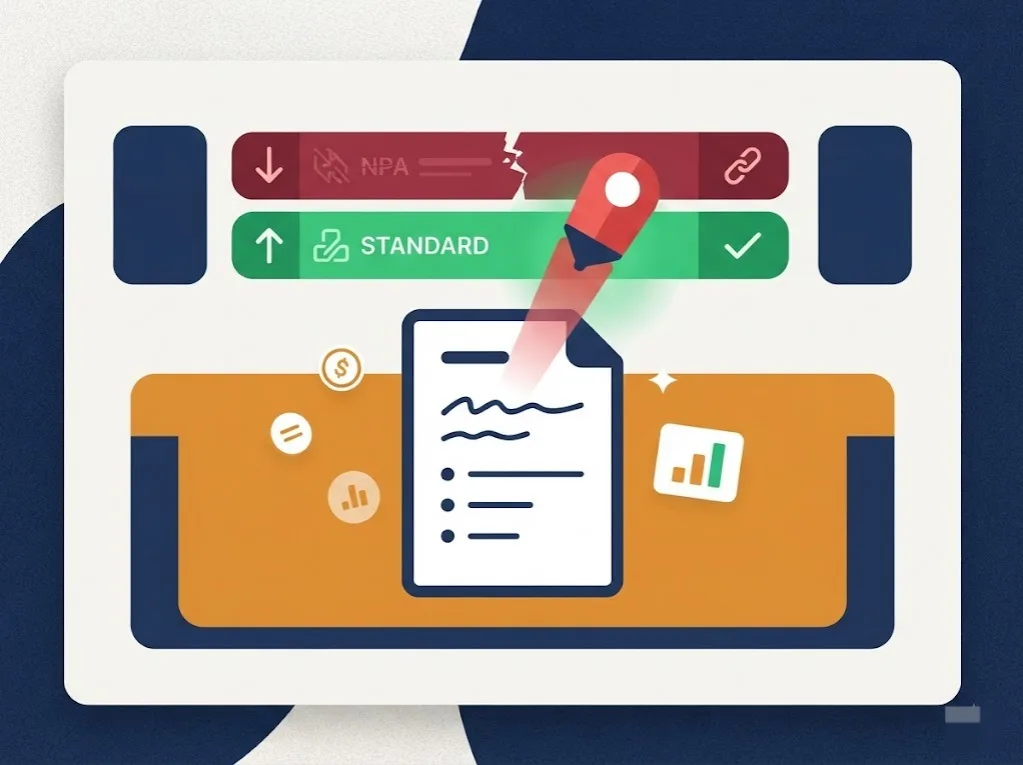
RBI’s rule is clear: an NPA account can be upgraded back to “standard” only if the entire overdue interest and principal is paid. Not part of it, all of it. Once that’s done, you carry on with your regular EMIs, and the account isn’t marked “Settled”. The overdue history stays on your report, but the account goes back to being a normal loan.
Path 2: Settle
Settlement is for borrowers who genuinely can’t repay in full. The bank accepts a reduced lump sum, and the account shows “Settled” on your report. It’s a real cost to your credit, and that’s why it comes after the first path, not before.
Here’s what that looks like in numbers. Say your personal loan EMI is ₹8,000, and four EMIs went unpaid. That’s ₹32,000 overdue, and as it’s more than 90 days, the account is now NPA. Add illustrative penal charges of ₹500 for each missed EMI, so ₹2,000 in all. Under RBI’s 2023 rule, these are separate charges, with no interest added on top of them.
In this illustration, the overdue instalments and assumed penal charges total ₹34,000 before any additional interest or other permitted charges. The lender must provide an account statement showing the amount required to regularise the facility. After that, you carry on paying ₹8,000 EMIs. If you can find that amount and the EMIs are still affordable, this path keeps your credit cleaner.
But say you can’t find ₹34,000, and even the ₹8,000 EMI has become too much for your salary. Then bringing the account back to normal isn’t realistic, and settlement is the path the bank may consider.
This example is illustrative. Figures are for explanation only. Final terms decided by the bank. FREED is not a Loan Provider. No outcome is guaranteed.
Here’s how to match your situation to a path:
| Your situation | Better path | Credit report effect |
|---|---|---|
| Can pay all arrears and keep paying EMIs | Bring it back to normal | Overdue history stays; no “Settled” mark |
| Can pay EMIs going forward but not the lump sum | Ask the bank about changing the loan plan (restructuring) | Bank-specific; ask how it will be reported |
| Genuinely can’t repay in full | Settlement | “Settled” for up to 7 years |
| Not yet NPA (SMA stage) and still paying several loans | Consolidation may fit; talk to FREED’s team about eligibility | Doesn’t drop; tends to improve |
Look at the second row closely. Many people in the middle, who can pay monthly but can’t find a lump sum, are better off asking the bank to restructure the loan. Here’s how loan restructuring works. And for the full upgrade route, see how an NPA account goes back to normal.
The last row is for people who haven’t reached NPA yet. If you’re still in the SMA stage and still paying several loans, FREED’s Loan Consolidation Plan can combine them into a single monthly EMI. FREED assesses your profile and tells you if you’re eligible.
Not NPA Yet and Still Paying Several Loans?
One EMI on one date may stop things getting worse.
Reduce My EMIHow Does NPA Loan Account Settlement Work, Step by Step?
NPA loan account settlement follows a clear order. These 7 steps work whether you handle it yourself or with help:
- Get your exact outstanding in writing. Ask the bank for a statement showing principal, interest and charges separately. You need the real starting number, because agents often quote figures that don’t match the bank’s books.
- Pull your credit report. See how the account is shown: overdue, NPA or written-off. You’ll compare it with what you see after settling, and every bureau gives you a free annual credit report.
- Ask the bank for a settlement, in writing. Explain your situation honestly: what changed, and what you can realistically pay. Each bank decides under its own board-approved policy, and approval sits inside the bank, one level above the officer who sanctioned your loan, not with a recovery agent. Here’s how to write a loan settlement letter to a bank.
- Get the offer on bank letterhead. A phone call or a WhatsApp message isn’t enough. Verbal offers can’t be enforced, and some turn out to be fake.
- Check every term against the table in the next section. If a term is missing, ask for a corrected letter before paying. Missing terms are hard to fix after the money has gone.
- Pay only through the channel named in the letter. Use the bank’s own account or official link, and keep the UTR (unique transaction reference) for every payment. It’s your proof the money reached the bank.
- Collect the confirmation and the NOC, then check your report. The NOC (no-dues certificate) and the bank’s written confirmation finish the record. Check your credit report about 4 to 6 weeks later. Here’s more on getting an NOC after loan settlement.
Look at what’s absent from this list: paying anyone before there’s a written offer, and paying anyone other than the bank. Each of those skipped steps is how borrowers end up paying twice.
For the full process from start to finish, here’s the personal loan settlement process.
A practical question comes before step 3: what can you realistically put toward a settlement? FREED’s EMI Score is a free, quick check of where your income, savings and loans stand, so you go into the conversation with a number that’s honest.
What Terms Should an NPA Settlement Offer Include?
A settlement offer on an NPA account should cover each of these terms. The “why it matters” column shows how each one connects to the way NPA accounts are handled:
| Term | What it should say | Why it matters for an NPA account |
|---|---|---|
| Outstanding breakdown | Principal, interest and charges, shown separately | Penal charges should appear as separate charges, not added to interest (RBI 2023; applies to loans, not cards) |
| Settlement amount | The amount in figures and words | Prevents “typo” disputes later |
| Payment schedule | A single payment, or instalments with dates | If spread over more than 3 months, the bank treats it as restructuring |
| Payment channel | The bank’s own account or official link only | Protects you from fake collection |
| Full and final clause | “Fully and finally settled; no further claim” | A part settlement counts as restructuring, not settlement |
| Balance waived | No further recovery by the bank or any agency | Stops calls about the balance |
| Credit reporting | Reported as “Settled” (not “Closed”) | Sets honest expectations |
| NOC | Issued within the timeline stated in the letter | Closes the paper trail |
| NACH / cheques | Auto-debit cancelled; post-dated cheques returned | Stops old EMIs being taken after you’ve settled |
| Guarantor / co-applicant | Their release, if agreed | Protects family members who signed for you |
| Pending case | Withdrawal or consent decree, if a case has been filed | Required under RBI’s framework |
This is a general checklist. Banks use their own formats.
Here’s what a few of these mean in plain words.
The full and final clause is the one that counts most. Under RBI’s 2023 framework, a compromise settlement must fully settle the bank’s claim. If the paper doesn’t say so clearly, the bank may treat it as a part payment, which is a form of restructuring. You’d still owe the rest.
The 3-month line matters if you’re offered instalments. RBI’s framework treats payment spread over more than 3 months as restructuring, which is a different thing from settlement. Check every date.
The penal charges line helps you spot an inflated outstanding. RBI’s penal-charge directions require regulated entities to levy penalties for non-compliance with loan terms as penal charges rather than adding them to the interest rate. Such charges must not be capitalised or attract further interest. The directions contain specific scope provisions and exclusions, including for credit-card receivables. If a breakdown shows “penal interest” compounding on top of your balance, ask the bank to explain it.
A pending court case adds one more step. If the bank has already filed a recovery case, a settlement needs a consent decree, a court order recording the agreement. This is a point where legal advice matters.
If any term is missing, ask for a corrected letter before you pay. Here’s what a good loan settlement letter from the bank looks like, term by term.
What the Law Says
Under RBI rules, loan penalties must be separate penal charges. Banks can’t add them to the interest rate or charge interest on them.
Check My EMI ScoreWhat Happens to Your Credit Report After Settling an NPA Account?
After a compromise settlement is completed, the creditor may report the account as “Settled” rather than “Closed”, where the borrower has paid less than the full amount originally due. The status and balance should reflect the agreed settlement and applicable reporting requirements. Lenders may assess a settled account differently from an account repaid in full.
Here’s what to expect:
- “Settled” stays on your report for up to 7 years. New loans and cards get harder to get during that time. Here’s how settlement affects your credit score.
- Check your report about 4 to 6 weeks after the final payment. Lenders report to the bureaus at least every 15 days, and the bureau then loads the data. So a few weeks is a fair wait.
- A wrong entry must be fixed within 30 days of your complaint. That’s 21 days for the lender and 9 for the bureau. If it takes longer, you’re owed ₹100 a day for the delay. Here’s how to fix wrong entries on your CIBIL report.
- The same lender must wait at least 12 months before giving you fresh non-farm credit. That’s RBI’s cooling period after a compromise settlement. The bank’s own policy can set a longer wait.
- Other lenders will see the “Settled” mark. Rebuilding takes steady, small, on-time credit. Here’s how a loan after settlement affects your CIBIL.
Some questions go beyond what a credit report shows. Tax on the waived amount, releasing a guarantor, and what happens if you miss a settlement deadline are all covered in settling a loan in India.
If you’d like to see exactly where each account stands, FREED’s Credit Insights reads your Experian report and shows every account’s status in plain words. It refreshes monthly, so you can watch the status change after you settle.
Want to Know Exactly How Your Report Will Look?
Your report in plain words, with steps to rebuild.
Check My Credit InsightsWhat Helps Before You Accept an NPA Settlement Offer?
Before you say yes to anything, these 6 tips protect you from the most common problems:
- Get every number in writing before agreeing to anything. That means the outstanding, the settlement amount, the dates and the payment account. If a number was only said aloud, it doesn’t exist yet.
- Never make small part-payments to an agent without written terms. They may not count toward any settlement. Some borrowers pay in small amounts for months and find the bank still shows the full dues.
- Pay only into the bank’s own account. Never pay cash, or send money to a personal UPI ID or account. Money sent that way may never reach the bank.
- Check whether a court case has been filed. If so, a settlement needs a consent decree, and the paperwork changes. Ask the bank directly and in writing.
- Make sure every account you want settled is named. An account left off the letter stays fully payable. Match each one against your credit report.
- Keep copies of every message, letter and receipt. One folder, on paper and a scan. If anything is disputed later, that folder answers the question in minutes.
The same few checks run through all six tips: written, from the bank, to the bank. If an offer fails any of them, pause before paying.

FREED Expert Tip
If an agent asks for a “token amount” to stop calls on an NPA account, ask for the bank’s written settlement terms first. Payments without terms rarely count toward a settlement.
Settle My LoansWhat Are Your Rights While Your Account Is NPA?
Say you’ve missed several months of EMIs. The calls are frequent now, the letters are sharper, and someone from a collection agency has started messaging. It’s stressful, but you still have clear rights. RBI’s 2022 rules for banks that use recovery agents say agents must not:
- Intimidate or harass you, verbally or physically
- Make threatening or anonymous calls
- Call you before 8 am or after 7 pm to recover overdue dues
- Send inappropriate messages on your phone or social media
- Call you persistently
These rules apply to the bank and to any agency it hires. The bank stays responsible for what its agents do.
What to do if calls cross the line
- Keep logs and recordings. Note the date, time, number and what was said for every call. Save messages, and record calls where you can.
- Complain to the bank’s grievance team. Do it in writing, attach your records, and keep a copy. Here’s the full RBI complaint process for recovery agent harassment.
How FREED Shield helps
If you are facing recovery agent harassment, FREED helps you understand your legal rights as a borrower, report inappropriate recovery practices, and raise complaints with your lender. Where harassment is frequent, our experts speak to recovery agents on your behalf. And if you receive a legal notice about your loan, FREED helps you understand your options and draft a suitable reply. FREED Shield is available to everyone, whether or not you’re on a FREED plan.
If a notice has already arrived, here’s what to know about a legal notice for loan recovery.
One honest point. Legitimate recovery calls continue until the dues are paid or settled. The rules stop harassment, not the bank’s right to ask for its money. What you can expect is that those calls stay polite, stay within the hours, and stay with you rather than your family or office.
Getting Threats or Calls at Odd Hours?
FREED Shield is available to everyone facing harassment.
Get FREED Shield SupportHow FREED Helps With NPA Loan Account Settlement
If you genuinely cannot repay your loans, FREED negotiates with your lenders to settle them for less than 50%* of your outstanding dues.
That ties straight back to this article. In an NPA loan account settlement, approval sits inside the bank, so FREED negotiates with the bank, not with whoever is calling. And the money you set aside never sits with an agent or with FREED.
FREED is India’s trusted loan management platform. Over 20 lakh people trust it, and its founding team brings 50+ years of debt-resolution experience from the US. Here’s how the Loan Settlement Plan works:
- Your full situation is assessed. FREED looks at your loans, income and essential expenses, and builds a personalised plan around what you can realistically set aside.
- You save into an SPA. You put a fixed monthly amount into a Special Purpose Account (SPA) in your own name, held by an independent trustee, not by FREED.
- FREED negotiates once enough is saved. FREED talks to each bank, one account at a time, in the order that fits your situation.
- You decide. The bank decides the terms, and you accept or decline. No bank is paid until you authorise it.
- You get a settlement letter from the bank. On payment, each account ends with a letter from the bank.
How long it takes. The first settlement typically happens within about 4 months of enrolling, and the full programme typically takes around 1.5 years.
What to expect meanwhile. Your accounts stay overdue during the saving months, and recovery calls can continue. That’s where FREED Shield helps, making sure those calls stay within your rights.
Fees. Before enrolling, review the current programme agreement and fee schedule. Confirm the evaluation fee, success-based fee, applicable taxes, payment timing and refund conditions.
So far, FREED has settled 33,000+ accounts, worth over ₹500 crore in settlement amount. FREED handles unsecured loans only, like personal loans, credit cards, BNPL and app loans.
*Rates and ranges shown are indicative. Final terms decided by the bank. FREED is not a Loan Provider. No outcome is guaranteed. Please verify directly with your bank.
Get Your NPA Accounts Settled, With Every Term in Writing
No bank gets paid until you say yes to the offer.
Settle My LoansHow Do You Rebuild After Settling an NPA Account?
A settled NPA account feels like a hole in your credit history. It isn’t permanent, though. Credit scores respond to steady behaviour over time, and these 6 habits help you rebuild:
- Keep the letter, UTRs and NOC permanently. Store paper and scanned copies in two places. Years from now, they prove the matter was resolved.
- Check your report 4 to 6 weeks after the final payment, then once a year from each bureau. Every bureau gives you one free full report a year, so spread them out. Here’s how to get your free annual credit report.
- After the cooling period, start with one small, on-time credit line. A low-limit card or a small loan you can repay easily. Pay on time every month, without exception.
- Keep any card use low and pay the full amount. Spend a small part of the limit and clear the bill each month. That builds fresh history without interest.
- Build a small emergency fund. Even one month of essentials means the next rough patch doesn’t turn into missed EMIs again. Here’s why an emergency fund matters.
- Before any new loan, check that the EMI fits comfortably under half your take-home pay. If it takes more than that, the loan is likely to squeeze you the same way again.
Here are more steps to rebuild your credit score after a loan default.
FREED’s Credit Insights refreshes monthly, so you can see your report improving as these habits add up.
One folder of papers, one small credit line paid on time, one month of savings. Start with whichever you can do this week.
Planning Your First Credit After Settlement?
See how much EMI your salary can comfortably carry.
Check My EMI Score
Mohit Juneja
Mohit Juneja is FREED’s Content & Communication Lead with 12+ years of experience across content, media, advertising and digital communications. He holds a postgraduate diploma in Communications from Xavier Institute of Communications, Mumbai, and has worked with organisations including NDTV, The Indian Express, McCann Worldgroup and NABARD.
At FREED, he leads content and communication across loan management, debt resolution, debt consolidation and financial well-being. His work combines research, storytelling and consumer-focused communication to make complex financial topics easier to understand and act on. He has also scripted and produced 11 documentaries on rural development and agriculture for NABARD, with film's selected for the Mumbai International Film Festival.
mohit.juneja@freed.care

FREED is India's trusted loan management platform. Founded in 2020 and headquartered in Gurugram, FREED has counselled 20 lakh+ people on personal loans, credit cards, and app loans. FREED charges fees only on successful settlement, not upfront. FREED does not handle secured loans (home loans, car loans, gold loans).
Media Mentions