The Importance Of An Emergency Fund
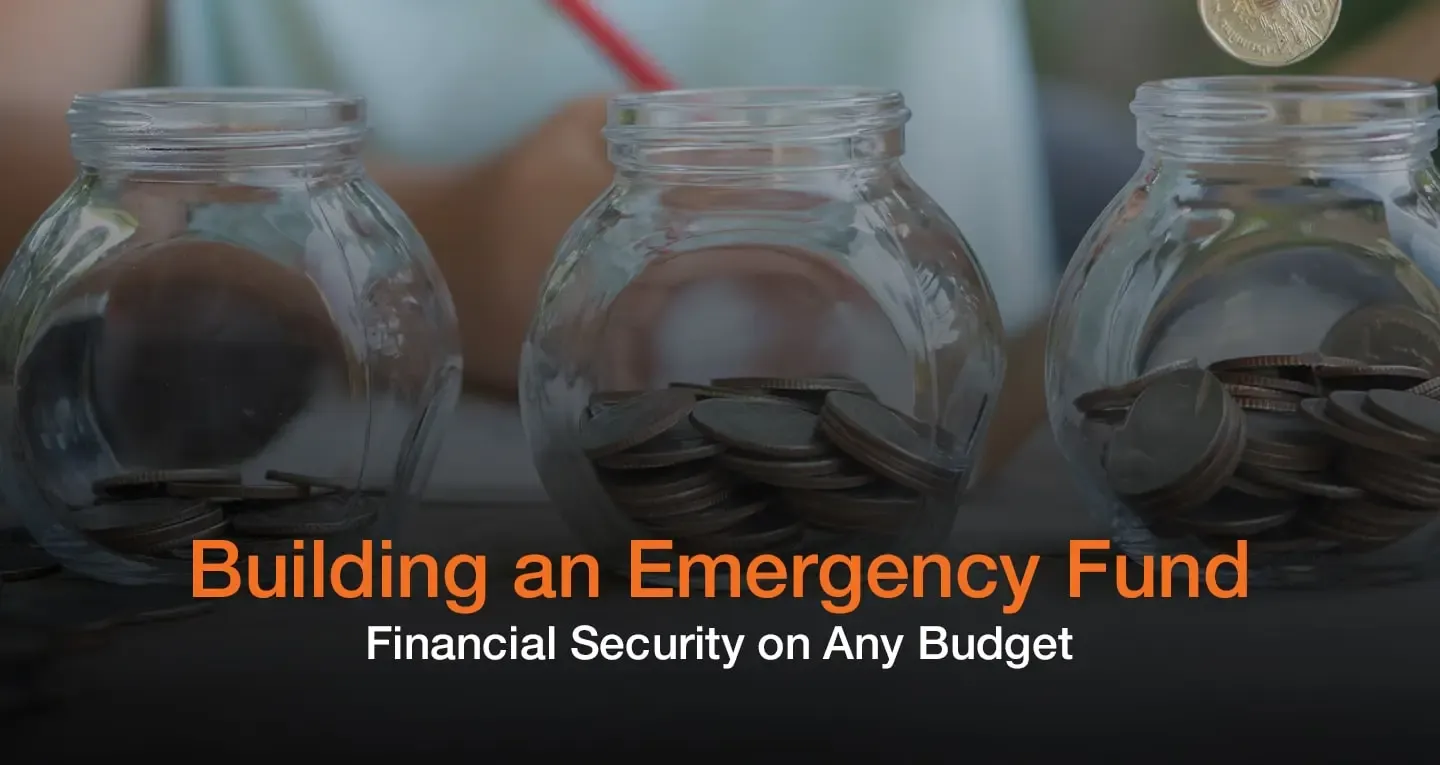
An emergency fund is money set aside specifically for sudden, unavoidable expenses, a job loss, a medical bill, a car repair. A commonly used target is 3 to 6 months of essential expenses, but the right amount depends on your income stability, dependants, debt obligations and access to other financial resources. Without one, an unexpected expense may have to be funded through new borrowing, credit-card debt or missed payments.
Mohit Juneja
Reviewed by FREED India, Debt Resolution Specialists
 4.7/5
4.7/5 ₹3,200Cr+
 20,000+
 20,00,000+4.7/5₹3,200Cr+20,000+20,00,000+
KEY TAKEAWAYS

An emergency fund covers sudden, unavoidable expenses without needing to borrow.
Target 3 to 6 months of essential expenses, though even one month is meaningful protection.
Without a fund, a shock often becomes a new EMI, raising FOIR (Fixed Obligation to Income Ratio, the share of income going to debt payments) and hurting future loan eligibility.
FREED helps when a past emergency has already turned into debt that's hard to manage.
What Is an Emergency Fund?
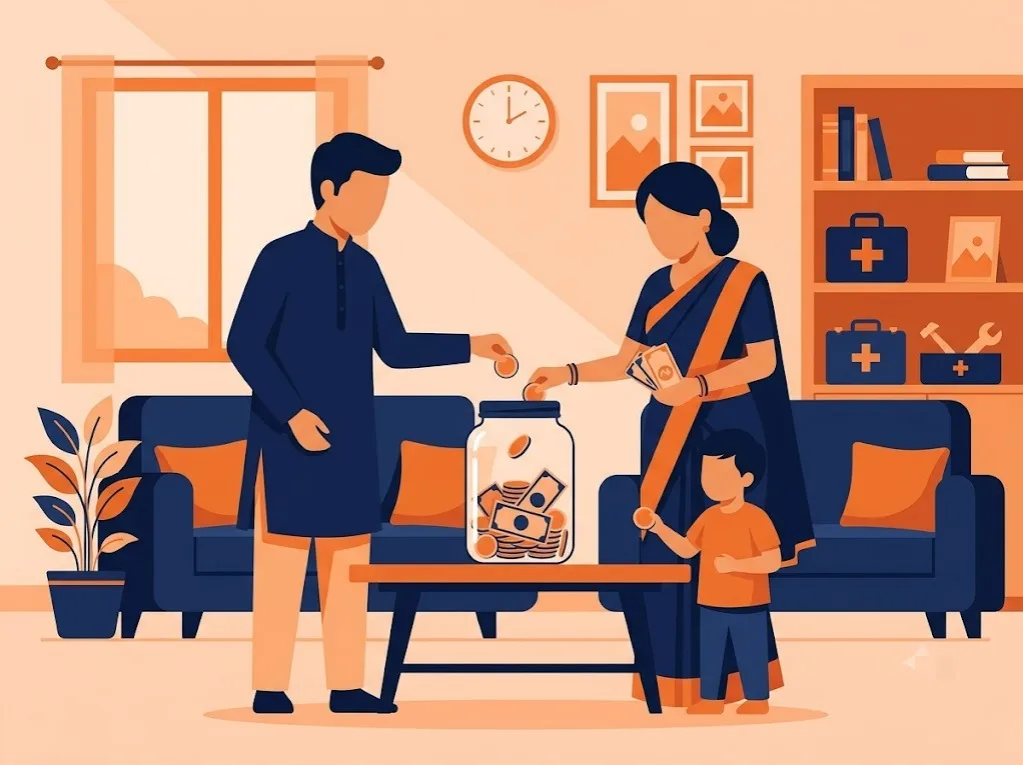
An emergency fund is money set aside for one purpose only, covering a genuine, unavoidable expense without needing to borrow. Think of it as a shock absorber sitting between an unexpected cost and your regular budget, there to take the impact so the rest of your finances don't have to.
It's worth being precise about what this fund isn't, since the label gets misused constantly. It isn't a vacation fund, saved up for a planned trip you already know is coming. It isn't a fund for a planned purchase, a new phone or a festival gift you've budgeted for in advance. And it isn't an investment portfolio, meant to grow over years while sitting somewhere it can lose value in the short term.
The difference matters because each of those other funds serves a purpose an emergency fund can't. A vacation fund can wait, be cut, or shrink without real consequence. An emergency fund exists precisely for the moment when nothing can wait, and that distinction is what makes it non-negotiable rather than optional. Building an emergency fund on any budget covers the deeper build-out if that's the piece you actually need next.

Talk Through Your Own Situation
Free counsellor call, understand where you stand today.
Talk to FREED TeamWhy an Emergency Fund Matters
Unexpected expenses aren't rare events that happen to unlucky households. Unexpected expenses can arise at any time, from medical costs and vehicle repairs to temporary income interruptions. Treating these as edge cases rather than near-certainties is exactly what leaves most households unprepared when one actually arrives.
Without a fund behind you, a shock stops being a one-time event and becomes a debt event instead. A higher debt burden can reduce your borrowing capacity, and some lenders use FOIR or similar measures when assessing new applications. Choosing not to borrow, and missing payments instead, means credit score damage that follows you for months or years. Neither path is free. Both cost real money, just in different currencies.
This connects directly to something most articles on this topic never spell out clearly: the actual chain that turns a single shock into a debt trap. A job loss with no savings behind it forces a personal loan. That loan's EMI strains an already tight budget. The next shock, even a modest one, forces a credit card to absorb it. That balance rolls over month after month, compounding at card rates the whole time. No single event in that chain looks catastrophic on its own. The pattern is what does the damage, one manageable-looking decision leading into the next.
Sizing your fund correctly is the first real step toward breaking that chain before it starts. Understanding and escaping the debt trap walks through this exact pattern in more depth, useful if any part of that chain sounds familiar already.
How Much Should Your Emergency Fund Be?
The standard target is 3 to 6 months of essential expenses. "Essential" needs a precise definition here, since a vague one is exactly where most people underfund or overestimate their target.
Essential expenses include:
- Rent or your EMI payments, the fixed roof-over-your-head cost that doesn't pause during a crisis.
- Groceries, the baseline cost of feeding your household.
- Utilities, electricity, water, and gas, none of which stop just because income has.
- School fees, where applicable, since these rarely have flexible timing.
- Transport for work, whatever gets you to your income source.
- Essential healthcare, ongoing medication or care that can't be paused.
Discretionary spending, dining out, entertainment, shopping, deliberately stays off this list. In a genuine emergency, discretionary spending is exactly what stops first, so your fund doesn't need to cover it at all.
Here's what this looks like with real numbers. A Tier 2 city household with ₹22,500 in monthly essential expenses would target ₹67,500 for a 3-month fund, or ₹1,35,000 for the full 6-month target. Those numbers should adjust to your own situation, not the other way around. Variable income or self-employment calls for aiming higher, since income gaps are harder to predict. Someone with stable employment, fewer dependants and low fixed obligations may choose a smaller buffer, while households with variable income or greater obligations may prefer a larger one. Existing debt changes the order entirely, build 1 month first, then grow the fund alongside debt paydown rather than waiting for debt to clear completely first.
Starting small isn't failure. A ₹1,35,000 target can feel distant enough to discourage the first deposit entirely, but the first ₹5,000 matters just as much as the last. A budgeting approach that actually sticks is worth reading alongside this section if the essential-expense list above is the first time you've actually itemised your own numbers.

How to Build an Emergency Fund on a Tight Budget
None of these steps require a windfall or a raise. They work through redirection, not new income.
- Do an honest budget review first. Most "there's nothing left to save" situations reveal forgotten subscriptions and creeping discretionary spending once everything actually gets listed out in one place.
- Pay yourself first. Automate a transfer the day your salary arrives, even ₹500 to ₹1,000, before that money is available to spend on anything else.
- Direct windfalls immediately. Tax refunds, bonuses, festival money, send these straight to the fund before they quietly disappear into lifestyle spending.
- Pick one specific expense to cut and redirect that exact amount. "Cancel one subscription, redirect ₹199" works. A vague "spend less" doesn't.
- Treat the contribution as non-negotiable. Put it in the same mental category as rent, not as an optional leftover that depends on how the month went.
None of these tactics need to happen perfectly or all at once. Even one of them, applied consistently, moves a fund from zero toward something real within a few months. Where that money should actually sit once it starts accumulating matters just as much as how it got there.
Where to Keep It and What Counts as a Real Emergency
Where to keep it
Your emergency fund needs to clear three tests. It must be accessible within hours or days, never locked away behind a long notice period. It should prioritise capital stability and liquidity over maximising returns. And it must sit in a separate account from daily spending, so it isn't casually dipped into for something that isn't actually an emergency.
A few realistic Indian options fit these criteria well. A separate savings account at a different bank than your primary one adds a useful layer of friction. A liquid mutual fund may be considered for a portion of the fund if you understand the product's redemption process and risks. Keep the amount needed for immediate emergencies in a readily accessible savings account. A short-term fixed deposit with suitable premature-withdrawal terms can hold part of the fund, provided you keep enough money immediately accessible for urgent needs.
Avoid relying on investments that can fluctuate significantly in value or take time to liquidate, such as equity or property, for the portion of your emergency fund you may need immediately. Anything that can lose value or can't be reached quickly defeats the entire purpose of this fund.
What counts as an emergency
Real emergencies include a sudden job loss, an uninsured medical cost, or a livelihood-critical vehicle or urgent home repair. What doesn't count: a planned festival expense, a vacation, an upgrade purchase for something that still works fine, or a sale you don't want to miss.
A simple two-question test settles most edge cases. Was this completely unpredictable? Can the expense reasonably be postponed without causing significant financial or personal harm? If either answer suggests it can wait, it isn't an emergency-fund expense, however tempting the timing feels.
What Happens When You Don't Have One?
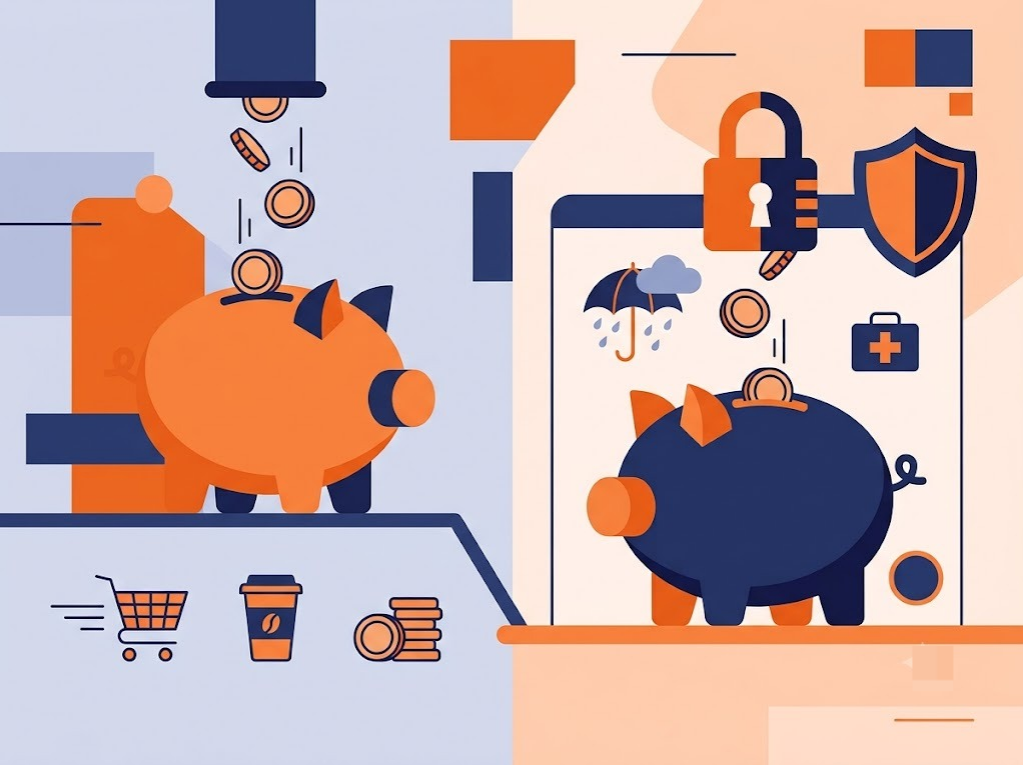
Two scenarios show this more clearly than any general warning could.
Scenario 1: Job loss, no fund. Three to four months of unemployment follow. Without savings to bridge the gap, EMIs start getting missed, and the credit score drops as a result. To bridge the income gap, a new personal loan gets taken, often at a materially higher rate than what the emergency fund would have cost in pure opportunity terms. The loan solves the immediate cash problem while creating a new, ongoing one.
Scenario 2: A medical expense, no fund. A credit card absorbs the cost and gets maxed out, now carrying interest at 30% to 45% annually. Minimum payments barely touch the principal each month, and by the time the balance finally clears, the total repaid ends up well above the original bill, sometimes by a wide margin. What minimum due actually costs over time walks through exactly why this trap runs as deep as it does.
Both scenarios share the same underlying mechanism. Each borrowed shock raises FOIR a little further, and a higher FOIR narrows the loan options available for the next shock, whenever it arrives. This is rarely one catastrophic event. It's a pattern that compounds through a series of individually manageable-looking decisions, each one making the next one harder to absorb cleanly. If this pattern already sounds familiar from your own experience, what comes next matters more than dwelling on how it started.
How FREED Helps
A lot of FREED's clients arrive at exactly the point Scenario 1 or Scenario 2 above describes, an emergency with no fund behind it, followed by debt that grew from a single, understandable decision.
If you're now juggling multiple EMIs from past shocks but still current on every payment, FREED's Debt Consolidation Program, known to customers as Reduce My EMI, combines them into one loan with a single, lower EMI. Consistent, on-time repayment of the new loan can support your credit profile over time. How loan consolidation actually works covers the mechanics in full if this is where your situation currently sits.
If you've already fallen behind and genuinely can't repay in full, FREED's Debt Resolution Program exists as a separate, structured path for that specific situation. It isn't the right fit for this piece to detail in full, since that's a decision with its own considerations worth reading about on its own terms.
See What Your EMIs Are Really Costing You
If past emergencies already turned into EMIs, it helps to see what those payments are costing you now, and whether consolidating them frees up enough room to actually build the fund this page just walked through. Enter your current total EMI load and your monthly income. The calculator shows your EMI burden as a percentage of income (your FOIR), a plain-language status, and how much monthly room consolidation could realistically free up.
What to Do After Using the Fund
Using the fund for a genuine emergency means it did exactly what it was built for. That's not a setback, it's the plan working as intended.
The next financial priority is rebuilding it. Redirect any surplus back into the fund before anything else, until it's back to your full target, the same way you built it the first time. An emergency fund isn't a one-time project that's finished once the target number is hit. It's a standing line in the budget, revisited as income and expenses change over time, in the same category as rent, not an afterthought.
Sources
Claim | Source |
Credit card interest on carried balances commonly runs 30-45% annually | Industry consensus across major card issuers |
Missed EMIs typically cost 100-plus CIBIL points | Credit bureau general guidance |
Consolidation improves CIBIL score over time rather than lowering it | FREED's documented consolidation outcomes |

Mohit Juneja
Mohit Juneja writes educational content at FREED on debt management, credit scores, loan repayment, and borrowing best practices. His content is shaped by expert insights and industry knowledge, helping readers better understand their financial options and make informed decisions.
mohit.juneja@freed.care

FREED is India's trusted loan management platform. Founded in 2020 and headquartered in Gurugram, FREED has counselled 20 lakh+ people on personal loans, credit cards, and app loans. FREED charges fees only on successful settlement, not upfront. FREED does not handle secured loans (home loans, car loans, gold loans).
Media Mentions