Understanding and Escaping the Debt Trap: A Complete, Plain Language Guide
You borrow to repay. You repay and borrow again. The balance never seems to go down. If this sounds familiar, you are in a debt trap. Here is what it means, how it happens, and most importantly, how to get out.

Mohit Juneja
Reviewed by FREED India, SEO Intern
 4.7/5
4.7/5 ₹3,200Cr+
 20,000+
 20,00,000+4.7/5₹3,200Cr+20,000+20,00,000+
Key Takeaways

EMIs crossing 50% of take-home salary is a commonly used warning threshold, not when debt itself starts feeling heavy.
Borrowing new credit to pay an old EMI is the single clearest warning sign.
A bounced EMI cheque can trigger Section 138 NI Act. A criminal complaint is possible, up to 2 years jail or fine up to 2x cheque amount. Electronic payment failures can have different legal and recovery consequences depending on the payment mechanism and circumstances. A payment failure should not automatically be treated as equivalent to cheque dishonour under Section 138.
Two exit paths exist: consolidation if you're still paying and need one lower EMI, or settlement if repayment genuinely isn't possible.
Settlement can result in a ‘Settled’ status on your credit report, which may affect how lenders assess future credit applications. Consolidation doesn't hurt the score, it improves it over time.
What Is a Debt Trap?
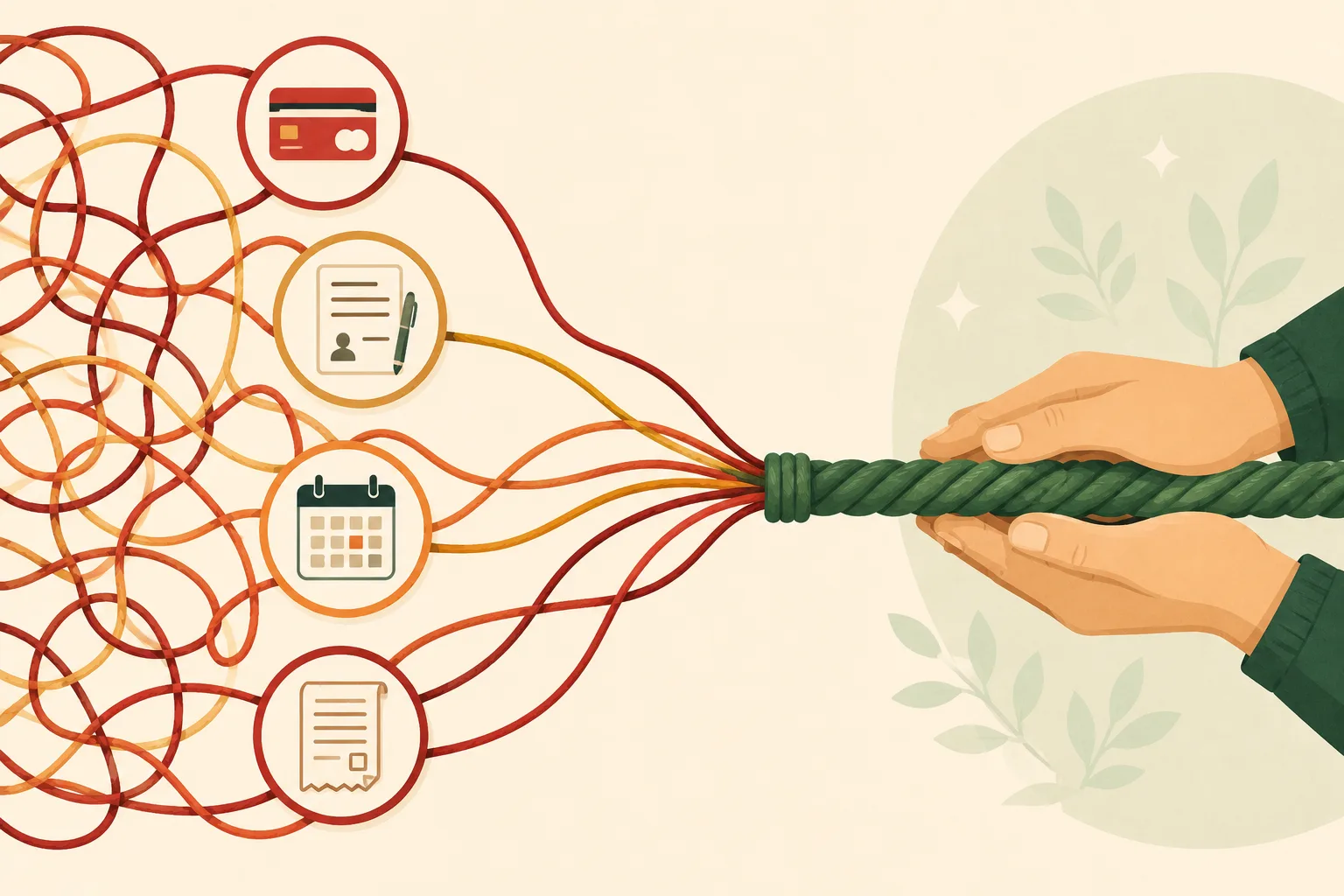
The mechanics work like this. Loan A needs an EMI. Income can't quite stretch to cover it that month, so loan B gets taken out, sized just enough to cover loan A's payment. Loan B carries its own interest, often higher than loan A's, since it was taken in a hurry with less negotiating room. A few months later, the same gap opens up again, except now it's wider, because loan B added its own EMI to the pile. That's the whole mechanism. It compounds because every round of borrowing costs more than the round before it.
None of this describes a home loan or a car EMI paid comfortably out of salary every month. That's ordinary debt, and it's fine. Loan consolidation as a general concept is often the thing that interrupts this pattern before it fully sets in, because it addresses the exact moment where new borrowing starts substituting for income rather than supplementing it.
FOIR, or Fixed Obligations to Income Ratio, is a measure lenders may use to assess how much of a borrower's income is already committed to fixed financial obligations. The calculation can vary by lender. Somewhere around the 50% mark, there's barely any room left to absorb a bad month. Getting here rarely happens in one move. A handful of specific patterns drive it, and they're worth naming individually.
What Causes a Debt Trap?
Buying on EMI without checking the cumulative load against income is one path in. A phone here, furniture there, each purchase looking perfectly affordable in isolation, until the stack of monthly commitments quietly outgrows what income can absorb.
An unplanned shock is another. A medical emergency, a sudden layoff, an income cut nobody saw coming. Any of these can knock a functioning budget sideways inside a single month, regardless of how carefully things were planned before.
Then there's the minimum-due habit on credit cards. Paying only the minimum due can leave a substantial balance outstanding, while interest and applicable charges continue to accrue according to the card's terms.
And running without an emergency fund removes the one buffer that could absorb a shock without new borrowing. When there's no savings to draw from, a bad month has exactly one place to go: another loan.
Recognising these patterns matters more before they compound than after, and there's a specific set of signs that shows up well before an account actually breaks down.
What Are the Warning Signs of a Debt Trap?
Run through this list honestly. One or two matching is worth watching. Even one of these signs can be worth taking seriously, particularly if new borrowing is being used to repay existing debt.
- EMIs together cross 50% of take-home salary
- New credit, a loan app, a credit card cash advance, gets used to pay an existing EMI
- Only the minimum due gets paid on a credit card for two or more consecutive months
- New credit applications are increasingly being rejected because of high existing debt or other credit-profile factors.
- Due dates are being juggled across three or more lenders at once
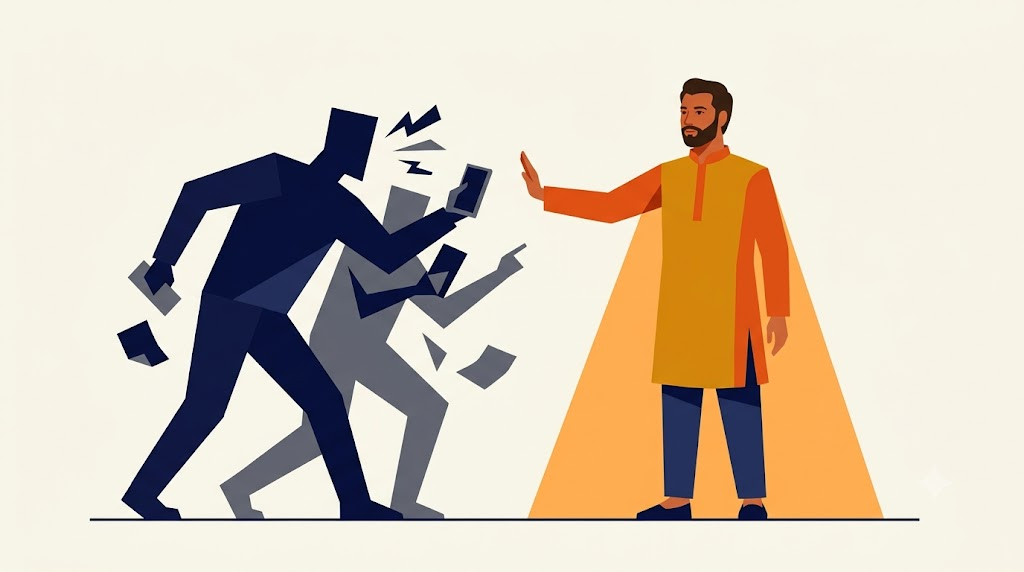
- Recovery calls have already started coming in
If recovery calls are already part of this list, knowing exactly what those calls can and can't legally involve is worth understanding sooner rather than later. Catching these signs early is what makes the next steps a choice rather than a scramble.


FREED Expert Tip
Check your EMI-to-income ratio today. Add every EMI, divide by take-home salary. Above 50%, act now, don't wait for a rejection to force the issue.
Start My Debt AssessmentHow Do You Get Out of a Debt Trap?
Everything after this point depends on one honest answer. Can income still stretch to cover a restructured payment plan, or has repayment genuinely stopped being possible? Getting there takes four concrete steps, not a guess.
Step 1: List Every Loan You Owe
Bank or NBFC name, amount owed, interest rate, EMI amount. All of it, in one place.
Step 2: Calculate Your EMI-to-Income Ratio
Add every EMI, divide by take-home salary. Above 50% means the trap territory has already been entered.
Step 3: Check Your CIBIL Score
Pulling the actual credit report settles this rather than guessing. Check your CIBIL score and credit report before considering consolidation. Whether you qualify depends on the lender's eligibility criteria and your overall financial profile. If you are still able to repay your debts, restructuring or consolidation may be worth exploring. If full repayment is genuinely no longer affordable, settlement may need to be considered.
Step 4: Decide, Restructure or Resolve
Still paying but stretched thin points to consolidation. Genuinely unable to repay points to settlement.
What each of those two paths actually involves looks quite different up close.
Debt Trap vs Debt Cycle: Is There a Difference?
Most explanations online use these two terms interchangeably. A cycle describes the mechanism itself, one loan covering another, repeating and compounding each time. A trap describes what that mechanism eventually produces, a point where escaping requires a deliberate change in approach rather than just paying a bit more diligently.
There's a separate distinction worth making too. Someone carrying a large EMI load that's still fully serviceable out of income isn't in a trap. They're just carrying a lot of debt, comfortably. Loan settlement's actual mechanics and CIBIL impact only become relevant once new borrowing is being used specifically to service the old, and that's the line that separates heavy debt from a trap.
What Are Your Options to Escape a Debt Trap?
Two roads exist here, and they don't serve the same person.
For someone still managing payments, even if stretched thin, consolidation is the direction worth taking. A DIY balance transfer to a lower-rate lender covers the simplest version of this for someone with a decent score. FREED's Debt Consolidation Program does the same thing at scale for someone juggling several unsecured debts at once, folding everything into one new loan with a single, usually lower, EMI. Consistent, on-time repayment after consolidation can help strengthen your credit profile over time.
For someone where repayment genuinely isn't possible anymore, no matter how it's restructured, settlement exists as the alternative. It's rarely the first thing tried. If full repayment remains possible, restructuring or another repayment arrangement may be worth exploring before settlement. The credit-reporting impact depends on the lender's arrangement and reporting. Once those options are exhausted, FREED's Debt Resolution Program builds a structured savings plan into an SPA, negotiates with the bank once that corpus is sufficient, and closes the account marked "Settled." In some cases, FREED may negotiate a settlement for less than the outstanding amount. Actual outcomes vary by lender, account and borrower circumstances, and no specific reduction is guaranteed.
The next section breaks down exactly how each of these two programs actually operates.

What the Law Says
Cheque dishonour can attract consequences under Section 138 of the Negotiable Instruments Act when the statutory conditions are met. The provision allows for imprisonment of up to two years, a fine that may extend to twice the cheque amount, or both.
Check your optionsHow FREED Helps You Escape a Debt Trap
FREED's Loan Consolidation Plan, also known as the Debt Consolidation Program or Reduce My EMI, fits someone still repaying but drowning under too many separate accounts. FREED reviews the full financial profile first, matches it to a lending partner, and once approved, the new loan clears the existing unsecured debt instantly. What's left is one EMI, usually lower in total than what several accounts added up to, and a score that climbs as the new loan stays current. The mechanics behind consolidation are worth a closer read for anyone wanting the full picture. Every settlement gets the customer's authorisation before it happens.
FREED's Loan Settlement Plan, also known as the Debt Resolution Program or Settle My Loans, exists for the other situation entirely, genuine financial distress rather than a temporary squeeze. FREED assesses the complete financial picture, guides a structured savings plan into an SPA, and negotiates with the bank once enough has built up to make a credible offer. Every settlement gets the customer's authorisation before it happens. None of this moves quickly. Savings build first. Negotiation comes after. The waiver typically lands at up to 50%* of the outstanding, with the account carrying a "Settled" tag for up to 7 years* once it closes. Anyone facing recovery pressure during this stretch, harassment, threats, calls at odd hours, can get help through FREED Shield, which is open to everyone, not just enrolled customers.
Rates and ranges shown are indicative. Final terms decided by the bank. FREED is not a Loan Provider. No outcome is guaranteed. Please verify directly with your bank.

Debt Consolidation vs Debt Settlement, Which Fits You?
Factor | Debt Consolidation | Debt Settlement |
Who it's for | Still paying but stretched thin | Genuinely can't repay in full |
What happens to CIBIL | Improves over time | "Settled" tag, up to 7 years* |
What happens to the debt | Combined into one new loan, one EMI | Reduced by up to 50%* through bank negotiation |
Timeframe | New loan disbursed once approved | First settlement typically within a few months, full program longer |
FREED product | Loan Consolidation Plan (Reduce My EMI) | Loan Settlement Plan (Settle My Loans) |
Rates, ranges, and timelines are indicative. Final terms decided by respective banks/NBFCs. FREED is not a lender. No outcome is guaranteed.

Tips to Stay Out of a Debt Trap After You Escape
Keeping total EMI under 40 to 50% of take-home income, even after restructuring or settling, is what stops a fresh start from turning into a repeat of the same problem. A 3 to 6 month emergency fund, built before taking on any new EMI purchase, covers the next shock without needing new borrowing to absorb it. Everyday spend, groceries, daily expenses, is worth moving off credit cards entirely once an account is consolidated or settled, since revolving credit was never meant to carry routine costs. Checking the CIBIL report every 2 to 3 months after resolution confirms the status is actually updating, whether that's a settled tag reflecting correctly or a consolidated account showing current.
These habits are what keep the fix permanent, not just the first step out.
Sources
Claim | Source |
Section 138 NI Act: up to 2 years jail or fine up to 2x cheque amount for wilful dishonour | |
EMI-to-income danger threshold of 50% | Internal FREED figure, confirm before quoting |
Settlement waiver up to 50%, "Settled" tag up to 7 years | Internal FREED figures, confirm before quoting |
RBI Fair Practices Code on recovery agent conduct | RBI Fair Practices Code, confirm current wording |

Mohit Juneja
Mohit Juneja writes educational content at FREED on debt management, credit scores, loan repayment, and borrowing best practices. His content is shaped by expert insights and industry knowledge, helping readers better understand their financial options and make informed decisions.
mohit.juneja@freed.care

FREED is India's trusted loan management platform. Founded in 2020 and headquartered in Gurugram, FREED has counselled 20 lakh+ people on personal loans, credit cards, and app loans. FREED charges fees only on successful settlement, not upfront. FREED does not handle secured loans (home loans, car loans, gold loans).
Media Mentions