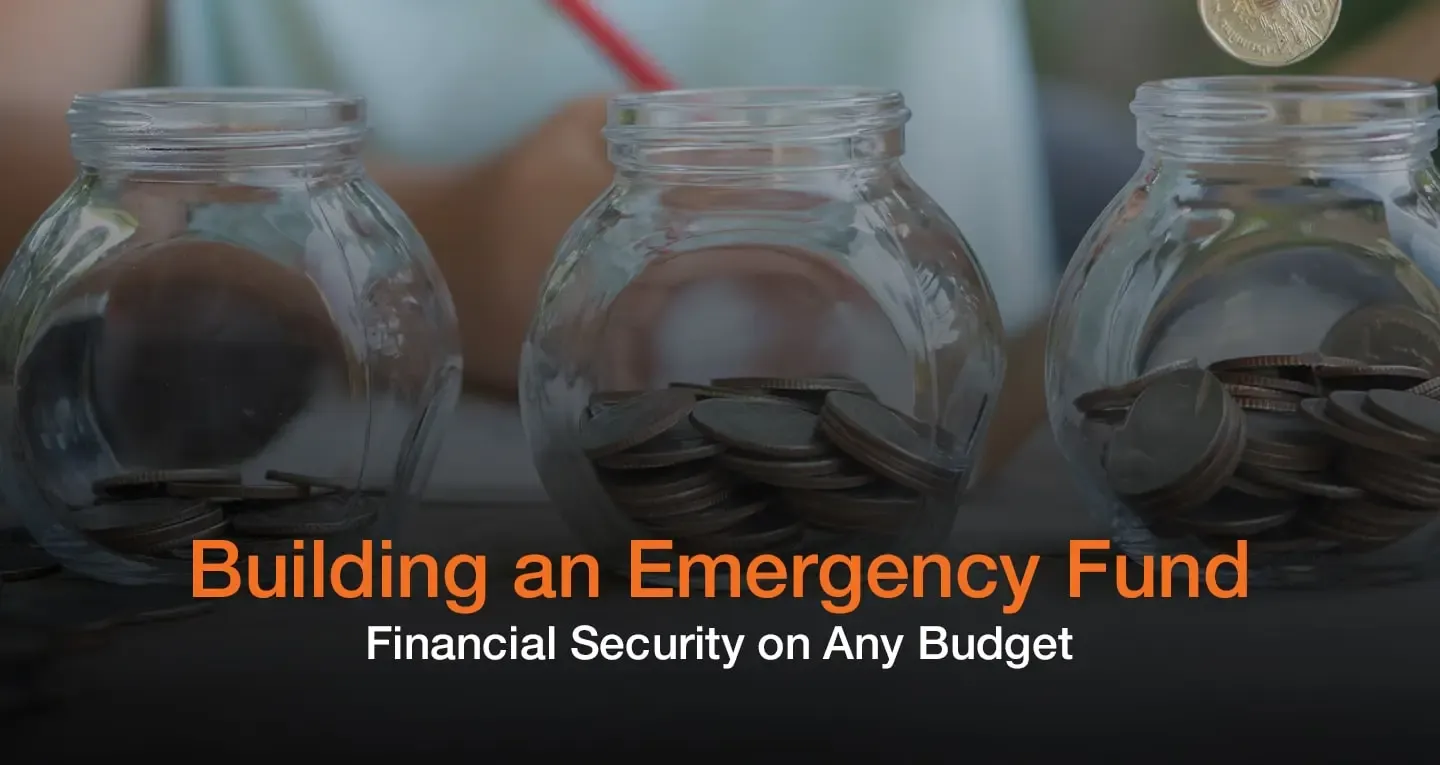
Building an Emergency Fund: Financial Security on Any Budget
Job loss. Medical bill. Bike breakdown. Life throws surprises and without a safety net, one bad month can push you into debt. Here's how to build an emergency fund, even if money is tight.
Mohit Juneja
Reviewed by FREED India, Debt Resolution Specialists
 4.7/5
4.7/5 ₹3,200Cr+
 20,000+
 20,00,000+4.7/5₹3,200Cr+20,000+20,00,000+
Key Takeaways

An emergency fund is 3–6 months of essential expenses kept separately and not touched until a real emergency.
Even ₹500 a month builds a meaningful safety net over time. The habit matters more than the amount.
Without an emergency fund, one unexpected expense becomes a loan and one loan becomes long-term debt.
Keep emergency savings in a separate, easy-access account not in investments, not in cash at home.
If high-interest EMIs leave nothing to save, the debt load needs to be fixed first. FREED can help.
What Is an Emergency Fund?
An emergency fund is a fixed amount of money kept aside only for genuine emergencies.
Not for a sale. Not for a trip. Not for a festival. Only for things like:
- Sudden medical expenses
- Job loss or salary delay
- Vehicle breakdown
- Home repair (roof leak, electrical fault)
- Family crisis that needs immediate cash
It's not an investment. It's not a savings goal. It's a financial cushion. The whole point is that it's there when you need it without you having to borrow.
Why Most Indians Don't Have One And What That Costs Them
In a survey, more than 6 out of 10 Indians said they would struggle to handle an unexpected expense of ₹20,000 or more without borrowing.
That's not a small number. That's the majority.
And the cost of not having this cushion is real:
When a ₹15,000 medical bill hits with no savings - it goes on a credit card. That credit card charges 36–42% annual interest. If you can only pay the minimum, that ₹15,000 bill becomes a ₹25,000+ problem within a year.
One emergency. No fund. Debt begins.
This is how most debt cycles start. Not from reckless spending - from one bad month with no backup.
How Much Should You Actually Save?
The standard advice is 3–6 months of expenses. In India, a practical target looks like this:
Monthly Expenses | 3-Month Target | 6-Month Target |
₹15,000 | ₹45,000 | ₹90,000 |
₹25,000 | ₹75,000 | ₹1,50,000 |
₹40,000 | ₹1,20,000 | ₹2,40,000 |
These numbers can feel large. That's okay.
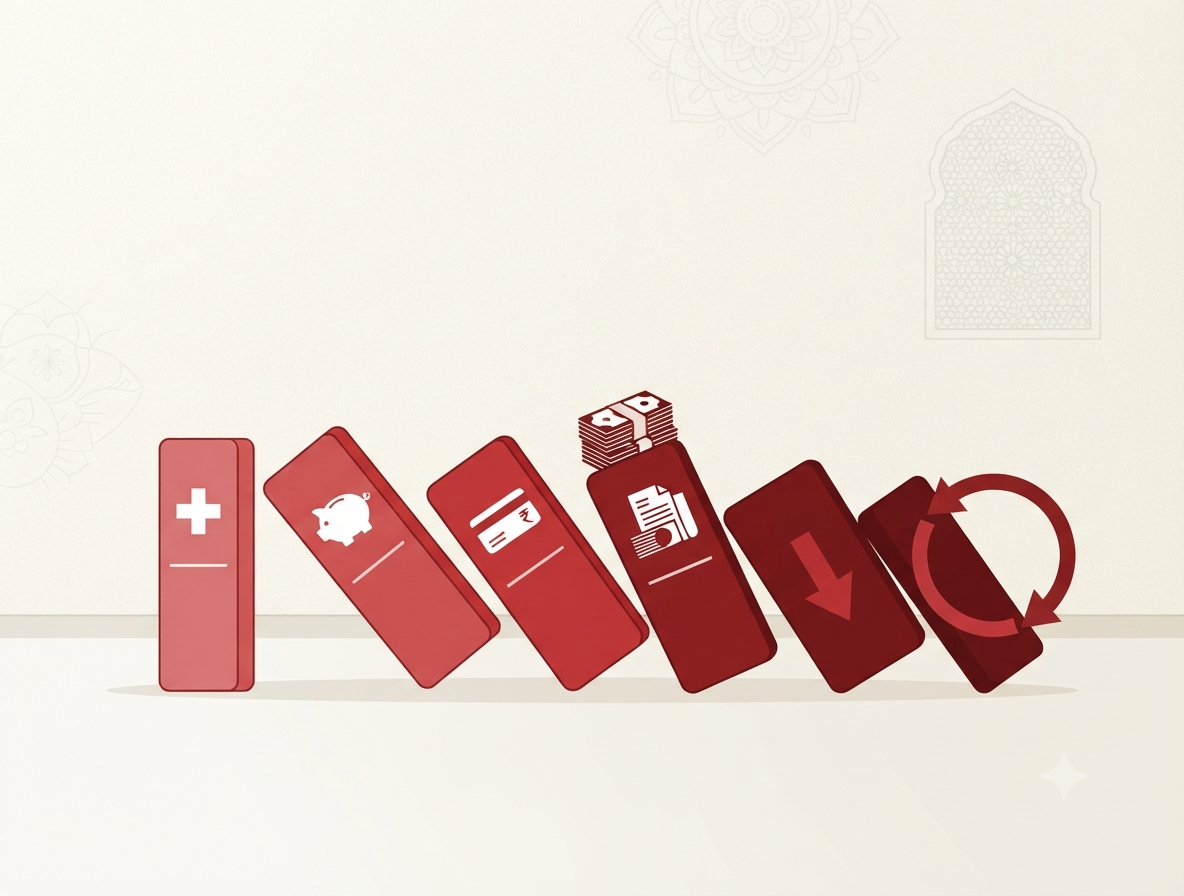
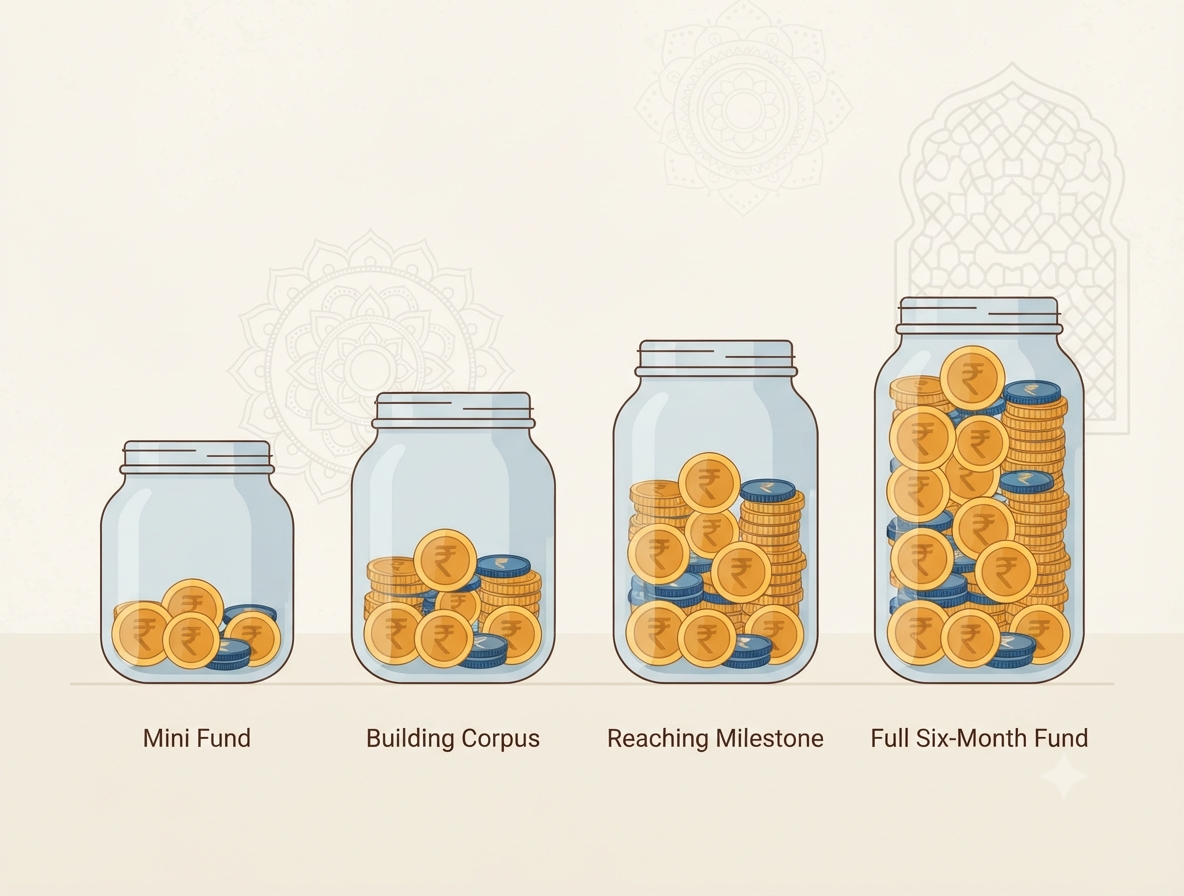
Start with a mini emergency fund first. Target ₹10,000–₹25,000 before anything else. This covers most common emergencies - a medical visit, a vehicle repair, a missed salary. It won't cover everything, but it stops the first debt domino from falling.
Once you have the mini fund, work towards the full 3-month target. Then 6 months.
Think of it as building in stages - not all at once.
How to Start When Money Is Already Tight
"I barely have enough for the month. How do I save for emergencies?"
This is the most common question and the most important one to answer honestly.
- 1
Step 1: Find any gap, no matter how small.
Go through last month's UPI and bank statement. Find ₹500–₹1,000 that went on something non-essential. That's your starting contribution. Even ₹300 counts.
- 2
Step 2: Open a separate savings account just for the emergency fund.
Not your main account. A separate one. This creates a psychological barrier, you won't accidentally spend it, and you won't see it sitting there tempting you.
- 3
Step 3: Set up an auto-transfer on salary day.
Even ₹500 auto-transferred the moment salary arrives becomes ₹6,000 in a year. Without any willpower required.
- 4
Step 4: Add windfalls when they come.
Tax refund, Diwali bonus, side income, selling old stuff, direct all of this into the emergency fund until you hit your first ₹25,000 milestone.
- 5
Step 5: Don't pause during bad months, reduce instead.
If money is very tight one month, reduce the transfer to ₹200 or ₹100. Don't stop. The habit of contribution, even tiny, is what builds the fund over time.
Where to Keep Your Emergency Fund
Where you keep this money matters as much as building it.
Right places:
- Separate savings account: Easy to access, earns a small interest, no risk. Best for the first ₹50,000–₹1,00,000 of your fund.
- Liquid mutual fund: Slightly better returns than a savings account, withdrawable within 1 business day. Good for the larger portion of the fund once you're comfortable.
- Short-term FD with premature withdrawal option: Earns better interest, can be broken in an emergency. Works for the portion of the fund you're unlikely to need immediately.
Wrong places:
- Cash at home - Too easy to spend, no interest, and not safe.
- Equity mutual funds or stocks - Market can be down exactly when you need the money. Emergency funds and market investments don't mix.
- Your main salary account - Out of sight, out of mind works both ways. If it's in your main account, it will get spent.

What the Law Says:
Under RBI guidelines, banks are required to allow premature withdrawal of fixed deposits, though a small penalty may apply. This means an FD is a valid emergency fund option - you can break it when needed. Always check the premature withdrawal terms before opening any FD for emergency savings.
Know your banking rights as a depositorCommon Mistakes to Avoid
Mistake 1: Treating it like regular savings. Emergency funds are not for planned expenses. A vacation is not an emergency. A phone upgrade is not an emergency. Using this fund for non-emergencies means it won't be there when something real hits.
Mistake 2: Investing it in the market. Returns matter less than availability. Your emergency fund needs to be accessible in 24–48 hours. Equity investments cannot guarantee this.
Mistake 3: Setting one large target and waiting. ₹1,00,000 sounds far away. ₹25,000 is achievable. Start small, hit the first milestone, then grow. Momentum matters.
Mistake 4: Stopping contributions once the fund exists. Inflation increases your monthly expenses over time. Your target amount should grow with it. Review and top up the fund every year.
Mistake 5: Not replenishing after using it. If you use the fund, which is exactly what it's for
-treat replenishing it as the next financial priority. Set a timeline to rebuild.
What If Debt Is Eating Your Savings Capacity?
Here's the hard version of this problem.
You understand why an emergency fund matters. You want one. But after EMIs - credit card dues, personal loans, BNPL, there is genuinely nothing left to save.
This is not a discipline problem. It's a math problem.
When EMIs consume 50–60% of income before rent and food, the remaining margin is too thin for consistent saving. One bad month wipes out whatever was set aside.
In this situation, reducing the debt load is the first priority, not because saving doesn't matter, but because it's the only way to create the room where saving becomes possible.
FREED helps people in exactly this position. Through Debt Consolidation, we combine multiple high-interest EMIs into one lower monthly payment. Through Debt Resolution, we help settle outstanding debt for less than the full amount owed.
Both approaches reduce the monthly outgo, creating the margin where an emergency fund can actually be built and held.
Over 10,000 Indians have used FREED to get to this point. The first conversation costs nothing.
Are You in a Loan Trap? Quick Check
Move the slider to your total EMIs as a % of monthly salary. See your debt stress level instantly.
EMIs as % of Monthly Salary

Mohit Juneja
Mohit Juneja writes educational content at FREED on debt management, credit scores, loan repayment, and borrowing best practices. His content is shaped by expert insights and industry knowledge, helping readers better understand their financial options and make informed decisions.
mohit.juneja@freed.care

FREED is India's trusted loan management platform. Founded in 2020 and headquartered in Gurugram, FREED has counselled 20 lakh+ people on personal loans, credit cards, and app loans. FREED charges fees only on successful settlement, not upfront. FREED does not handle secured loans (home loans, car loans, gold loans).
Media Mentions