6 Financial Tips For Millenials
Earning your first salary or a few years into your career? The financial decisions you make in your 20s and early 30s have a disproportionate impact on everything that comes after. Here are 6 tips that actually matter.
Mohit Juneja
Reviewed by FREED India, Debt Resolution Specialists

 4.7/5
4.7/5 ₹3,200Cr+
 20,000+
 20,00,000+4.7/5₹3,200Cr+20,000+20,00,000+
Key Takeaways

These top 6 financial tips work together to build genuine financial literacy in your 20s and 30s - the decade that shapes your entire financial future.
Compound interest does the hard lifting over time, so the earlier you start investing and saving, the less you need to save overall. This is the foundation of smart money management.
Building an emergency fund before making investments or increasing expenditure prevents any other financial objective from being derailed by one unforeseen event.
What financial products, including as home loans, business loans, and auto loans, are available to you in your 30s and 40s depends on your CIBIL score in your 20s. One of the most useful financial tips anyone can follow is to protect it early.
The main cause of financially literate millennials' high level of debt in their 30s is lifestyle inflation, or an impulse to spend more every time your pay grows.
When debt is addressed early on, it costs much lower in terms of money, worry, and opportunity than when it is ignored until a crisis arises. This is the point at which sound financial management truly matters.
Why Your 20s and 30s Are the Most Important Financial Decade
Financial decisions made between the ages of 22 and 35 have a greater influence on long-term financial well-being than those made at any other time of life. For this reason, having a clear financial guide is important now, not later.
This isn't because the sums involved are the highest; typically, they aren't. Time is the reason for this. Before retirement, every rupee invested or saved at age 25 has 35 years to compound. By avoiding debt at age 28, years of interest payments and psychological strain are saved. For decades, every habit formed at age thirty operates automatically.
The issue is that financial errors are also most common during this decade. Income is increasing quickly. Credit is easily accessible. There is a lot of pressure on social spending. Furthermore, the repercussions of bad financial choices seem far enough away to be disregarded.
In simple, non-jargon language, these financial tips tackle the unique financial issues faced by millennials.
Tip 1: Start Saving Early - Even a Very Small Amount
The most important financial choice a young person can make is to start saving money right away. Not when the pay increases. Not following the subsequent increment. Right now.
Compound interest is the cause. Your savings generate returns, which in turn generate returns. This leads to rapid growth over extended periods of time.
For instance, a monthly savings of Rs 1,000 from age 25 at a 10% annual return increases to almost Rs 22,00,000 by age 55. At age 35, the same monthly income of Rs 1,000 increases to just Rs 7,60,000 by the age of 55. identical contribution. A difference of Rs 14,00,000 is created by the 10-year head start.
Start with whatever you can afford. Rs 500. Rs 1,000. Start a SIP in a mutual fund or open a recurring deposit. The habit and the time are significantly more important than the sum; this one habit alone is among the best financial advice for beginners.
Tip 2: Build an Emergency Fund Before Anything Else
Create an emergency fund in advance of investing, purchasing insurance, or achieving any other financial objective.
Three to six months' worth of necessary monthly costs stored in a different savings account constitute an emergency fund. That is between Rs 60,000 and Rs 1,20,000 for someone who spends Rs 20,000 a month on needs.
The sole goal of this fund is to keep a financial emergency from turning into a debt emergency. A person without money may be forced into high-interest credit card or personal loan debt due to a job loss, medical expenses, or auto repairs.
These shocks are absorbed by an emergency fund without the need for borrowing. It serves as the basis for all other financial objectives and is the beginning of any meaningful financial management strategy.
In advance of making any further investments, build it. Don't touch it after it's constructed unless there is an actual emergency. After using it, replenish it right away.

Tip 3: Understand and Protect Your CIBIL Score
What financial products are available to you later on is directly affected by your CIBIL score in your 20s. A loan in your forties. an automobile loan. a loan for business. In certain cities, even a lease.
Until they need a loan and are turned down, the majority of millennials do not consider their CIBIL score. By that point, the harm caused by unpaid credit card debt or a forgotten EMI might have been accumulating for years.
At this point in your life, three factors are most important for your score:
Pay all credit card bills and EMI on time each month. Configure each card to automatically deduct the entire amount owed.
Don't use more than 30% of your credit card limit. Avoid frequently going over your credit card limit.
Avoid applying for several loans or credit cards at once. Every application results in a hard inquiry that immediately lowers your score.
Every three months, you can check your CIBIL score for free at cibil.com or via FREED at freed.care/credit-check. Early error detection saves years of unfair score damage; it's a tiny habit that pays off throughout your financial literacy journey.

FREED Expert Tip
Building a solid CIBIL score is best done before you need it. In your mid-20s, get a single credit card. Make one or two scheduled purchases with it each month. Each month, pay the entire balance due before the deadline. For two years, do this. Your CIBIL score will be in the outstanding range by the time you need a home loan in your 30s, which will allow you to secure the best interest rate.
Check My CIBIL ScoreTip 4: Use Credit Cards Responsibly - Not Just Conveniently
For millennials, credit cards are among the most mistaken financial products. When used properly, they are a potent CIBIL score booster, reward points, and free short-term credit. When misused, they are among the most costly types of debt. This is the point at which true credit card accountability separate a helpful instrument from an expensive trap.
The guidelines are straightforward:
Swipe only the amount you can pay in full before the deadline. You cannot afford to purchase it if you are unable to pay for it this month.
Don't just pay the minimal amount owed; pay the entire statement. The minimum due trap imposes an annual interest rate of 36 to 42% on the outstanding debt.
Always keep the total amount owed on all of your cards under 30% of your entire credit limit.
Never take out a cash advance using a credit card. In addition to a fee of 2.5 to 3% of the amount withdrawn, interest begins on the first day.
If you adhere to these four guidelines, using a credit card won't cost you anything and will improve your financial standing. Credit card responsibility should be included in every young earner's financial guide because ignoring any one of them can soon become costly.
Tip 5: Avoid Lifestyle Inflation as Your Salary Grows
This is one of the most important financial tips that most of youngsters overlook.
The trend of rising spending in proportion to income growth is known as lifestyle inflation. A better apartment comes with the first raise. A automobile loan is brought in by the second. Increased eating out, holidays, and subscriptions are all part of the third. Expenses have doubled by the time income has doubled, and savings are exactly the same as they were five years before.
This explains why many millennials who make between Rs 60,000 and Rs 80,000 a month feel just as constrained on cash as they did when they made Rs 25,000. Increased earnings, increased obligations, and identical savings.
The guideline is to save at least 50% of each pay increase before making lifestyle adjustments. Put Rs 2,500 into savings or investments and set aside Rs 2,500 for lifestyle if a raise increases take-home pay by Rs 5,000 per month. Every single time. Without fail. Long-term financial management revolves around this one discipline.

Do you feel like your debt is already overtaking you?
Speak with a FREED Expert for free; just one discussion may completely change your possibilities.
Talk to a FREED Expert - It's Free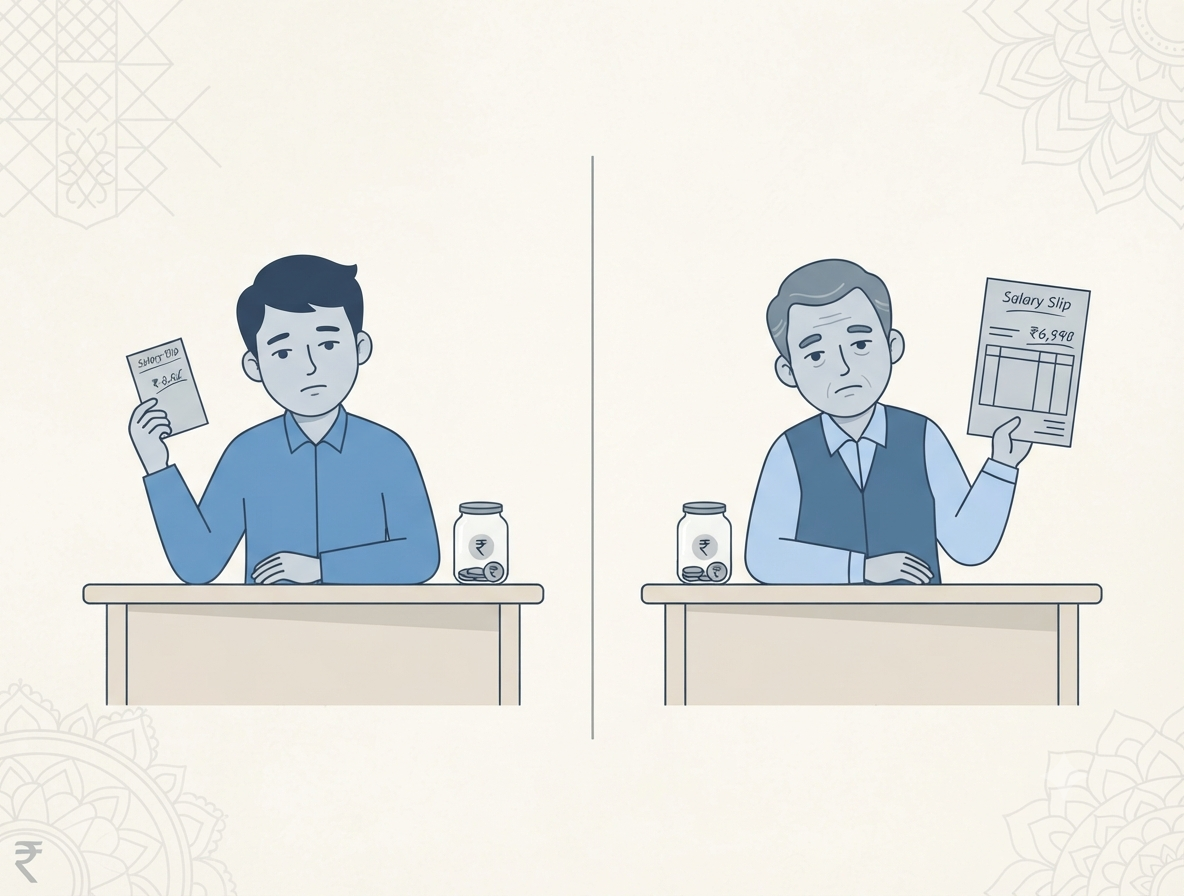
Tip 6: Address Debt Early - Do Not Let It Compound
Debt is more than just a money issue. It's a timing issue.
The amount owed increases each month if high-interest debt—especially credit card debt, which has an annual interest rate of 36 to 42%—is not paid off. The compound interest. Eventually, you will have to pay a higher total. Additionally, the psychological toll increases.
Without making any new purchases, a credit card balance of Rs 30,000 that is neglected for a full year at 38% interest amounts to over Rs 41,400. About Rs 57,000 after two years of neglect.
Deal with debt as soon as it arises. Pay more than the minimal amount on each card. First, focus on the debt with the greatest interest rate. Consolidation into a single, lower-interest loan might be the best course of action if several loans are becoming unmanageable.
As part of a more comprehensive financial guidance to getting back on track, FREED's free consultation will tell you honestly what your choices are if your debt has already gotten out of control.

What the Law Says
Before granting a loan, all lenders must evaluate a borrower's ability to repay the loan, according to RBI regulations. This involves looking at your total EMIs as a percentage of your monthly income, or the Fixed Obligation to Income Ratio, which most banks cap at 40 to 50%. You have the right to contact the lender and ask for restructuring if they approved a loan that has caused your EMIs to exceed this threshold or if your income has decreased since the loan was issued. This is a privilege that borrowers have and should not be ashamed to request.
Reduce My EMIAre You in a Loan Trap? Quick Check
Move the slider to your total EMIs as a % of monthly salary. See your debt stress level instantly.
EMIs as % of Monthly Salary

Mohit Juneja
Mohit Juneja writes educational content at FREED on debt management, credit scores, loan repayment, and borrowing best practices. His content is shaped by expert insights and industry knowledge, helping readers better understand their financial options and make informed decisions.
mohit.juneja@freed.care

FREED is India's trusted loan management platform. Founded in 2020 and headquartered in Gurugram, FREED has counselled 20 lakh+ people on personal loans, credit cards, and app loans. FREED charges fees only on successful settlement, not upfront. FREED does not handle secured loans (home loans, car loans, gold loans).
Media Mentions