What Happens If You Only Pay the Minimum, Every Month
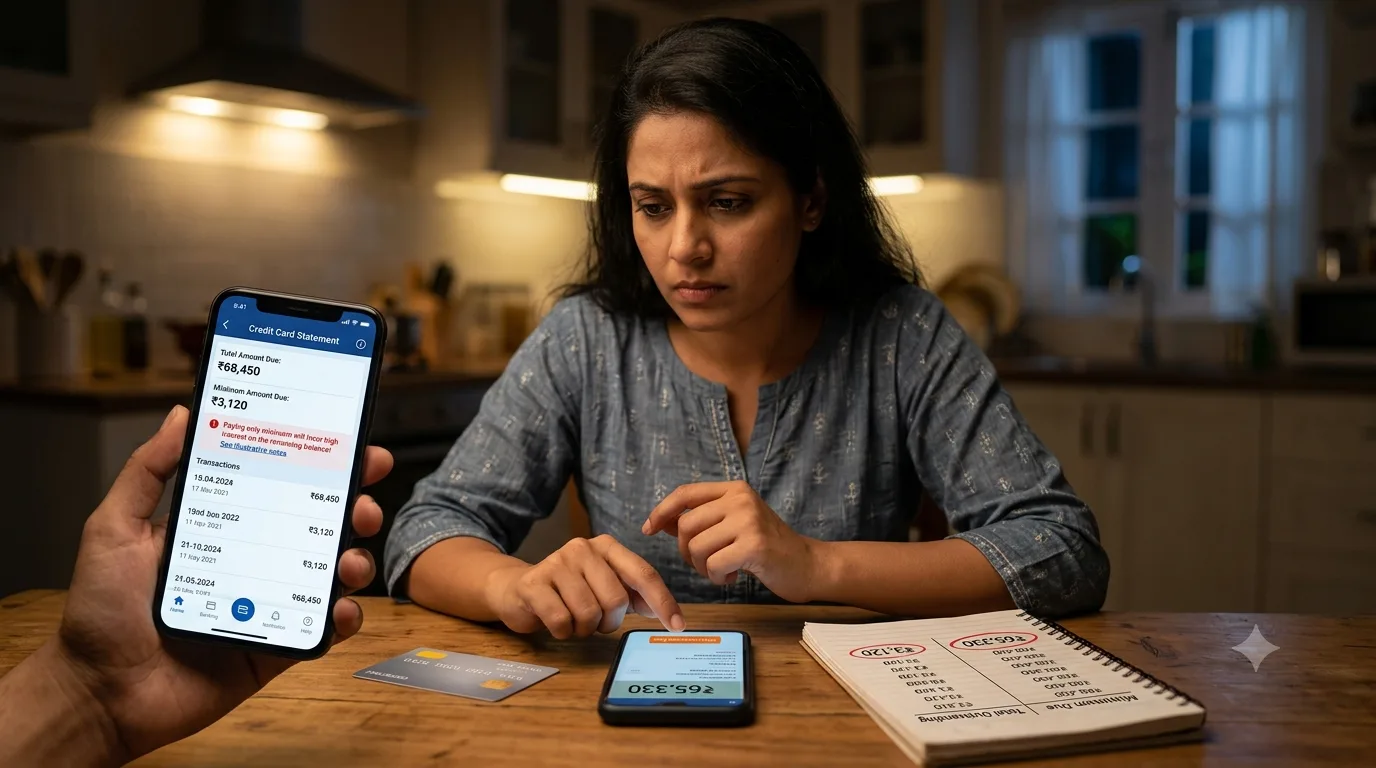
Paying only the minimum due every month keeps your account technically current, but it doesn't mean your debt is shrinking the way it looks. Interest continues to accrue on the unpaid balance, while new spending can add to the amount you owe.
Mohit Juneja
Reviewed by FREED India, Debt Resolution Specialists
 4.7/5
4.7/5 ₹3,200Cr+
 20,000+
 20,00,000+4.7/5₹3,200Cr+20,000+20,00,000+
KEY TAKEAWAYS

Paying only the minimum due keeps interest running on your full balance, not just what's left after your payment.
A balance paid at minimum due only can take over a decade to clear and cost far more than the original amount.
New purchases start accruing interest immediately too. Once you're carrying a balance, there's no more interest-free period.
Persistently high utilisation from minimum-only payments can quietly affect your CIBIL score, even while you're technically current.
If even the minimum eventually stops, the account moves toward NPA (loan marked as bad by the bank) after 90 days overdue.
What Happens If You Only Pay the Minimum? A Quick Answer
Paying only the minimum due every month sets off five effects that compound on top of each other, and most cardholders only notice the combined weight of them months or years after the pattern started. Interest keeps running on your entire outstanding balance, not the smaller amount left after your payment, at rates that typically sit between 36% and 42% a year. That interest alone is enough to stretch a payoff timeline that should take a couple of years into well over a decade. New purchases made while carrying a balance start accruing interest from the moment you swipe, since the interest-free grace period disappears the instant you stop paying in full. Your credit utilisation, meaning how much of your credit limit you're actually using, tends to stay high month after month, which can quietly weigh on your CIBIL score even without a single missed payment. And if income gets tight enough that even the minimum stops getting paid, the account crosses into far more serious territory.
This article walks through each of those five effects on its own, in order, so you can see exactly where the real cost is coming from rather than just feeling it show up in your balance every month. It doesn't re-explain what minimum due actually is or how it gets calculated. If you want that groundwork first, FREED has a dedicated breakdown of the minimum due amount on a credit card worth reading alongside this one. What follows here assumes you already know what minimum due means and want to understand what actually happens when you keep paying only that.

Effect 1: Interest Keeps Compounding on the Full Balance
This is the effect every other consequence in this article traces back to, so it's worth being precise about it. Paying only the minimum does not stop interest on the unpaid balance. Once you don't clear the total amount due, the interest-free period is suspended, and interest can be charged on the outstanding amount in accordance with the card issuer's terms. Credit-card interest rates can be high, and the applicable rate varies by card issuer and product. Check your card's stated APR rather than assuming a standard rate.
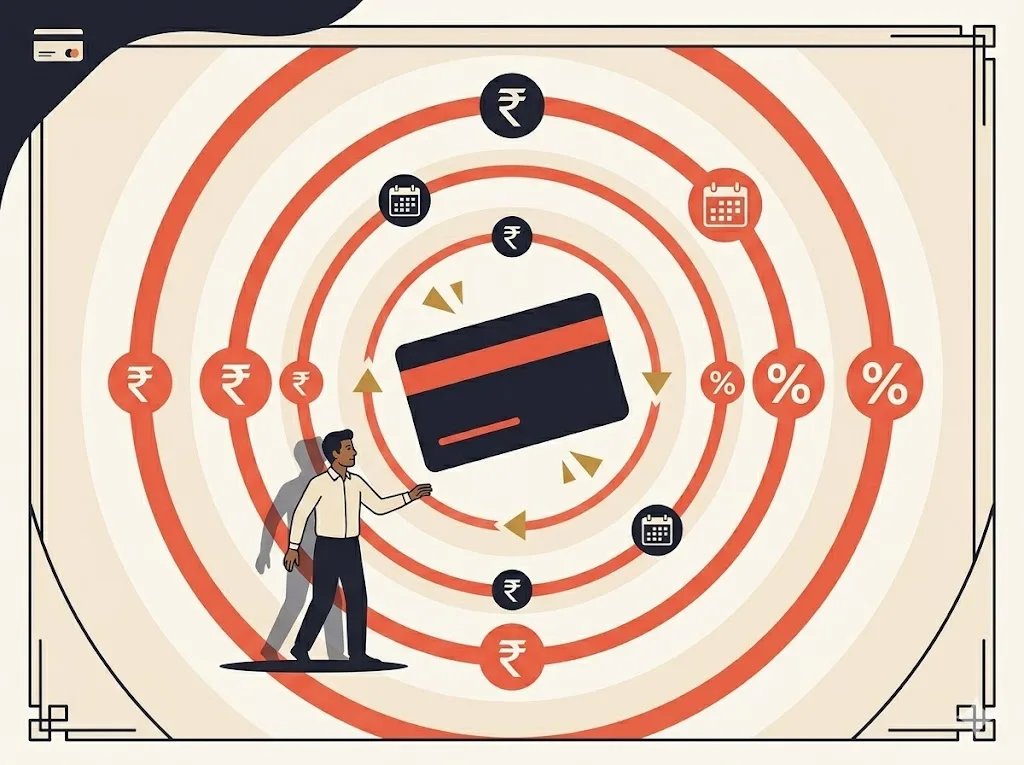
That distinction between "interest on the full balance" versus "interest on what's left" is the whole reason minimum-only payments feel like they're barely making a dent, because in a very real sense, they aren't. The bulk of what you pay each month is servicing interest on money you already spent, not reducing the amount you actually owe. For the full mechanics of how this gets calculated and why it's structured this way, FREED's existing piece on how revolving credit actually works covers the calculation in detail. Every effect covered below in this article grows directly out of this one fact.
Effect 2: It Takes Far Longer to Clear the Debt Than It Looks
Here's what that compounding interest actually costs in real time. For illustration, a ₹50,000 balance paid using a minimum-payment structure can take many years to clear and can cost substantially more than the original balance. The exact timeline and total cost depend on the card's interest rate, minimum-payment formula, charges and whether you make additional purchases. That figure is consistent with what FREED's detailed breakdown of minimum amount due has already published, and it's worth treating as the reference number rather than a rough estimate, because the math behind it holds regardless of which specific card or bank is involved.
The reason it stretches this long comes straight back to Effect 1. The minimum due is calculated according to the card issuer's formula and may include a percentage of the outstanding amount along with interest, fees, taxes or instalments. It's only once the balance has shrunk considerably, usually after years of payments, that a meaningfully larger share of each minimum payment finally starts chipping away at the amount you originally borrowed. Eleven years is a long time to be paying off what started as a single ₹50,000 balance, and most people who fall into this pattern never sat down and did that math in advance.
Effect 3: New Purchases Start Accruing Interest Immediately Too
There's a specific detail here that catches a lot of cardholders off guard, because it's easy to assume your grace period, the interest-free window most cards offer, still applies as long as you're paying something every month. It doesn't, not once you're carrying a balance.
When you pay your card in full every single month, new purchases genuinely are interest-free for that entire billing cycle, right up until your next due date. That grace period is one of the actual benefits of using a credit card responsibly. The interest-free period is suspended when a previous month's balance remains outstanding. It can resume once the conditions specified by the card issuer are met. If you don't clear the total amount due, you can lose the interest-free period. New purchases may then attract interest from the transaction date, subject to the card issuer's applicable terms.
This means continuing to use a card while only paying the minimum doesn't just fail to help, it actively adds fresh interest-bearing balance directly on top of whatever's already compounding from before. A ₹3,000 purchase made mid-cycle on a card already carrying a balance starts costing interest that same day, stacking straight onto the pile covered in Effects 1 and 2. This is one of the quieter ways a manageable-looking balance turns into something much bigger, purchase by purchase, without a single moment that felt like a big decision.

Freed Expert Tip
If you're carrying a balance, stop using that card for new purchases until it's cleared. Every new swipe joins the interest-bearing pile immediately, with no grace period left.
Reduce My EMIEffect 4: It Can Quietly Affect Your Credit Score
Here's an effect that surprises people who think they're doing everything right, because on the surface, they are. Paying the minimum due, on time, every single month, keeps your account technically current. It doesn't trigger a default mark, and it doesn't show up on your credit report as a missed payment. But that doesn't mean it's invisible to lenders and bureaus in every other way.
A persistently high balance relative to your credit limit, known as utilisation, is a signal on its own, entirely separate from whether you're paying on time. If you're carrying, say, ₹45,000 on a ₹50,000 limit month after month because minimum-only payments barely reduce the balance, that 90% utilisation figure tells lenders something specific: you're relying heavily on borrowed money and not making meaningful progress against it. Higher credit utilisation can negatively affect your credit profile. A lower utilisation ratio is generally viewed more favourably, although there is no universal 30% cutoff that guarantees a particular score outcome.
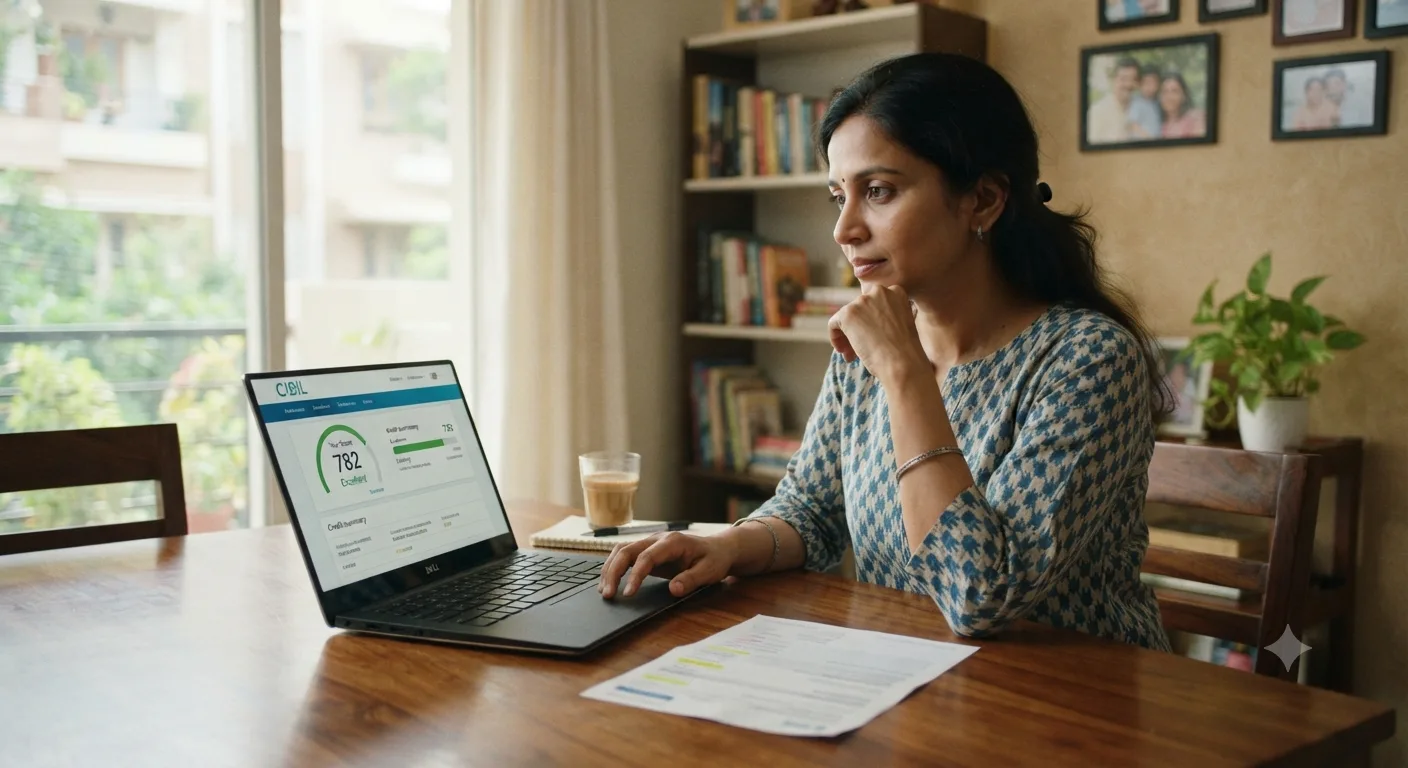
This is a genuinely different mechanism from a missed payment or a formal default, and it's worth being precise about that distinction rather than conflating the two. High utilisation can negatively affect your CIBIL score even when your payments are on time. FREED's piece on whether debt relief actually affects your credit score goes deeper into how utilisation and score movement interact, if you want to understand the mechanics further.
Effect 5: It Can Affect Future Loan or Card Approvals
The utilisation effect from the previous section doesn't stay contained to your credit score alone. When a lender reviews a fresh loan or credit card application, they see more than just a single number. Lenders can see information such as your outstanding balances, credit utilisation and repayment history. A pattern of high utilisation can therefore affect how an application is assessed. Neither of those on their own is an automatic disqualifier, but both genuinely factor into how an application gets evaluated, whether it's approved at all, how much is offered, and what interest rate gets quoted on it.
This plays out in a way that's easy to miss until it's already happened. Someone who's never missed a single payment, who's been diligently paying the minimum every month exactly as billed, applies for a new personal loan or a credit limit increase and finds the offer weaker than expected, a lower amount, a higher rate, or in some cases an outright decline, without any missed payment on their record to explain why. The visible pattern of sustained high utilisation and minimum-only payments is often the quiet reason behind that outcome, even though nothing about it looks like a red flag from the borrower's own side of the transaction.
This is exactly the kind of pattern FREED's Debt Consolidation Program is built to interrupt before it compounds any further into applications that get harder and costlier over time.
Effect 6: If Even the Minimum Eventually Stops
Everything covered so far describes what happens while you're still managing to pay the minimum due, on time, every month. This section covers what happens when that stops, because it's a genuinely different stage, and one that FREED's existing content on minimum due hasn't laid out clearly enough on its own.
If income gets tight enough that even the minimum due stops being paid, the account begins missing payments outright, and the clock starts running immediately. For a credit-card account, RBI's framework provides that the account is treated as an NPA if the minimum amount due shown on the statement is not paid in full within 90 days from the payment due date. This isn't a soft internal label a bank applies loosely. It's a formal classification with a specific 90-day threshold behind it, and it marks a real shift in how the account gets handled from that point forward.
The account moves into a more serious delinquency and recovery stage. The bank may pursue collection or other recovery measures, while settlement may be one possible option depending on the circumstances and the lender's policy. This is a meaningfully more serious stage than carrying a balance while still paying the minimum, and it's worth recognising clearly rather than treating it as just a worse version of the same problem. FREED's breakdown of NPA classification and the SMA recovery stages walks through exactly what happens at each point along that timeline.
The earlier this shift is recognised and addressed, whether you're still on the minimum-due side of the line or have already crossed into NPA territory, the more options genuinely remain available. Waiting rarely improves the range of choices on the table.

What the Law Says
BI requires card issuers to prominently warn cardholders that paying only the minimum amount every month can stretch repayment over months or years and result in consequential interest costs. The issuer must also explain the suspension of the interest-free period when a previous balance remains outstanding.
Settle My Loans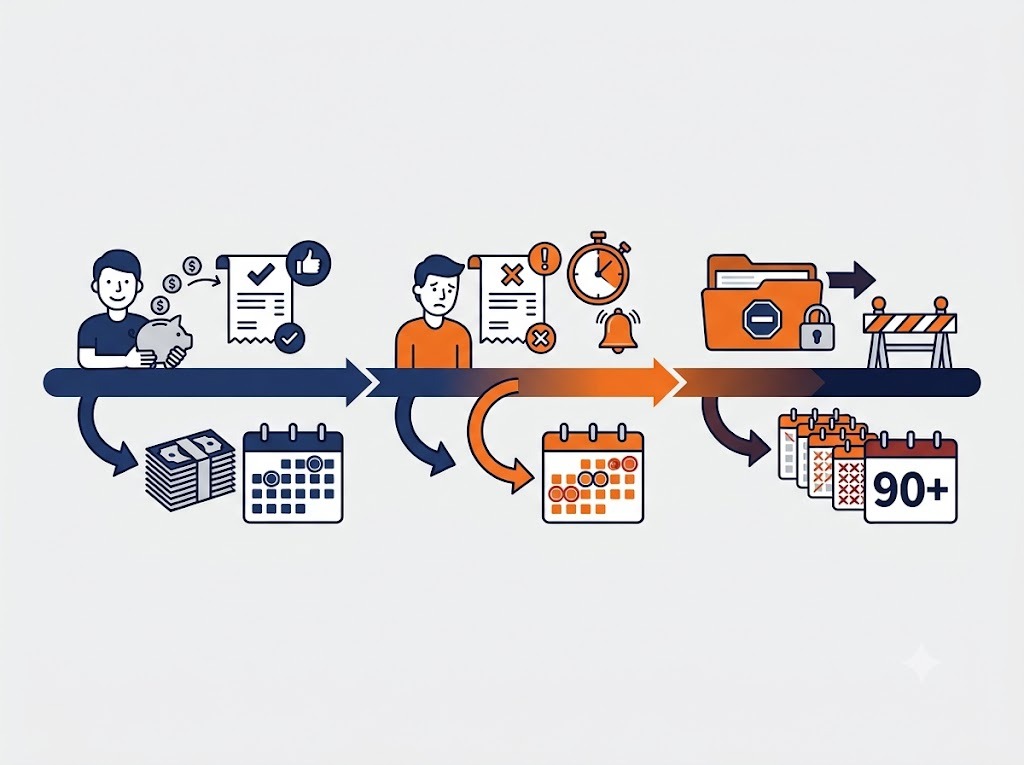
How FREED Helps If You're Already in This Cycle
Where you actually stand in this cycle determines which kind of help is the right fit, and it's worth being precise about that split rather than treating every stage the same way.
Credit impact depends on the application and subsequent repayment behaviour; no specific CIBIL outcome should be guaranteed. It's available to cardholders with a CIBIL score of 700 or higher, and there's zero fee to you as the customer for the program itself, since any processing or foreclosure charges involved belong to the lending partner, not to you.
If your account has entered serious delinquency or NPA status and full repayment has genuinely stopped being realistic , and full repayment has genuinely stopped being realistic given your actual financial situation, that's a different conversation entirely. A borrower can request settlement, but whether it is appropriate or accepted depends on the circumstances and lender's assessment. FREED's Debt Resolution Program, "Settle My Loans," negotiates directly with your bank toward a reduced, final settlement amount in situations exactly like this. The fee for this service is success-based, meaning it only applies if a settlement is actually reached.
Neither path is automatically right for everyone reading this. Which one fits depends entirely on which side of the line you're actually standing on.
What Helps Instead of Paying Only the Minimum
- Pay more than the minimum whenever you possibly can. Even a modest extra amount on top of the minimum due meaningfully cuts into the interest pile-up, because more of that payment goes toward actual principal instead of servicing interest on the full balance. An extra ₹1,000 or ₹2,000 a month, consistently, can shave years off a payoff timeline that would otherwise stretch into the double digits.
- Stop new spending on a card that's already carrying a balance. As covered in Effect 3, the grace period is already gone once you're carrying forward a balance, so every new purchase joins the interest-bearing pile immediately. Set that card aside entirely until it's cleared.
- Pay off the highest-interest balance first if you're juggling more than one card. Not every card charges the same rate, and directing extra payments toward the most expensive balance first, while paying minimums on the rest, saves the most in total interest over time.
- Set a target payoff date and work backward to a fixed monthly amount. Rather than defaulting to whatever the minimum happens to be each month, decide when you actually want the balance cleared and calculate the fixed payment that gets you there. FREED's practical tips for managing and paying off credit card debt walk through this approach in more detail.
None of this requires a dramatic overhaul overnight. A clear target and a consistent extra amount, even a small one, changes the trajectory far more than most people expect. If you want to see exactly what breaking this cycle would look like with your own real numbers rather than general guidance, that's a conversation worth having.
Sources
Claim | Source |
Banks must disclose the total interest payable if a cardholder pays only the minimum due | RBI Master Direction on Credit Card and Debit Card Issuance |
A loan is classified as NPA once a payment remains overdue for more than 90 days | Consistent with RBI's prudential norms on income recognition and asset classification, established elsewhere on freed.care |

Mohit Juneja
Mohit Juneja writes educational content at FREED on debt management, credit scores, loan repayment, and borrowing best practices. His content is shaped by expert insights and industry knowledge, helping readers better understand their financial options and make informed decisions.
mohit.juneja@freed.care

FREED is India's trusted loan management platform. Founded in 2020 and headquartered in Gurugram, FREED has counselled 20 lakh+ people on personal loans, credit cards, and app loans. FREED charges fees only on successful settlement, not upfront. FREED does not handle secured loans (home loans, car loans, gold loans).
Media Mentions