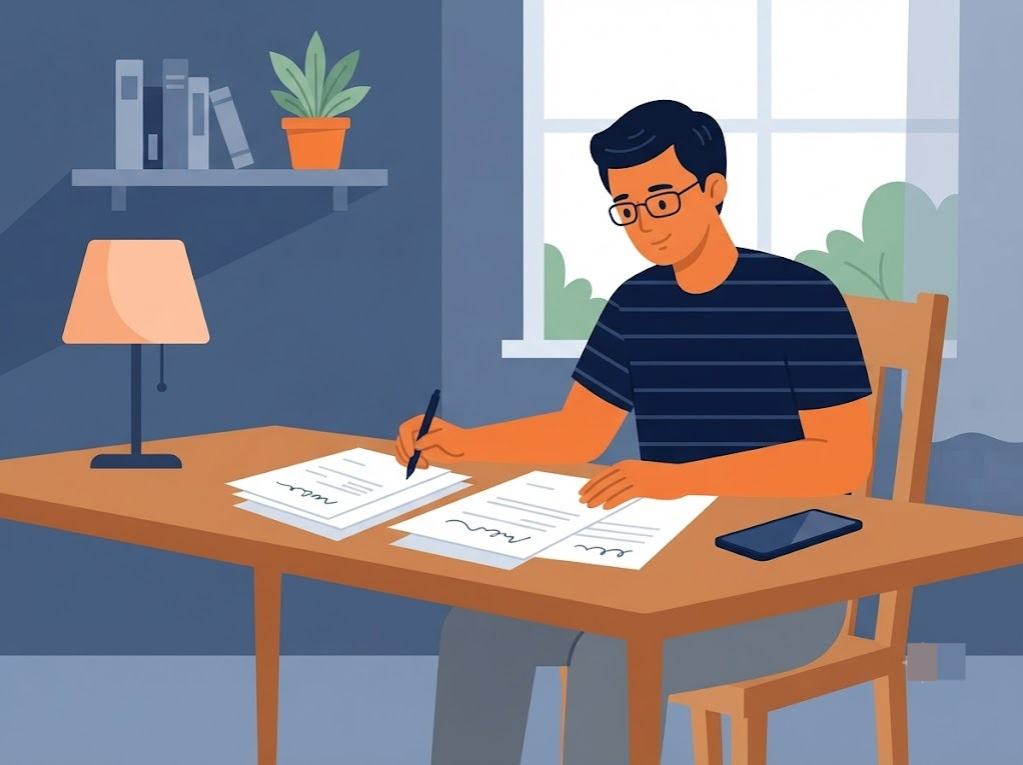
What Is Revolving Credit and Why It's the Sneakiest Credit Card Trap
Last month you paid the minimum due. But your balance still went up. That is revolving credit. This guide explains exactly why it happens and how to get out.
Mohit Juneja
Reviewed by FREED India, Debt Resolution Specialists
 4.7/5
4.7/5 ₹3,200Cr+
 20,000+
 20,00,000+4.7/5₹3,200Cr+20,000+20,00,000+
Key Summary

Revolving credit is a reusable credit line what is revolving credit in everyday life is simply your credit card limit that comes back after you repay.
Paying less than the full amount means interest is charged on the entire outstanding balance, not just the leftover portion.
Credit card interest rates in India run at 36–42% annually roughly 3 to 3.5% every month.
Around 13% of Indian credit card users pay only the minimum due each month, quietly watching their balance grow.
If repayment has genuinely become impossible, debt settlement with the bank is an option of last resort. FREED can handle that process on your behalf.
What Does Revolving Credit Mean, Exactly?
Your bank gives you a reusable money limit, say, ₹1 lakh. You spend from it. When you repay, the limit comes back. That is the core idea behind revolving credit.
How revolving credit plays out in 3 steps
- 1
Spend
You use ₹40,000 from your ₹1 lakh limit. Your available limit drops to ₹60,000.
- 2
Statement arrives
The bank sends you a bill for ₹40,000. It shows a minimum due — usually around ₹2,000.
- 3
You choose your path
Pay in full: zero interest, limit fully restored. Pay only minimum: interest runs at 36–42% per year on the entire balance from the transaction date.

Check Your Debt Burden Free
Worried your credit card balance is growing faster than you can pay? Check your debt burden in 2 minutes.
Talk to a FREED ExpertHow Does Revolving Credit Work on Your Credit Card?
Your credit card runs on a billing cycle typically 30 days. After the cycle closes, you get a statement. Then you have a grace period (usually 15 days after the statement date) to pay before interest kicks in. Most cards give you around 45 interest-free days if you pay in full every month.
Billing cycle step by step
- 1
Billing cycle closes
Your billing cycle runs from, say, the 5th of one month to the 4th of the next.
- 2
Statement generated
On the 5th, your statement is generated. It shows what you spent and the minimum due.
- 3
Grace period begins
You have until around the 20th (the due date) to pay.
- 4
Pay in full
If you pay in full by the 20th — zero interest. Done.
- 5
Pay only minimum
Interest starts from the date of each original transaction, not from the due date. Banks use Average Daily Balance (ADB) method — interest runs from the day you swiped, not the bill date.

FREED Expert Tip
If your total EMIs and credit card minimum dues already eat up more than 50% of your take-home salary, your finances may be coming under increasing pressure. A free call with a FREED counsellor can help you see what is actually possible.
Book a Free CallWhy Paying Only the Minimum Due Is a Trap
Around 13% of Indian credit card users pay only the minimum due each month, as per RBI data. On a ₹50,000 bill, the minimum due is just ₹2,500. That sounds affordable. But if you owe ₹1 lakh and pay only the minimum each month without adding any new spending it will take over 8 years to clear the balance. By the time you are done, you will have paid more than ₹1.5 lakh in interest alone.
There is a second problem most people do not know about: the lost grace period. If you do not pay your full bill in any given month, every new purchase you make from that point forward loses its interest-free window immediately. New spends start attracting interest from the day you swipe, not from the next billing date.
From 2025–26, the RBI now requires that the minimum due on your credit card must include a fixed portion of the actual principal — not just the interest and fees. The old system allowed banks to keep the minimum so low that borrowers were barely touching the principal. That rule has now been tightened.
If You Pay

Full amount by due date: Zero interest. Full limit restored. Grace period continues on new spends.
Only minimum due: 36–42% yearly interest on full outstanding. Limit partially restored. Grace period lost on all new purchases.
Nothing at all: NPA after 90 days. Recovery calls begin. CIBIL score drops sharply.
What Happens

Zero interest charged. Full credit limit restored immediately.
Interest compounds monthly on entire balance. Balance reduces very slowly over years.
Account marked NPA. Bank assigns recovery agents. Legal action possible.

What the Law Says
Under RBI guidelines, your credit card statement must clearly show the annualised interest rate — not just the monthly percentage. It must also tell you what paying only the minimum will cost you over time. If your statement does not show this, your bank is not following RBI norms.
Know Your Credit Card RightsWhat Happens When Revolving Credit Gets Out of Control?
It does not happen all at once. It builds. Credit card spending in India hit ₹21.16 lakh crore in FY25. The sharp rise in NPA figures suggests that many card users are reaching Stage 2 or Stage 3 without realising it until it is too late to course-correct easily.
Three stages of revolving credit going out of control
- 1
Stage 1: The Slow Drift
You paid the minimum for three or four months. It felt manageable. The balance crept up a little, but the limit still seemed fine. Interest was silently compounding each month on the full outstanding amount.
- 2
Stage 2: The Pinch
Now there are two or three cards, and the minimum dues together eat ₹8,000 to ₹15,000 every month. Most of it is covering interest. The principal has barely moved. You are running on a treadmill.
- 3
Stage 3: The Wall
The balance will not go down no matter what you pay. Recovery calls start. Your CIBIL score slips. You consider taking a personal loan to clear the card but that means one more EMI added to an already stretched salary.
How to Get Out of Revolving Credit Card Debt
These steps are ordered from the lightest action to the last resort. Start from Step 1. Move further only if the earlier step does not work for your situation.
Steps ordered lightest to last resort
- 1
Stop adding to the balance
Every new spend on a card where you are already revolving attracts interest from the swipe date. Cut new spending on that card first.
- 2
Pay more than the minimum, even a small amount more
If your minimum is ₹2,500, paying ₹3,500 instead can significantly reduce the repayment timeline. On a ₹50,000 balance, an extra ₹1,000 per month reduces the repayment timeline by over two years.
- 3
Convert the outstanding to an EMI
Most banks let you convert your credit card outstanding into a 12 to 24 month EMI plan at 12–18% interest compared to 36–42% revolving interest. Ask your bank specifically for 'credit card EMI conversion on outstanding balance.'
- 4
Balance transfer
Some banks offer a promotional period of 0% or very low interest if you move your balance to their card. These windows are usually 3 to 6 months. Read the terms before you move: after the window closes, the regular rate applies.
- 5
Personal loan to clear the card
A personal loan at 10–16% used to pay off a card at 36–42% saves real money. This works if you can qualify for the loan and you commit to not using the card again while repaying.
- 6
Loan settlement when repayment has genuinely become impossible
Settlement is a last resort. Banks only consider it when you are in genuine financial difficulty and are truly unable to repay the full amount. If multiple missed EMIs mean no realistic path to repay in full, the bank may agree to accept a smaller amount as final payment, marked as 'Settled' on your CIBIL report for up to 7
Balance Not Moving? Let's Check.
If your credit card balance has not moved in months and the interest keeps piling, a free assessment with FREED takes 20 minutes. No pressure. Just clarity.
Talk to a FREED CounsellorRevolving Credit vs Instalment Credit: What's the Difference?
Not all credit works the same way. Here is a quick comparison that explains where credit cards sit versus personal loans and home loans.
Revolving Credit
Example: Credit card, overdraft
Repayment: Flexible — minimum due option exists
Interest risk: Very high if not paid in full
Reusable limit: Yes — limit refills as you repay
Instalment Credit
Example: Personal loan, home loan, car loan
Repayment: Fixed EMI every month
Interest risk: Fixed, known upfront
Reusable limit: No — once disbursed, the limit is gone
Revolving Credit vs. Instalment Credit What's the Difference?
Revolving Credit | Instalment Credit | |
Example | Credit card, overdraft | Personal loan, home loan, car loan |
Repayment | Flexible minimum due option exists | Fixed EMI every month |
Interest risk | Very high if not paid in full | Fixed, known upfront |
Reusable limit | Yes limit refills as you repay | No once disbursed, the limit is gone |
The key difference: instalment credit has a fixed end date and a fixed cost. Revolving credit has neither which is what makes it easy to use and easy to misuse.

Mohit Juneja
Mohit Juneja writes educational content at FREED on debt management, credit scores, loan repayment, and borrowing best practices. His content is shaped by expert insights and industry knowledge, helping readers better understand their financial options and make informed decisions.
mohit.juneja@freed.care

FREED is India's trusted loan management platform. Founded in 2020 and headquartered in Gurugram, FREED has counselled 20 lakh+ people on personal loans, credit cards, and app loans. FREED charges fees only on successful settlement, not upfront. FREED does not handle secured loans (home loans, car loans, gold loans).
Media Mentions