Loan Settlement: Everything You Need to Know
Loan settlement is when your bank or NBFC agrees to close a defaulted loan for less than the full amount owed. That much is well covered. What's missing from most guides: whether the waived amount counts as taxable income, what happens to anyone who guaranteed your loan, and what actually happens if you agree to a settlement and then can't make the payment.

Mohit Juneja
Reviewed by FREED India, Debt Resolution Specialists
 4.7/5
4.7/5 ₹3,200Cr+
 20,000+
 20,00,000+4.7/5₹3,200Cr+20,000+20,00,000+
KEY TAKEAWAYS

The tax treatment of a waived loan amount depends on the nature and use of the loan and the facts of the case. While certain loan waivers have been treated as capital receipts, this should not be assumed for every personal loan settlement. A qualified tax professional should confirm the treatment in your specific case.”
If someone guaranteed your loan, settling your account doesn't automatically release them; their liability for the waived portion can still be pursued depending on the guarantee's terms.
If you agree to a settlement and then fail to pay by the deadline, the settlement typically becomes void, and the bank can revert to pursuing the full original amount.
The actual RBI rule governing this is a specific circular, not a vague "RBI guideline," and it draws a sharp legal line between a genuine settlement and a technical write-off.
What Loan Settlement Means, Briefly
Settlement is not something a borrower chooses out of preference. Banks and financial companies only consider it when someone is in genuine financial difficulty and truly unable to repay the full amount; it's a last resort, not a shortcut around a manageable situation.
It results in the loan being marked "Settled" rather than "Closed" on your CIBIL report, with the waived portion written off by the lender as part of the agreement. This typically only becomes available once an account has slipped into NPA status due to genuine hardship, not simply a preference for paying less. The fuller existing guide covers the full process, eligibility criteria, and pros and cons in depth, worth reading first if you haven't already, since this piece builds directly on top of that foundation rather than repeating it.

Freed Expert Tip
If you haven't yet read the full process and eligibility breakdown, start there first; this piece assumes you already understand the basics and goes further.
Talk to FREED's TeamThe Actual RBI Framework Behind Settlement
The specific circular is RBI's Framework for Compromise Settlements and Technical Write-offs, RBI/2023-24/40, dated June 8, 2023, and it requires every regulated bank and NBFC to have a Board-approved policy for how it handles settlements, rather than deciding case by case on an ad-hoc basis.
The framework draws a sharp legal distinction worth understanding precisely. A "compromise settlement" involves the lender actually waiving its claim against you in exchange for a negotiated cash payment; your liability for the waived portion genuinely ends once this happens. A "technical write-off" is something entirely different, a purely internal accounting action where the lender removes the account from its active books for its own reporting purposes, but does not waive its claim and can still legally pursue you for the full amount owed.
This distinction matters practically more than most borrowers realise. If your settlement letter doesn't clearly state that your claims are waived and the matter is fully and finally closed, you may only have received a technical write-off from the bank's side internally, not genuine relief from your obligation. Knowing exactly what to write, and what to insist a settlement letter actually says, is worth reading directly rather than assuming any signed document automatically counts as a genuine compromise settlement. The question almost no one asks before settling whether the waived amount itself gets taxed is worth answering carefully next.

What the Law Says
RBI's Framework for Compromise Settlements and Technical Write-offs requires every bank and NBFC to have a Board-approved policy, and draws a legal distinction between a genuine settlement (your claim is actually waived) and a technical write-off (an internal accounting entry that doesn't waive the lender's claim against you).
Check My Credit ScoreIs the Waived Amount Taxable? What Indian Tax Law Actually Says
Say you owed ₹4,00,000 and settled for ₹2,00,000. Has that ₹2,00,000 waived been "gained" in a way the Income Tax Department actually taxes? This is the exact question most settlement guides skip entirely, and it's genuinely worth getting right.
For an individual settling a personal, non-business loan, a personal loan, credit card, or BNPL balance, the position that has generally prevailed treats this waiver as a capital receipt rather than taxable income. The underlying logic follows a reasoning line the Supreme Court applied in CIT v. Mahindra & Mahindra Ltd.: since receiving the original loan wasn't taxable income in the first place, its waiver shouldn't become taxable income either. Worth noting precisely that this specific Supreme Court case actually concerned a business's capital-asset loan, not an individual's personal consumption loan, but tax practitioners have generally extended the same reasoning to personal loans used for genuine personal consumption, on the basis that a personal loan waiver is likewise a reduction of a capital liability rather than business income.
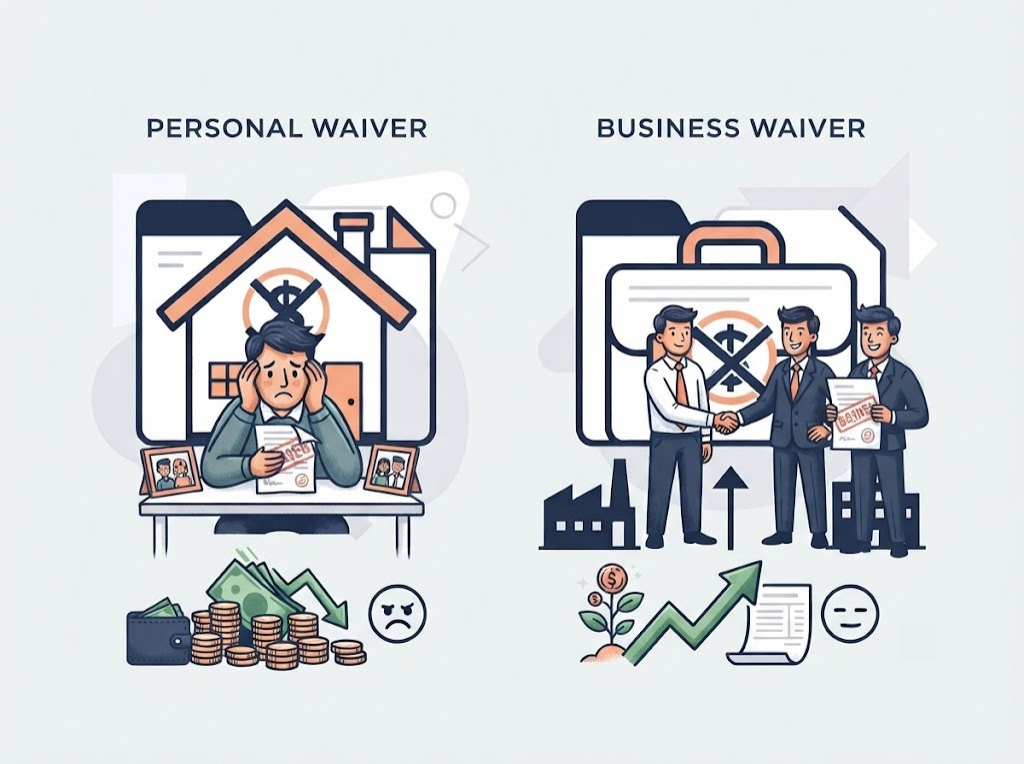
Contrast this clearly with a business context. If a business has a trading liability, money owed to a vendor or supplier for goods or services used in the business, and that liability is waived by the creditor, the waived amount is taxable as business income under Section 41(1) of the Income Tax Act. This is an entirely different scenario from an individual settling a personal unsecured loan, and the two shouldn't be conflated just because both involve a "waiver."
One thing can complicate the personal-loan picture specifically: if the loan was taken for or used substantially for business or investment purposes rather than personal consumption, the tax treatment can shift toward the business logic instead, even if the loan itself was structured and marketed as a "personal" loan. Worth stating plainly and responsibly: this is a genuinely litigated, fact-specific area of tax law. This piece explains the general position, not a guarantee for your specific case, and a qualified tax professional should confirm your individual treatment directly, especially for larger settled amounts where the stakes of getting it wrong are meaningfully higher.

Want to talk through your specific situation?
FREED can walk through the settlement itself; always confirm tax specifics with a qualified professional.
Book My Free CallWhat Happens to a Co-Applicant or Guarantor When You Settle
A co-applicant, someone who applied for the loan jointly with you, is generally covered by the same settlement agreement, since they're an equal party to the original loan. This typically resolves their liability too, provided the settlement letter names them explicitly rather than referring only to the primary applicant by name.
A guarantor sits in a genuinely different, riskier position. A settlement with the borrower does not necessarily release a guarantor. Whether the guarantor remains liable will depend on the terms of the guarantee and the settlement agreement, so any intended discharge of the guarantor should be clearly documented.” depends entirely on the specific terms of the guarantee agreement itself. The actual step-by-step settlement process covers exactly where a guarantor's details need to appear in that documentation, worth checking directly rather than assuming the standard letter format already covers this. The practical instruction here matters: if a guarantor is involved, insist the settlement letter explicitly states that the guarantor's liability is also fully and finally discharged, not just the primary borrower's.
What Happens If You Agree to a Settlement and Then Can't Pay
A settlement agreement is a legally binding commitment once signed, but it's conditional, specifically on the payment actually being made by the agreed deadline stated in the letter.
If the lump sum isn't paid within that deadline, the settlement typically becomes void. The lender is not obligated to honour the reduced amount indefinitely, and can revert to pursuing the full original outstanding amount, including all accumulated interest and charges that had been provisionally set aside during the negotiation. If this happens, you're generally back to where you started, or in a worse position, since the missed settlement deadline itself becomes another negative mark, and any goodwill built during the negotiation is largely lost along with it. The practical instruction is simple but important: never agree to a settlement amount or timeline you're not genuinely confident you can meet, and if circumstances change before the deadline arrives, contact the lender proactively rather than letting the deadline pass silently. Approaching your bank the right way from the very start makes exactly this kind of proactive conversation easier to have later, since a lender who's already dealt with you in good faith is generally more willing to grant a short extension if asked before the fact rather than after, when the damage is already done.
Not confident you can meet a settlement deadline?
Talk to FREED before agreeing to terms, not after.
Book My Free CallCan You Settle More Than Once?
There's no blanket rule preventing someone from settling a different loan with a different lender at a different point in time; each account and each lender's decision is independent of the others.
RBI's compromise settlement framework does include a minimum cooling period, and here it's worth being precise, since this gets misstated often. Under RBI’s compromise-settlement framework, regulated entities must prescribe a cooling period for fresh exposure after a compromise settlement. For exposures other than farm credit, the cooling period is subject to a minimum of 12 months, and the lender’s Board-approved policy may prescribe a longer period. This 12-month rule is not specifically about fraud or wilful default; it applies broadly to normal, everyday settlements. Fraud and wilful-defaulter accounts actually face a separate, considerably harsher restriction: a 5-year debarment from availing any bank finance, and RBI has explicitly clarified that the 12-month cooling period does not relax or shorten this longer restriction in any way.
The practical reality worth knowing: a lender's own internal risk assessment does consider your history regardless of any formal cooling period. A borrower with multiple past settlements may face more scrutiny or less favourable terms on a future request, even without a formal regulatory bar standing in the way, simply because it affects how genuinely the lender assesses your hardship each time you come back.
What Are Your Options
Settlement remains a last resort, worth exploring only after restructuring, EMI revision, consolidation, and moratorium have genuinely been tried and found insufficient for your actual situation. For those still able to manage payments across several unsecured debts, consolidation into one lower EMI is worth exploring before settlement enters the picture at all, and weighing consolidation against settlement directly is worth doing before assuming either one is automatically the right fit for your situation.
How FREED Helps With the Full Picture
FREED's Debt Resolution Programme manages the entire settlement process, including ensuring the settlement letter's wording actually protects you and any guarantor named on the account, and that payment is only released once every term is confirmed in writing.
FREED does not provide tax advice; for the tax treatment of a specific settlement, a qualified professional should be consulted directly; no debt resolution platform is a substitute for that specific expertise. Fees are charged only on successful settlement, never upfront, which is worth knowing when comparing this against any provider that asks for money before anything has actually been resolved.
Want the full picture handled properly, guarantor terms included?
See how FREED's process works.
Check your optionsTips Before You Settle
Confirm whether your settlement letter constitutes a genuine compromise settlement or only a technical write-off. The wording matters legally, not just as a formality to file away.
If a guarantor is involved, insist their discharge is explicitly named in the letter too, not left to be assumed or inferred later.
Never agree to a payment deadline you're not genuinely confident you can meet, since a missed deadline can leave you worse off than before you started negotiating.
For larger settled amounts, get a tax professional's read on your specific situation before assuming the general position applies to you without question, particularly if the loan touched business or investment use at any point.
Sources
Claim | Source |
Framework for Compromise Settlements and Technical Write-offs, distinction between compromise settlement (claim waived) and technical write-off (internal accounting only, no waiver) | RBI Circular RBI/2023-24/40, DOR.STR.REC.20/21.04.048/2023-24 (June 8, 2023) |
Personal loan waiver generally treated as a capital receipt, not taxable, for individuals; business trading liability waiver taxable under Section 41(1) | Income Tax Act, 1961, Section 41(1); reasoning extended from Supreme Court ruling in Commissioner v. Mahindra & Mahindra Ltd. (2018), which itself concerned a business capital-asset loan; general position only, individual cases should be confirmed with a tax professional |
12-month cooling period applies generally to compromise settlements, restricting fresh credit from the same lender; fraud/wilful-defaulter accounts face a separate 5-year debarment from any bank finance, unaffected by the 12-month rule | RBI Circular RBI/2023-24/40 (June 8, 2023) and subsequent RBI FAQ clarification (June 20, 2023) |
"Settled" status stays on CIBIL report for up to 7 years | Consistent with existing FREED-published guidance |

Mohit Juneja
Mohit Juneja writes educational content at FREED on debt management, credit scores, loan repayment, and borrowing best practices. His content is shaped by expert insights and industry knowledge, helping readers better understand their financial options and make informed decisions.
mohit.juneja@freed.care

FREED is India's trusted loan management platform. Founded in 2020 and headquartered in Gurugram, FREED has counselled 20 lakh+ people on personal loans, credit cards, and app loans. FREED charges fees only on successful settlement, not upfront. FREED does not handle secured loans (home loans, car loans, gold loans).
Media Mentions