Personal Loan Settlement Process: A Borrower's Step-by-Step Guide
Understand the personal loan settlement process in India — what it is, when it applies, step-by-step, CIBIL impact, and what to do before you even consider it. Honest guide by FREED.
Mohit Juneja
Reviewed by FREED India, Debt Resolution Specialists
 4.7/5
4.7/5 ₹3,200Cr+
 20,000+
 20,00,000+4.7/5₹3,200Cr+20,000+20,00,000+
Key Takeaways

Personal loan settlement means resolving your loan for less than the full outstanding amount. It is only for borrowers who truly cannot repay.
After 90 days of missed payments, your loan is classified as an NPA (loan gone bad by the bank). This is when settlement discussions can formally begin.
The "Settled" tag on your CIBIL report stays for up to 7 years and can make future loans, credit cards, and even rental applications harder.
Every bank and NBFC has its own OTS (one-time settlement) policy. The final amount depends on your situation, your hardship proof, and the bank's internal decision.
Before settlement: EMI restructuring, moratorium (temporary pause on payments), tenure extension, and debt consolidation must be explored first.
Never pay any amount toward settlement without a signed written agreement from an authorised bank officer. Verbal promises are not binding.
Section 138 of the Negotiable Instruments Act (cheque bounce law can turn criminal) may apply if post-dated cheques were issued on the account.
What Is Personal Loan Settlement?
If you are reading this, you are probably already in a hard place. Missed EMIs. Recovery calls that are becoming difficult to manage. A growing sense that the loan has taken over your life. You are not alone, and you are not wrong to look for answers.
Settlement is not something a borrower chooses out of preference. Banks and financial companies only consider it when you are in genuine financial difficulty and are truly unable to repay the full amount. It is a last resort, not a shortcut.
So what does it actually mean?
Personal loan settlement also called OTS (one-time settlement, paying it once and the matter ends) or full and final settlement is when your bank agrees to accept a lump-sum payment that is less than the total you owe. The remaining amount is written off. Your account is then marked "Settled" in the bank's records and on your CIBIL report.
This is very different from a normal loan closure. Closure means you paid the full amount on time. Your CIBIL shows "Closed" no damage. Settlement means the bank accepted less. Your CIBIL shows "Settled" and future lenders may view a 'Settled' status less favourably than a 'Closed' account. More on that in the CIBIL section below.
Banks can only begin considering OTS after your loan has turned into an NPA. Under RBI norms, a personal loan is classified as an NPA after 90 days roughly 3 missed EMIs of non-payment.
The "Settled" tag can stay on your CIBIL report for up to 7 years from the date it is reported.
When Should You Consider Personal Loan Settlement?
Settlement is relevant in a specific situation. It is not for everyone who is stressed about money.
Settlement applies when:
- Your income has stopped or dropped so severely that repaying the EMI is genuinely not possible. Not uncomfortable. Not tight. Impossible.
- You have missed 3 or more EMIs and the loan has turned or is about to turn into an NPA.
- You have already tried talking to your bank about restructuring or a pause in payments, and those options did not work.
- You have no realistic path back to repaying the full outstanding amount, even over a longer tenure.
Settlement does NOT apply when:
- You are still earning and can manage even a reduced EMI.
- You have missed 1 or 2 EMIs because of a rough patch but expect income to return.
- You are hoping to use settlement as a way to pay less on a loan you could technically repay.
The trigger is genuine inability to repay. Not stress. Not feeling overwhelmed. Not the number of loans. Banks assess your situation through real documents: a job termination letter, medical bills, bank statements showing no income for months. That proof is what opens the door to a conversation about settlement.
What Are Your Options Before Personal Loan Settlement?
Before settlement, there are 5 options you must explore. Every single one of them is better for your CIBIL and your future.
1. EMI Restructuring (changing how you repay) Ask your bank to lower your monthly EMI by spreading the remaining amount over a longer period. Your total repayment increases slightly, but the monthly burden drops. This option is available even before you miss an EMI. The earlier you ask, the more options you have.
2. Moratorium (temporary pause on payments) A moratorium is a short break from paying your EMI. Some banks offer a 3 to 6 month pause under their hardship policy. Interest may continue to accrue during this time, but you get breathing room. [Writer: verify bank-specific moratorium terms before writing specifics use directional language only.]
3. Tenure Extension The bank extends how long you have to repay. Your monthly EMI drops. The total amount you pay goes up slightly because interest runs longer. Often less damaging to future borrowing eligibility than settlement.
4. Debt Consolidation (merging all loans into 1 lower EMI) If you have multiple loans and your CIBIL score is still 670 or above, you may be able to merge them into 1 new personal loan with a lower combined EMI. This simplifies your repayments and reduces total monthly outflow.
5. FREED's Debt Management Program FREED's Debt Management Program is a structured plan where all your loan payments are organised into 1 clear monthly payment with a defined end date. This is for borrowers who still have some income but are struggling to manage multiple EMIs.
Settlement comes after all of these have been genuinely tried and ruled out. Banks are required under RBI guidelines to respond to borrower hardship requests with empathy. Asking early almost always gives you more options than waiting until the loan is already in NPA.

FREED Expert Tip
Call your bank's loan department directly, not the recovery agent and ask specifically about EMI restructuring or a moratorium. Most borrowers do not know these options exist until they ask.
Enroll NowPersonal Loan Settlement Process in India: Step by Step
This section is for borrowers who have genuinely exhausted every alternative above and are now facing a situation where repaying in full is not possible.
Do not begin this process as a first move. Settlement comes last.
- Confirm you have explored every alternative first. Restructuring, moratorium, and consolidation must be tried before this step. Proceed only if the bank has declined all of them and the loan is in NPA.
- Get your full loan picture in writing. Request a statement showing: the original loan amount, interest added, penalties added, total outstanding today, number of EMIs missed, and the current NPA status.
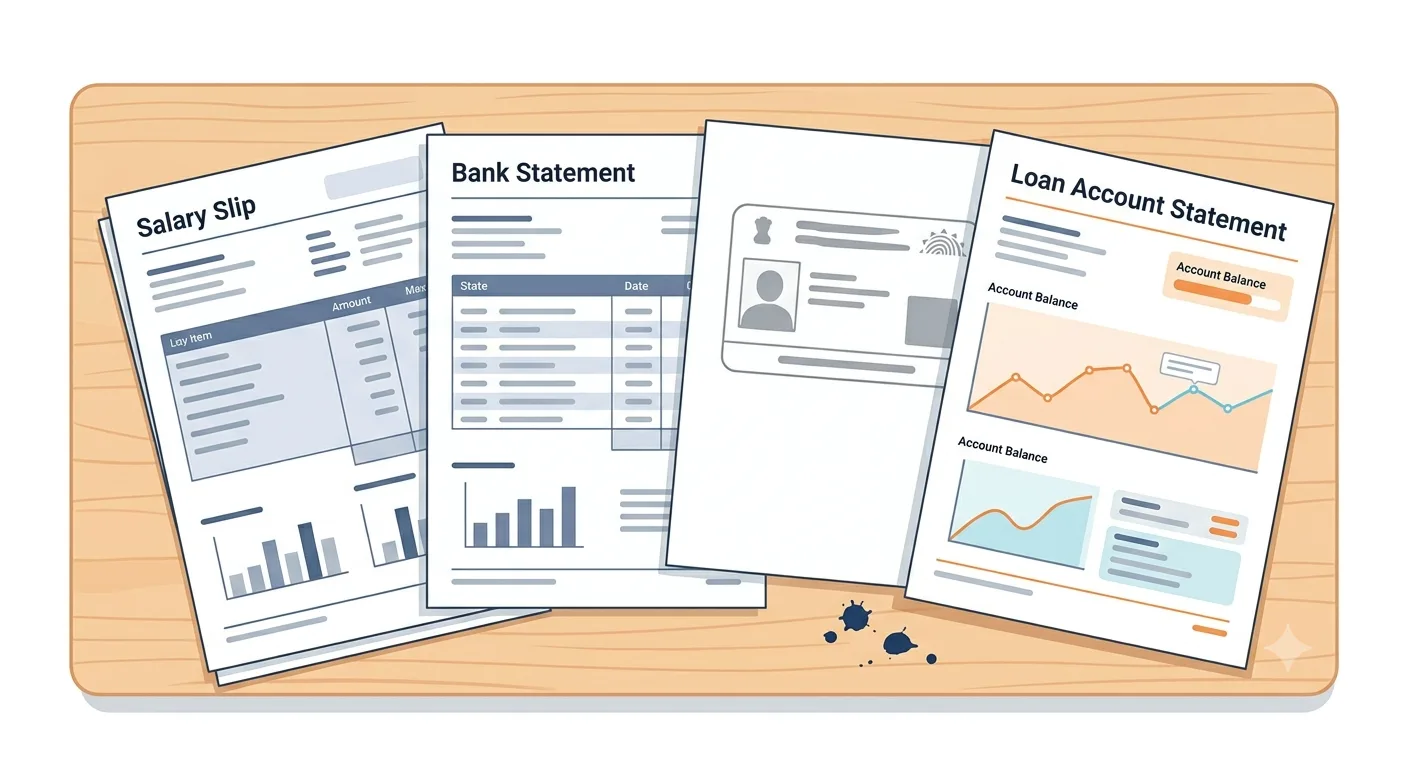
- Gather your hardship documents. Collect: a job termination letter or salary reduction letter, medical bills if health was the cause, bank statements for the last 3 to 6 months showing no or very low income, and any other document that shows the genuine reason repayment stopped.
- Write a formal hardship letter to your bank. Address it to the branch manager. State clearly that you are unable to repay the full outstanding amount. State the reason briefly. Request that the bank consider an OTS. Keep the tone factual.
- Wait for the bank's written OTS offer. Do not make any payment. Do not agree to anything over the phone or in person based on a verbal promise. No bank official's verbal word is binding. The offer must come in writing, on the bank's letterhead, with an authorised signature.
- Negotiate the settlement amount. You can respond to the offer with a counter based on your documented ability to pay. The final number is entirely the bank's decision based on their internal OTS policy. Present your hardship documents clearly. The bank may go back and forth once or twice before settling on a number.
- Get the full settlement agreement signed. Before paying a single rupee, the signed settlement agreement must be in your hand. It must include: the settlement amount, confirmation that the remaining balance is waived, and a commitment that the account will be marked "Settled" with the bureau.
- Make payment and collect your NOC (clearance letter). Pay only through a traceable channel: bank transfer or demand draft. Never cash. Keep every record. Once the bank receives full payment, they must issue your NOC. Do not consider the matter resolved until you have the NOC in hand.
- Monitor your CIBIL report. Credit bureau updates may take several weeks after settlement. The "Settled" status should appear within 45 to 60 days of payment. [Writer: verify this timeline before publishing.] If it does not update correctly, raise a bureau dispute using your NOC as proof.
FREED can support borrowers throughout this process- from approaching the bank to negotiating the amount to making sure the NOC and CIBIL update are in order.
What Documents Do You Need for Personal Loan Settlement?
The stronger and more organised your documents, the better positioned you are when the bank reviews your case. Requirements vary by bank, confirm with your specific bank before submitting.
- Identity proof Aadhaar or PAN card. Confirms who you are.
- Address proof Any government-issued document with your current address.
- Personal loan account statements Full history showing the original loan amount, EMIs paid, EMIs missed, and outstanding as of today.
- Bank statements for 3 to 6 months Shows the bank that your income genuinely stopped or dropped.
- Hardship proof Job termination letter, medical bills, salary reduction letter, or any document that explains why repayment stopped.
- Any legal notices received from the bank Include these so there are no surprises during negotiation.
How Does Personal Loan Settlement Affect Your CIBIL Score?
This is the part many borrowers do not fully understand before they settle. Know this before you decide.
"Settled" is not the same as "Closed."
When a loan is repaid in full and on time, the bank marks your account "Closed." No negative signal. Future banks see a clean, completed account.
When a loan is settled, the bank marks your account "Settled." This tells every future bank and NBFC: this borrower did not fulfil their original repayment obligation. The bank accepted less. Future lenders may view this status negatively when assessing applications. Most banks treat a "Settled" account the same way they treat a default because it is one.
Your CIBIL score will drop significantly after settlement. The actual drop depends on your full credit history, the size of the loan, and your repayment behaviour after settlement. [Writer: do not quote a specific point range without verification from an official CIBIL or RBI source. Use directional language only in the published article.]
The "Settled" tag can stay on your CIBIL report for up to 7 years from the date it is reported. [Writer: verify exact duration from CIBIL official FAQs.] During that period, some lenders may be more cautious when evaluating future applications. or offer credit at a significantly higher interest rate.
Future applications affected include: home loans, personal loans, car loans, and credit cards. Some landlords now run CIBIL checks before approving a rental.
There is a path back. With consistent behaviour over time, repaying new credit on time, using a secured credit card responsibly, and keeping your credit utilisation low, your score can recover. How long this takes depends on your full credit history and what you do after settlement There is a path back. With consistent positive behaviour repaying any new credit on time, using a secured credit card, keeping credit utilisation low Credit rebuilding varies depending on future repayment behaviour and overall credit history. [Writer: verify this timeline from a credible published source.]
Borrowers should be cautious of unverified third parties requesting upfront payments. before considering a new loan application. [Writer: verify from an actual RBI circular before publishing do not cite secondary or aggregator sources.]
Settlement is not the end. But understand what it costs before you decide.

What the Law Says
Under Section 138 of the Negotiable Instruments Act, if a post-dated cheque issued on your personal loan account bounces, the bank can file a criminal complaint. This is separate from the civil loan recovery process. It can apply even while settlement negotiations are ongoing.
Enroll NowWhat to Watch Out for During the Personal Loan Settlement Process
A few things that can go wrong and how to stay protected.
Never pay anyone who is not an authorised bank official. Fraudulent agents and so-called "settlement agencies" take upfront fees and disappear. If someone claims they can settle your loan without any official bank documentation, walk away. Always deal with the bank directly.
Never pay the bank before receiving a signed written OTS offer. Verbal promises, even from a bank official, are not legally binding. Any payment made before a written agreement is signed has no protection.
Always pay through a traceable channel. Bank transfer or demand draft only. Never cash. Cash payments leave no paper trail, and you will have no proof if the bank later disputes the amount received.
Get your NOC before considering the matter resolved. The NOC (clearance letter) is your proof that the bank has received payment and the matter is concluded. Do not consider the process done without it.
Do not confuse a "write-off" with a settlement. When a bank writes off a loan, it is an internal accounting step. The loan still exists. You still owe the amount. A write-off without a signed settlement agreement is not the same as an OTS.
Check your CIBIL report after payment. The "Settled" status must appear correctly within 45 to 60 days. If it does not update, or if the account is reported incorrectly, use your NOC to raise a bureau dispute with CIBIL.
What Happens After Personal Loan Settlement Is Complete?
The process is done. Here is what to do next.
Collect and store your NOC securely. Keep both a physical copy and a scanned digital copy. This document is your proof for any future dispute with a bank, a new landlord, or CIBIL.
Check your CIBIL report within 60 days of payment. Log in at cibil.com and confirm the account shows "Settled" with the correct date and amount. If anything is wrong, file a bureau dispute using your NOC as supporting proof.
If the loan involved any property as collateral, the bank must return your property documents within 30 days. [Writer: verify exact applicability of the RBI December 2023 directive to personal loans vs. secured loans before including.]
Start rebuilding your credit score. This takes time but it works.
- Apply for a secured credit card (backed by a fixed deposit). Use it for small purchases and pay the full bill every month. After 12 to 18 months of this, your score starts to recover.
- If you take a small personal loan later, repay it without a single miss. Every on-time payment adds positive history.
- Do not apply for large credit immediately after settlement. Most banks will reject the application, and the rejection itself adds another negative mark to your CIBIL.
And one more thing. Start building a small emergency buffer, even if it is just ₹500 to ₹1,000 a month, so that one rough patch in the future does not put you back in the same situation.
Personal Loan Settlement vs Other Resolution Options
Option | What It Means | CIBIL Impact | When to Use |
EMI Restructuring | Change the repayment plan lower EMI, longer tenure | Minimal if no default yet | Income has reduced but some repayment is still possible |
Moratorium | Temporary pause on EMIs interest may continue to accrue | Minimal if bank-approved | Short-term income disruption: job loss, medical emergency |
Debt Consolidation | Merge all loans into 1 lower-EMI personal loan | Positive if repaid on time | CIBIL 670+ and stable income |
FREED Debt Management Program | Structured 1-payment plan with a clear end date | Positive if followed | Multiple loans, income is still present |
Loan Settlement (OTS) | Resolve for less than owed lump-sum payment | Significant. "Settled" tag up to 7 years | Only when repayment is genuinely impossible |

Mohit Juneja
Mohit Juneja writes educational content at FREED on debt management, credit scores, loan repayment, and borrowing best practices. His content is shaped by expert insights and industry knowledge, helping readers better understand their financial options and make informed decisions.
mohit.juneja@freed.care

FREED is India's trusted loan management platform. Founded in 2020 and headquartered in Gurugram, FREED has counselled 20 lakh+ people on personal loans, credit cards, and app loans. FREED charges fees only on successful settlement, not upfront. FREED does not handle secured loans (home loans, car loans, gold loans).
Media Mentions











